(Version française disponible ici)
The climate debate is often regarded as a question requiring technological, economic or regulatory solutions. However, it is now facing a more fundamental tension, one that is especially political in nature.
Current emission trajectories are not aligned with the goals set by states, while the necessary transformations to achieve these goals have sparked a growing public backlash.
This tension redefines the very conditions of climate action. It boils down to one simple question: How to speed up the transition without undermining the social support upon which it relies? To find an answer, two uncomfortable truths must first be faced.
First truth: We are falling short in the battle against the climate crisis
The Paris Agreement, signed in 2015, sets a clear objective: limit the temperature increase to 1.5 C above pre-industrial levels, or, failing that, to well below 2 C.
However, global warming has been accelerating since 2015. Since the early 1970s, the global mean surface temperature has increased at an average rate of about 0.2 C per decade; but since 2015, it has accelerated to 0.35 C per decade. At this rate, the temperature will surpass the limit of 1.5 C by 2029.
Current projections indicate that the temperature could reach or even exceed 3 C above pre-industrial levels by the end of the century, with the warming that would follow. A world with an increased temperature of 3 C or higher is not an acceptable legacy to leave for future generations.
Approximately 70 countries have pledged to get to net-zero emissions by 2050 – within just 24 years. China, the largest emitter, has promised to reach the goal by 2060. Yet the plans to reduce greenhouse gas emissions announced by these governments, known as nationally determined contributions (NDC), fall short of these goals.
Take the case of Canada, which has committed to reducing its greenhouse gas emissions by 40 to 45 per cent below 2005 levels by 2030, and by 45 to 50 per cent by 2035. In reality, the reduction has been only 8.5 per cent between 2005 and 2023.
Since we know that the problem stems mainly from the combustion of hydrocarbons (oil, natural gas and coal), why not simply stop using them? The reality is far more complex.
Abruptly halting the use of hydrocarbons as an energy source would paralyze the world economy. Bypassing coal, oil and natural gas while maintaining economic growth requires a real technological, industrial and energy revolution.
When governments began to combat climate change in the early 1990s, oil, gas and coal accounted for an average of more than 80 per cent of global energy consumption. Despite three decades of climate policies, this figure remains unchanged.
While renewable energies set new deployment records in 2024 for the 23rd consecutive year, consumption of oil, natural gas and coal also beat the record, according to the World Energy Outlook 2025 of the International Energy Agency (IEA). We are not replacing energy sources but adding to them.
Climate policies were relatively popular when it came to fixing ambitious reduction objectives with distant deadlines. Nonetheless, as environmental policies shift from abstract goals to concrete regulatory measures, resistance appears from agricultural and industrial lobbies, “not in my backyard” groups, and other places. They band together against the feared impacts of climate policies on their businesses, jobs, electricity bills, gas prices, food costs, and, in short, their lifestyle.
Notably, far-right populist parties identify with a traditional lifestyle that is strongly tied to the use of hydrocarbons and private cars. They often denounce environmental and climate policies as the whims of an urban elite disconnected from “real people,” echoing Donald Trump’s Republican slogan, “Drill, baby, drill.”
Governments react by backtracking on their environmental objectives. In numerous national parliaments, budget cuts in environmental programs are passed, climatic objectives are scaled back and projects are postponed (such as the ban on the sale of gas-powered cars) or even abandoned. Climate policies are undermined under the guise of supposed sensible deregulation. In the financial world, the growth of responsible investment market share, which relies on environmental, social, and governance (ESG) criteria, has slowed down.
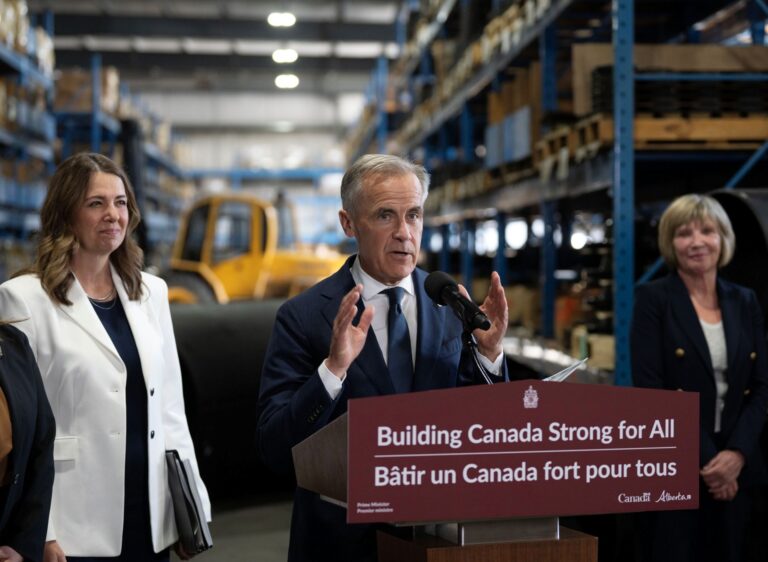
In Canada, the Carney government suspended carbon pricing for individuals, postponed the regulations aimed at increasing electric car sales, scrapped minimum electric vehicle quotas for manufacturers, lifted the emissions cap on the oil and gas sector, and exempted Alberta from Clean Electricity Regulations.
The reality is cruel: Our societies are struggling to cut back on hydrocarbons use. States have other priorities, which include, unfortunately, war. In the wake of Russia’s attack on Ukraine, a large-scale rearmament has started. According to the UN, global military spending reached US$2.7 trillion in 2024, while Climate Policy Initiative estimates global climate finance for 2023 to be between US$1.5 and $1.6 trillion. The contrast is stark: humanity is investing more in protecting itself from itself than in stabilizing the climate.
Second truth: Giving up is not an option
Climate action is constrained by three factors: urgency, the magnitude of the task and public support. To maintain public support for this transition, action must not be perceived as risky, abrupt, costly or unfair. Those who fear the end of the world must find common ground with those who worry about paying their bills at the end of the month.
We do not want climate-skeptic politicians who refuse to do anything – and boast about it – to win elections. Instead, we are reduced to celebrating those who do little when they defeat those who do nothing, even though climate scientists are urging us to do a lot more.
It is essential to accelerate the pace of decarbonization through effective carbon pricing mechanisms and other measures, but this transition must remain economically viable. Businesses, workers, unions and local communities must be supported at every stage of this huge economic transformation.
Beyond carbon pricing: a fairer way to drive climate policy
One simple fix for Canada’s industrial carbon pricing systems
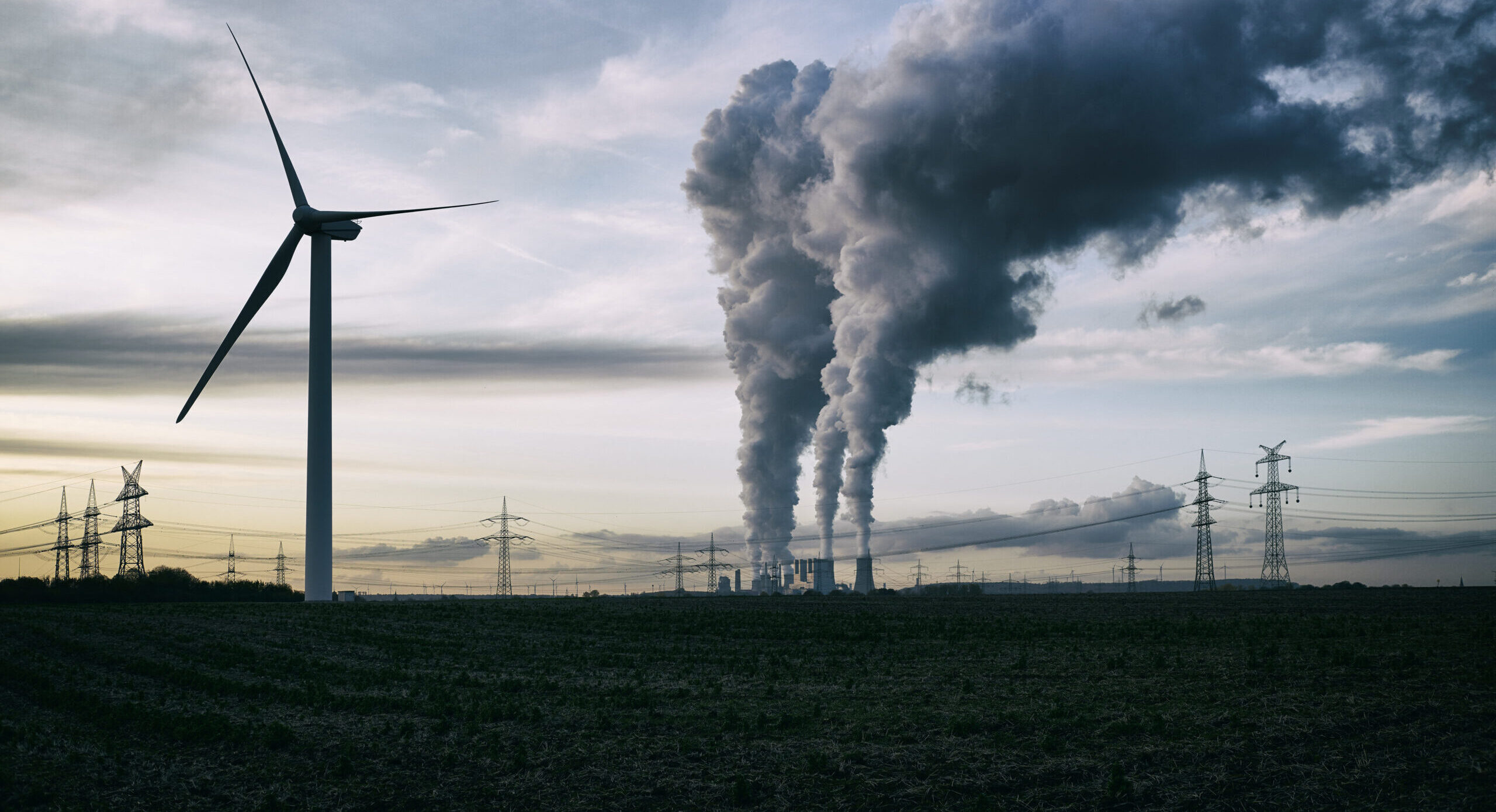
Technologically speaking, the green transition towards renewable energy sources is already in motion. Solar panels, wind turbines and the batteries to manage intermittency are increasingly becoming the way to produce and use cheaper electricity. The economies of scale related to mass production will make the prices even more competitive. Likewise, instead of slowing down, we should accelerate replacing combustion engines with electric motors in vehicles. The goal is to decarbonize electricity production and to electrify the economy.
Donald Trump’s presidency is a disaster for the battle against climate change. Nevertheless, even he failed to stop American coal divestment, which began in the mid-2000s.
None of these measures are sufficient on their own, but they provide foundations to build upon. And Canada can lead the way, thanks to its technological leadership, skilled workforce and rich mineral and metal resources essential to the transition towards carbon-free energy sources.
To bring these critical resources to the market, unprecedented co-operation in the energy and mining sectors is a must. This will involve commercial partnerships, long-term contracts, massive investments and mining standard agreements, which observe social and ecological requirements and are respectful of Indigenous peoples.
European countries are trying to shake off the yoke of dependence on Russian oil and critical minerals from China. They have genuine interest in Canada as a stable, democratic ally with strong technology and research capacity and access to critical natural resources.
Additionally, Canada plays a significant role in the nuclear energy sector. To reach carbon neutrality by 2050, one of the objectives outlined in the IEA scenarios calls for an increase of 80 per cent in the global nuclear energy production by 2040.
Canada has decades of expertise in the development, exploitation and modernization of the CANDU reactor, a technology utilizing natural uranium and heavy water. Small modular reactors (SMRs) provide an opportunity to extend this leadership to the next nuclear generation. Moreover, the country is one of the main exporters of uranium, accounting for 18 per cent of the global production.
Canada and the world are facing one of the biggest challenges in modern history, one that can only be achieved through a combination of determination and pragmatism. It is to reconcile humanity with the planet, while ensuring those who fear the end of the world and those who worry about the end of the month stay united.