Canada prides itself on being a global leader in human rights, climate action and multicultural inclusion. Yet environmental harm in this country is racialized.
Black, Indigenous and marginalized communities are disproportionately subjected to environmental hazards such as proximity to landfills, toxic waste sites, industrial pollution and unsafe water systems. This environmental racism is a consequence of historic policy decisions, economic disparities and uneven development.
The 2024 passage of Bill C-226, the National Strategy to Assess, Prevent and Address Environmental Racism and to Advance Environmental Justice Act, marked a significant milestone because it officially acknowledges these discriminatory practices. The act requires the minister of environment and climate change to formulate, by June 2026, a national strategy to achieve these goals.
However, the mere acknowledgment of these issues is insufficient for achieving true environmental justice. If the national strategy is limited to documenting environmental hazards and generating reports, it may inadvertently reinforce existing injustices rather than alleviate them.
Canada’s history is replete with instances of governments recognizing structural inequalities without making meaningful change. Therefore, achieving true environmental justice necessitates not just recognition but also actions to address and correct these longstanding injustices.
Three key steps would help: introduction of environmental hazard exposure tax credits for workers in high-risk industries; a targeted green reskilling fund for Black workers and communities that have historically been overrepresented in hazardous industries; and ensuring that communities bearing the environmental burdens of infrastructure developments such as data centres and logistics hubs also share in the economic rewards.
Where the burden falls
Ingrid Waldron’s definition of environmental racism encompasses not only the exposure to environmental hazards but also the limited political capacity of marginalized communities to resist the establishment of hazardous industries near their living areas.
For example, Indigenous communities, despite covering only 0.5 per cent of Canada’s land area, disproportionately bear approximately 29 per cent of federal contaminated sites on their lands.
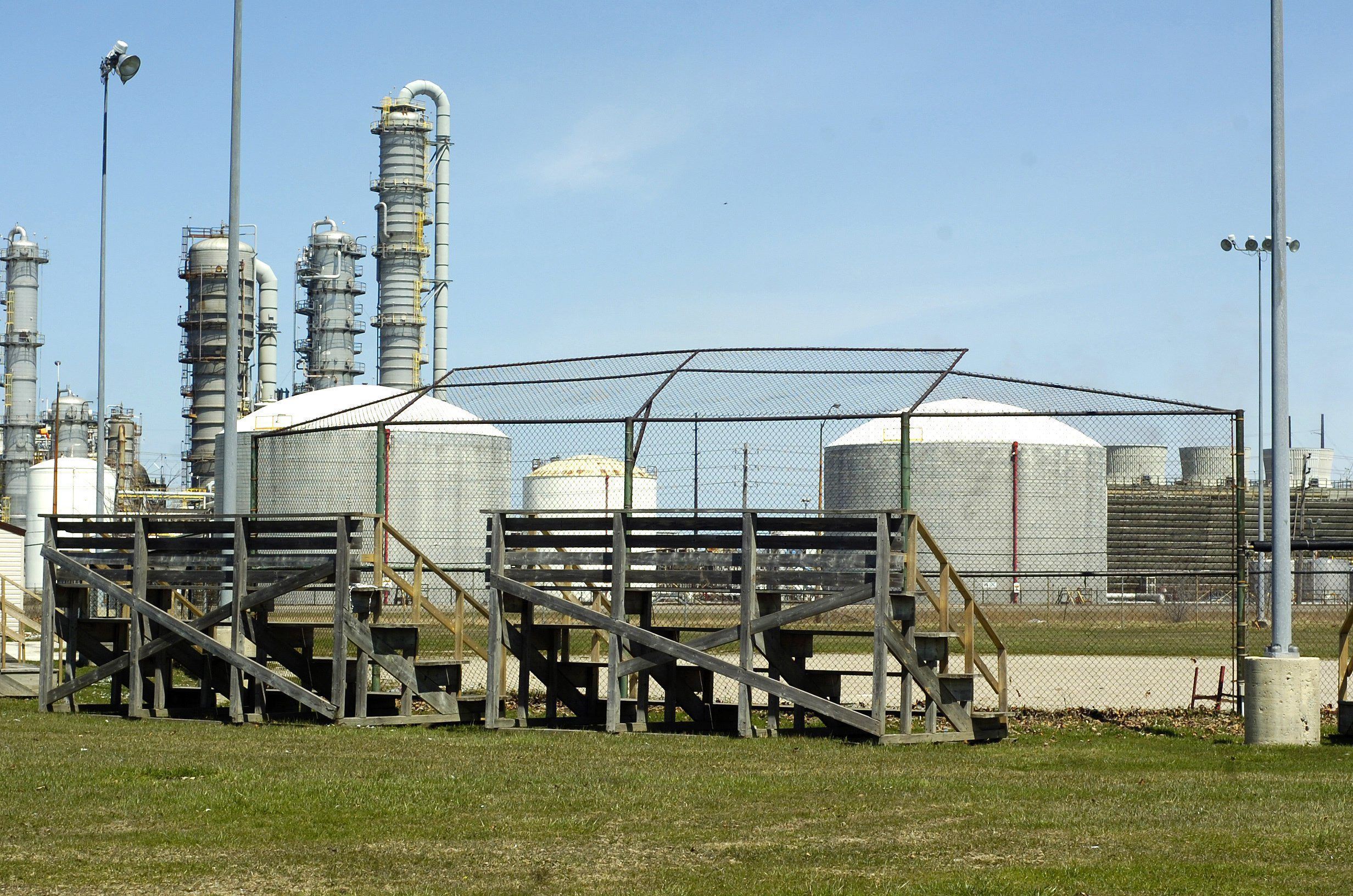
More than half of First Nations communities contend with the realities of industrial pollution because landfills, mining and petrochemical operations have been frequently located next to their land. One example is the Aamjiwnaang First Nation near Sarnia, Ont., within the Chemical Valley, which is home to about 40 per cent of Canada’s petrochemical industry.
The patterns of environmental injustice also extend to Black communities, especially in Nova Scotia where historically Black neighbourhoods such as Africville, Shelburne and Lincolnville are situated close to waste disposal areas and industrial facilities.
Meanwhile, urban areas can illustrate how environmental racism interacts with housing inequality. Neighbourhoods such as Jane-Finch in Toronto and Herongate-Ledbury in Ottawa, which are home to large Black (approximately 30 per cent), immigrant and newcomer communities, exemplify this.
These neighbourhoods are characterized by high-density housing, proximity to major traffic corridors or industrial activity causing air pollution and limited access to green space and environmental amenities.
The consequences of these disparities are profound because economic inequality restricts mobility and choices for affected communities.
The median income for Black Canadians in 2021 was $37,200, compared to $41,200 for the overall population. Black workers earn approximately 75.6 cents for each dollar made by non-racialized colleagues. Such economic hardships, coupled with limited options for affordable housing, increase the likelihood of residing in areas rife with environmental dangers.
The labour question
Environmental justice is deeply intertwined with the demographics of the workforce in hazardous industries. While discussions often revolve around the location of environmental hazards, a crucial aspect is understanding who comprises the labour force in sectors such as agriculture, mining, petrochemicals and waste management.
Migrant agricultural workers, primarily from Mexico, Guatemala and Jamaica, are disproportionately exposed to unsafe working and living conditions, including heat stress, overcrowded housing, exposure to pesticides, and limited access to health care.
Similarly, Indigenous workers make up approximately 10 to 12 per cent of Canada’s mining workforce – nearly three times their representation across other industries – increasing their exposure to occupational illnesses and environmental hazards such as black lung disease.
Many workers live in the same communities where these environmental risks are prevalent, leading to a dual burden of exposure to harm and economic dependency on hazardous jobs.
An effective environmental justice strategy must confront this dilemma directly, ensuring that workers are not placed in the position of choosing between their economic survival and their health. Policymakers should create solutions that not only reduce pollution but also facilitate transitions for workers into safer, more stable employment opportunities.
As Canada approaches a transition to a low-carbon economy, significant changes in the labour market are anticipated. New job opportunities are expected to arise in areas such as renewable energy installation, building retrofits and ecosystem restoration.
However, there is no guarantee that the communities historically affected by environmental hazards will gain from this transition. Visible minorities represent about 34 per cent of Canada’s overall workforce but only around 14 per cent in the environmental sector.
Without focused policy interventions, there is a real risk that the shift to green jobs will perpetuate existing inequalities within the labour market.
From recognition to repair
Bill C-226 offers a framework to tackle intersecting injustices by requiring the federal government to explore the connections among race, socioeconomic status and environmental risk. The act includes several policy options, but three other steps can also facilitate this necessary transition.
The first is environmental hazard-exposure tax credits for workers in high-risk industries, where industrial pollution poses significant threats. This temporary tax credit would not only recognize the risks faced by these workers but also provide crucial income stability amid necessary industrial transitions.
In addition, the establishment of a targeted green reskilling fund is necessary specifically for Black workers and communities that have historically been overrepresented in hazardous industries. This fund should encompass comprehensive support, including tuition, wage replacements, child-care services and mentoring to enable effective career transitions.
Collaborations with labour unions and community organizations are essential to ensure that training programs align with local labour market demands.
Where does Canada stand on international environmental crime?
Finally, infrastructure developments such as data centres and logistics hubs can lead to serious environmental impacts, such as increased water usage, noise pollution and traffic congestion.
To address this disparity, host-community compensation mechanisms are required. These could take the form of property tax relief, infrastructure investments or community development funds, ensuring that communities bearing the environmental burdens of such projects also share in the economic rewards.
Beyond these specific measures, Canada should implement enforceable environmental justice standards, invest in robust data collection systems and empower affected communities to play a decisive role in decision-making processes.
The introduction of a national tool, akin to the environmental justice mapping and screening system in the United States, would help policymakers and communities identify high-risk areas and allocate resources more fairly.
A rare window
Environment and Climate Change Canada is already gathering public input as it develops the national strategy required by Bill C-226, with the first iteration due in less than three months. Communities, policymakers and advocates now have a chance to shape what comes next.
Canada has recognized environmental racism. The question is whether recognition is where this ends or where it begins.