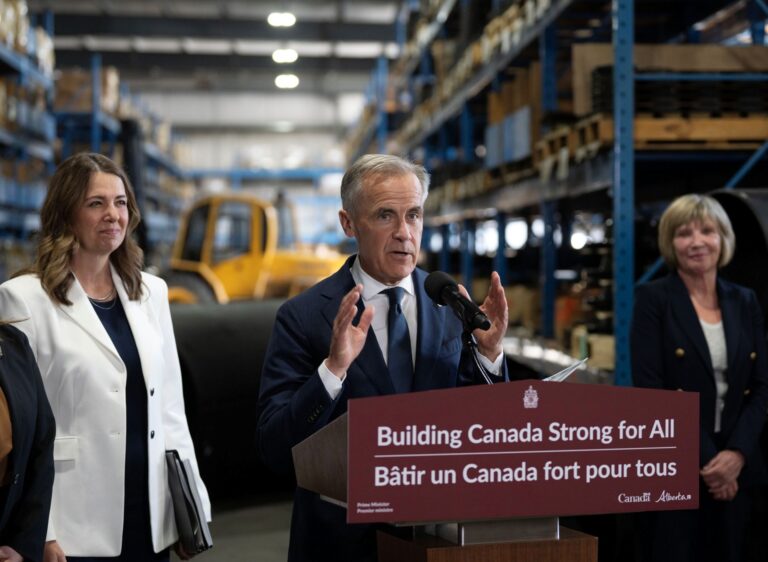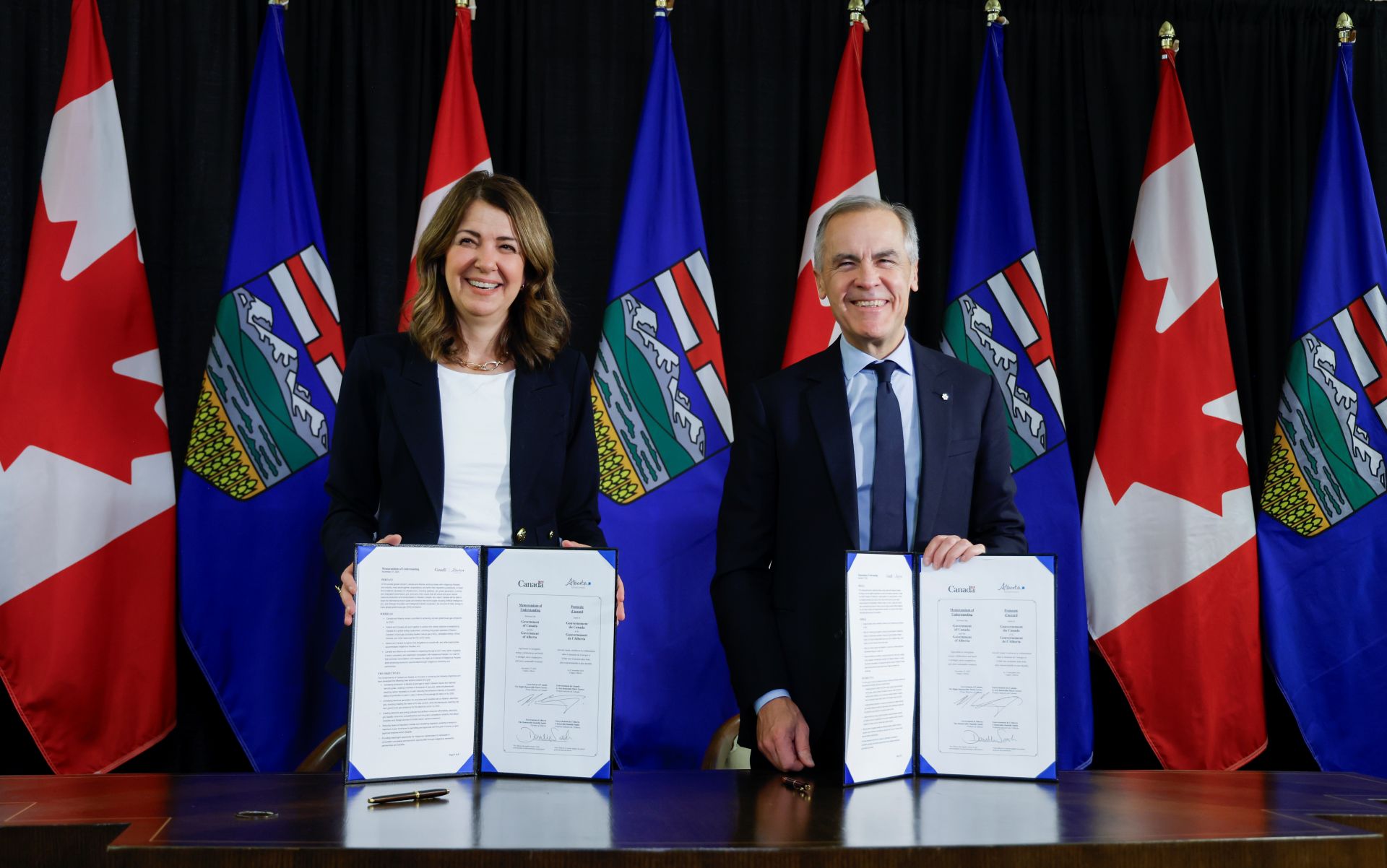
The agreement recently signed between Alberta and the federal government is an uneven bargain. Alberta gets support for a pipeline and the waiver of major climate policies in exchange for strengthening industrial carbon pricing, which is the key pillar of Canada’s emissions reduction efforts. But rather than strengthening financial incentives to reduce emissions, the agreement proposes an ineffective fix that will further derail efforts to reduce greenhouse gases.
Industrial carbon pricing is designed to give big emitters in Canada an incentive to reduce emissions while remaining internationally competitive. Without it, big emitters have few reasons to cut back, but when emissions are priced, curtailing them can be profitable.
Canada has priced industrial emissions jointly with provinces since 2019. Some provinces, including Alberta, introduced a price on emissions before that.
Carbon pricing aims to reduce emissions by requiring that big emitters obtain permits for each tonne of greenhouse gases released. These permits are in limited supply and come at a cost. This price is effectively the penalty companies pay for emissions and creates an incentive to reduce them.
Under Canada’s and Alberta’s industrial carbon pricing, emitting facilities receive some permits for free, which keeps average costs low and helps maintain competitiveness. They can purchase further permits to offset their emissions from the government at a fixed “headline price.”
They can also purchase permits on the open market either as “offsets” from smaller operations working to reduce emissions or from surplus permits from regulated facilities. Larger emitters can use these permits or offsets to help satisfy their regulatory obligations. All these things together are part and parcel of national and provincial industrial carbon pricing regimes.
Cheap credits weaken the incentive to cut emissions
These regimes are complex and are not working as well as they could. For example, Alberta has reduced the prices at which permits trade on the open market by introducing new ways for facilities to obtain them. Lowering the effective price gives firms less reason to invest in reducing emissions.
Rather than trading close to the posted headline price of $95 a tonne, permits in Alberta are available on the open market today at roughly $35 a tonne. This dramatically reduces the incentive to lower emissions. It’s likely these transactions are also occurring at prices well below the headline price in other provinces.
The agreement between Ottawa and Alberta is aimed, in part, at clarifying the rules for industrial carbon pricing in Canada and ensuring that permit costs more closely reflect the headline price. It does so by introducing a price floor that is supposed to maintain incentives to reduce emissions. This could have been a smart approach that significantly improved upon the status quo. Instead, it is on track to repeat the problems of the past with insufficiently clear rules.
Why the proposed price floor can be gamed
The price floor is to be implemented through a new regulation, imposed by Alberta, on the minimum transfer price — the amount that one party must charge another for a permit to emit greenhouse gases. This approach fails in two ways and will undermine carbon markets and emissions reduction.
First, most emission permits aren’t traded. This regulation only applies to those that are. Alberta (or another province) could potentially increase the number of emissions permits available to all regulated facilities — effectively weakening the carbon price across the board. This would allow for more emissions and would not necessarily show up in transaction prices, since the increase in permits would be applied uniformly.
Second, while the regulation proposes to limit transaction prices, governments are unlikely to be able to prevent firms from bundling emissions permits with other goods or services to circumvent that limit. This is often observed in markets with price controls. For example, in the case of rent controls, scholars have found that landlords may require other payments or concessions from tenants to make up for not being able to increase rental rates.
These payments can include money for grounds maintenance or “key money” to secure or retain a lease. Similarly, alcohol prices in Canadian provinces are tightly regulated, but vendors can circumvent the controls by bundling alcohol with products like glassware, thereby reducing the effective price.
Companies could also skirt the proposed limit on transaction prices through strategic mergers or acquisitions. Consider a big emitter wanting to buy emissions permits owned by a small, low-carbon installation, but at a cost much lower than the price floor. Rather than buying the permits subject to the minimum price, the big emitter could buy the whole low-carbon project — including the emissions permits. There would be no direct transfer of permits that would be subject to regulation.
A stronger floor would use a standing buyer
A better way to bring in a price floor — one which could not be gamed by market participants — would be for Alberta to purchase an unlimited number of emissions permits at the floor price. If all parties knew that Alberta was purchasing permits for, say, $60 per tonne of carbon dioxide, then no other permit seller would ever agree to sell below that price. This would guarantee a minimum price for credits. Alberta would also have an incentive to create fewer permits in the first place, because the province would be on the hook for buying any excess ones. That would prevent efforts to flood the permit market such as has happened in recent years.
Adding a standing offer to purchase is consistent with policy in place today in Alberta and in Canada. Both industrial carbon pricing programs currently have government standing offers to sell credits at $95 a tonne. This provides certainty to emitting firms that limits their exposure to potential price increases. It would also provide certainty for companies investing in emissions reduction, including through carbon capture and storage and renewable electricity generation.
A well-designed price floor is an appropriate reform that has the potential to put carbon pricing in Canada on a better footing, but it is critical to get the details right. The recent agreement lays a weak foundation that has the potential to be manipulated by future market participants in the same way that it is by today’s players. Effective permit markets should have a price floor based on a guaranteed offer to purchase credits, not a regulation that tries to stipulate the terms of individual transactions.