Canada’s new federal nature strategy, launched in March 2026, lays out how the country plans to meet its commitment under the 2022 Kunming-Montreal Global Biodiversity Framework: protecting 30 per cent of its lands and waters by 2030.
The federal government pledged to invest $3.8 billion to expand protected areas, including the creation of 10 new national parks and 10 new national marine conservation areas. The strategy also includes measures to advance Indigenous-led conservation work and strengthen the protection and recovery of species at risk, among other things.
But it has a glaring gap that will make the “30×30” target harder to reach: it has almost no plan for agricultural land.
Closing the gap will require adopting policies that recognize that farmland and farmers have a distinct role to play in Canada’s conservation efforts.
A farmer-led conservation model
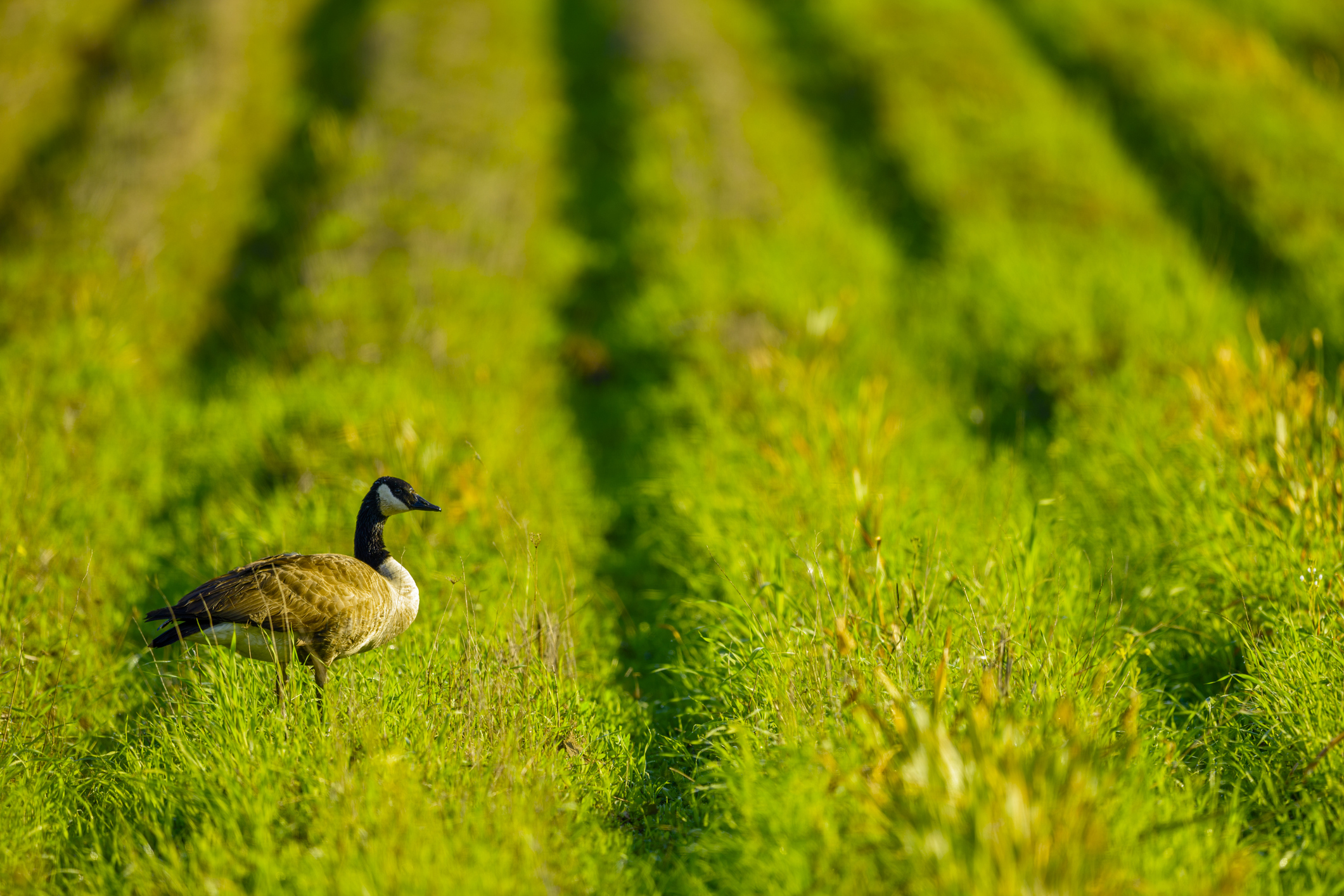
Farmland covers roughly 62 million hectares across Canada, only about 6.8 per cent of the country’s total land area, but home to the majority of its species at risk and more than 300 breeding bird species. It is also where biodiversity loss has been steepest, driven by intensification, wetland drainage and grassland conversion.
But the tools of the federal nature strategy were designed for land outside the farm gate. There is no operational framework for counting or supporting conservation on working farmland.
None of this is new. Researchers, conservation groups and farmers have been pointing out the disconnect for years. What has changed is that there is now a proven model, already operating at a national scale, that shows farmer-led conservation can deliver verified results by the end of the decade.
ALUS is that model. The organization operates across 41 communities in six Canadian provinces, and is governed at the community level by partnership advisory committees where farmers hold the majority of seats. These committees identify conservation opportunities, design projects suited to their landscapes and approve every initiative based on local knowledge combined with scientific expertise. The outcomes – including wetland restoration, grassland conservation, riparian buffer establishment and pollinator habitat creation – are independently verified and monitored over time.
More than 2,100 farmers and ranchers participate, and more than 23,000 hectares of conservation projects are under active management. A U.S. pilot is underway. Total investment exceeds $84 million, supported by a mix of public funding and private-sector partners including major Canadian corporations.
Community food systems are critical to Canada’s national security
Carl Poirier, a certified organic farmer in Quebec’s Outaouais region near Montebello*, built monarch habitat protection into his crop rotation to solve a problem no centralized program would have anticipated: how to control cabbage pests without killing butterfly caterpillars breeding on the same land.
On a mixed farm in southwestern Ontario, Chris Crump converted eroded, underperforming acres around his barn into wetlands and wildlife habitat. Bird species on the property went from 28 to more than 50.
Both farmers were doing conservation work before they joined ALUS. The program gave them structure, verification and a way to show other farmers it was worth doing.
What sets this apart from conventional agri-environmental programs is who makes the decisions. In most federal and provincial programs, farmers are applicants, responding to criteria set elsewhere. In ALUS, they are the governing body. That local ownership produces two things government programs have struggled to generate: farmer trust and sustained participation.
Making farmland a distinct pillar in conservation efforts
Closing the gap in Canada’s nature strategy requires three policy shifts. First, it should formally recognize conservation on working landscapes as a distinct pillar from protected areas and Indigenous-led conservation. This work should have its own implementation frameworks, performance metrics and funding streams. Farmland does not fit into existing protected-area categories and should not be forced into them.
Second, federal investment should prioritize governance models that give farmers decision-making authority. ALUS and other comparable international programs show that farmer-led governance drives higher participation rates and more durable environmental outcomes than centralized, compliance-based approaches. Programs under the Sustainable Canadian Agricultural Partnership framework should be judged on whether they empower local governance, not just whether they distribute payments.
Third, conservation outcomes on agricultural land should count toward Canada’s 30×30 target. The Kunming-Montreal Framework explicitly includes “other effective area-based conservation measures” (or OECMs) as a mechanism for recognizing conservation outside formal protected areas. Verified, monitored conservation on working land fits squarely within this provision. Canada should develop clear OECM criteria for agricultural conservation and start reporting these contributions.
Canada’s biodiversity commitments are the right commitments. Meeting them means recognizing that conservation doesn’t stop at the boundary of a national park. It extends into the fields, pastures and wetlands where farmers are already doing the work.
Farmers are not the obstacle to Canada’s conservation goals. Given the right framework, they are the most effective partners we have.
*Editor’s note: An earlier version of this article described Carl Poirier’s farm as being near Valleyfield, QC, when in fact it is part of the Outaouais region and is closer to Montebello, QC.