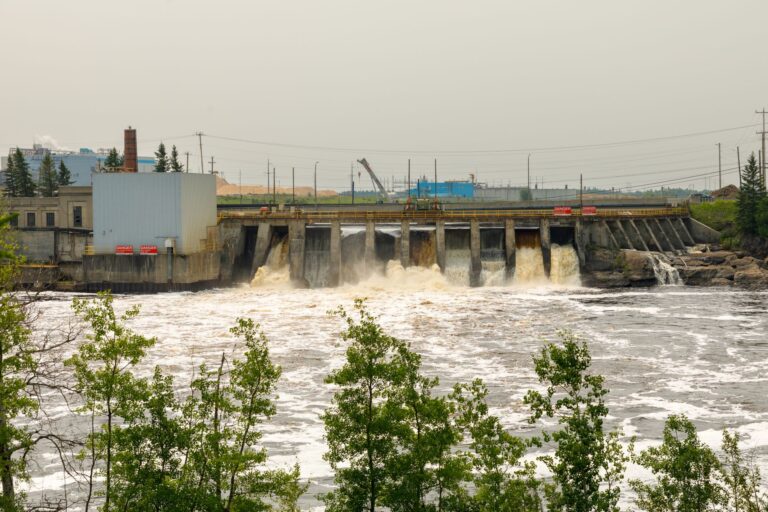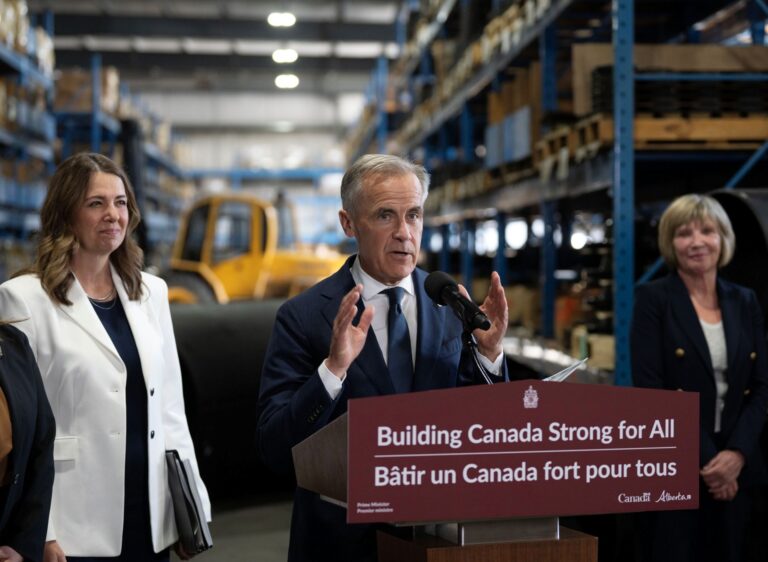
It took more than a century to build the electricity network we have today in Canada – from the first hydroelectric projects in the late 1800s to today’s provincial grids. Ottawa’s new national electricity strategy commits to doubling Canada’s power supply by 2050.
The scale of this ambition is staggering.
Federal analysis suggests that modernizing and doubling Canada’s electricity output by 2050 could require investments of up to $1 trillion. If successful, this will be one of the largest, most complex infrastructure achievements in this country’s history. But it requires an unprecedented mobilization of capital, labour and political will across all levels of government.
A policy Christmas
We have rarely seen a policy Christmas quite like this. The federal government’s strategy is a package overflowing with initiatives and ambitious targets. Within a few dozen pages, the document lays out an aggressive, all‑hands‑on‑deck approach to rewiring the nation’s electricity system.
The strategy touches almost every conventional macroeconomic lever available to policymakers. Its core pillars emphasize large‑scale infrastructure financing, expanding interprovincial transmission links, building a much larger skilled workforce and increasing domestic clean‑energy manufacturing. It also leans on broad home retrofit programs and on revised regulations that allow a continued role for natural-gas generation under certain conditions. The latter is a change that has sparked debate about affordability, emissions and stranded assets.
A crucial piece of the puzzle has been overlooked in allocating billions of dollars for massive generation projects and industrial supply chains. The strategy rightly focuses on provincial governments, utilities and industry. But it pays comparatively little attention to the role that communities, municipalities, co-operatives and citizens can play in shaping and accelerating the energy transition.
The community blind spot
The country’s electricity network was largely built around centralized generation and one-way flows of power. This model helped deliver reliable and affordable electricity for decades. But the transition now underway creates an opportunity to rethink the relationship between communities and their power supply.
To its credit, the national electricity strategy recognizes the importance of affordability, Indigenous partnerships, workforce development and public engagement. But communities are still largely positioned as recipients of the transition rather than active participants in shaping and benefiting from it.
A national grid should accelerate – not stifle – the energy transition
Communities take many shapes: Indigenous nations striving for energy sovereignty, small and rural municipalities managing aging infrastructure, energy co-operatives pooling local resources and neighbourhood associations fighting for energy equity. Communities are the physical and social landscapes where this trillion-dollar transition will take place.
They matter because they are the ultimate arbiters of social licence. You cannot build millions of kilometres of new transmission lines or target sites for renewable energy projects without communities as genuine partners. When communities are treated as an afterthought, infrastructure projects face fierce opposition, delays and cost overruns.
Conversely, when communities are empowered, they deliver remarkable, tangible results. Some examples include:
- Indigenous energy sovereignty: In the Yukon, the Vuntut Gwitchin First Nation’s Old Crow solar project installed 900 kilowatts of solar panels and battery storage. The isolated community 800 kilometres north of Whitehorse has dramatically reduced its reliance on heavily polluting diesel and has generated revenue to reinvest into the community.
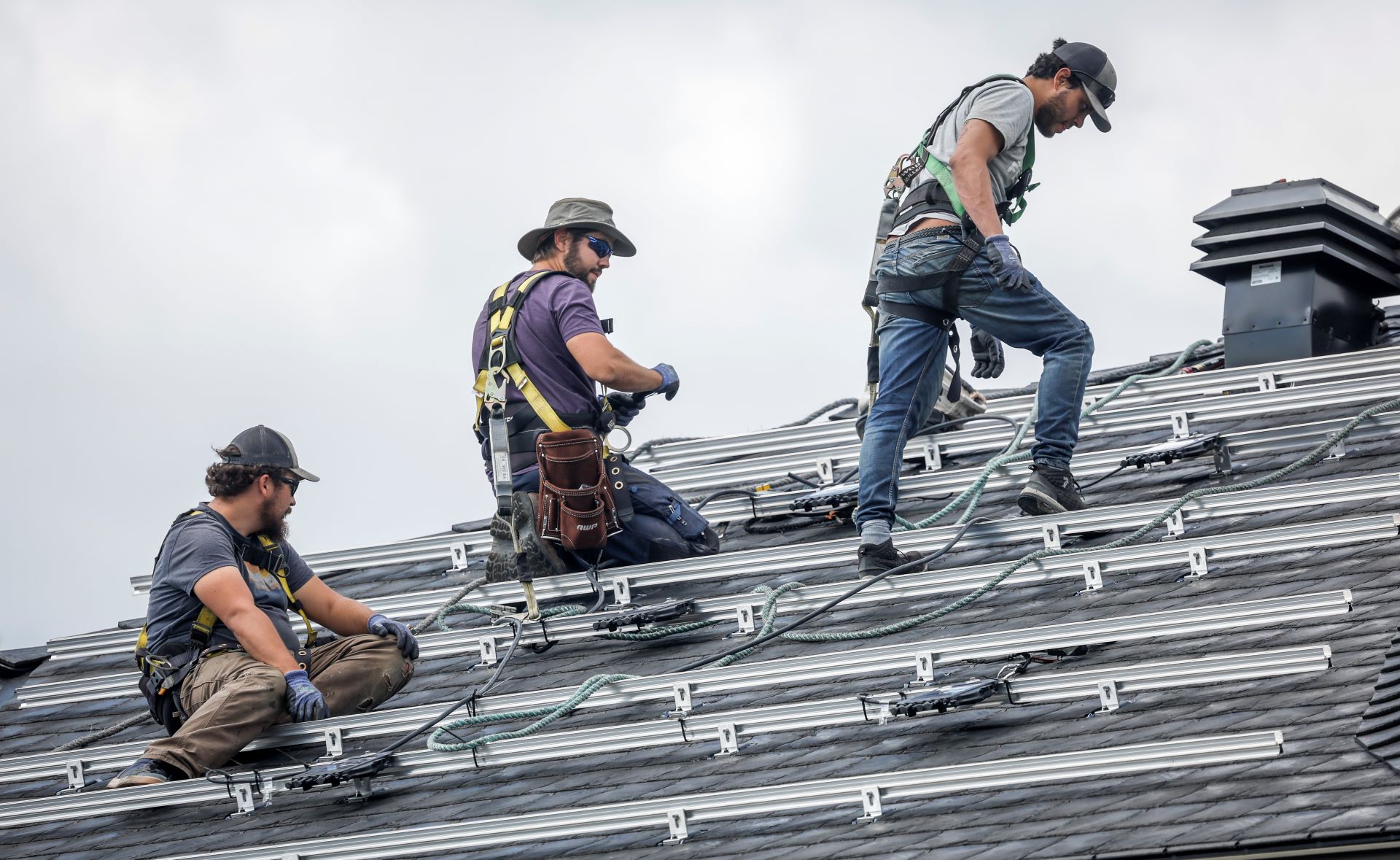
- Small municipality leadership: In Alberta, the town of Raymond (population roughly 4,000) became the province’s first municipality to achieve net-zero electricity use for municipal operations. Facing fluctuating energy prices, the town installed solar arrays on municipal buildings, which offset 100 per cent of their operational electricity use and shield taxpayers from volatile utility bills.
- Local investment through energy co-ops: Grassroots organizations like the Bow Valley Green Energy Cooperative in Alberta allow citizens to pool capital and invest directly in local renewable projects, such as solar installations on community churches. This keeps dividend profits within a community’s economy
Integrating community-led energy initiatives ensures that the economic benefits of the energy transition are retained locally rather than being taken over by distant actors.
How to empower communities?
To successfully double our grid capacity by 2050 we need a framework that includes local co-owners and co-architects. The national electricity strategy must make community ownership and self-governance non‑negotiable pillars of the energy transition on par with infrastructure and investment.
This can be done in several ways.
First, governments should build upon existing commitments to Indigenous-led projects aiming for energy sovereignty. Indigenous communities are estimated to participate in nearly one-fifth of Canada’s electricity-generating infrastructure. Future federally supported projects should include ways for Indigenous ownership and long-term revenue sharing.
Second, Canada should dedicate funding to support community energy organizations and co-operatives. Targeted support could help communities own and operate solar projects, battery storage and microgrids. A community and renewable-energy program in Scotland shows what this can look like. It provides grants and technical support to help community groups develop locally owned renewable projects and reduce energy costs in community buildings.
But funding is only part of the challenge. Research on community energy ecosystems internationally shows that financial incentives only work when the underlying regulatory environment includes co-operative ownership, fair grid access and market rules that don’t disadvantage participants.
Third, municipalities need greater technical and financial capacity to fully meet an energy transition. This is not simply a question of hiring more staff. Community-led projects face a structural market disadvantage. Large corporate developers can gather substantial financial resources, specialized expertise and dedicated teams to move quickly through regulatory and technical hurdles. But communities need additional time to build local support and raise capital for projects.
Federal, provincial and Indigenous-focused programs point in the right direction. These include the Green Municipal Fund, British Columbia’s Indigenous clean energy funds and the Northern REACHE program for rural and remote communities. But these initiatives remain fragmented, competitive and oversubscribed.
Finally, the federal government should work with provinces, regulators, utilities and communities to identify and remove barriers to community-led energy production, distribution and utilization. While electricity regulation remains primarily a provincial responsibility, Ottawa could support pilot projects, share best practices and provide federal funding for innovations such as community solar gardens, virtual net-metering, local energy-sharing and other solutions that enhance resilience and local control.
The national electricity strategy is a historic opportunity – but opportunity alone is not enough. Doubling the grid by 2050 is achievable, but only if communities are treated as co‑builders, not just customers. Ottawa has laid an ambitious foundation. Now it must make room for the people who will live with the infrastructure, markets, and governance it sets in motion.
The authors would like to acknowledge the contributions of Curran Crawford and Maya Willard-Stepan.