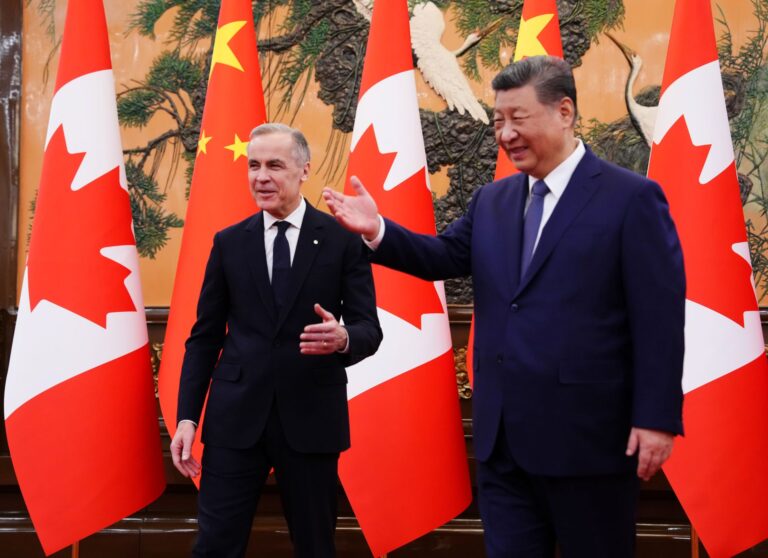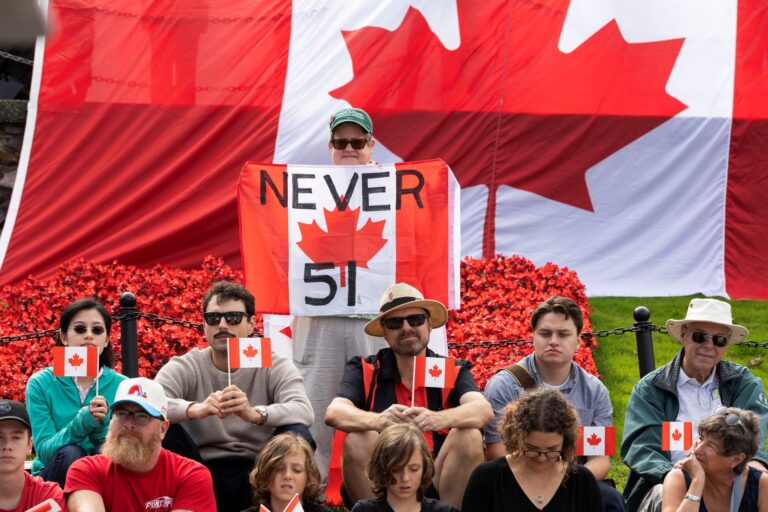
As it navigates an increasingly dangerous and capricious world, Canada must deal with unpredictable actors including great powers such as China and Russia and even the United States, with its constantly shifting attitude towards allies and adversaries alike.
In this landscape, it is vital that our federal government’s senior decision-makers have a sophisticated, comprehensive understanding of all state and non-state threats facing the country. Protecting Canada’s strategic autonomy requires a stronger ability to produce independent intelligence assessments of international political, military, economic and technological developments, as well as of threats to domestic security.
For too long, Canada has been able to downplay its need for a robust intelligence assessment capacity by relying too heavily on our allies’ interpretations of international developments. One consequence is that Canada’s intelligence assessment machinery has evolved in an ad hoc fashion. We need a clear vision for how best to structure this essential capability.
The government’s new national security framework announced this fall, combined with its 2026 budget commitments, provides an opportunity to address this situation. In The Plan for a Stronger Canada, Ottawa commits to improving intelligence capabilities across the board.
But the federal budget’s focus on the Canadian Security Intelligence Service (CSIS) only addresses part of the problem. Strengthening the collection of intelligence is important but will only be effective if the government improves its capacity to assess and understand that information. There is little point in collecting secret intelligence, at considerable expense, if we cannot analyse its credibility and assess its implications.
We can only hope that the government’s upcoming intelligence strategy captures this essential point.
How Canada’s intelligence assessment system evolved
In Ottawa, foreign intelligence assessment has typically taken a back seat to intelligence collection. After 1945, senior officials seeking to end Canada’s dependence on London and Washington for strategic intelligence assessments proposed creating a central assessment agency of analysts who could access the government’s entire range of information pertaining to international issues. This proposal was blocked by federal departments protecting their own turf.
One result was that Canada’s fragmented intelligence assessment capacity evolved at a snail’s pace, with no clear central direction. In subsequent decades, decisions on intelligence assessment capabilities were taken by individual departments more focused on their own priorities than on national considerations. The Department of External Affairs, for example, created its own internal political intelligence assessment unit in the 1970s, only to abolish it in 1993 owing to budget pressures.
The Privy Council Office (PCO) provides policy support for the prime minister and all cabinet portfolios, but has had limited success in bringing coherence to this loose confederation of departmental intelligence units. In the 1980s, an attempt was made to establish a modest central assessment unit, but it foundered on cost issues and — once again — opposition from other departments.
In 1993, rushing to respond when External Affairs unilaterally eliminated its intelligence assessment branch, PCO created a small unit — the Intelligence Assessment Secretariat (IAS) — to carry out political and economic intelligence analysis. However, in recent years PCO has substantially reduced the number of IAS analysts and redirected resources elsewhere. Global Affairs Canada (the successor to External Affairs) re-created its political intelligence unit but then cut the number of analysts due to government-wide staff reductions. Meanwhile, CSIS also abolished its intelligence assessment bureau.
The value of intelligence assessment
While departmental policy analyses focus on specific policies, a distinctive characteristic of intelligence assessment is that it strives to be policy neutral — providing objective, non-partisan intelligence analyses free of political, departmental or other bias, giving decision-makers a clear understanding of information that is crucial to the national interest.
Intelligence assessment integrates large quantities of information from a wide variety of sources, both classified and unclassified, and helps senior leaders see individual pieces of information in a wider context. The judgment of assessment experts is used to reach conclusions on how a situation is likely to develop and its implications for Canada.
Strong assessment capabilities also play an important role in providing early warning of developments that could have a major impact on Canadian interests. The expertise developed by intelligence analysts is particularly crucial in crisis situations.
Canadian assessment units can also provide an independent evaluation of our allies’ interpretations of international developments. In 2002, the IAS challenged U.S. claims that Saddam Hussein was rebuilding a weapons of mass destruction program. This judgment by Canadian analysts informed Ottawa’s decision not to participate in the American-led invasion of Iraq (which ultimately confirmed that there were no weapons of mass destruction).
Without an effective and independent assessment capability, Canada would largely have had to accept at face value the conclusions of our allies.
A quarter century later, with today’s U.S. intelligence community heavily politicized under the Trump administration, it is more important than ever that Canada can make its own sovereign evaluations of critical international issues.
Needed: A new strategy for foreign intelligence assessment
Providing a clear vision for national-level foreign intelligence assessment requires leadership at the top. However, recent changes in PCO — which appear to have effectively discarded the position of national security and intelligence adviser to the prime minister — have left a serious leadership gap for Ottawa’s assessment community.
In preparing any new intelligence strategy, the government must determine the most effective structure for providing senior leaders with independent intelligence assessments of international political, security and economic developments.
The practice of leaving such decisions up to individual departments concerned with their own interests has not produced an effective, coherent national assessment capacity.
Moving forward, one option that should be considered as part of any Canadian intelligence strategy is the creation of a stand-alone assessment organization.
A successful example of such an approach in a Westminster model of government already exists. Australia’s Office of National Intelligence, an independent assessment agency reporting directly to the prime minister, has established a strong reputation for the quality of its analysis.
A Canadian equivalent should have a similar legislative basis to provide stability. And to maintain the independence of its analysis, it should not become part of any future Canadian foreign espionage service. Reporting to the prime minister and staffed by regional and issue experts with unfettered access to all information available to the government, such an agency would establish the critical mass of analytical expertise necessary to assess international trends and developments.
Carney’s deputy minister shuffle raises national security questions
Three pillars for a stronger Canadian national security strategy
Such a centralized body would efficiently serve policymakers across government, and its independence from other agencies would reduce departmental policy bias in its assessments. High-quality, independent Canadian assessments would guide decision-makers in managing key foreign policy and security issues.
A backup option might be creating a body similar to the U.S. director of national intelligence, housed within PCO and reporting to the prime minister. A robust assessment team in this structure would likewise be well-placed to provide policy-neutral assessments to the government as a whole.
Living beside the United States
No country in the world has a greater need than Canada to understand developments in the United States, given our geography and close security and economic relationship. An expansion of policy-neutral intelligence assessment could complement departmental policy analysis related to Canada-U.S. relations. (The Canadian intelligence community already conducts such assessments of the U.S. This is based on the clear understanding that analyzing Washington’s policies and actions is fundamentally different from carrying out covert intelligence collection, and recognizes that the U.S. conducts similar assessments of Canada.)
Canada should be the global leader in the study of the American behemoth. Achieving this requires being able to prepare elite-calibre, policy-neutral analysis of broader U.S. issues, which is characteristic of the intelligence assessment community. This activity could be nurtured within a future Canadian foreign assessment agency or placed elsewhere in government. No matter where it is located, such a body must have the independence to prepare policy-neutral assessments drawing on the fullest range of sources available to Canada.
With its new security framework, Ottawa has an opportunity to establish a vigorous sovereign intelligence capability within Canada. But to do so, it must approach the core business of intelligence in a balanced manner: Collection and assessment are two sides of the same coin. One without the other serves no purpose.
The time has come to give intelligence assessment the attention it deserves.