The recent elections in the United States resulted in a decisive victory for Democrats, who regained control of both the House and the Senate, and handed the Republicans one of the worst midterm defeats in decades. What would appear to be a vote of non-confidence in Donald Trump is likely to hinder many of his efforts for the rest of his term. And the fallout of Trump’s presidency won’t end with him. Whoever becomes the next president will inherit an office marked by significantly eroded democratic institutions and diminished legitimacy.
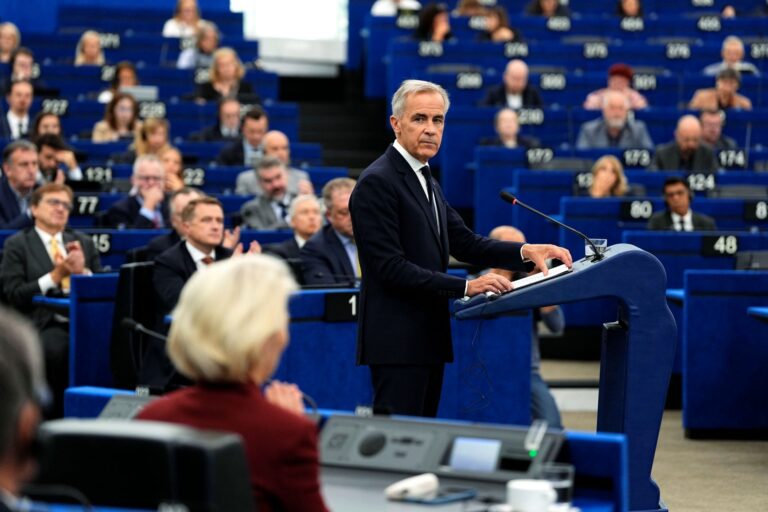
Prime Minister Mark Carney, speaking at the World Economic Forum in Davos in January, warned leaders of a “rupture” in the global rules-based order that followed the end of the Cold War. That rupture, precipitated by the second Trump presidency, has provoked democratic backsliding in the U.S., the country’s withdrawal from dozens of international organizations and its tariffs on more than 80 countries and economies, including Canada. Despite the Democratic victory in the midterms, political polarization caused by the president’s actions is likely to continue, and there is no guarantee that the next Republican candidate will behave any more rationally than Trump.
The rupture will be more lasting than we would like. Even if Congress is able to roll back tariffs on Canadian products, the trust and goodwill between Canada and the U.S. will remain badly damaged, if not irreparably broken. A Pew Research Center poll last spring found that one-third of Canadians surveyed viewed the U.S. favourably, while 44 per cent viewed China more favourably than they did the U.S.
Traditionally, Canada has relied heavily on the U.S. for both its security and economic activity. The U.S. has been Canada’s main supplier of military equipment, as well as the single largest destination for Canadian goods, accounting for 71.7 per cent of our exports in 2025 (down over four per cent since Trump retook the White House). Being able to lean on a world superpower for security and market access is a luxury that few countries have. That made Canada lucky — but also complacent. Merging two distinct partnerships into one relationship amounted to putting all our eggs in one basket, an inherently risky foreign policy and trade strategy, and the opposite of diversification. The president’s actions, however, have jolted Canada out of its complacency and put us on a path to diversification — no matter whether a Democrat or a Republican succeeds Trump.
Separate trade from security
Pivoting away from the U.S. does not mean Canada has to run toward China. It is not one or the other. Diversification must separate our defence partnerships from economic ones.
Canada has rightly looked to the European Union and to democracies in the Indo-Pacific for closer security partnerships. But these should be grounded in shared political values. For example, we should not be procuring military equipment from non-democracies, no matter how expedient it may be. We have made headway in forging closer ties with the EU, including defence, since Carney took office, even though it is not yet entirely clear what that relationship will look like or be called.
On the economic front, China is a rising power and a market we can ill afford to ignore. The country’s diplomacy is transactional and interest-driven rather than values-based. That pragmatism could allow Canada to move away from its over-reliance on the U.S. Even though China’s growth has slowed, it is still the world’s second-largest economy, one of its largest consumer markets and home to a rapidly growing high-tech sector. Energy, agri-food, and metal ores and minerals are the sectors in which Canadian exporters have made inroads into the Chinese market.
What the past nine years of CAN-EU trade show about diversification
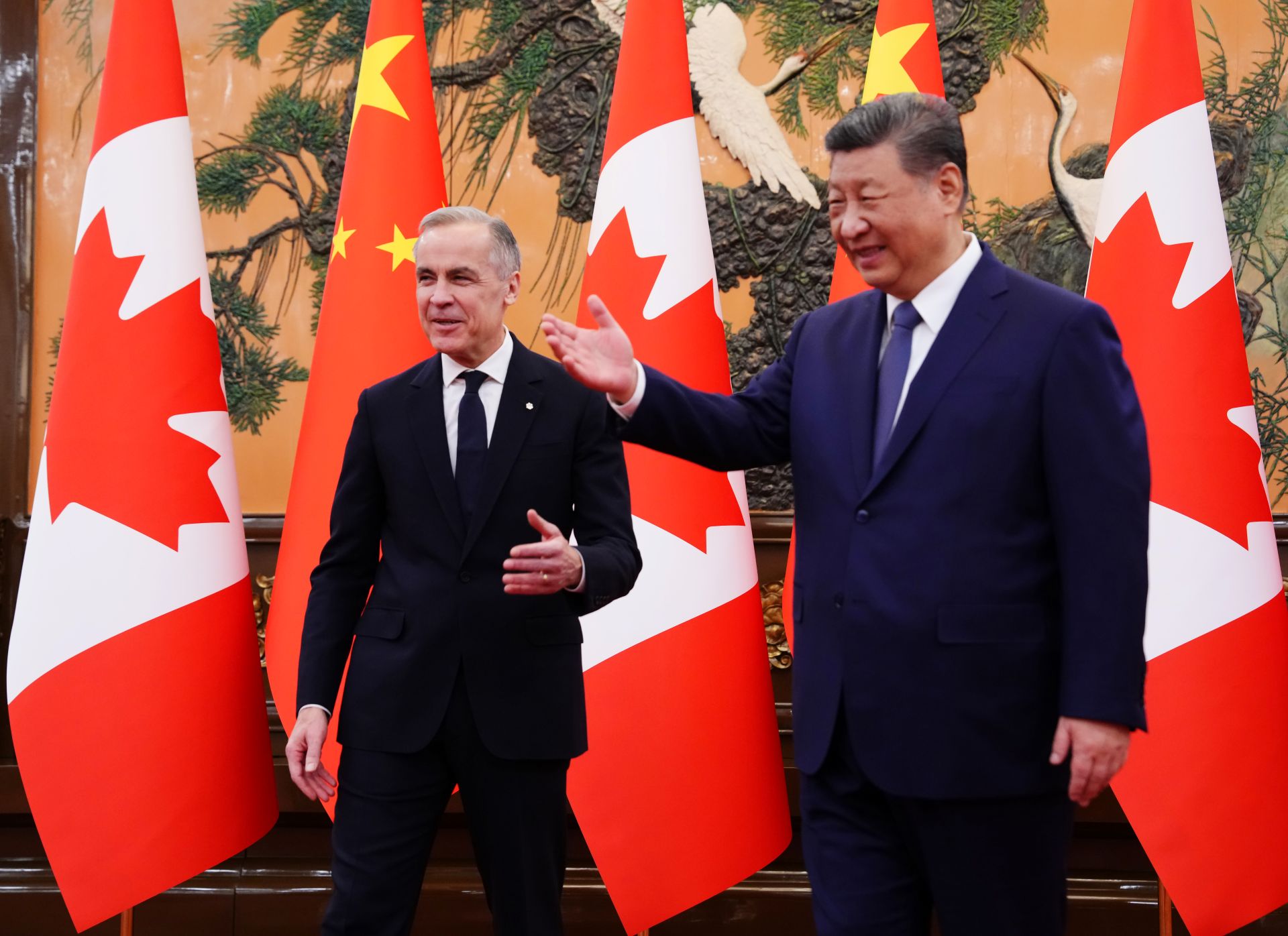
Carney established a “strategic partnership” with Beijing during a trip to China in January and is attending the Asia-Pacific Economic Cooperation (APEC) leaders’ meeting there this week, where he is expected to meet with Chinese President Xi Jinping. The relationship between the two countries grew decidedly icy in 2018 following Canada’s arrest of Huawei CFO Meng Wanzhou and Beijing’s subsequent detention of Canadian citizens Michael Kovrik and Michael Spavor. But relations appear to be thawing since Carney’s visit. Exports to China grew by almost 40 per cent to $33.5 billion in the first nine months of 2026. However, this should be seen as economic diversification away from the U.S. rather than an all-out embrace of China.
Recent history shows that trade with China can change quickly. Canadian canola seed, pork and beef exports faced restrictions due to alleged sanitary problems in 2019 during the diplomatic dispute over Meng and “the two Michaels.” And in March 2025, canola oil and certain pork products were targeted following Canadian surtaxes on Chinese electric vehicles. These examples underscore that our diversification strategy should start — but not end — with China. We shouldn’t place all our eggs in China’s basket but rather spread them across many countries to reduce dependence on any single market.
Guarding against over-reliance
What does reducing over-reliance look like? Industries should set, monitor and enforce a threshold for the share of exports going to any single market beyond which producers would become vulnerable. While fluctuations in export sales are inevitable, concentrating sales in one market to the point that losing it could cripple an industry is unwise. This is particularly true for Canadian agri-food exports, which, as noted above, have been targets of Chinese trade coercion in the past.
Another way to reduce over-reliance is to diversify supply chains. Spreading the sourcing, processing and sales of raw materials across countries means no single shock can disrupt them all.
Finally, Carney’s idea of what he calls variable geometry — that is, working with other middle powers on an issue-by-issue basis — offers an alternative to leaning on the U.S. or China for security or economic partnerships. And by working with countries such as Australia, Japan, India and some European nations, Canada could lead discussions and initiatives on everything from arbitrary detentions to artificial intelligence to critical minerals. The aim is to offer governments genuine alternatives to working with superpowers that have proven to be unreliable political and trading partners. The existential economic crisis brought on by the second Trump presidency may allow Canada to shine and punch above its weight — if we seize the opportunity.
Editor’s note: This article draws on the author’s comments at the Stanfield Conversation 2026 in Halifax.