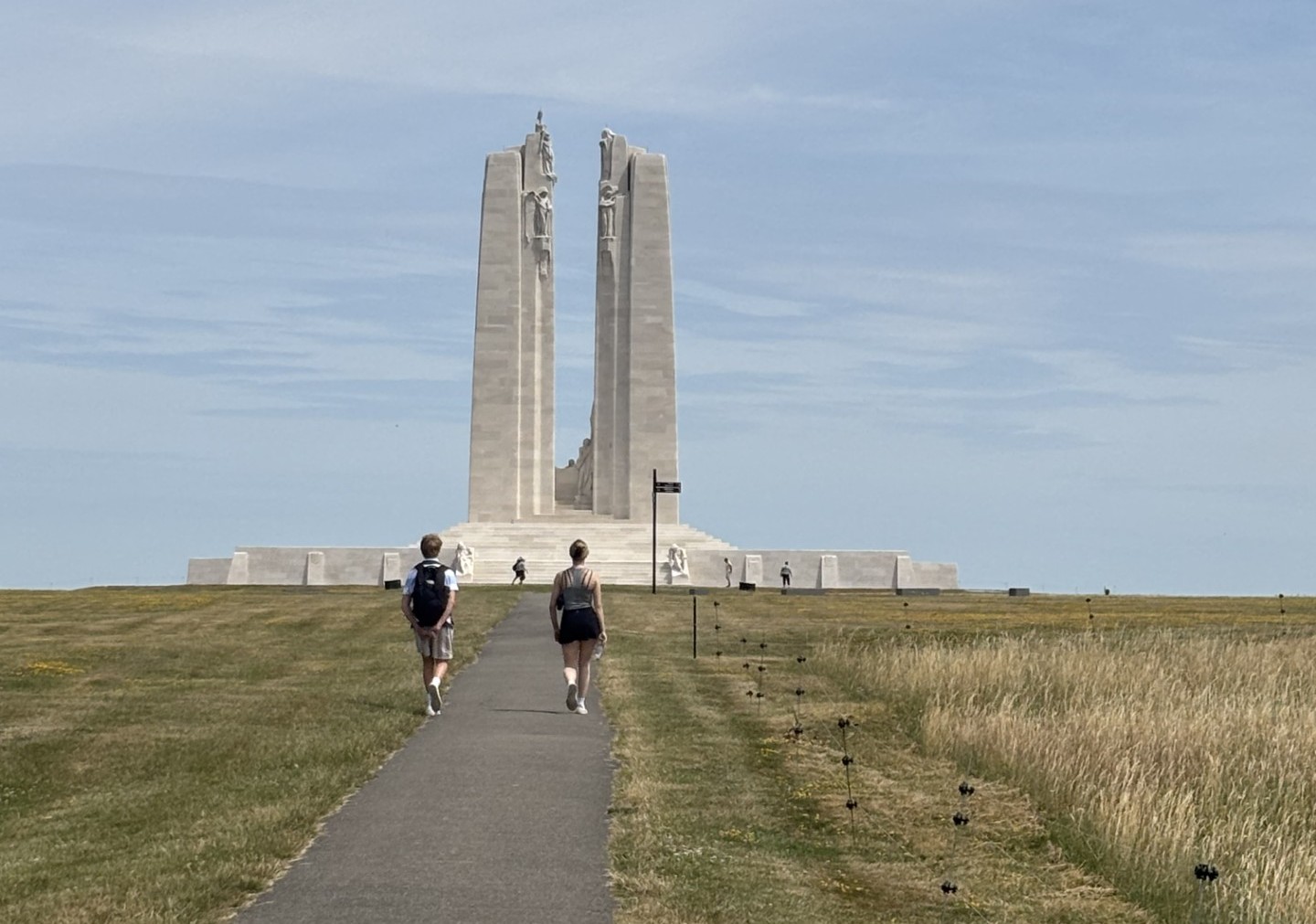
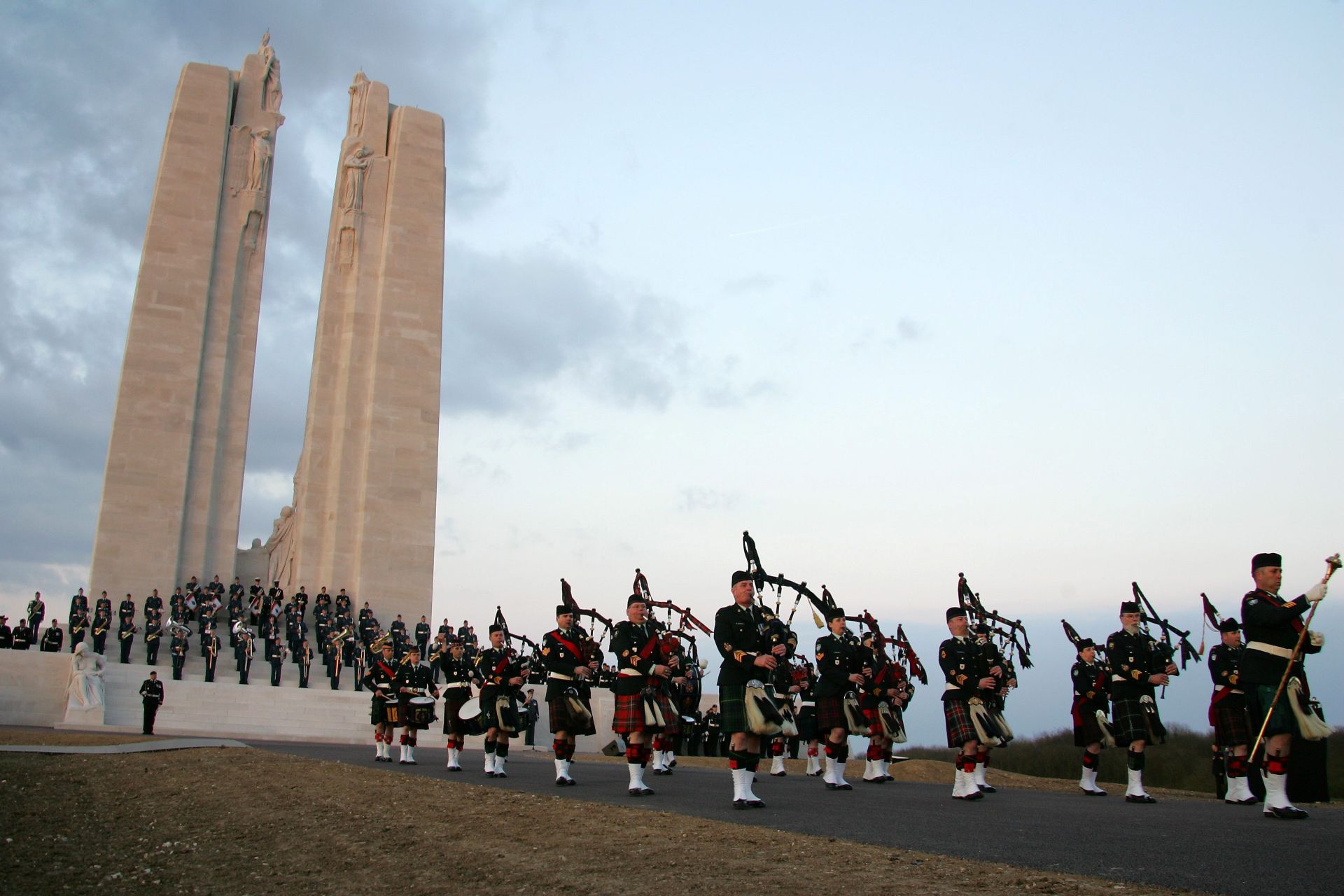
On a ridge in northern France, two great white pillars rise nearly 30 metres toward the sky. Visible for kilometres across a former First World War battlefield, the Canadian National Vimy Memorial is one of Canada’s defining symbols, an expression of sacrifice, nationhood and remembrance.
Each year, nearly a million people make the pilgrimage to Vimy Ridge. The memorial’s image is on our $20 bill. Schoolchildren learn its story. Historians describe it as one of the world’s finest war memorials.
On a visit last summer, I saw its power first-hand as a group of rowdy British teenagers fell into a respectful silence upon approaching the monument.
Yet few Canadians could name the person who created it.
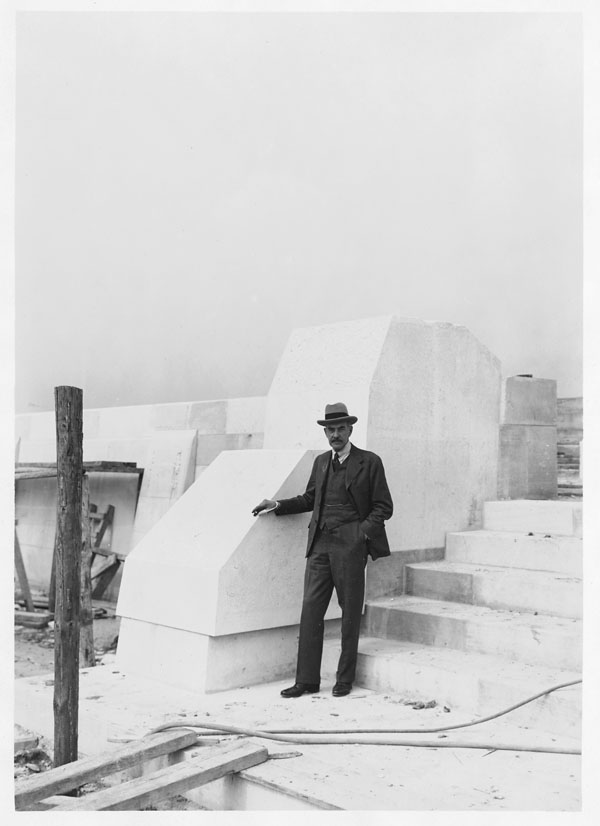
Walter Seymour Allward devoted 15 years of his life to the monument. He conceived the memorial, studied and crossed the shattered landscape, repeatedly refined his design, and battled engineering constraints and meddlesome bureaucrats. He oversaw an extraordinarily complex undertaking employing hundreds of workers and artisans.
Jane Urquhart introduced the largely forgotten Allward to a new generation of Canadians in her 2001 novel The Stone Carvers. That same year, the Historic Sites and Monuments Board of Canada recommended that he be recognized as a person of national historic significance. The designation followed in 2002. The renewed attention was fleeting, and Allward once again faded from public consciousness.
Canada has invested generations in preserving Allward’s greatest creation. We need to show the same commitment to preserving the legacy of its creator.
Defining Canada’s cultural identity
Allward was one of Canada’s foremost sculptors when his design was selected in 1921 over 160 other submissions. He had completed the South African War Memorial on Toronto’s University Avenue (1911), the Alexander Graham Bell Memorial in Brantford (1917), the Baldwin-Lafontaine Monument on Parliament Hill (1914), numerous statues at Queen’s Park, as well as the conception and statues for the King Edward VII Memorial, a project that had been shelved for financial reasons at the outset of the First World War.
Allward is among a small group of artists who helped define Canada’s cultural identity. Quebec’s Louis-Philippe Hébert created many of the statues that define Parliament Hill and public squares. Ernest Cormier designed landmarks such as the Université de Montréal campus and the Supreme Court of Canada. The Group of Seven transformed the way Canadians saw their own landscape.
There is a strong case to be made that Allward’s achievement surpasses them all.
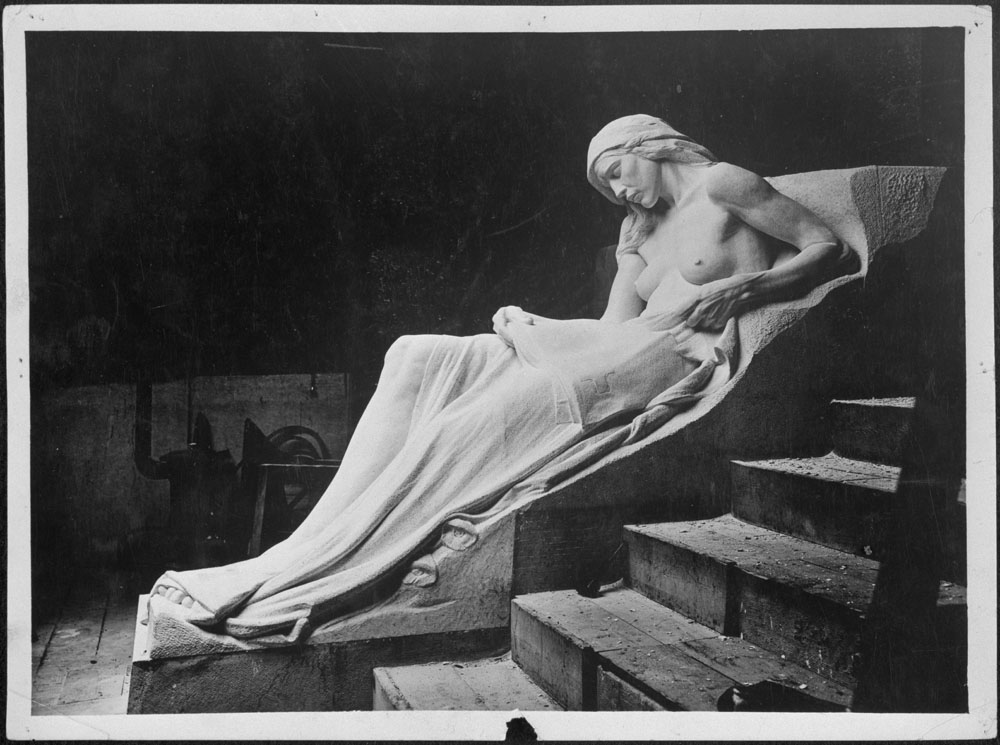
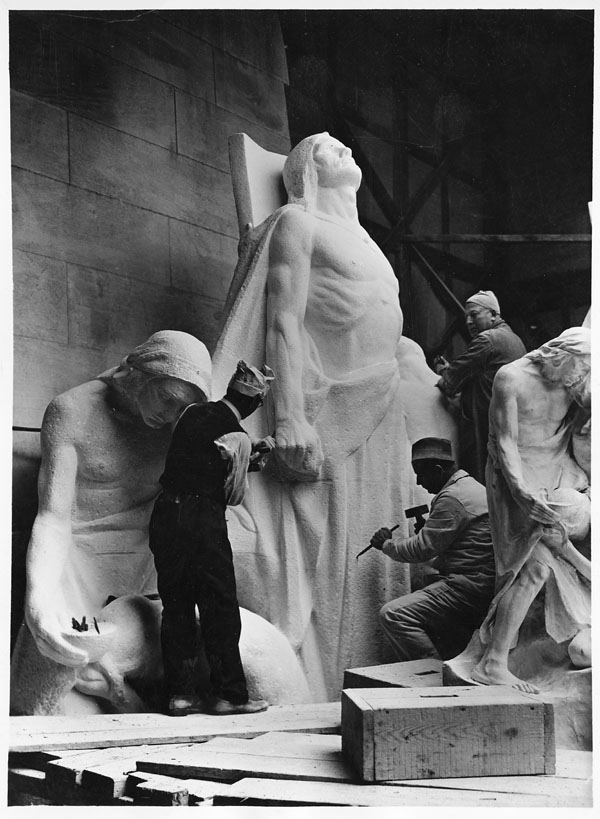
Allward was deeply influenced by a 1903 trip to France, where he saw Auguste Rodin’s sculptures. Though he never formally studied under Rodin, he considered himself a disciple. Rodin believed sculpture should convey feeling rather than merely describe form. This philosophy was completely carried out at Vimy. The memorial’s figures are not portraits or historical actors, but embodiments of its eight core values: Peace, Justice, Honour, Hope, Charity, Faith, Truth and Knowledge.
The Vimy story is also about artistic obsession, which was described so well in this 2007 CBC Peter Mansbridge feature.
Vimy was not a straightforward commission, but a prolonged struggle by Allward to realize his vision. He moved his family to London and traveled repeatedly to France to oversee the work. Every figure was carefully composed. Every symbolic element carried meaning. Every surface mattered.
His pursuit for perfection became a source of conflict. Costs rose. Timelines slipped. Officials grew impatient. At one point the exasperated then-prime minister R.B. Bennett decreed the monument be finalized within two years. Allward would blow past that deadline by a further three.
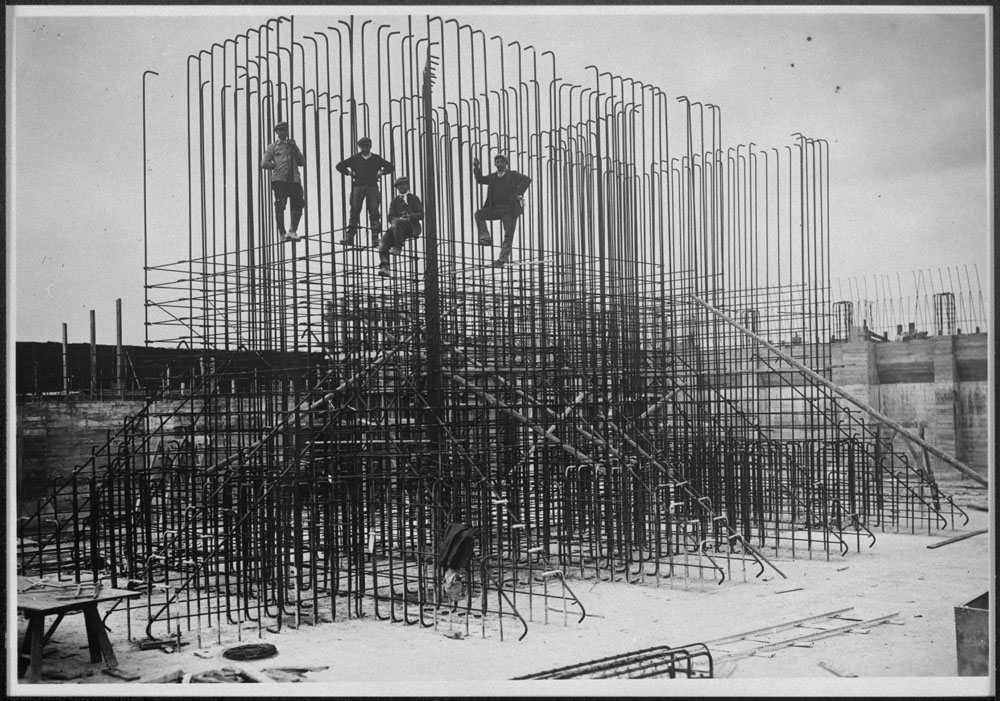
His role in the project was put at risk. Finding the right stone became an obsession. After an almost two-year search across Europe, Allward finally selected luminous white limestone from an ancient Roman quarry in Croatia, reopened in 1925 to supply the project.
He would not compromise because the memorial was to last for centuries. Allward’s convictions nearly cost him the project. It ultimately secured its legacy.
Honouring the fallen
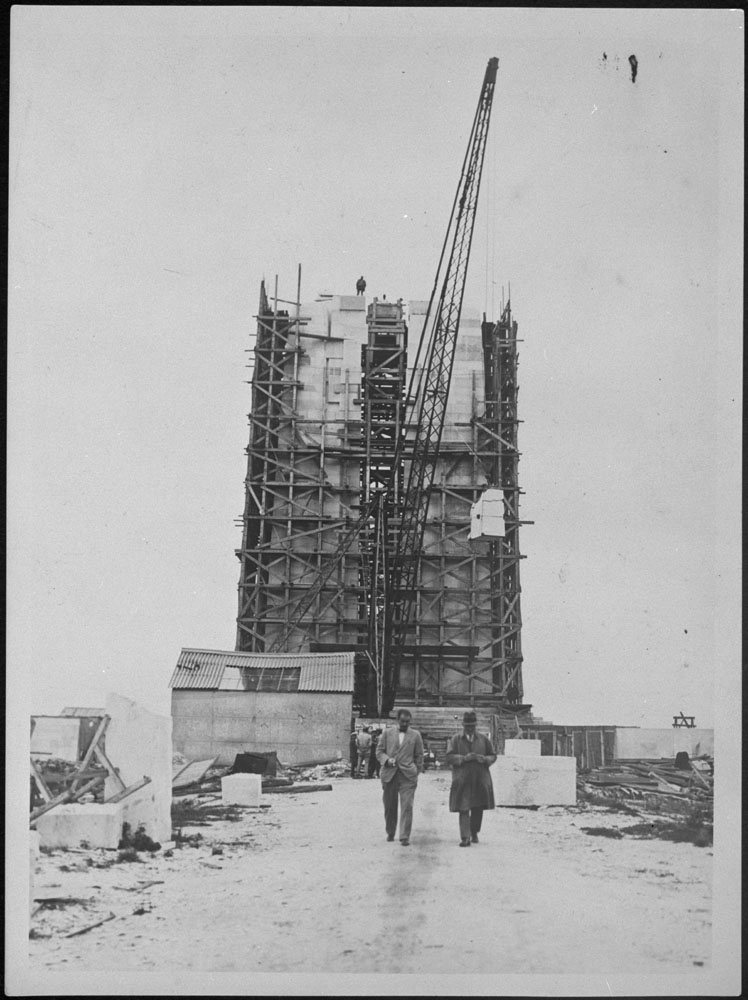
By 1935, Allward had transformed more than 6,000 tonnes of stone into the memorial. Across its walls, in simple alphabetical order, were carved the names of 11,285 Canadians who died in France with no known grave. Allward’s insistence on alphabetical order, without distinction of rank, was not new. He had championed the same principle in his earlier South African War Memorial in Toronto and the war memorials in Stratford and Peterborough, Ont.
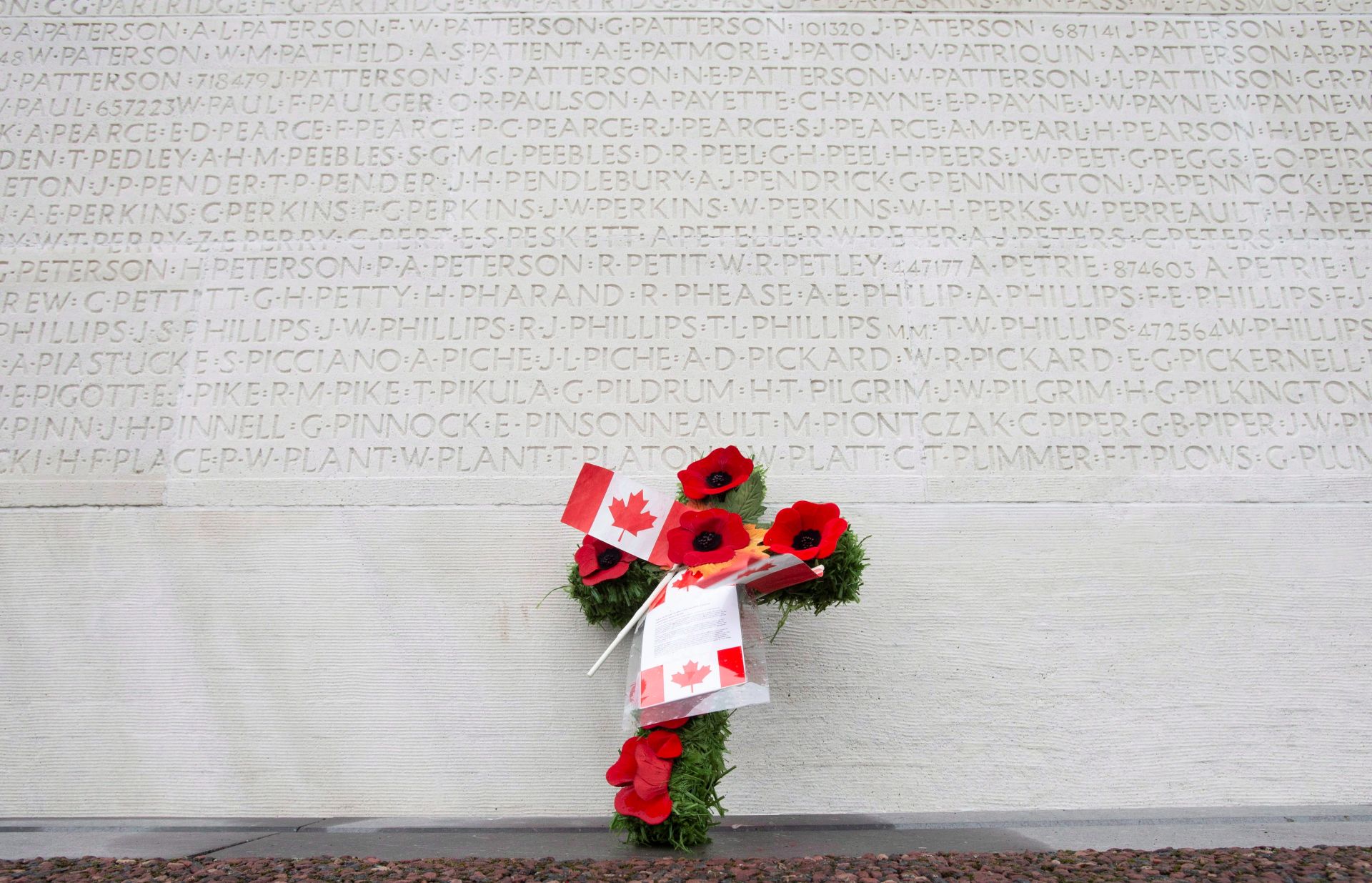
In contrast, on Britain’s Thiepval Memorial on the Somme, the missing were commemorated by regiment and rank. For Allward, every life lost deserved equal recognition, regardless of military standing.
The principle of honouring the fallen without distinction of rank is now commonplace, reflected in memorials such as Washington’s Vietnam Veterans Memorial. Names were arranged chronologically rather than alphabetically, but every sacrifice was accorded equal dignity.
Which raises a question: shouldn’t Canada do more to honour Allward?
Neglect is not only symbolic. Two Allward sculptures Veritas and Justicia first intended for the cancelled King Edward VII memorial now stand before the Supreme Court of Canada. They spent more than half a century forgotten in storage before finally being installed in 1969. One of the country’s greatest sculptors created national works that the nation itself failed to display.
Across Canada, his monuments are present but poorly interpreted. Cities that host his work often make little effort to tell his story.
Plaster casts made for Vimy sit almost as an afterthought in an annex next to the Canadian War Museum’s “tank” room. His preparatory studies and other artwork remain largely out of public view.
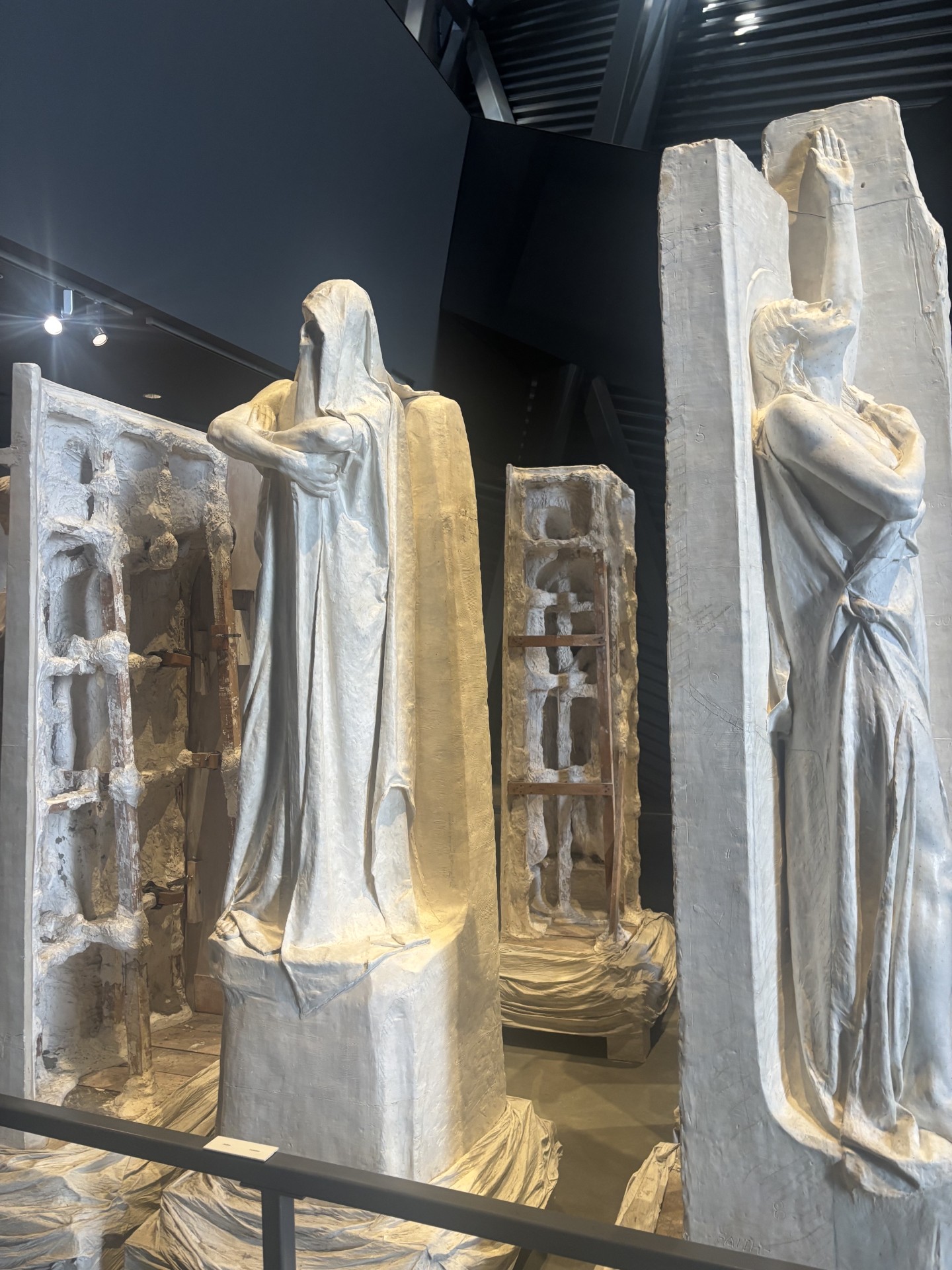
Allward’s work is scattered across Canada. His official papers are held at Queen’s University, and the National Gallery and War Museum have some of his artwork. Philip Dombowsky’s delightful Walter S. Allward: Life & Workpublished in 2021 (a full 66 years after Allward’s death) is the only major scholarly monograph devoted to Allward. Dombowsky’s work and expertise in all things Allward can be found at Art Canada Institute. He would be a key person to include in any initiative devoted to Allward.
Canada has readily commemorated artists who helped shape its cultural identity, naming streets, schools and public spaces for figures such as Emily Carr, Tom Thomson and members of the Group of Seven. Allward’s name is conspicuously absent. In 2013, Vaughan, Ont., became home to what appears to be Canada’s first and only Allward Street.
France maintains the Musée Rodin, a national museum devoted to preserving, studying and exhibiting Auguste Rodin’s work. In the United States, Daniel Chester French, creator of the seated Abraham Lincoln in Washington’s Lincoln Memorial, is recognized as one of the country’s foremost sculptors. Chesterwood, his former home and studio, is preserved as a museum dedicated to his life and work. Their monuments endure and so do the stories of the artists who created them.
There is little recognition of Allward’s former studios or home on Toronto’s Walker Avenue. Today, one of the few reminders of his presence in Toronto is an unassuming plaque on University Avenue.
The quintessential Canadian
In many ways, Allward was the quintessential Canadian: modest, self-effacing, reluctant to draw attention to himself, yet capable of putting his “elbows up” when needed. He was reportedly uncertain he even wanted to attend the Vimy unveiling.
Peace, Justice, Honour, Hope, Charity, Faith, Truth and Knowledge, the eight virtues Allward placed atop Vimy seem increasingly under assault in today’s world.
The 1917 Vimy battle is marked as a key milestone in Canada’s development into a modern nation.
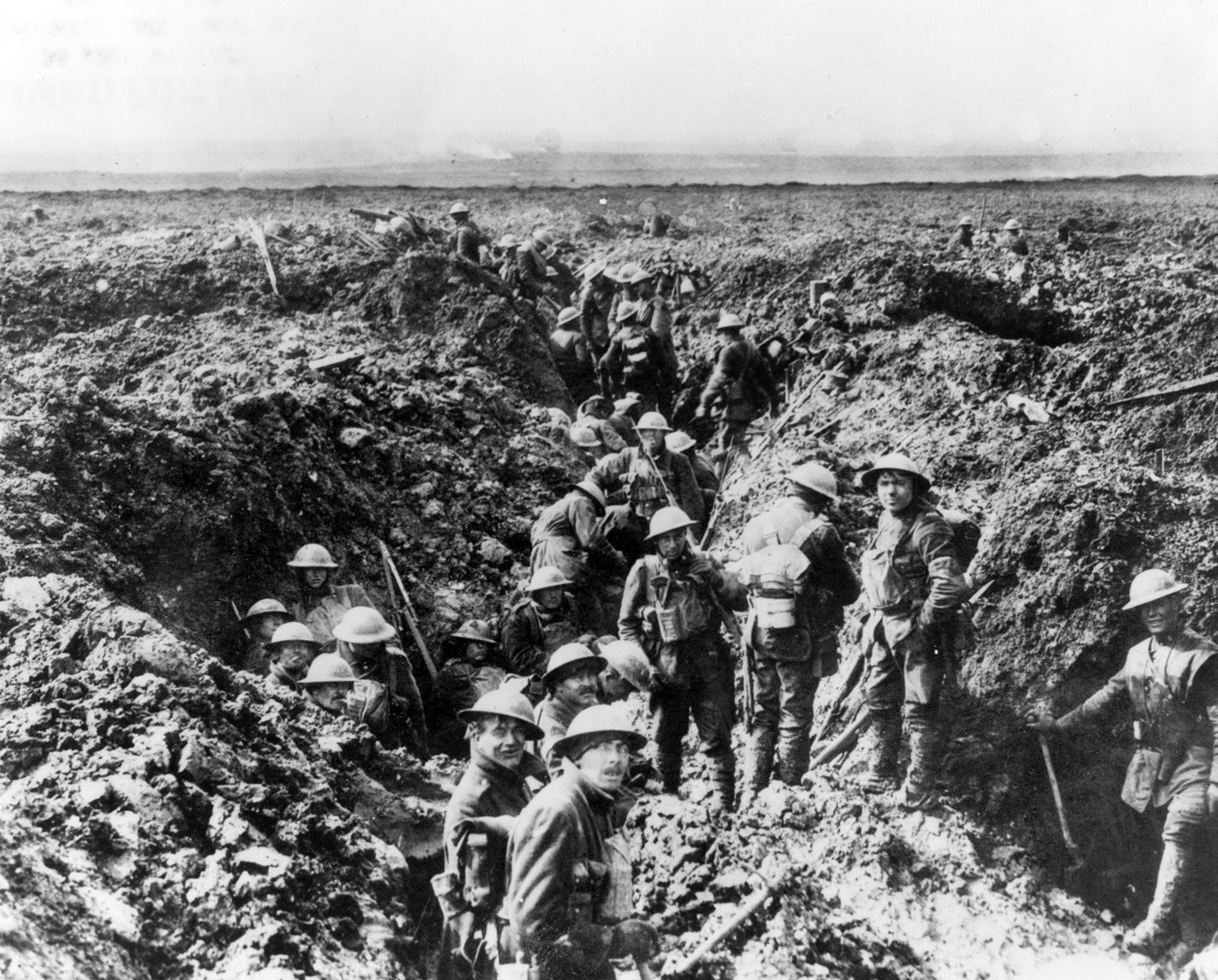
The memorial serves as one of Canada’s most effective cultural-diplomacy instruments shaping how Canada is understood abroad. It projects Canada not through power or wealth but through values, sacrifice, art and shared memory. It draws international visitors, anchors diplomatic ceremonies and sustains Canada’s presence in Europe as a country defined by remembrance and peace.
As part of a $30-million First World War monuments project, Canada restored the Vimy Ridge memorial to its original glory in 2007 after allowing it to fall into disrepair. Perhaps with the monument’s 100-year anniversary looming in 2036, it is time to honour the mind that created it?
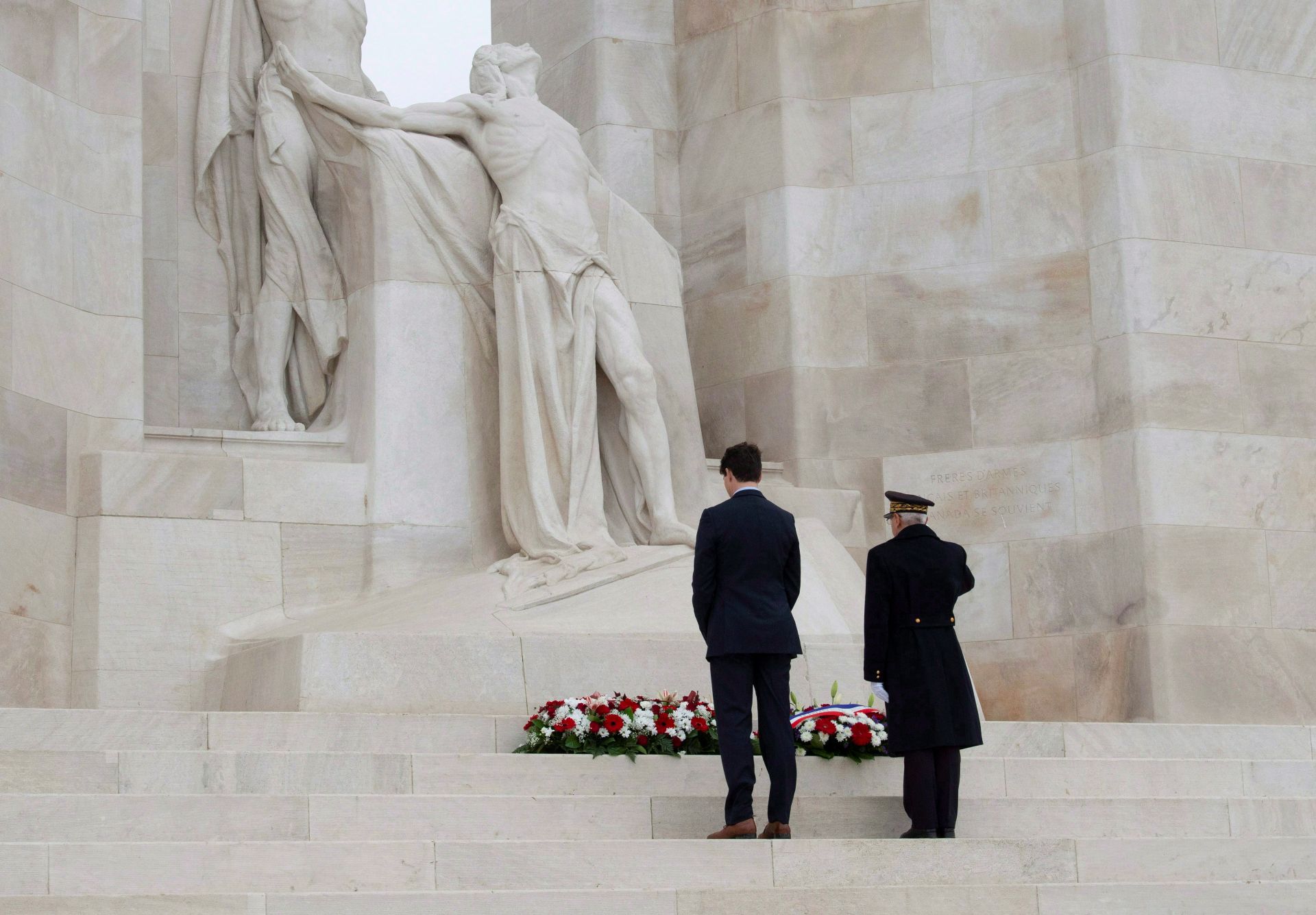
Canada is enjoying a moment of international attention. Anne Carson just became our second Nobel laureate in literature. Prime Minister Mark Carney has raised Canada’s profile on the world stage. Surely there is room to rediscover Allward’s extraordinary achievement that has represented our country to the world for nearly a century.
The government of Canada, together with the National Gallery of Canada, Library and Archives Canada, the Canadian War Museum and Queen’s University, must gather Allward’s papers, drawings, plaster studies, photographs and correspondence in a permanent, accessible national collection. His work needs to be catalogued, digitized, exhibited and made available to scholars and the public.
Nations are remembered not only for the battles they fought but for the artists who gave those battles meaning. Walter Seymour Allward shaped Canada’s memory in stone. Canada must finally honour him by ensuring his own legacy has a permanent home.