(Version française disponible ici.)
The Coalition Avenir Québec (CAQ) made history in 2018 and 2022, winning two of the largest majorities in Quebec’s political history. Positioning itself as a credible economic alternative to the Quebec Liberal Party and a nationalist alternative to the Parti Québécois, it embodied a “third way” based on economic pragmatism, identity politics, and autonomist nationalism.
However, this electoral dominance has not translated into lasting popular support. How can we explain the CAQ’s rapid decline in popularity after two such decisive victories? To what extent has the CAQ really kept its promises? And what does the CAQ’s record reveal compared to that of previous governments?
Data from the Centre for Public Policy Analysis’ Polimeter allows us to examine the CAQ’s record of delivering on election promises in five key policy areas — culture and nationalism, economy and labour, environment and energy, education, health and social services — while situating its performance in the context of broader political and economic constraints.
The CAQ’s trajectory reveals a central tension in modern governance between explicit and implicit electoral mandates: keeping promises is necessary but insufficient to maintain public trust. Good governance is essential.
A strong track record on promises
Figure 1 shows that the majority government formed by the CAQ (2018-2022) fulfilled (fully or partially) 80 per cent of its election commitments during its first mandate. In absolute numbers, this first CAQ government kept 200 promises, in whole or in part. This result is remarkable for two reasons: first, the CAQ was a new party, coming to power for the first time, with no prior experience. The party was able to achieve this goal while managing the COVID-19 pandemic and maintaining high levels of public satisfaction.
By contrast, by spring 2026, the second CAQ government (2022-2026) had partially or fully fulfilled 65 per cent (95) of its commitments, 24 per cent of which are still underway or not yet evaluated. This second term pales in comparison to the first.
Health and social services in the lead
During its two mandates, the CAQ has remained focused on the same major priorities: health and social services, the economy and labour, and education. But their relative weight has evolved. Commitments to health and social services have decreased (from 22 to 16.7 per cent), while those related to the economy, labour and education increased (from 14 to 18 per cent and from 11 to 14.7 per cent, respectively).
Since the CAQ linked the economy to the energy transition and climate-change policy, the proportion of environmental and energy commitments represented 18.7 per cent of all promises in the second term.
We included culture and nationalism in our analysis because of their importance in the “third way” proposed by the CAQ as a nationalist and autonomist positioning between independence (Parti Québécois) and federalism (Quebec Liberal Party) that affirms and defends the interests of the Quebec nation within Canada, whether they be economic, cultural, identity or linguistic ones.
Figure 2 compares the pledge-keeping record by the main areas of public policy at the heart of the CAQ’s vision for Quebec during its first mandate. This vision was based in particular on an economic strategy centred on entrepreneurship combining the stimulation of private investment through tax incentives and the reform of Investissement Québec to increase productivity.
This included the promotion of important infrastructure projects for the electrification of transportation and the export of clean energy, as well as investment in health and education infrastructure. Many of the CAQ’s commitments on roads and public transit have been respected. But the emblematic promise of the third link, a major but controversial transportation project for the Quebec City and Lévis region, has been broken.
On the cultural and national fronts, the CAQ has further concretized its commitments, notably with the adoption of Bill 96. This bill strengthened the legislative framework for the French language. It created the position of French language commissioner and confirmed the recognition of the Quebec nation within a unilateral constitutional framework.
Similarly, the adoption of Bill 21 on the laicity of the State established new provisions governing the religious neutrality of the Quebec state while reaffirming the principles of equality and freedom of conscience and religion.
The second CAQ government quickly implemented its commitments regarding the anti-inflation shield in 2022. However, its decision to abandon the promise of the third link was a breaking point in the trajectory of some regional commitments.
In line with its first mandate, the government also pursued a new series of economic promises related to the environment and energy to support Quebec’s net-zero objectives. These include the electrification of public transit, the promotion of renewable energy, various recycling measures as well as a major reorientation of Hydro-Québec’s mandate, particularly in connection with the development of wind energy. The economic impact of these measures is expected to unfold over a long-term horizon.
At the mid-term, the government also became aware of the budgetary pressures related to its management of the pandemic, the growth of public spending and the renewal of collective agreements in the public sector. In this context, some infrastructure investment priorities inherited from the first term have been postponed or abandoned to control expenditures and reduce the deficit. This has raised questions about the implementation of the promise to maintain services without resorting to austerity measures. In the spring of 2025, S&P Global downgraded the Quebec government’s credit rating from AA- to A+.
The nationalist “third way” agenda revolved around the implementation of Bill 96 (law 14) and the promotion of French. It also included the defence of Bill 21 on secularism. Additional promises were made to promote reading and participation in cultural events.
As its popularity waned, the government intensified its legislative activity to strengthen and expand Bill 21 and to affirm Quebec’s vision of intercultural integration in opposition to Canadian multiculturalism. Broken promises in this area were about investments in religious heritage and cultural centres to promote Quebec culture and history while the kept promises focused on the core ideas of the nationalist third-way agenda.
What legacy for the CAQ?
Compared with previous governments, the CAQ’s record of promises is solid. The Polimeter data shows that its two terms surpass many previous governments on the proportion of promises fully or partially fulfilled.
Among majority governments since the 1990s, the first Legault government (2018–2022) ranks among the most successful, just behind the Liberal government of Philippe Couillard. The second term is in the middle of the ranking, reflecting the CAQ’s more uneven performance.
These results remind us of an important point: most Quebec governments, as in other democratic systems, respect a significant part of their commitments. The differences are explained more by contextual factors than by partisan differences.
The CAQ’s experience is a good illustration of this dynamic. Like the Charest government during the 2008-2009 financial crisis, the second Legault government operated in an unfavourable economic context, aggravated by Donald Trump’s domestic and foreign policies. Inflation, rising deficits, and global uncertainty limited policy options and imposed difficult trade-offs.
Variations in the fulfillment of promises by different governments can be explained by several factors: domestic and international economic conditions, fiscal constraints, jurisdictions and the nature of commitments. Unlike previous nationalist parties, the CAQ’s third way has led to an avalanche of laws to affirm secularism, strengthen Bill 101 and define a Quebec vision of intercultural integration in opposition to Canadian multiculturalism — areas under Quebec’s jurisdiction, supported by the notwithstanding clause of the Canadian Charter of Rights and Freedoms.
How to explain the CAQ’s spectacular fall?
With such a record of delivering on promises, how did the historic victory of 2022 lead to such a rapid erosion of popular support?
The answer lies in the distinction between explicit and implicit mandates. The explicit mandate refers to measurable election promises, tracked by tools such as the Polimeter. The implicit mandate is the ability to govern: to manage crises, to demonstrate competence and to adapt to the unexpected.
The CAQ’s first mandate was solid on these two fronts. The government delivered on its promises while maintaining public trust during the pandemic, consistent with its nationalist and entrepreneurial orientation. This performance created expectations for the second term, especially since the CAQ’s election slogan was “Let’s continue (Continuons).”
Conversely, the second government struggled on these fronts. It had to deal with tensions between budgetary rigour and the need to improve public services while seeking to keep its promises.
Several controversial decisions have fueled the erosion of trust: controversial investments in Northvolt, perceptions of a lack of rigour in public spending, salary increases for elected officials, administrative failures such as SAAQclic. These issues were not directly related to the CAQ’s election promises.
At the same time, government communication has become more complex. Efforts to cut spending without mentioning austerity, combined with reversals on projects like the third link, have created a sense of incoherence. Media criticism and political satire have amplified this feeling.
These difficulties culminated in the resignation of François Legault as premier in January 2026, signaling the end of a political cycle marked by remarkable success and rapid decline. In June 2026, the report of the Auditor General of Quebec on the battery sector confirmed the lack of rigour in the CAQ government’s economic interventionism.
Toward the 2026 election
As the next provincial election in October approaches, the political landscape is shaped by both continuity and change. Concerns about inflation and the quality of public services remain central, but linguistic, generational, ideological and regional divides shape electoral choices. Partisan loyalties are weakened, increasing the importance of campaign dynamics and perceptions of leadership.
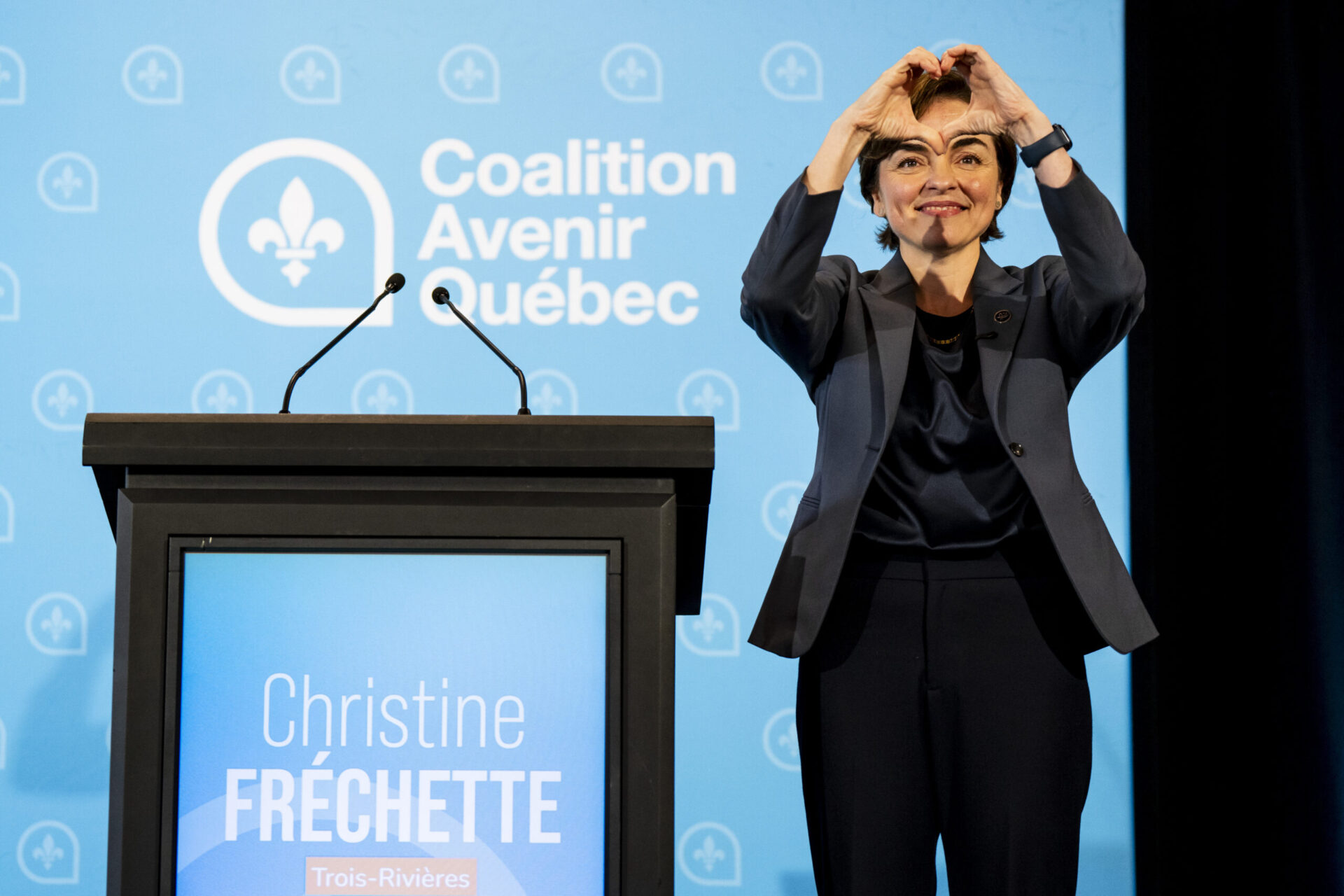
In this context, the CAQ’s record appears ambivalent. It shows a strong capacity for pledge implementation, but also limitations in the management of public affairs. Like its opponents, the party now has a real record of government. The CAQ is now hoping for a “Christine Fréchette” effect like the “Mark Carney” effect, where the leader’s personality weighed heavily in the 2025 federal election.
Can swapping leaders really change election outcomes?
Harassment is becoming a threat to Canadian democracy — starting locally
Canadian political parties keep more promises than you might think
The lesson is clear: Delivering on promises does not guarantee public support. Voters also judge governments by the results they produce and the competence they show in dealing with the unexpected.
As the campaign approaches, parties will once again seek explicit mandates through their election promises. But the election will also be based on a more fundamental question linked to the implicit mandate: who will have the capacity to govern Quebec in these uncertain times?
Whatever the outcome, the next government will face the same double imperative that marked the CAQ era: keeping its promises while gaining public confidence in its broader management of Quebec.