When U.S. President Donald Trump was inaugurated in January 2025 for a second term, his words were unequivocal: America would once again consider itself a growing nation — one that increases its wealth and expands its territory. Canada was not mentioned. It didn’t need to be.
Within hours, reports emerged of an imminent 25-per-cent tariff on Canadian goods. Within weeks, the threat to annex Canada as the 51st state had moved from campaign bluster to a presidential talking point. Within months, economic pressure was brought to bear on our country in a manner not experienced in living memory.
Our trade and national-security policies had been built for decades on the assumption of a friendly, economically aligned southern neighbour. That assumption was not a fact. It was a bet — and the game had just changed.
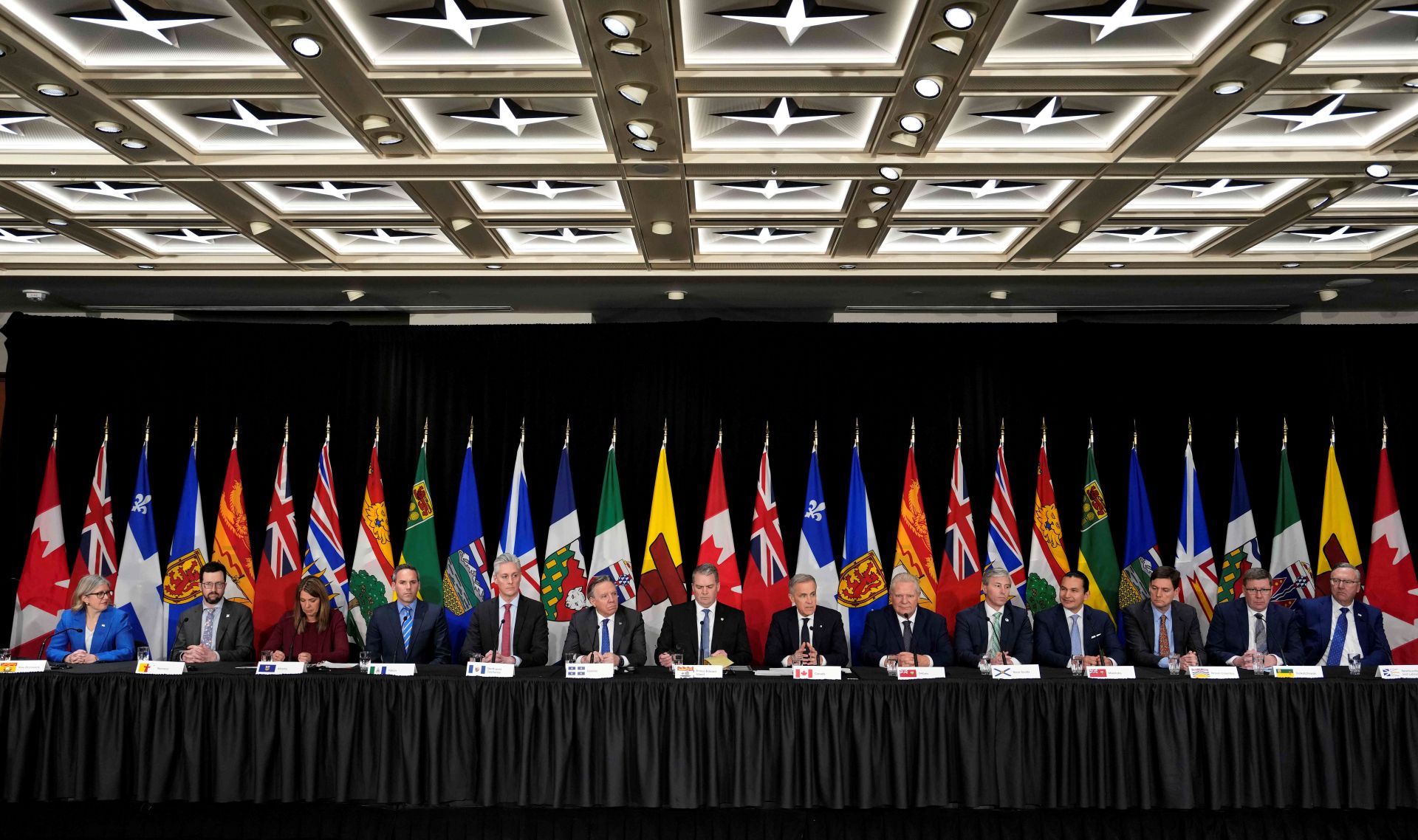
In answer, Canada did something it hadn’t managed in generations. It began to act as a country. Although internal trade regulation might seem an unlikely candidate for patriotic inspiration, a transformational coalition — one that many had long thought politically impossible — started taking shape almost immediately.
Since Trump’s second term began, Ottawa has eliminated all 53 of its exemptions in the Canadian Free Trade Agreement(CFTA).
Provinces and territories have collectively removed a further 55 non-federal exceptions, while seven provinces have passed mutual-recognition legislation toward a pan-Canadian as-of-right licensing model for regulated professions, including Ontario via bilateral economic co-operation agreements with every other province and territory. Alberta, Saskatchewan and Newfoundland-Labrador are the exceptions.
the Canadian Federation of Independent Business noted in its Interprovincial Cooperation Report Card last June: “More progress has been made on removing trade barriers within Canada in the past six months than in the eight years since the CFTA was signed.”
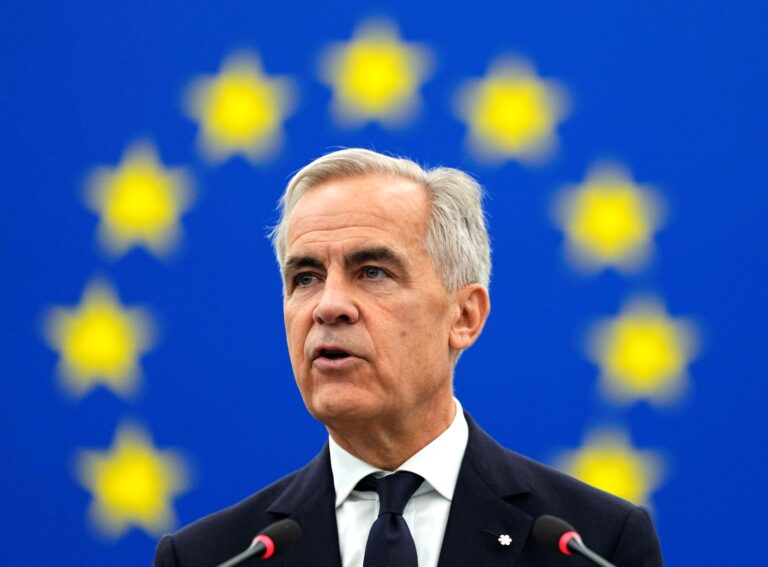
Prime Minister Mark Carney put the spirit of it plainly at Davos, though his audience was global. “Collective investments in resilience are cheaper than everyone building their own fortresses. Shared standards reduce fragmentation. Complementarities are positive sum.”
He was speaking of middle powers and the fracturing international order. However, the description was also apt for what Canada had already started at home.
There’s an echo here of something older and more deliberate. Canada was quite literally made for this moment. As early as 1864, in my hometown of Charlottetown, the Fathers of Confederation were espousing the merits of a great coalition formed in direct response to American belligerence and the imminent loss of reciprocal trade.
Then, as now, it was no joke. Near the end of the U.S. Civil War, the Union army alone had more than 600,000 battle-hardened soldiers — a number that dwarfed anything British North America could muster — the abrogation of the Reciprocity Treaty was imminent and the unsettling question on people’s minds was what Washington intended to do with all those soldiers once the Confederacy fell.
It was against this backdrop that otherwise sworn political enemies — George-Étienne Cartier, John A. Macdonald, George Brown — conceived of a great coalition as an alternative to absorption into the United States.
The governance model they put forward, codified in the Constitution Act of 1867, was co-operative federalism. Federal and provincial powers were divided, but not absolutely, with overlapping authority, all in pursuit of peace, order and good government through collaborative governance. On paper, the whole thing was an oddity. In practice, it worked and it still works today.
It remains, however, more akin to plate tectonics than pyrotechnics. Building enduring national frameworks through co-operative federalism is the polar opposite of bright, fast and loud. It is a slow and incremental affair, with occasional drama, the architecture of which is remarkably difficult to alter through litigation. The federal government discovered this in 2011 when the Supreme Court ruled that securities regulation belonged to the provinces, not Parliament, and always had.
The decision was as much a rebuke of attempts to wish away the Constitution’s division of powers as it was an invitation to get on with the harder work the founders had espoused.
A coalition of willing jurisdictions responded by designing the Cooperative Capital Markets Regulatory System squarely on co-operative federalism principles. A 2018 Supreme Court reference deemed it constitutional.
However, it never got off the ground. Alberta, Quebec and Manitoba declined to join, citing concerns about provincial autonomy and unresolved issues with a centralized structure for their distinct markets. Without them, the implementation organization was eventually disbanded. In the end, what was constitutional on paper could not function in practice.
More than a decade of effort produced a system that remains unbuilt. That effort might otherwise have continued the harder, slower work of deepening what had already been built.
There is also a design lesson here. A regulatory authority built for co-operative federalism is most durable when its governance structure is designed from that principle outward and not with aspects borrowed from a corporate template for the sake of expediency.
The overall lesson is that constitutional soundness is necessary but not sufficient. Co-operative federalism also requires a complete coalition. The cost of pursuing an incomplete one is not just failure, but diversion.
There was already a working model. The securities passport system — underappreciated, unglamorous, and nearly two decades old — is one of the more instructive examples of co-operative federalism in Canadian regulatory history.
Prior to 2005, a firm seeking to operate nationally had to navigate 13 separate regulators, each with its own requirements, forms and timelines — as tough a barrier as anything now being removed in response to Trump.
Dismantling that system required carefully sequenced change and the sequence mattered. Shared national filing and registration systems were built first in the late 1990s and early 2000s, creating the infrastructure on which everything else would depend.
A 2004 ministerial memorandum of understanding then established the passport principle. Participating jurisdictions harmonized their underlying legislation and developed national instruments — uniform rules that each jurisdiction enacted as its own law, so the substance was national even when the authority remained provincial. Full passport implementation for both issuers and registrants was complete by 2009.
Today, a filer deals with one regulator in its home province or territory and that decision is recognized everywhere else. Ontario has not formally joined but is accommodated through parallel systems and close policy collaboration.
Residual fee and staffing duplication remains across 13 jurisdictions. The initiative is not finished. But it works and has been working for nearly 20 years within the very constitutional framework the Supreme Court has consistently said we have no choice except to use.
The system is also more flexible than critics acknowledge. Alongside national instruments, the framework accommodates regional and local rules that reflect genuine differences between markets — differences that a uniform national structure would flatten rather than serve.
The system is also governed and co-ordinated by the Canadian Securities Administrators (CSA), an umbrella organization whose respective regulatory executives serve as its de-facto board. It’s fair ball to grade the CSA’s own governance model and co-ordination processes as needing improvement in several areas, such as streamlined decision-making and committee work, as well as more optimized division of labour.
But the answer to those deficiencies is not simply to replace a co-operative governance forum with a centralized authority. It is to improve the forum on co-operative federalism principles — the same approach that is needed for internal trade reform.
The securities passport system did not eliminate the problem of 13 regulators. However, its 13 regulators now work as a single country. Critics who call the current state a structural ceiling rather than a waypoint are in effect arguing that co-operative federalism itself has run its course. The Fathers of Confederation and the geopolitical moment that Canada currently occupies suggest otherwise.
Canada is spending billions to fix the wrong productivity problem
The Carney government’s policy pivot amid global turmoil requires reshaping how government works
The lesson is sequencing: shared systems foundations, harmonized legislation and holdouts accommodated rather than sidelined or empowered to veto the project. Two decades. Still in progress. Working.
In February 1865, George Brown rose in the Ontario legislature to defend what would become Confederation. “What we propose now,” he told his colleagues, “is but to lay the foundations of the structure — to set in motion the governmental machine.” He was not promising a finished country. He was promising a beginning.
The securities passport system is a 20-year lesson in what proper foundations look like and in why the work is never finished. The removal of CFTA exceptions and the new mutual-recognition frameworks for regulated professions are this generation’s equivalent.
They are real and they matter. But they are also incomplete. Exceptions remain and applicants still file separately with each provincial regulator, pay separate fees and depend on whether reciprocal legislation or agreements exist. They are a beginning, not an end.
The same external pressure that forged a coalition in 1864 is present again. That is not a coincidence. It is the same constitutional machinery, responding to the same kind of moment, asking for the same kind of patience.
The hard work — the common standards, the systems infrastructure, the consensus building — is the laborious machinery Brown was describing.
We have the architecture. We have a model that works. The question is whether we give it what it requires. Not speed, but patience. Not expediency, but earnest collaboration. Not shortcuts, but sequence.