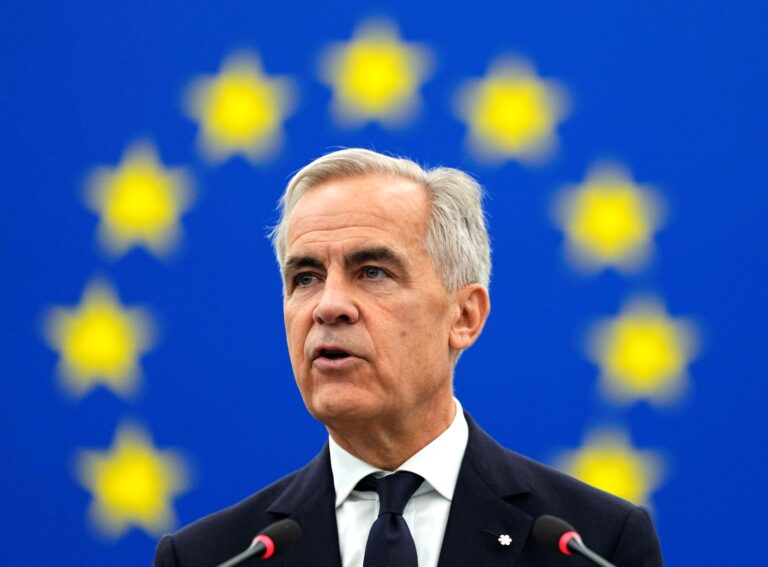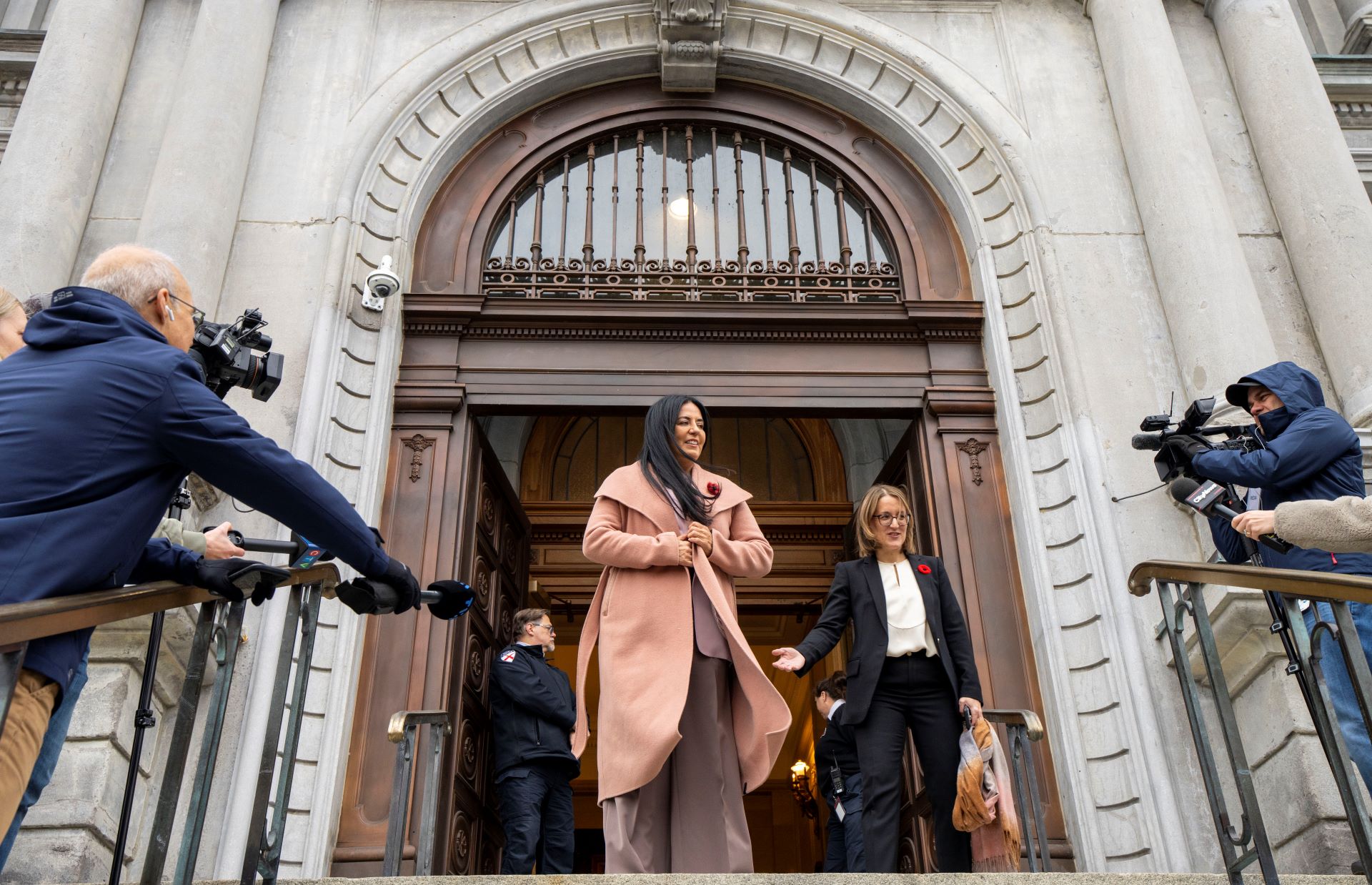
Five Canadian provinces as well as the Northwest Territories will hold municipal elections this year. Increasing political polarization often occupies centre stage in larger debates about democracy, but hostility and intimidation are a growing concern for municipal politicians as well. Just over 45 per cent of those surveyed last year identified harassment as somewhat of a problem or a big problem in their municipalities. Canada can learn from other countries how to prevent this issue from worsening.
Most mainstream media reporting on harassment has focused on provincial or federal politicians. This is unsurprising. Incidents involving high-profile figures — for example, threatening the prime minister or a premier — are more likely to capture attention. Yet our previous work on municipal politics shows that harassment is shaping local politics, too.
B.C. election tests new policies to protect elections from digital threats
A systematic scan of Canadian news articles published between Jan. 1, 2020, and June 30, 2025, identified and documented 152 cases of reported harassment. We organized these cases by level of government (federal, provincial, municipal) and by type of threat (online, in-person, on the phone or via vandalism).
Our findings reveal a trend of increasing levels of reported harassment, peaking at 43 cases in 2024 (the last full year analyzed). Online harassment accounted for 37.9 per cent of cases, while in-person threats made up 26.4 per cent. Threats carried out via vandalism represented 17.6 per cent of cases, followed by phone calls at 8.2 per cent.
Fifty-six cases of harassment involved municipal politicians, just one fewer than involved federal politicians. This was substantially more than the 39 provincial incidents recorded. There were also slightly higher vandalism and property attacks against municipal politicians (11) compared with federal and provincial politicians (nine).
The true rate of harassment, especially against local elected officials, is undoubtedly higher than these figures suggest. Many incidents may never be publicized at all as some targeted politicians prefer not to share their experiences publicly. The findings also are likely to reflect uneven news coverage as politicians in smaller communities tend to be under-represented.
Threats that were described in municipal cases were made online 50 per cent of the time, 43.8 per cent in-person and 6.3 per cent by phone call. Thirteen (23 per cent) involved threats to physical safety outside an elected official’s home. This included two separate cases involving then-councillor Karrie Porter in St. Catharines, Ont., whose house was vandalized twice within little over a month. No arrests were made, which reflects a broader pattern of unresolved cases.
The findings of our news scan are broadly consistent with trends identified in Canada and globally. A 2025 poll by the Canadian Municipal Barometer showed that 63 per cent of local politicians across the country had experienced some form of harassment. A survey by the Union des municipalités Québec (UMQ) found that 58 per cent of the province’s local politicians had experienced verbal violence, 46 per cent bullying or threats, 36 per cent harassment and four per cent physical violence.
In 2024, 73 per cent of councillors who responded to an online survey in England and Wales reported being harassed or intimidated. Almost half agreed that this was part of an increasing trend of incivility.
One knock-on effect is that more municipal officials are resigning from public office. In Quebec, a 2024 report from the UMQ said that 741 of 8,000 municipal politicians — nearly 10 per cent — had resigned since 2021. Among them was the former mayor of Gatineau, France Bélisle, who quit due to recurring death threats.
There is increasing recognition of and action to address harassment. The Association of Manitoba Municipalities, working with the Strong Cities Network, recently released a toolkit with 130 recommendations, including creation of a safety checklist and having law enforcement present at council meetings.
Legislation in Quebec allows for fines of up to $1,500 for individuals who intimidate or harass municipal officials. There is insufficient publicly available data to determine whether this law, passed in 2024, is having a meaningful impact.
Across the Atlantic, some governments are testing ways to protect elected officials without unduly restricting democracy.
In the United Kingdom, the government has passed legislation to make targeted protests outside the homes of public office holders a criminal offence. Other measures include a policing protocol brought in two years ago and an arrangement introduced earlier this year to have one officer from each police force co-ordinate security support for elected municipal officials and candidates. Critics argue that the application of the law remains uneven in practice.
France has taken a more supportive approach. Its 2024 law strengthens penalties for attacks on mayors and other local elected officials. These protections also cover electoral candidates as hostility often begins before election day. The state or local authority must provide legal, financial and practical support, including assistance after threats or violence. French practice also includes psychological support services — such as dedicated helplines and victim-support associations — for targeted officials. This reflects a broader recognition that public office requires not only security but also sustained institutional support.
Canada could learn from both countries. Officers within local police and RCMP units could be designated as advisers to share practices with and offer security guidance to elected officials as is done in the U.K. This would provide support without major new spending. Greater reporting on the effectiveness of the Quebec law that allows for fines — as does French legislation— would help other provinces and territories decide whether to adopt this model.
Yet reactive security fixes can only go so far. A special committee in British Columbia on democratic and electoral reform has argued that strengthening democracy means rebuilding civic trust by allowing people to participate in decisions, especially those that affect their daily lives. The vibrancy of any democracy rests on good faith and the ability to engage in civic life. Harassment can undermine both.
Without course correction, local politics risks becoming increasingly closed off from constituents, which can in turn create further resentment and frustration. The municipal elections of 2026 provide an opportunity to more actively protect candidates and, hopefully, head off the cycle of apathy, frustration and harassment.