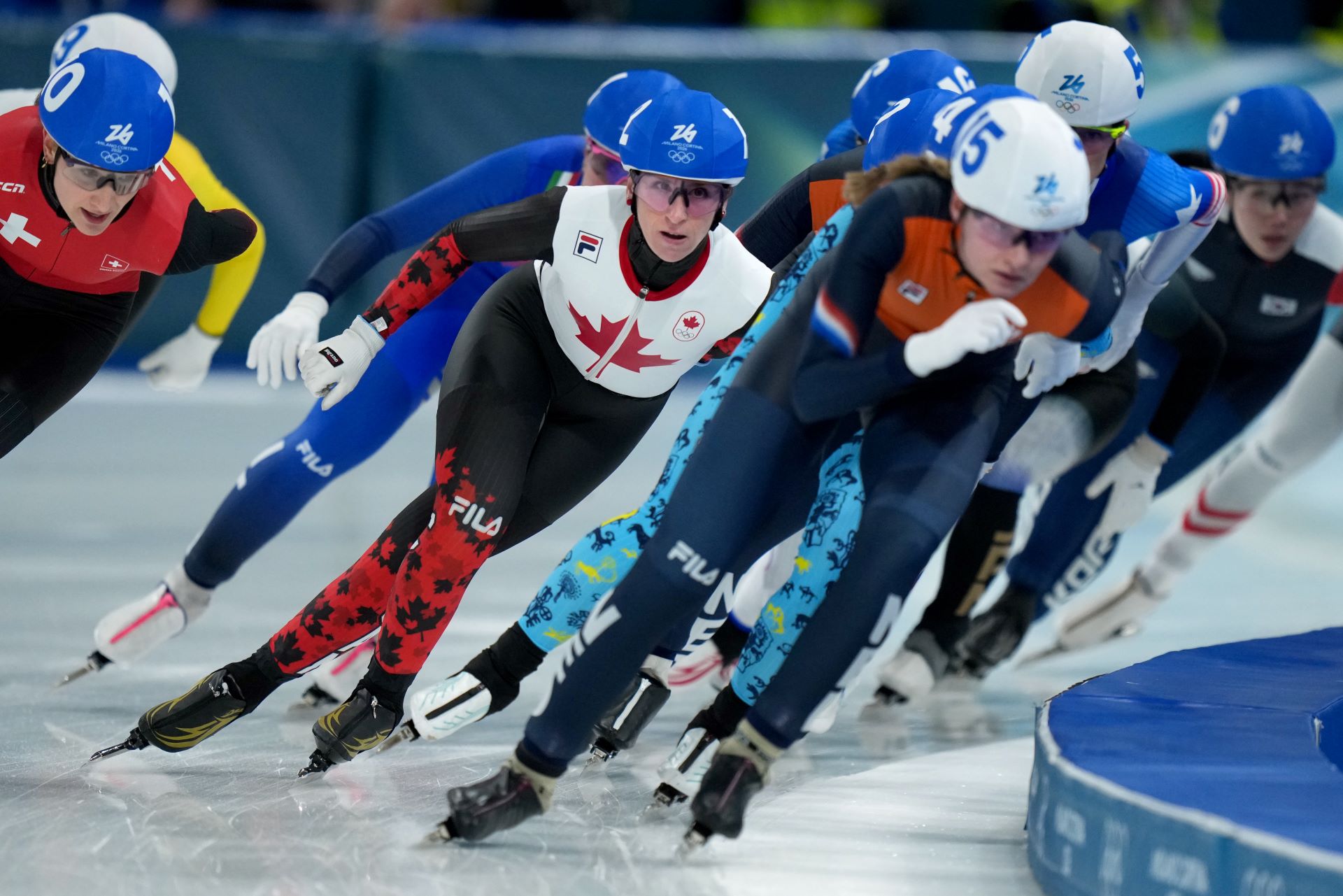
The recently concluded Olympic and Paralympic Games in Italy were the most gender-balanced in history.
At the Olympics, women were 47 per cent of the competitors, 45 per cent of the senior leadership of the organizing committee and 55 per cent of the volunteers. Twelve of the 16 Olympic disciplines were completely gender-balanced. Similarly, at the Paralympics, a record number of women athletes competed. Canadian women brought home 21 of the country’s 36 Olympic and Paralympic medals.
Yet, a dark cloud looms over the future of women’s sport due to efforts taken to exclude transgender women and women with sex variations by certain international sport federations, the U.S. and Alberta governments, and most recently, the International Olympic Committee (IOC).
Proponents of such exclusions argue that transgender women and women with sex variations are “biologically male” and therefore have certain physiological characteristics that could provide an unfair edge or pose injury risks to “biologically female” athletes, potentially jeopardizing the integrity of women’s sports categories.
These concerns are unsupported by scientific evidence and unpersuasive.
In the case of women with sex variations, there is an absence of high-quality, independent evidence showing sport performance advantage.
Alberta’s new sport legislation built on fear and discrimination
Further, as geneticists, ethicists and human-rights experts have repeatedly argued, focusing on a single biological characteristic of women with sex variations (such as the presence of a Y chromosome or their natural testosterone levels) ignores the many other factors that contribute to athletic success and remain unregulated, such as height, reach, concentration of fast-twitch muscle fibres, other genetic variations and socioeconomic status.
In the case of transgender women, the scientific research is inconclusive due to small sample sizes and limited generalizability to specific sports, disciplines and events at all levels. This lack of evidence recently led a Belgian court to conclude that a ban on transgender women in international cycling was discriminatory and therefore unlawful.
Proponents of exclusion also ignore those not infrequent cases where transgender women competed in the women’s category without issue, such as women’s flat-track roller derby, where the international sport-governing body has adopted a gender-inclusive eligibility policy.
In keeping with its commitment to gender inclusion and its longstanding opposition to sex testing in international sport, the federal government must denounce efforts to ban transgender women and women with sex variations from women’s sport.
It must:
- make unrestricted gender inclusion mandatory for federally funded sports organizations;
- fund more scientific research into the issue; and
- prohibit international sports events from being held in Canada if they restrict or exclude transgender women athletes or women athletes with sex variations.
A disturbing, growing trend
The IOC just announced a new policy requiring all athletes seeking to compete in the women’s category at IOC events, such as the Olympic Games and Youth Olympic Games, to undergo mandatory genetic screening for the sex-determining region Y (SRY) gene.
The purpose is to identify and exclude transgender women and women with sex variations. Athletes who test positive for the SRY gene are ineligible for the women’s category, except for a limited exemption available only through invasive clinical evaluations.
The new policy was informed by a review conducted by an anonymous working group and replaces the IOC’s 2021 policy framework, which encouraged gender inclusion and was based on consultations with hundreds of athletes and human rights, medical and legal experts.
The new IOC policy amounts to an endorsement and extension of the genetic sex testing practices recently adopted by the international sport federations for athletics, swimming, boxing, and skiing and snowboarding. It paves the way for other international federations to implement the same or similar measures for their non-IOC events, even though sex-testing practices were previously discredited and abandoned in the 1990s on scientific and ethical grounds.
In the United States, President Donald Trump previously took steps to restrict the participation of transgender athletes in women’s sports, including at the 2028 Los Angeles Olympics — a decision that now is aligned with the IOC’s new policy. In Alberta, Premier Danielle Smith’s government has banned transgender women and girls aged 12 and older from women’s sports in that province.
In February, the use of mandatory genetic sex testing and categorical bans on transgender women and women with sex variations were condemned by several United Nations human rights experts.
They said such practices are rooted in stereotypes and generalized assumptions of performance advantage rather than robust and sport-specific substantiated evidence. They said this also risks violating the human-rights principles of non-discrimination, bodily and psychological integrity, dignity and privacy.
Three steps for the federal government to take
First, Ottawa must strengthen its existing policies on gender inclusion in sport and make compliance a requirement for federally funded sport organizations. This should incorporate the principles from the IOC’s 2021 Framework on Fairness, Inclusion and Non-Discrimination on the Basis of Gender Identity and Sex Variations, as well as the 2024 Statement on Trans and Gender-Diverse Inclusion in Sport by former federal minister of sport Carla Qualtrough.
Both emphasize starting from a place of inclusion and restricting eligibility only on sport-specific, evidence-based assessments.
A federal gender-inclusion policy could have a meaningful impact at multiple levels. It could require national sports organizations to ensure that their eligibility rules — and those of their provincial/territorial organizations — comply with human-rights standards.
Such a federal policy could result in a transgender woman or woman with sex variations winning at the national level in an event but being unable to compete at the international level in the same event.
The policy could also encourage national sport organizations that are members of international sport federations to vote against or otherwise oppose sex-testing rules and blanket bans proposed by their international federations. The federal government took this approach during the international campaign to isolate apartheid South Africa in sports.
Similar resistance was recently displayed by the Canadian Paralympic Committee when it voted against the International Paralympic Committee’s decision to readmit Russia, despite its ongoing invasion of Ukraine and history of state-sponsored doping.
Second, Ottawa must fund more scientific research into the regulation of gender in sport. This is essential in light of the lack of peer-reviewed, sport-specific evidence assessing whether performance differences exist between transgender women, women with sex variations and other women athletes.
Third, the federal government must strengthen its policy for hosting international sports events to prohibit such events in Canada where sex testing is required or where transgender women athletes or women athletes with sex variations are categorically banned.
Such an action could encourage other countries to follow suit and could send a powerful message to international sport federations and the IOC that national governments will not be an accomplice to human rights violations in sport.
This measure would also pre-empt the staging of international sport events likely to violate Canadian human-rights laws and therefore alleviate the burden that would otherwise fall on women athletes to bring their own legal challenges to the eligibility rules governing an international sport event being held in Canada.
Only by taking these three steps will the federal government be on the right side of protecting women’s sport.