(Version française disponible ici)
For the past fifty years, Canadian governments have increasingly resorted to closure and time allocation procedures to pass their legislation. This trend is not solely explained by parliamentary obstruction; it primarily reveals the effects of partisan polarization on the functioning of the House of Commons.
For several decades, House of Commons operations have undergone a significant transformation. Originally conceived as exceptional measures to counter parliamentary obstruction, closure and time allocation have become common tools for managing the legislative agenda, without this evolution being attributable to a proportional increase in legislative activity.
This development raises a fundamental question: why have mechanisms that limit debate become normal in an institution whose legitimacy is based on deliberation and compromise?
This normalization reflects profound transformations in Canadian parliamentarism. The increasing polarization of relations between parties has reduced opportunities for compromise and made it more difficult to reach agreements to organize the House’s work by consensus. In this context, governments are increasingly relying on procedural mechanisms to ensure the adoption of their legislative agenda, while the House of Commons is seeing its deliberative role diminish.
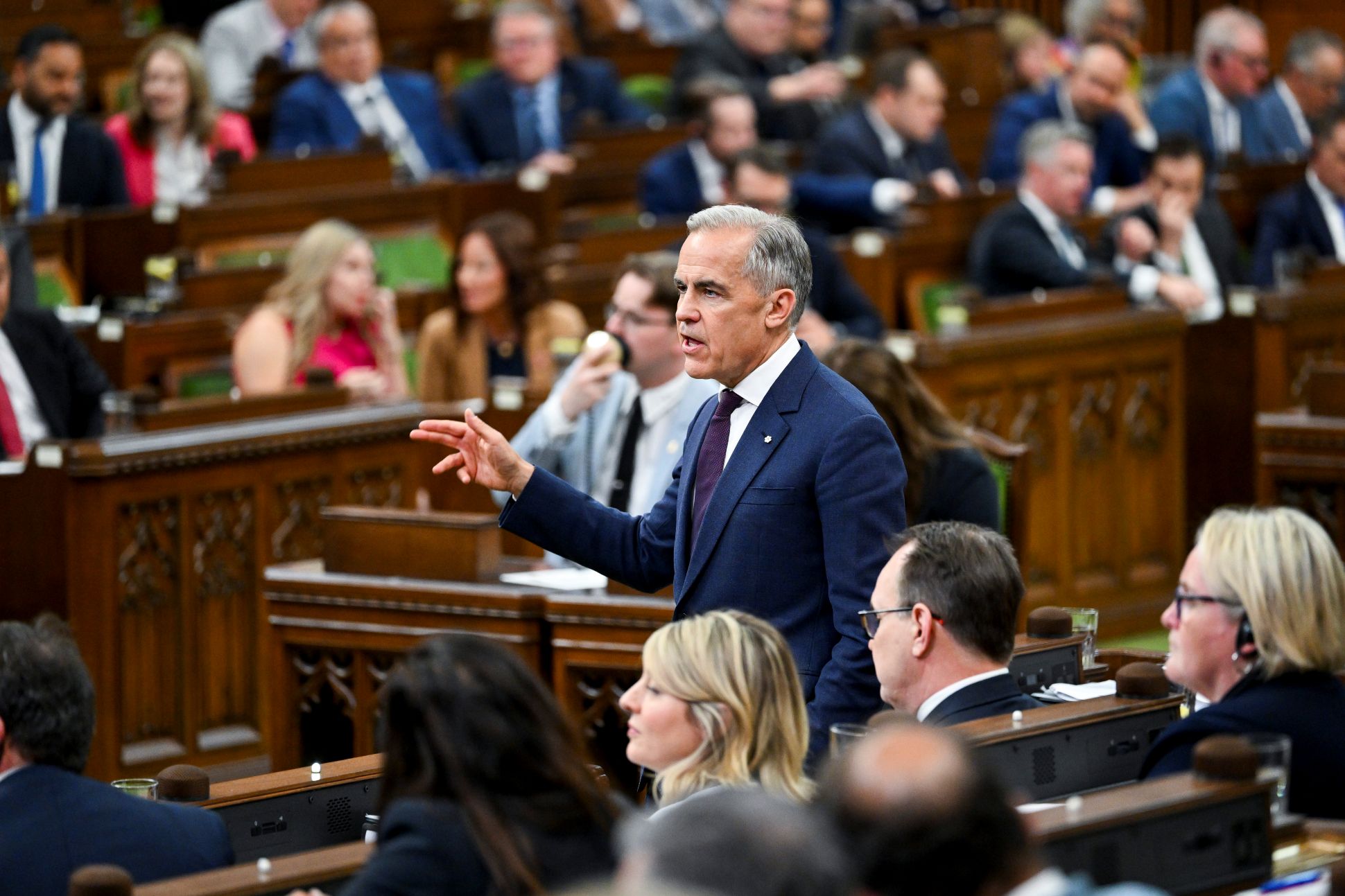
Recent controversies surrounding the Carney government’s use of closure and time allocation motions clearly illustrate this trend. Since June 1, 2026, the House has passed two closure motions and six time-allocation motions. More broadly, since the beginning of this Parliament, thirteen motions limiting debate time have been approved.
For example, on March 26, 2026, Bill C-26, entitled An Act to authorize certain payments to be made out of the Consolidated Revenue Fund for the purpose of improving housing supply, completed first reading. The bill was not reconsidered until June 16 – three days before the end of the spring session. On the same day a closure motion was adopted, limiting consideration and adoption of subsequent stages of the bill to June 17, without allowing time for substantive debate.
A procedure diverted from its original purpose
Introduced in 1913 to counter parliamentary obstruction, closure quickly became a tool for government to end debates it deemed excessively long. Controversial use in debates including the 1956 pipeline confrontation and the 1964 flag debate fostered a lasting mistrust of this procedure, often perceived as an infringement on the right of MPs to speak and on the deliberative role of the House of Commons.
Reform work in the 1960s led to the 1969 adoption of a new system governed by the rules of the House of Commons, including the time allocation procedure.
This procedure established three distinct methods of allocating time: one based on the unanimous consent of the parties, another on the agreement of a majority of them, and a third — more controversial — allowing the government to impose a time limit for debate in the absence of an agreement, thus consolidating its control over the legislative process.
Ironically, this reform, intended to offer a more flexible alternative to closure, was itself adopted thanks to a closure motion imposed by the Pierre Elliott Trudeau government, despite opposition from other political parties.
Growing use due to partisan polarization
The institutional history of closure and time allocation helps us understand the origin of these mechanisms, but not their increasing use. As polarization intensified, relations between the parties hardened and opportunities for compromise diminished.
Agreements aimed at organizing parliamentary work by consensus have thus become rarer, pushing governments to make greater use of procedural mechanisms.
At the same time, governments have become increasingly unwilling to amend their bills in response to proposals from parliamentarians, including their own members. This has weakened the deliberative role of the House, giving way to a more centralized and partisan approach to controlling the legislative process.
The data shows a wide variation in the use of time allocation motions across legislatures. However, more than 92 per cent fall under the most binding form, provided for in subsection 78(3), which allows the government to impose a time limit for debate in the absence of an agreement between the parties.
A persistent procedure, especially in a majority context
It was under Stephen Harper’s majority government, during the 41st Parliament (2011-2015), that the use of time allocations reached its peak. No fewer than 92 motions were adopted, representing 18 per cent of sitting days, 65 per cent of bills introduced, and 87 per cent of bills passed. This period illustrates the most intensive use of this tool for managing the government’s agenda.
The 42nd Parliament (2015-2019), under Justin Trudeau’s majority government, maintained a very high level of use of time allocations, with 65 motions adopted. The 41st and 42nd parliaments thus demonstrate a normalization of this tool within the context of a majority government.
The minority legislatures that followed show a marked decline, although they have not yet returned to the levels observed before 2011. The 43rd Parliament (2019-2021) has only six motions adopted, which probably reflects the constraints inherent in a minority government.
Although much shorter, the 45th Parliament (2025-2026) already suggests a sustained reliance on time allocation. Eight motions were adopted in 139 sitting days, representing six per cent of all sitting days. Most notably, nearly half of the bills passed (47 per cent) were adopted after a time allocation, demonstrating the continued importance of this procedure in managing parliamentary business.
Maintaining a balance between efficiency and quality of deliberation
Despite criticism of the Carney government for its swift recourse to closure and time allocation, its behaviour, at least at this stage, represents historical continuity rather than a break. For the moment, it does not significantly deviate from previous governments.
Rather than simply denouncing the use of closure and time allocation, the House of Commons should ensure that no bill can be passed without a minimum amount of debate time. Such a measure would allow parliamentarians to examine bills, propose amendments, and fully exercise their role as legislators.
The challenge is not to eliminate time management tools, but to regulate their use in order to preserve the balance between government efficiency and the quality of parliamentary deliberation.