(Version française disponible ici.)
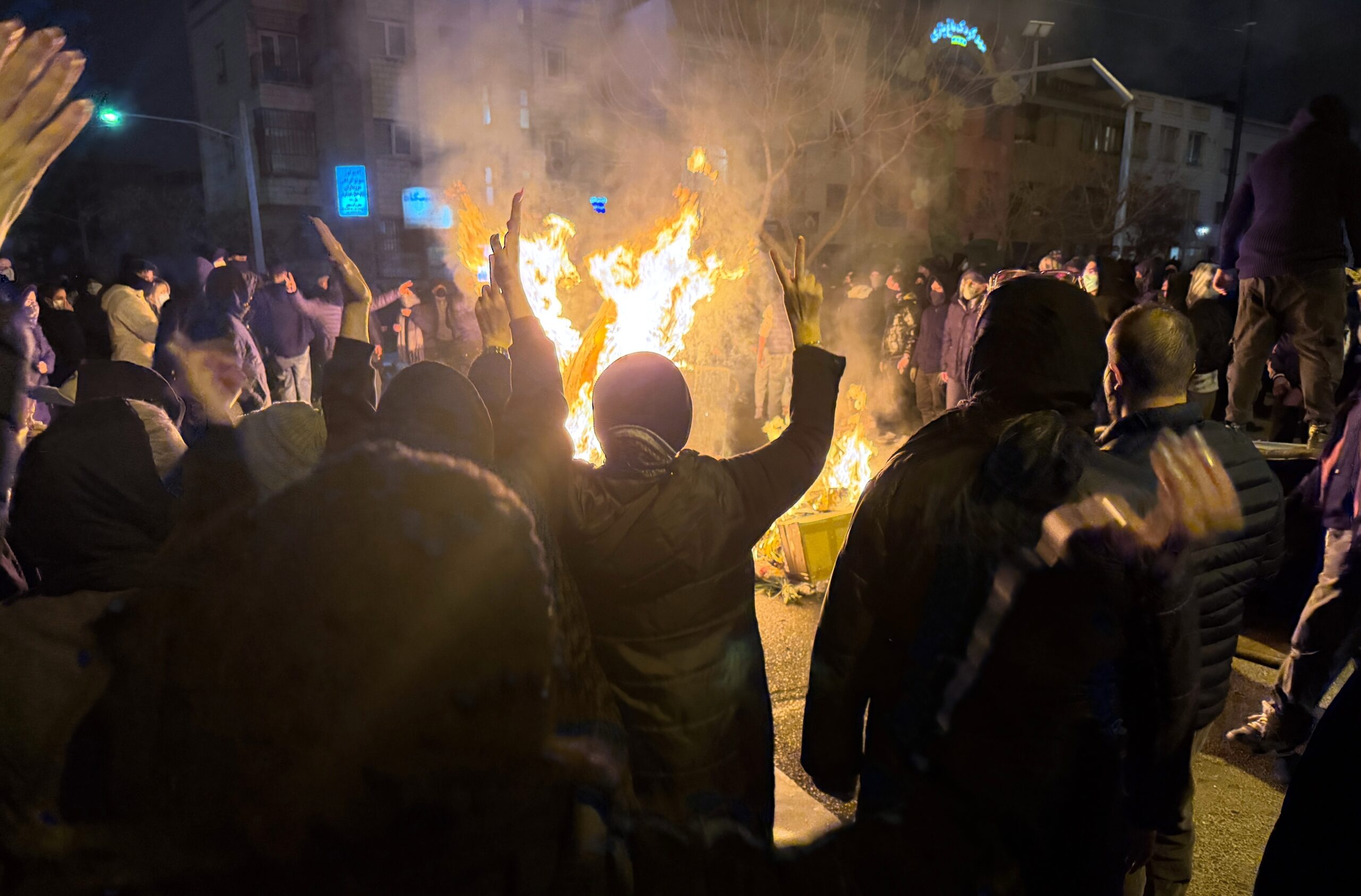
Iran is once again at the centre of global attention, not because of its nuclear program or regional proxy wars, but because its people have returned to the streets in defiance of a regime that has lost its claim to legitimacy. From Tehran to provincial cities, protesters are demanding freedom, dignity and an end to clerical rule.
Some chants go further, openly calling for a constitutional monarchy and invoking Crown Prince Reza Pahlavi as a symbol of national continuity. Whatever one’s view of Iran’s political future, the message from the streets is unmistakable: the Islamic Republic no longer commands consent. It rules by force and, increasingly, force alone.
This moment matters far beyond Iran’s borders. Iran is not a marginal state. It is a geopolitical pivot whose internal trajectory affects Middle Eastern stability, global energy markets, and the balance between democratic and authoritarian systems worldwide. When Iran moves, the region moves with it.
Canada must prepare
Canada, as a middle power with moral credibility and strategic interests at stake, cannot afford to treat this crisis as a distant tragedy or a purely symbolic human rights issue. It must prepare for change.
The scale and persistence of the current unrest reveal a deeper legitimacy collapse. Iran has experienced repeated nationwide uprisings since 2009, including the Green Movement and subsequent waves of protest driven by economic hardship and political exclusion. Each time, the regime has responded with repression rather than reform.
Political legitimacy theory is clear: regimes that substitute coercion for governance weaken their own foundations. Stability becomes brittle. The appearance of control masks growing fragility beneath the surface.
Today, that fragility is visible. Protesters are no longer asking for policy adjustments. They are rejecting the system itself. Slogans denouncing clerical authority, foreign adventurism and economic corruption reflect a society that sees no future under the current order. The regime’s violent response, including mass arrests, internet shutdowns and lethal force against civilians, has only reinforced this perception. Repression may delay change, but it rarely prevents it.
Growing ties to China, Russia
Western passivity in such moments carries costs. From a realist perspective, authoritarian regimes facing internal legitimacy crises often externalize pressure through regional aggression. Iran’s long-standing support for proxy militias across Lebanon, Syria, Iraq and Yemen has served precisely this function. These activities have destabilized the Middle East and threatened global energy security for decades.
At the same time, Tehran’s growing alignment with Moscow and Beijing has integrated Iran into a broader authoritarian bloc that challenges Western influence and norms.
This alignment has consequences well beyond the region. Iran’s military co-operation with Russia, including the supply of armed drones used against Ukrainian cities, strengthens Moscow’s ability to sustain its war in Europe. Tehran’s integration into China’s economic and energy strategies supports Beijing’s effort to build alternative global systems insulated from Western pressure. And Iran’s recent participation in BRICS reflects its ambition to reshape the international order away from liberal norms.
From a liberal institutionalist perspective, the stakes are equally high. When mass repression produces little more than diplomatic condemnation, the credibility of the rules-based international order erodes. Norms protecting civilians, freedom of assembly and political participation weaken when violations go unanswered. Over time, this erosion undermines deterrence and signals that democratic values are negotiable.
For a country like Canada, whose influence rests heavily on norms and institutions rather than raw power, this is a strategic vulnerability.
Downing of flight PS752
Canada’s relationship with Iran carries particular moral weight. The downing of Ukraine International Airlines Flight PS752 in January 2020, which killed 176 people including 55 Canadians and 30 permanent residents, remains a defining moment. The absence of full accountability for that act of state violence has shaped Canadian public opinion and reinforced Ottawa’s commitment to transparency, justice and civilian protection. Canada’s leadership in pursuing international legal action demonstrated that middle powers can shape accountability when they act with clarity and persistence.
Recent statements by Prime Minister Mark Carney condemning the violent suppression of peaceful protesters place Canada alongside partners such as Australia, Germany and Sweden in questioning the regime’s legitimacy.
Yet condemnation alone is not a strategy. If Iran’s political trajectory shifts, whether through gradual transition or abrupt collapse, Canada will face practical choices about engagement, economic re-entry and regional positioning. Those choices require preparation now.
Opportunities for Canada
The economic dimension of a post-regime Iran is often overlooked. Iran remains one of the world’s most under-integrated major economies despite vast natural resources, a young and educated population, and strategic geography. Decades of sanctions and mismanagement have suppressed growth and investment. Political opening would not deliver instant prosperity, but it could unlock long-term modernization across energy, infrastructure, transportation, mining, aviation and digital services.
Diplomacy without pressure won’t end Iran’s nuclear program
Iranian regime officials are entering Canada with alarming ease
For Canada, the opportunities are concrete. Iran’s aging civil aviation fleet requires comprehensive renewal, an area where Canadian firms possess technical expertise. Its reserves of copper, lithium and rare earth elements align with global demand driven by the energy transition. Infrastructure modernization, renewable energy development and engineering services present further avenues for engagement. A reintegrated Iran could diversify global energy supply, reduce market volatility and strengthen supply-chain resilience, all of which serve Canada’s economic security interests.
Security implications are equally significant. Iran’s reliance on proxy warfare has fueled regional instability for decades. A government focused on domestic legitimacy rather than ideological export could reduce support for armed non-state actors and lower escalation risks. This would not guarantee peace, but it would reshape the strategic environment in ways that favour de-escalation and economic development.
Such a shift would also affect global power dynamics. Russia’s influence in Ukraine depends in part on co-ordination with Iran. Weakening that partnership would constrain Moscow’s reach while it remains bogged down in Ukraine. China’s long-term energy and infrastructure ambitions in Iran could face recalibration if a more transparent, pluralistic government sought broader international engagement rather than exclusive alignment. In this sense, Iran’s future is inseparable from the broader contest between democratic and authoritarian systems.
Ottawa’s role in post-transition reconstruction
Canada’s role in this landscape does not require military intervention. As a respected middle power with strong diplomatic credibility, NATO commitments and deep ties to multilateral institutions, Ottawa has tools well suited to long-term influence. Targeted sanctions against human rights violators, support for international accountability mechanisms and co-ordinated messaging with allies reinforce norms without escalating conflict.
Equally important is quiet preparation. Canada can develop policy frameworks for potential economic re-engagement, consult with industry on regulatory readiness and deepen dialogue with diaspora communities to understand priorities for post-transition reconstruction. These steps signal foresight rather than interference. They also reflect a foreign policy grounded in institutions, law and long-term stability.
Iran’s future will ultimately be shaped by internal forces: social mobilization, elite divisions and economic pressures. External actors cannot dictate outcomes. But international posture matters. Strategic patience paired with principled readiness allows democratic states to respond effectively when political openings emerge.
For Canada, the choice is not between involvement and indifference. It is between reacting to events after the fact or preparing thoughtfully for a moment that could reshape regional security, global markets and the international balance of power.
A values-based foreign policy carries weight only when matched by strategic foresight. In the case of Iran, that moment may be closer than many expect.