The latest volley in the Canada-U.S. trade dispute came in September, when President Donald Trump warned that the U.S. was working on a deal to buy potash from Belarus at a cheaper price than what it pays for Canadian supplies. A day later, he backtracked and said the U.S. would continue to buy potash from Canada, but it would have to be at a lower cost.
This could be consequential for Canada. The U.S. is Canada’s biggest export market for potash, accounting for about half of Canadian exports. The U.S. imported 87 per cent of its potash from Canada in 2025-2026.
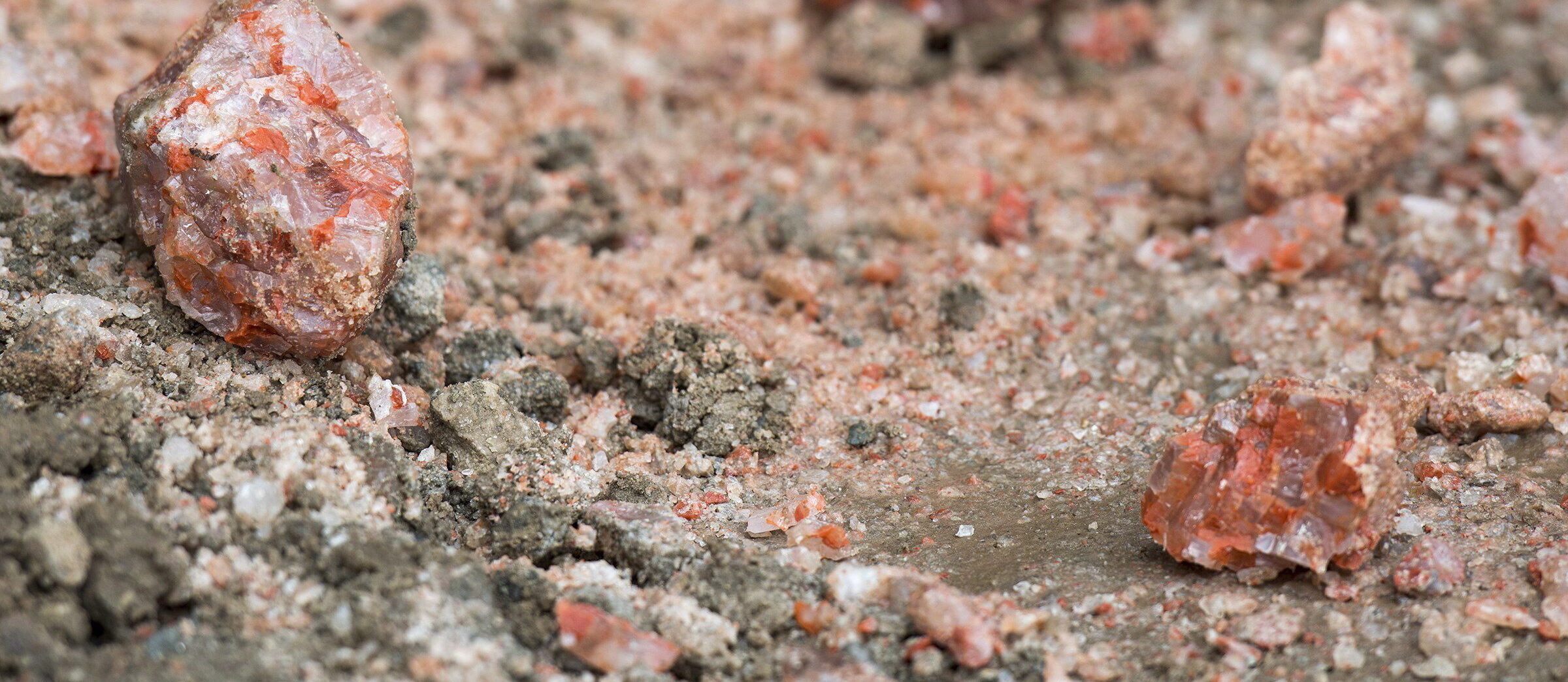
Potash is a critical component in fertilizers that maintains soil health and promotes good yields. Canada is the leading producer and exporter of potash and has the world’s largest reserves, totaling 1.1 billion tonnes. Most of the reserves are concentrated in Saskatchewan, which accounts for almost 45 per cent of the known global reserves.
The fertilizer industry plays an essential role in Canada’s economy; the total economic impact of the industry is more than $42 billion.
The Trump administration’s strong-arm tactics have already prompted Canada to actively seek new trading avenues. Among the potential partners that Canada can build stronger ties with is India – especially when it comes to potash. Establishing a reliable, strategic partnership between the two on potash could bring long-term benefits to both countries.
Supply chain disruptions
India is the second largest consumer of fertilizer in the world. It uses almost 60 million tonnes of fertilizer per year and imports about 30 per cent of this. However, it is completely import-dependent on potash, a critical component of fertilizer. This is because India does not have any viable potash reserves.
As a result, India has been a buyer of Canadian potash, importing nearly 25 per cent of muriate of potash from the country between 2022 and 2025. The rest of its fertilizer supplies come from Russia, Belarus, Saudi Arabia and Israel.
The global upheaval caused by the 2022 Russian invasion of Ukraine and then the war in Iran highlighted India’s vulnerability to supply chain disruptions in its procurement of the nutrient.
At a webinar hosted by the Canada-India Strategic Partnership Forum (CISPF), Rohit Kumar Singh, former secretary of India’s department of consumer affairs, highlighted India’s vulnerability to food security because of its dependence on imported potash. He argued that policy reform was needed to move away from India’s nitrogen-based subsidy program. The creation of a reliable long-term supply of potash from countries like Canada would be critical, he said.
Canada’s food imports need stronger environmental safeguards
Effective trade diversification depends on small and medium businesses
Matthew Don Trapp, senior director of policy and government relations at Fertilizer Canada, stressed the need to build stronger ties through trade with democratically aligned partners. He made a direct comparison with Belarus and Russia, saying India would do well to align more with Canada. He also noted that Canadian potash production generates 50 per cent fewer carbon emissions than potash produced by other countries.
Making potash a pillar of the CEPA
Building on the discussion, I argued in a CISPF policy brief that Canada and India should create a strategic partnership on potash. The Comprehensive Economic Partnership Agreement (CEPA) currently being negotiated between Canada and India should formalize such a partnership. The policy brief states that “this action would elevate fertilizer from a standard trade line item to a foundational pillar of the broader strategic partnership.”
A multistakeholder working group could create principles for long-term agreements aimed at supporting transparent pricing, regulatory co-operation, sustainability standards, conditional yet minimum long-term offtake commitments and emergency allocation protocols.
The changing geopolitical scenario should compel both India and Canada to view potash as a strategic asset rather than merely a transactional commodity. Certain policy instruments like establishing risk-sharing on price, production, transport and financing between the government and private entities were also recommended. This was based on the experiences of companies like Clean Seed Capital Group, a Canadian agri-tech company, that had to navigate the relationship between India’s central and state governments on agriculture while working out a partnership with India’s Mahindra and Mahindra.
Turning strategy into a deal
The brief also recommended Indian equity participation in upstream Canadian potash assets. This would insulate India from price shocks caused by supply chain disruptions. However, raising the initial capital would remain a challenge as evident in the case of Karnalyte Resources’ Wynyard Project, an early-stage potash and magnesium development in Saskatchewan.
India’s Gujarat State Fertilizer and Chemicals, one of India’s largest fertilizer and industrial chemicals companies, has a 47.7 per cent stake in the company, but the project has been delayed primarily due to financing.
Canadian Prime Minister Mark Carney announced in October that Indian Prime Minister Narendra Modi and is expected to sign the CEPA in December during a visit by Modi to Canada. Also in October, Maninder Sidhu, Canada’s minister of International Trade, met with Piyush Goyal, India’s minister of Commerce and Industry, in New Delhi signalling the intent the two countries have in finalizing the agreement by the end of this year.
Potash is critical to India’s food security and could help Canada achieve its trade diversification goals. It could also help cement a mutually beneficial partnership with a win-win outcome for both the countries.