Canada is in the midst of its most ambitious trade pivot in a generation. The federal government, having committed to doubling non-U.S. exports over the next decade, has concluded new agreements with Indonesia and Ecuador, relaunched negotiations with India, and signed investment deals with the United Arab Emirates all while navigating a volatile review of the Canada-United States-Mexico Agreement.
Nearly all of these efforts focus on what Canada sells. Almost none is directed at what Canada buys. That creates a risky blind spot, especially when it comes to our food supply.
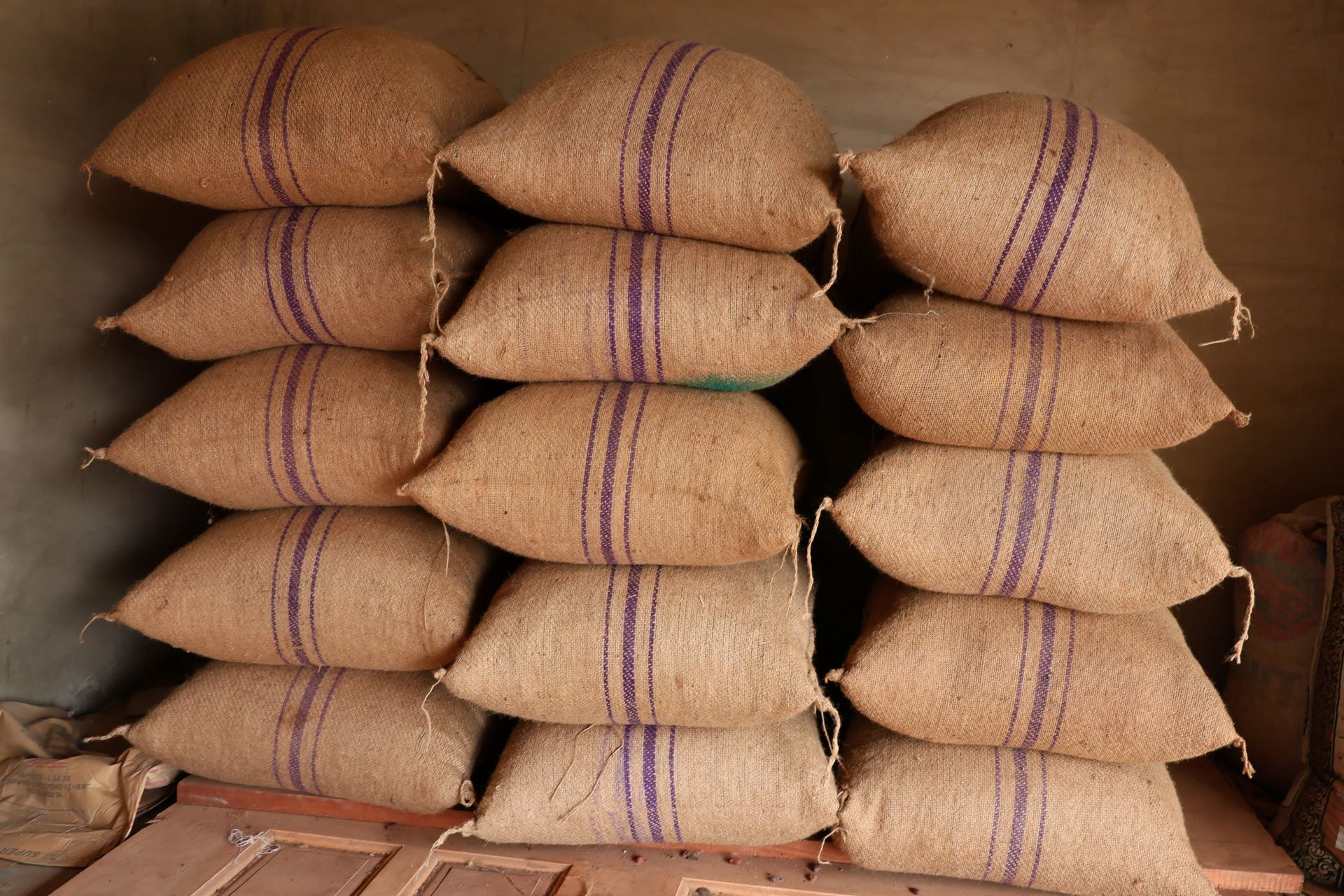
According to the new National Food Security Strategy, Canada is the world’s 11th-largest importer of agriculture and agri-food products. We import about 88 per cent of the fresh fruit and nuts and 72 per cent of the fresh vegetables we consume. In 2024, we imported around $2.6 billion worth of coffee and coffee products, about $1.75 billion in ready-to-eat chocolate in 2023, and a similar value in 2025 for cocoa beans.
To produce high-value goods such as roasted coffee or chocolate, Canadian enterprises rely heavily on imported commodities that we cannot grow at home. This dependency makes Canada vulnerable to supply fluctuations and market volatility, as demonstrated by recent surges in global cocoa and coffee prices, driven by extreme weather in key producing regions.
What Canada’s national food security strategy is missing
New bill fails to address human rights abuses in supply chains
Community food systems are critical to Canada’s national security
When the productive capacity of our international partners erodes, it threatens our own domestic food manufacturing industry. Enhancing the resilience — and sustainability — of our supply chain is essential to safeguarding our security.
In pursuing its ambitious market diversification strategy, Canada must remain mindful of the sustainability of agri-food imports. This is not an argument for trading less, or erecting protectionist barriers behind a green label. The objective is to ensure goods coming into the country arrive free of the environmental degradation and labour abuses that are often reported by NGOs.
Economic prosperity and sustainability can be compatible. Treating sustainability as an investment rather than a cost is what will make trade diversification durable, and position Canada as a leader in balancing environmental accountability with economic capacity.
This approach could become a new “Ottawa Effect” in global supply-chain resilience.
Diversification without responsibility is fragility
Agriculture is a factor behind up to 90 per cent of global deforestation, and many of the commodities that Canadians eat can contribute to soil degradation, water stress and biodiversity loss in exporting regions. Environmental degradation abroad can translate into supply disruptions, price spikes and quality failures. For example, Canadian food security would be undermined if poor water management reduced California’s capacity to export fruit and vegetables.
In seeking new trade relationships, Canada should recognize that commodity prices do not always reflect the true costs of environmental degradation and social harms. Over time, these hidden impacts will weaken the very supply chains Canada relies upon. Poor environmental management only compounds the threat when extreme weather and other shocks hit intensified production areas.

Notably, regions from which Canada imports raw commodities for further processing are often those where trade architecture is thinnest. Canada has 15 free-trade agreements covering 51 countries, yet much of sub-Saharan Africa remains outside of these agreements despite being an important source of our agricultural commodity imports. Where agreements do exist, their environmental provisions are often weak or unenforceable.
The policy choices that Canada makes today — through trade agreements where they exist, and through investment, co-operation and capacity-building where they do not — will shape these relationships for decades.
The agri-food sector has been overlooked
The Canadian conversation about supply-chain responsibility tends to centre on garments, critical minerals, batteries and steel. Agri-food rarely makes the list, yet the sector’s challenges are distinct and mounting.
Supply chains are often long and fragmented, touching millions of smallholder farmers. Many Canadian downstream firms engaged in processing, distribution and retail are small and medium enterprises (SMEs) with limited capacity to manage complex sustainability requirements. And besides being perishable, agri-food products are more culturally salient and emotionally charged than, say, how we get our lithium batteries. Canadians are more conscious about what is in their food and how it got here.
Canada’s existing supply-chain regulations do little to address these challenges. While the Fighting Against Forced Labour and Child Labour in Supply Chains Act requires companies to publish annual reports on labour risks, it lacks specific due-diligence requirements and omits environmental harm entirely.
The U.S. enforces stricter import prohibitions, even if its scope remains constrained by targeted entity and product lists. Canada’s Bill C-35, An Act respecting the prohibition of the importation of goods produced by forced labour, would move closer to a U.S.-style enforcement framework without addressing gaps in due diligence or environmental mandates.
The European Union, on the other hand, is confronting greenhouse gas emissions and biodiversity loss. Starting in December it will bar imports linked to deforestation. Its carbon border adjustment mechanism already requires the price of imports to reflect their carbon footprint.
Canadian exporters to the EU will need to meet these requirements regardless of what Ottawa does. As the EU raises sustainability standards, non-compliant goods will end up in jurisdictions with weaker policies — such as Canada and the U.S. If Canada does not adopt similar environmental protections, we will remain a repository for climate-damaging imports.
What can be done
Beyond simply pursuing stronger due-diligence regulations for supply chains, Ottawa must also invest in the tools, partnerships, and institutional capacity needed to make them effective.
Here are four practical steps that Canada should take:
- Build environmental accountability into trade agreements already being negotiated, for example with the Association of Southeast Asian Nations (ASEAN), the South American trade bloc Mercosur and India. In agreements where such tools are absent, require co-operation frameworks where partner countries build traceability and monitoring capacity rather than simply imposing paperwork on their farmers.
- Invest in shared traceability infrastructure and due-diligence tools that support supply-chain monitoring and help agri-food enterprises meet sustainability requirements more efficiently. For instance, Tier 2 and 3 suppliers (those further up the supply chain, who provide raw materials rather than finished product) can be difficult for resource-strapped organizations to monitor. Providing these tools directly aligns with Canada’s recent commitment to invest $5 billion in trade infrastructure.
- Use the Canada-United States Regulatory Cooperation Council to align supply-chain policies. A coordinated North American approach will make these policies more impactful by combining the market power of both countries while minimizing compliance friction for cross-border agri-food supply chains.
- Close the evidence gap. We lack data on which import supply chains carry the largest environmental footprints, and where those chains are most opaque. A modest research investment could focus policy on real risks rather than perceived ones. Concentrating resources on the highest-risk areas would avoid a broad, all-encompassing regime that disproportionately inflates compliance costs for businesses.
The window is open now
As both a net exporter and one of the largest importers of agri-food and seafood products, Canadian food supply chains leave a global footprint. Trade agreements written today will shape what Canadians eat for decades.
As we move to urgently diversify trade away from dependency on the U.S., developing new partnerships should involve embedding environmental and social principles. Doing this proactively avoids losing considerable time and money to retrofitting existing agreements. Reducing the reputational, economic and environmental costs of what we buy, starting with the food on our plates, is necessary to ensuring a more resilient and just food supply.
Next year will mark 40 years since the Montreal Protocol rallied the international community to stop the use of ozone-depleting substances that were causing alarming levels of harm to the Earth’s atmosphere.
Today Canada can again become a global catalyst by creating the “Ottawa Effect,” strengthening the global momentum to build capacity for environmental regulation and stimulate sustainable transitions for supply chains.
This commentary emerged from discussions held as part of a national Delphi study and stakeholder workshop on sustainable agri-food import governance. We sincerely thank the researchers, industry representatives, policymakers and civil society participants whose insights helped shape the ideas presented here. To preserve the anonymity of the Delphi process, other individual participants are not named.
This work was supported by the Social Sciences and Humanities Research Council of Canada (SSHRC) through the project: “Cultivating Accountability: Understanding Opportunities for Sustainability in Canada’s Agrifood Trade,” Grant Number 892-2025-2072.