More than one in six children worldwide live in areas of conflict. This reality is compounded by a rise in attacks on students and teachers, which increased by 40 per cent in 2024-25 compared with the previous two years. Children are paying a devastating price.
A particularly distressing example was on Feb. 28, when the United States and Israel first attacked Iran. A strike on an elementary school killed 156 people — 120 of them children.
Such risks were highlighted by David Lametti, Canada’s representative to the United Nations, during an annual debate on children and armed conflict. Lametti spoke of the toll global conflict takes on children and urged that their views be included when shaping political decisions affecting their lives. “Treat children as agents, not just beneficiaries of care,” he said.
Canada’s role in stopping attacks on hospitals in armed conflict
More female peacekeepers essential to protect children in conflict zones
Children and youth in conflict zones consistently rank education among their highest priorities. Yet education is not always considered early in a crisis and is often excluded from decisions on humanitarian funding. Global Affairs Canada should prioritize education as part of any emergency aid.
Graça Machel’s report 30 years later
Graça Machel, Mozambique’s first minister of education, wrote a groundbreaking report in 1996 on the devastating effects of war on children. The report documented attacks on schools, the recruitment of child soldiers and psychological trauma. Her report helped establish education as a humanitarian priority by recognizing its protective role(s) for children. Machel wrote:
“Donors should extend the boundaries of emergency funding to include support for education. The establishment of educational activity, including the provision of teaching aids and basic educational materials, should be accepted as a priority component of humanitarian assistance.” (p. 59)
Thirty years later we are still faced with having to make the same case. Global funding cuts to official development assistance have sped up a UN reform aimed at restructuring humanitarian aid. This has contributed to a 33 per cent decline in education funding requirements in crisis settings.
Education as life-saving
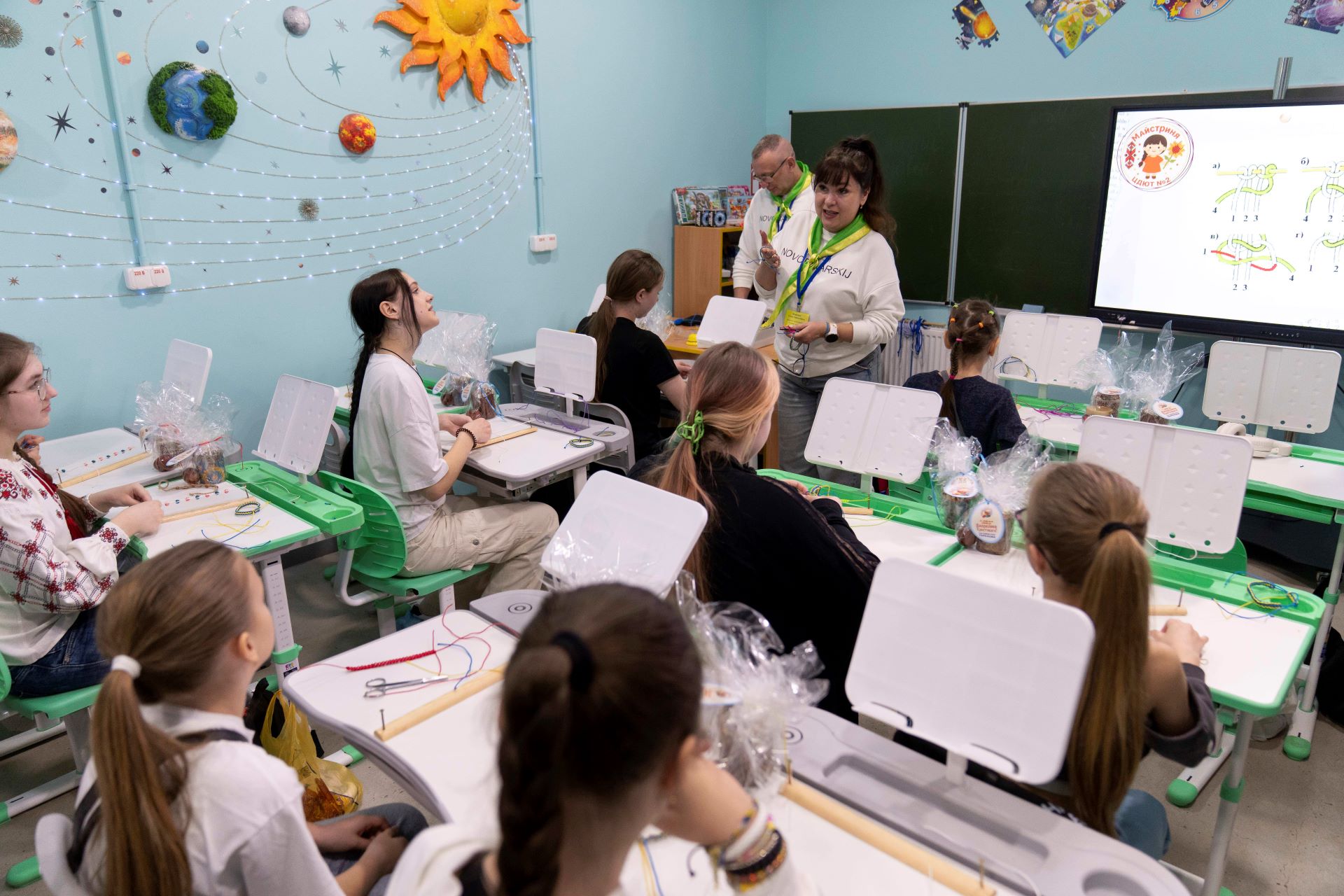
Education is life-saving and serves as a gateway to other forms of critical assistance. Learning spaces provide vulnerable children with protection, stability and trusted relationships. Education also reduces the risks of violence, exploitation, child labour, child and early forced marriage, and recruitment by armed groups. At the same time, it provides access to psychosocial support, health care and protective environments.
Children and their families have consistently prioritized education during crises. Research by Save the Children found that one in three ranked education at the top of the list — above food, health care, water and sanitation. More recent evidence, based on half a million household interviews across 31 crisis-affected countries, showed that families continue to prioritize education. They recognize it as essential for children’s safety, well-being and future opportunities.
Another 2026 global consultation found that children and youth want safe and quality education that expands future opportunities. Humanitarian response by governments must remain accountable to affected communities by ensuring that they receive the education that is so important to them.
Canada’s role in child protection and education
Canada has been a leader in protecting children affected by armed conflict as well as advancing access to quality education globally. Our country ranks seventh among the world’s top education donors. The government has spent more than $1.2 billion over the last three years on international education and skills development and in 2018 introduced a G7 commitment to educate girls and women in developing and crisis countries. An initial pledge by G7 leaders ultimately grew with international support to nearly $4.4 billion — the largest toward that cause in global history.
In 2017, the government introduced the Vancouver Principles to prevent the recruitment and use of child soldiers and endorsed the international Safe Schools Declaration made in Oslo. Canada also co-chairs high-level discussions on children and armed conflict, champions global education for girls and leads support for refugee education.
Education as an emergency response is a natural bridge between these areas. It brings together Canada’s commitments to protect children affected by conflict and its global leadership in promoting economic activity, stability and recovery in affected countries through quality learning that reaches the most marginalized.
The recommendation
The government should make emergency education funding a given in any international humanitarian response. Early support would allow local communities and Canada’s international partners to respond quickly to the needs of vulnerable children. When schools are attacked, occupied or forced to close, girls and boys face increased risks of abduction, violence, exploitation and other forms of abuse. They need an immediate response that includes education.
Such an approach would align with the UN global emergency response fund’s life-saving criteria (p. 8), which recognize education as part of any humanitarian response. While Global Affairs Canada already uses these standards to guide humanitarian funding decisions, it has not adopted the criteria’s education aspect.
A child is a child everywhere
The tragedy at Shajareh Tayyebeh school in Iran, where a regular day became one of unimaginable loss, is a stark reminder that attacks on children and teachers have become increasingly common during conflicts. This underscores that education should not be peripheral to humanitarian response but considered one of the main losses children face in conflicts.
Prime Minister Mark Carney’s government is re-evaluating almost every aspect of its global role and responsibility in this time of economic and geopolitical uncertainty. This presents a timely opportunity to also rethink support for education in conflict zones. Early funding during emergencies would not only enhance Canada’s leadership role but also respond to significant humanitarian need of children and youth.
Funding education from day one in a crisis is not only about protecting learning. It is about protecting the futures of children as soon as they are put at risk. It would recognize what children and teachers already know. Education is not a secondary service in a conflict, but essential for protection, resilience, recovery and peace.
All children deserve these — no matter where they live.