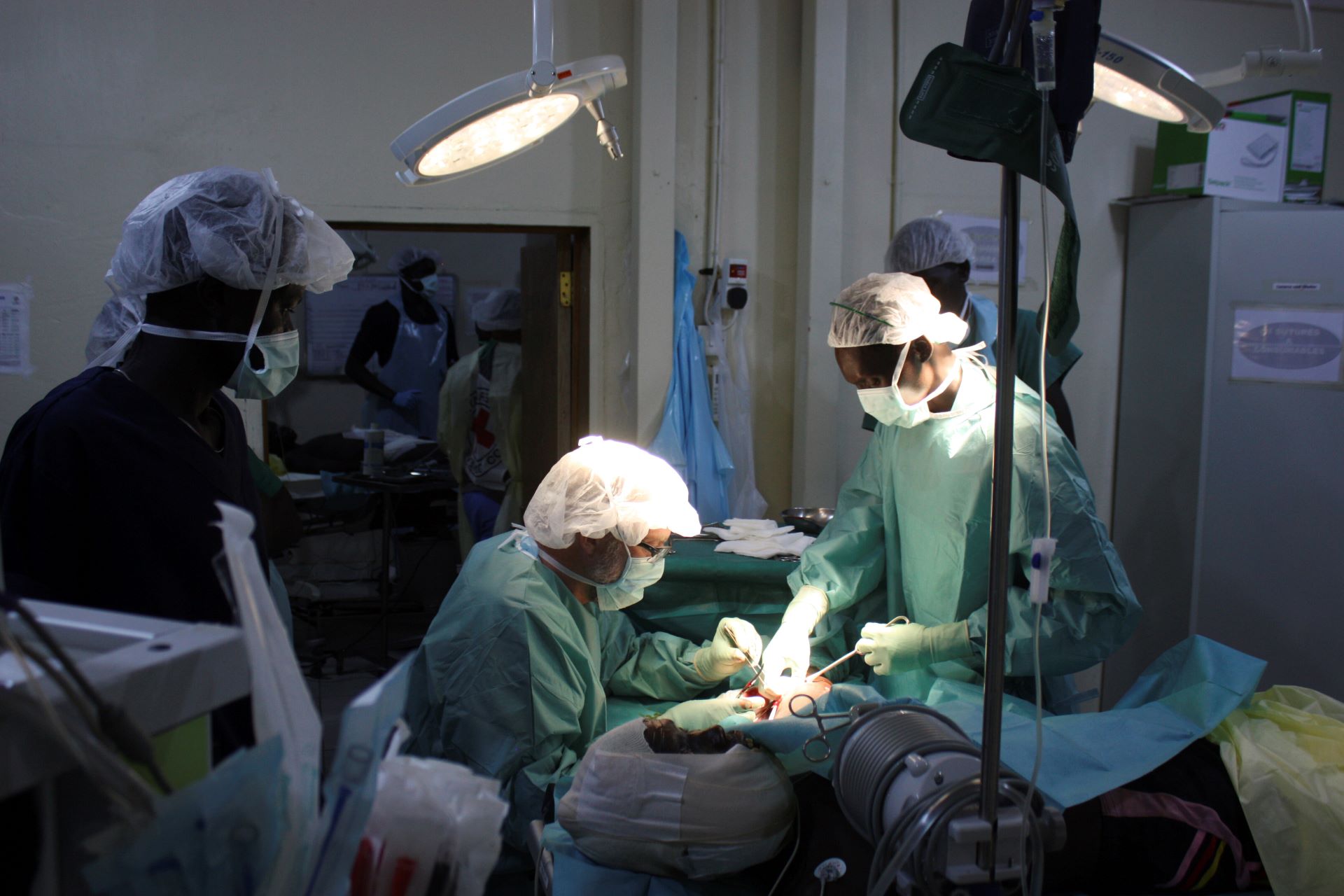
A devastating drone strike on a hospital in Sudan during the Islamic festival of Eid al-Fitr in March once again underscored the erosion of protection for health-care facilities and personnel in armed conflicts around the world, as well as the deadly implications.
The attack on El-Daein Teaching Hospital in East Darfur killed at least 64 people, including nurses and doctors, and injured 89 others. The hospital was rendered non-functional.
A doctor in Al Jazirah State in Sudan captured the fear and exhaustion felt by many health-care workers when he told me: “It feels scary just to do my job . . . We face constant threats of being accused of treating the ‘enemy’ or of hospitals being hit. But I am just providing care to my patients. I cannot leave them. They have nowhere else to go.”
Canada should walk the talk to help shield civilians from violence
Protecting civilians in both Israel and Gaza is critical for peace and justice
Sadly, attacks on health-care facilities and personnel have become normalized recently across many conflicts from South Sudan and Sudan to Gaza, Haiti, Ukraine, the Central African Republic, Yemen, the Democratic Republic of Congo and Myanmar.
Under international humanitarian law, hospitals are afforded one of the highest levels of protection. However, attacks on these facilities have become routine, including Israel’s relentless pounding of hospitals in Gaza and the widespread destruction wreaked on health-care facilities and personnel by U.S. and Israeli forces in Iran.
Even wars have limits
The time to act is now and there is something that Canada can do, as a co-sponsor of United Nations Security Council Resolution 2286, which reaffirmed the protected status of medical care in armed conflicts and strongly condemned violence against the wounded and the sick, as well as the medical and humanitarian personnel who care for them.
However, 10 years after that resolution was passed, implementation remains weak and limited.
Canada has maintained some involvement, issuing statements condemning attacks on hospitals and medical facilities, endorsing declarations and participating in multilateral initiatives.
But these actions have not translated into meaningful accountability for the aggressors or improved protection on the ground. The gap between rhetoric and reality has widened.
Canada should use its diplomatic leverage at the UN to reinvigorate global momentum on the issue. It should also host a high-level international meeting ahead of the 10th anniversary of passage of the resolution to take stock of progress and set a clear path toward implementation, compliance and accountability.
Within Canada, the federal government should commit to convening a meeting of Canadian humanitarian and development organizations, medical associations and human rights actors to ensure our foreign policy reflects realities on the ground.
The time to act is now
At a moment when Canada is reducing its international assistance budget, these actions become even more critical. Funding cuts risk further weakening support to already fragile health systems and undermining the protections the resolution seeks to reaffirm, while also damaging Canada’s credibility as a reliable partner.
For civilians caught in a war, health care is often their last lifeline. Protection of the medical mission is a fundamental tenet of international humanitarian law, which requires that medical personnel, facilities and transports be respected and protected in all circumstances (Article 19 of the Geneva Conventions, 1949).
In 2016, Canada and Switzerland established the Informal Group of States, which met in Geneva – one of the only state-led follow-up initiatives toward implementing Resolution 2286. However, the group is no longer active.
As both a co-sponsor of the original resolution and a leader of the Informal Group, Canada has a responsibility to reaffirm its commitments, especially as the world witnesses continued attacks on health-care facilities and personnel.
Yet Canada is not currently playing an effective leadership role in defending international humanitarian law or in protecting civilians and medical missions in armed conflicts. Involvement exists, but it is largely on paper, rather than in practice.
Without targeted political leadership, Resolution 2286 risks fading into irrelevance. The upcoming 10-year anniversary offers a critical opportunity to change course.
From fragmentation to focus
Resolution 2286 was adopted because there was a consensus that measures to prevent violence against the wounded and sick, and against medical and humanitarian personnel, were necessary in response to increasingly brazen attacks on hospitals and medical facilities. This resolution is legally binding on UN member states and is accompanied by recommendations from the UN secretary general to support its implementation.
However, over the past decade, international attention has become fragmented. New political declarations and global initiatives have emerged, often overlapping but lacking followthrough. This diffusion of focus has sidelined Resolution 2286.
Instead of continuing down that path, Canada should prioritize helping its worldwide implementation, which includes clear actions required by member states to reaffirm protection for hospitals, medical and humanitarian personnel.
As a middle power, Canada is well-positioned to reinvigorate implementation of the resolution. Ultimately, moving from fragmentation to focus requires investing political capital to ensure existing commitments are prioritized, given adequate resources and implemented.
Resolution 2286 reflected principled and innovative leadership. Canada helped reaffirm a vital global norm that even wars have limits. Today, those limits are being tested, crossed and too often ignored. The anniversary should not be reduced to a symbolic milestone.
Because in places such as Sudan, when a hospital goes dark, it is not just a building that is lost. It is the last line of care for entire communities.