In 2019, I argued that Canada’s mining sector could contribute to skills, accountability and more inclusive development in Africa. That argument still applies.
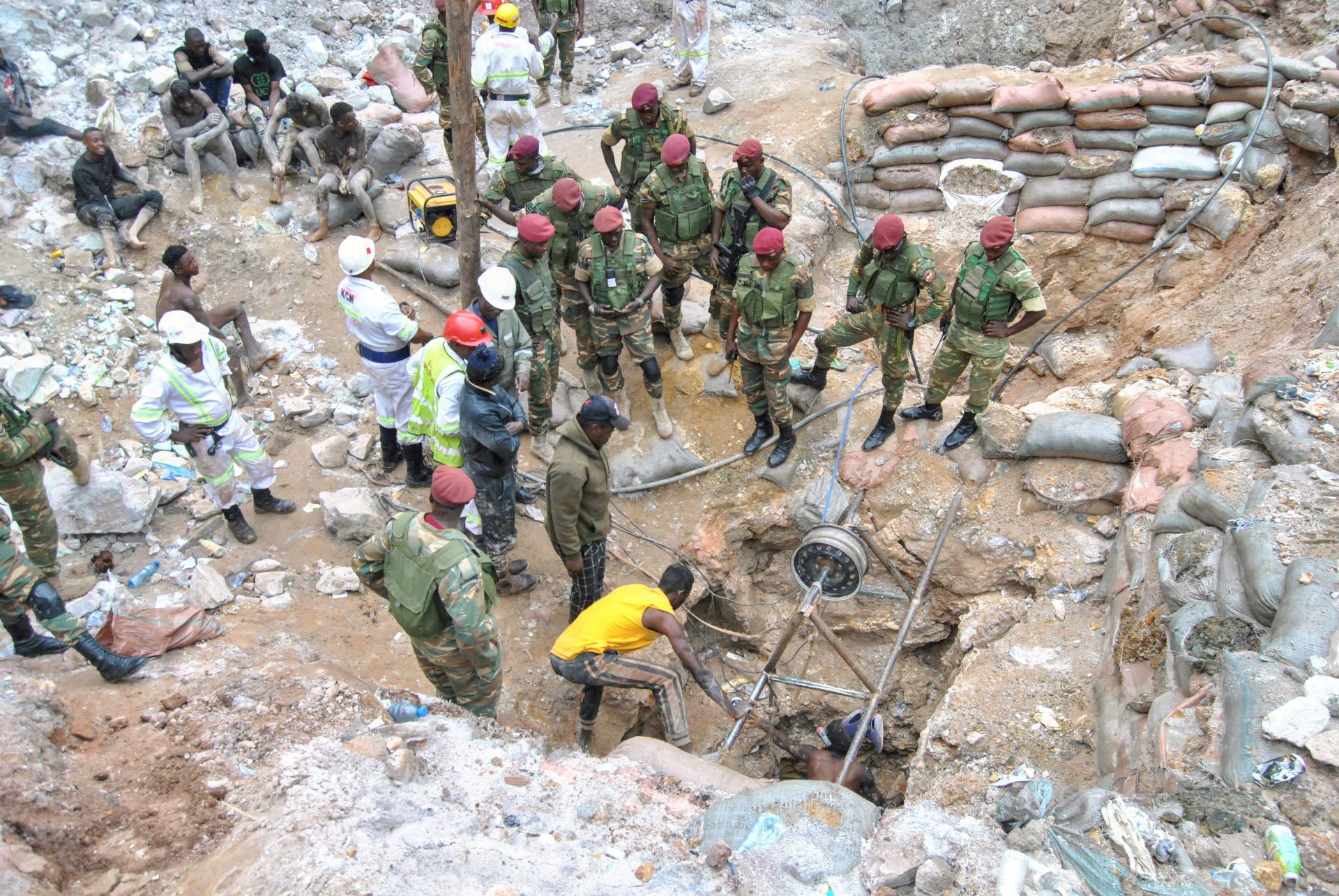
Africa is now central to worldwide competition for critical minerals, such as copper, cobalt, lithium and manganese, which are used in electric vehicles, power grids, advanced manufacturing and defence. The Atlantic Council has described this as a scramble for Africa’s critical minerals.
The continent holds more than one-quarter of the world’s known reserves of these minerals, including large high-grade copper and manganese deposits, according to a recent McKinsey analysis.
The related question is who influences project terms such as environmental oversight, benefit-sharing and the infrastructure decisions that accompany extraction.
Canada’s mining industry in Africa and social responsibility
For critical minerals, it’s better to talk about SDGs than ESG
Canadian mining and exploration companies held $352.6 billion in global assets in 2024. Africa was one of the larger destinations for Canadian mining assets outside the Americas, according to Natural Resources Canada.
The federal government has placed critical minerals at the centre of its economic security agenda. Its tools include the critical minerals strategy and the responsible business conduct abroad program.
Canada now has more structured tools than it did in 2019. Therefore, when Ottawa uses public finances to support mining projects abroad, it should require four things: joint environmental and social monitoring, transparent benefit-sharing, local content commitments and support for local regulators, institutions and organizations.
What reporting does not decide
The 2022 responsible business conduct abroad strategy replaced earlier corporate social responsibility policies that were focused largely on extractive industries with a new framework for Canadian companies across sectors. It asks companies operating abroad to identify and address environmental, labour and human rights risks.
The earlier approach relied more heavily on voluntary corporate commitments. Environmental, social and corporate governance (ESG) standards formalize how companies report on environmental impacts, community relationships and corporate oversight. They also increasingly shape investor expectations, access to financing and international standards.
The strategy also places greater emphasis on due diligence – identifying, preventing, reducing and addressing these risks.
The latest transition minerals tracker recorded 329 new allegations worldwide in 2025 of human-rights abuses connected to mines supplying minerals for the global energy transition, compared with 156 the previous year. Its 2025 Africa-focused tracker edition identified the Democratic Republic of Congo and Zambia among the countries most frequently associated with such allegations.
The increase may reflect both more allegations being recorded and stronger monitoring. The available data cannot fully separate those two factors.
Reporting can show whether a company has identified risks, set targets and disclosed performance. However, it cannot by itself determine who has authority when decisions are made. This matters because mines and the rail, road and port links that serve them increasingly involve several regions, governments, companies and communities.
A domestic lesson, not a template
Canada’s experience with First Nations shows how resource project governance can change when participation is tied to rights, ownership and oversight rather than consultation alone. During the past two decades, some major projects have gone beyond one-time consultation to negotiated benefit agreements, equity participation, joint environmental monitoring and consent-based decision-making in some cases.
The First Nations Major Projects Coalition now represents more than 180 First Nations and supports members seeking equity and leadership roles in major natural resource and infrastructure projects.
Canada has not resolved its own resource governance challenges. Formal recognition does not always translate into the capacity or influence needed to affect project decisions. Nor should Canadian legal instruments or Indigenous governance models be presented as templates for African countries and communities.
However, the Canadian experience suggests resource projects are more likely to command legitimacy when affected communities and public institutions have meaningful roles in oversight, benefit-sharing and long-term planning. Consultation can be necessary, but its value depends on when it occurs, what information is available and whether participants can influence decisions before they are finalized.
Canada can apply this principle through the terms attached to its own financing of external projects, while African governments, regulators, communities and regional institutions define the arrangements that fit their contexts. Canada’s role is to ensure it strengthens, rather than works against, those arrangements.
A practical public finance choice
Canada’s most direct influence lies in the conditions attached to its development finance, its export credits and infrastructure support. Development finance supports private-sector investment in developing markets, while export credit provides government-backed financing or insurance for Canadian firms operating abroad.
When Ottawa supports mines or the rail, road, port and power systems that connect them to markets, ESG reporting should be the baseline, not the end of its responsibility.
This is especially relevant for areas such as the Lobito Corridor – a rail and port route linking mineral-producing regions of the Democratic Republic of Congo and Zambia to Angola’s Atlantic coast.
More broadly, mineral corridors can include rail, road, port and power systems that connect mines to markets. They can reduce transport bottlenecks and support regional trade, but they also shape land use, local economies and environmental pressures across more than one jurisdiction.
Canada could begin with four conditions for its support for mining projects abroad:
- Joint environmental and social monitoring, in which regulators, companies and affected communities have defined oversight roles;
- Transparent benefit-sharing arrangements for jobs, services, revenues and other benefits, while protecting legitimately confidential commercial information;
- Local content commitments, using local workers, suppliers, training and processing capacity tied to host country industrial plans where feasible;
- Capacity support for regulators, local institutions and civil society organizations so participation can be meaningful.
The conditions should be negotiated with host country institutions and adapted to each setting, rather than applied as a fixed Canadian template. They would link Canadian support to clearer benefit arrangements, visible local oversight and stronger institutional capacity – not to merely securing mineral supply.
Canada should also apply this standard with humility. Its own accountability architecture remains limited. The Canadian ombudsperson for responsible enterprise – the office that handles complaints involving Canadian companies abroad – has no binding power to compel documents or witness testimony.
The question for Canada
Canada now has more formal tools than it did in 2019 – a responsible business conduct strategy, ESG expectations and a critical minerals agenda. The question is whether Ottawa will use them when public financing supports mines and mineral infrastructure in Africa.
Ottawa should ask whether affected communities and host country institutions have a meaningful role in decisions on environmental, social and economic terms.
Such conditions would not resolve every conflict or make every project viable. But they would bring Canada’s overseas financing closer to a lesson it is still learning at home – project legitimacy depends on how decisions are made, not only on what companies disclose.