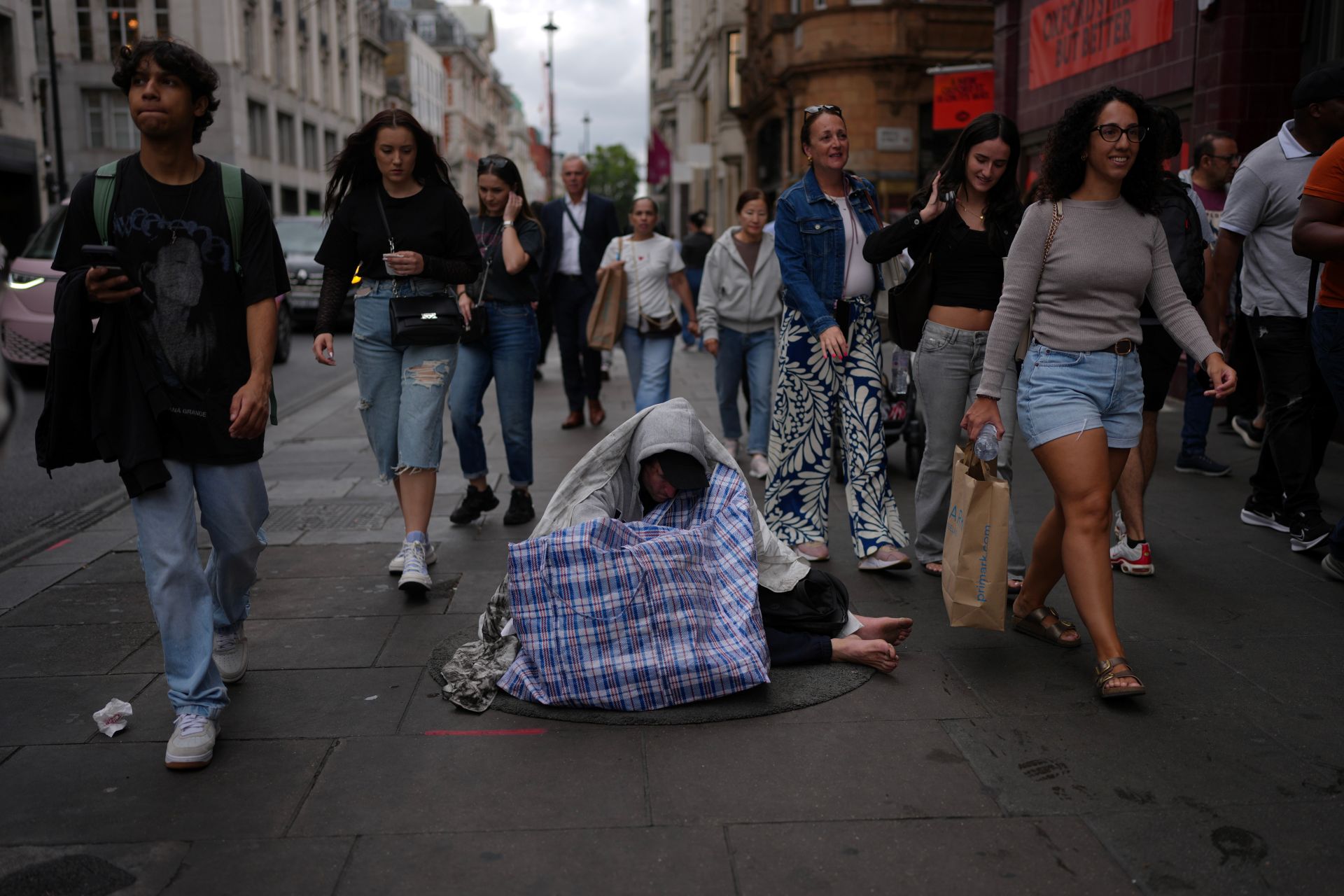
When Andy Burnham became prime minister of the United Kingdom in July, his first pledge was to end homelessness. That should tell you something about what’s possible when a government decides to stop managing a crisis and start preventing it.
Before walking up Downing Street, Burnham met people with lived experience of homelessness. Then he backed it with £340 million ($631 million). He also said something I think deserves to be heard here in Canada:
“For too long, we’ve been told that ending rough-sleeping will take decades or even that it’s impossible. I’m not having that. This is something a government can fix if it chooses to. Today, I’m choosing to.”
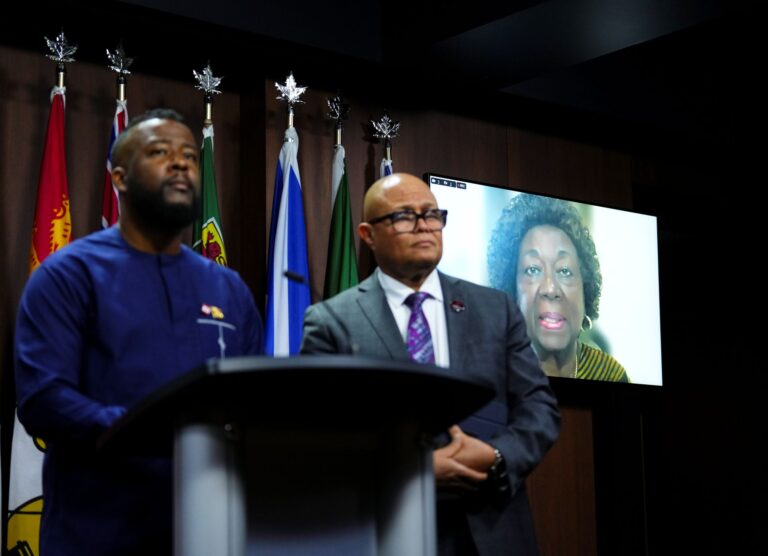
We’ve seen this shift up close. Earlier this year, we joined a small international delegation invited to the U.K. to meet Prince William and learn more about Homewards, his Royal Foundation’s youth homelessness prevention initiative. What struck us was how closely the U.K.’s emerging approach echoes what Canadian evidence has already shown works.
Burnham’s framing matters as much as his financial commitment. He described the goal as building “a more preventative state, investing in success rather than paying for failure.” His government noted that a year of rough-sleeping costs an estimated £20,128 ($38,000) per person, compared to £1,426 ($2,700) for a successful prevention intervention. The math, as he pointed out, is not complicated. And the benefits extend far beyond the individual, reducing the pressure on the health-care system, the criminal-justice system and public services more broadly.
Internal analysis by the Canadian Observatory on Homelessness (COH) and A Way Home Canada, a national coalition tackling youth homelessness, shows that early, targeted supports to prevent homelessness would cost about $13,980 per youth, compared to $48,910 a year for an emergency-shelter bed that offers no path to lasting housing stability. The gap here is as stark as the one Burnham is pointing to in the U.K.
During the COVID-19 pandemic, almost overnight the U.K. housed thousands of people experiencing homelessness. We saw the same thing happen here. When governments decided that no one should be homeless during a public-health emergency, they found the resources and the will to make it happen quickly.
Nationally, funding for Canada’s national homelessness strategy, Reaching Home, created more than 26,000 temporary accommodation spaces and supported more than 214,000 stays in hotels and other non-congregate spaces within months, backed by $693.6 million in emergency federal funding announced within weeks of the outbreak. The barriers to ending homelessness were never technical. They were, and are, political.
Prevention costs less than crisis response
We already know prevention works. Over the past decade, the Observatory and A Way Home have developed and rigorously evaluated prevention approaches in communities across this country through Making the Shift, a youth homelessness social innovation lab.
Communities in Hamilton, Kelowna, St. John’s, Ottawa and Niagara Region have demonstrated strong results. In Guelph, chronic youth homelessness has dropped 76 per cent in recent years, and the city is on track to become the first mid-sized city in Canada to reach functional zero for youth homelessness. That progress is visible on the ground: a local youth-serving agency is opening new supportive and transitional housing with youth expected to move in this fall.
Nearly half of all currently homeless adults first experienced homelessness before the age of 25 with the peak years of first experience falling between ages 12 and 20. For young people who left home before 16, most Canadian communities offer no support until they are older and their needs become more complex and costly to address. Only 18 per cent of communities across the country have youth-designated shelters. This is a policy choice, and, like all policy choices, it can be unmade.
Other jurisdictions are already proving the case. Washington State passed a youth homelessness act and through sustained legislative commitment cut youth homelessness by 40 per cent between 2016 and 2022.
Canada already knows what works
Through its national strategy, Reaching Home, Canada has already built a solid foundation for homelessness prevention: co-ordinated access systems and a network of community organizations across the country that know how to do this work. What’s still missing is the data infrastructure to match. Not a single federal system, but shared standards across provinces and territories, and local capacity that lets every community track outcomes that roll up to a national picture.
The community capacity and innovation stream within Reaching Home showed exactly the right instinct: invest in systems and capacity, not just beds and services. That was the right call. The next phase of Canada’s homelessness strategy should take that logic further and close the data gap that remains.
Canada needs permanent, at-scale investment in prevention infrastructure, not another pilot or demonstration project. Federal leadership is what activates the capacity that already exists in communities across this country. But federal leadership alone won’t be enough. The systems where youth homelessness most often begins – education, child welfare, health and justice – fall within provincial and territorial jurisdiction. Prevention cannot take root without provinces and territories bringing their own resources to the table as genuine co-investors.
Burnham’s announcement in July is a reminder of what becomes possible when governments decide to act. What we need now is a scaled-up prevention infrastructure that is already proven to work and is built into the government’s broader agenda on infrastructure, productivity and long-term fiscal resilience.
That means federal investment that builds on what Reaching Home has already put in place, brings provinces, territories and philanthropy to the table and delivers measurable impact for young people. Canada has the evidence base, training capacity and community readiness to prioritize this work, end homelessness for our country’s young people and provide a roadmap for international jurisdictions. Canada has the opportunity not only to end youth homelessness here, but to show the world how it’s done.