(Version française disponible ici.)
Canada is one of the world’s leading nuclear power nations.
It supplied 24 per cent of global uranium in 2024, making it the world’s second-largest producer. It is an $800-million-a-year industry that directly employs more than 2,000 Canadians at mine sites, more than half of whom are residents of northern Saskatchewan.
With Ontario Power Generation leading the way, Canada is also a leader in the development of small modular reactors (SMRs), which have attracted interest and development plans in other provinces, such as Nova Scotia.
Yet one crucial step in the nuclear industry is missing here – enrichment, which is the process of increasing the percentage of the uranium-235 isotope in natural uranium for use as reactor fuel.
Controversially, this fuel can be used to make nuclear weapons when enriched beyond the levels required for civilian energy production. Current global geopolitical conflicts make the politics of enrichment more visible and raise proliferation concerns as the distance from civilian-fuel grade to a more sensitive fuel cycle becomes shorter
Today, uranium mined and processed in Canada must be exported to the United States for enrichment before being returned for use as reactor fuel.
But as a new generation of SMRs – most of which require enriched uranium as fuel – are being prioritized, this raises a strategic question: should Canada complete the nuclear fuel cycle at home? The answer is not straightforward.
Domestic enrichment promises to provide economic opportunity, supply chain security and technological leadership. But it also raises difficult questions about nuclear non-proliferation and geopolitical risks. The issue is not merely technical. It is strategic.
While this does not necessarily mean that the Canadian nuclear sector should aim at developing a domestic enrichment capability, it does mean it should have a plan that includes deepening alliances with key international players in the field, assessing the viability of domestic enrichment and considering greater use of recycled spent CANDU fuel that has already been processed.
Canada’s SMR moment
Following decades of global success with CANDU reactors, Canada’s nuclear industry is experiencing renewed momentum with the shift toward SMRs. Provinces and utilities are exploring them as part of the future of electricity generation and industrial decarbonization.
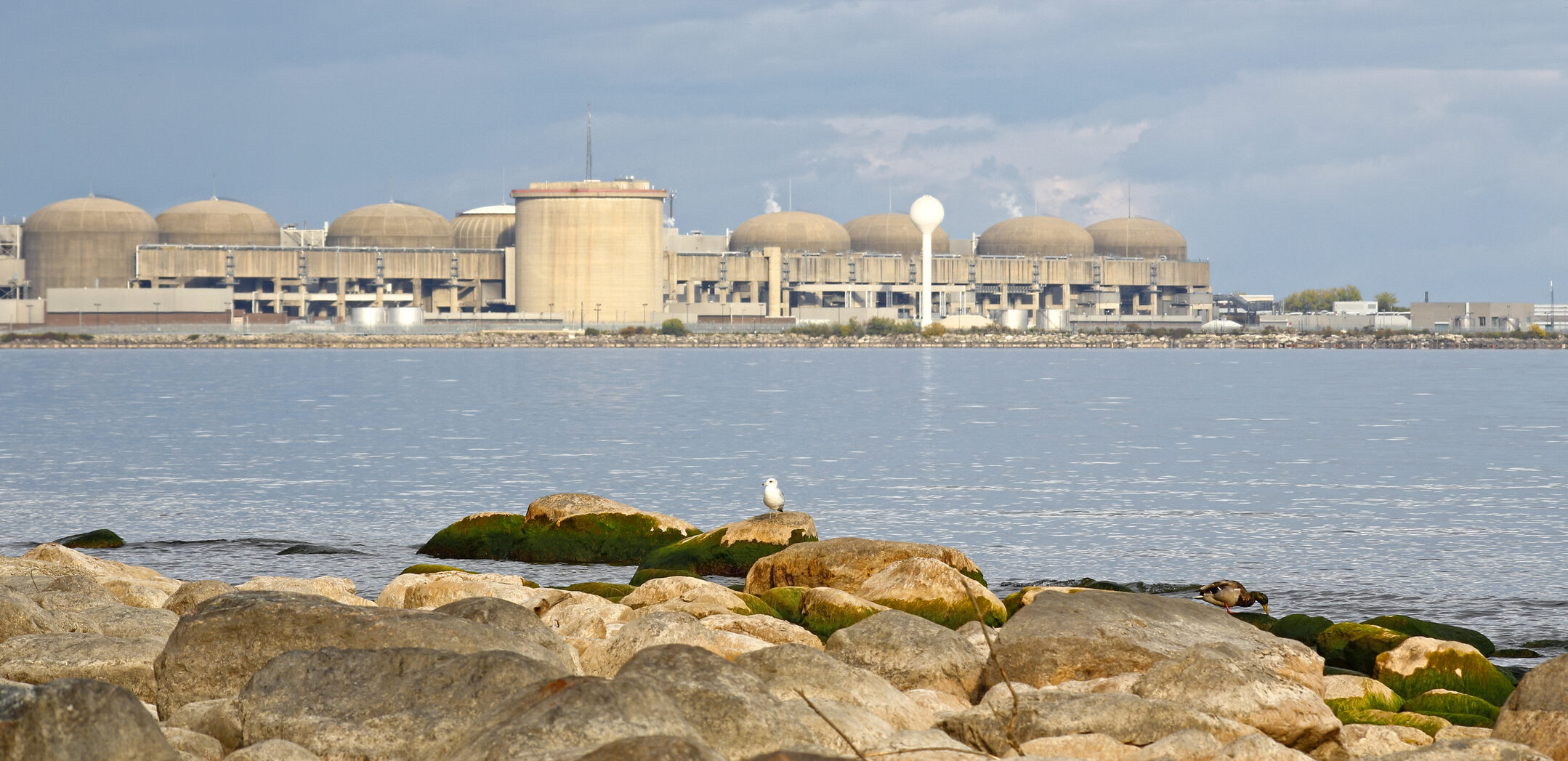
Ontario is spearheading the way with plans for an SMR that will produce electricity for the province’s main power grid at the Darlington nuclear site. Saskatchewan has recognized SMRs as a potential solution to replace coal-fired power generation, while New Brunswick is home to two advanced SMR projects aimed at exporting Canadian nuclear innovation.
There are even proposals linking SMRs to food security in northern communities by supporting greenhouse agriculture in cold climates, because nuclear reactors can provide both electricity and heat with minimal emissions.
But increased use of SMRs leads to a crucial issue – the need for enriched fuel.
Canada’s existing nuclear industry is built on CANDU reactors which use natural uranium, eliminating the need for enrichment. However, many modern reactors require enriched uranium.
Completing the value chain
Energy transitions today are shaped as much by supply chains as by technology. Canada already holds several advantages in the nuclear fuel cycle.
In addition to being the world’s second-largest uranium producer, it hosts one of the world’s few uranium conversion facilities in Port Hope, Ont. That facility manufactures both fuel for CANDU heavy-water reactors and uranium hexafluoride, which is exported for enrichment and fabrication into fuel for light-water reactors.
Federal gifts for the nuclear and mining industries
Nuclear energy plays a key role in meeting Canada’s net-zero goals
Including fuel enrichment capacity to complete the domestic value chain would not only enhance Canada’s energy security by reducing dependence on imported fuels but would also serve as a hedge against geopolitical disruptions, provide economic opportunity for the high-value industrial and engineering sectors, and further enhance its position as a leader in the nuclear energy field.
Canada has decades of experience with reactor technology through its CANDU program. The completion of the fuel cycle through domestic enrichment would allow Canada to offer a more complete nuclear energy program as the world’s SMR market develops. In theory, Canada could capture a greater share of that supply chain. In practice, however, the path is far from straightforward.
Political, technological and financial barriers
While Canada is fully committed to the non-proliferation of nuclear weapons, the presence of enrichment facilities would inevitably raise questions. The sensitivity of the topic may have been a reason why Canada originally went the CANDU route, using natural not enriched uranium.
The political barrier is further compounded by the fact the most prevalent form of enrichment – centrifuge technology – is currently the domain of a handful of companies and nations. Therefore, Canada would have to acquire enrichment technology through a collaboration with some of them.
In addition, there would be the cost of construction of new facilities, requiring an assessment of their economic viability against the country’s multiple strategic interests.
An alternative pathway: fuel recycling
An alternative Canada can consider is efficient fuel recycling. CANDU reactors have been in operation for more than 50 years and have produced large quantities of spent nuclear fuel. Reprocessing would ensure that these unused nuclear isotopes are recovered for use in future reactors.
Some advanced SMR designs are already exploring the use of recycled fuel. If these technologies develop further, Canada’s decades-long inventory of used CANDU fuel could become a strategic asset, thereby eliminating the geopolitical risks associated with enrichment. However, reprocessing raises its own technical and regulatory challenges because this option is still in its infancy.
Building enrichment capacity is not just an economic calculation. There is a need for a multidimensional assessment that emphasizes reducing the geopolitical risk, addresses value for money and ensures a sustainable energy security pathway.
The future of the Canadian nuclear sector will be shaped not only by the type of reactor used but also by the strength of the fuel supply chain that backs it. The CANDU nuclear sector played a key role in pioneering the use of civilian nuclear power. With the advent of SMRs, the sector is at an important crossroads and Canada has an important decision to make.