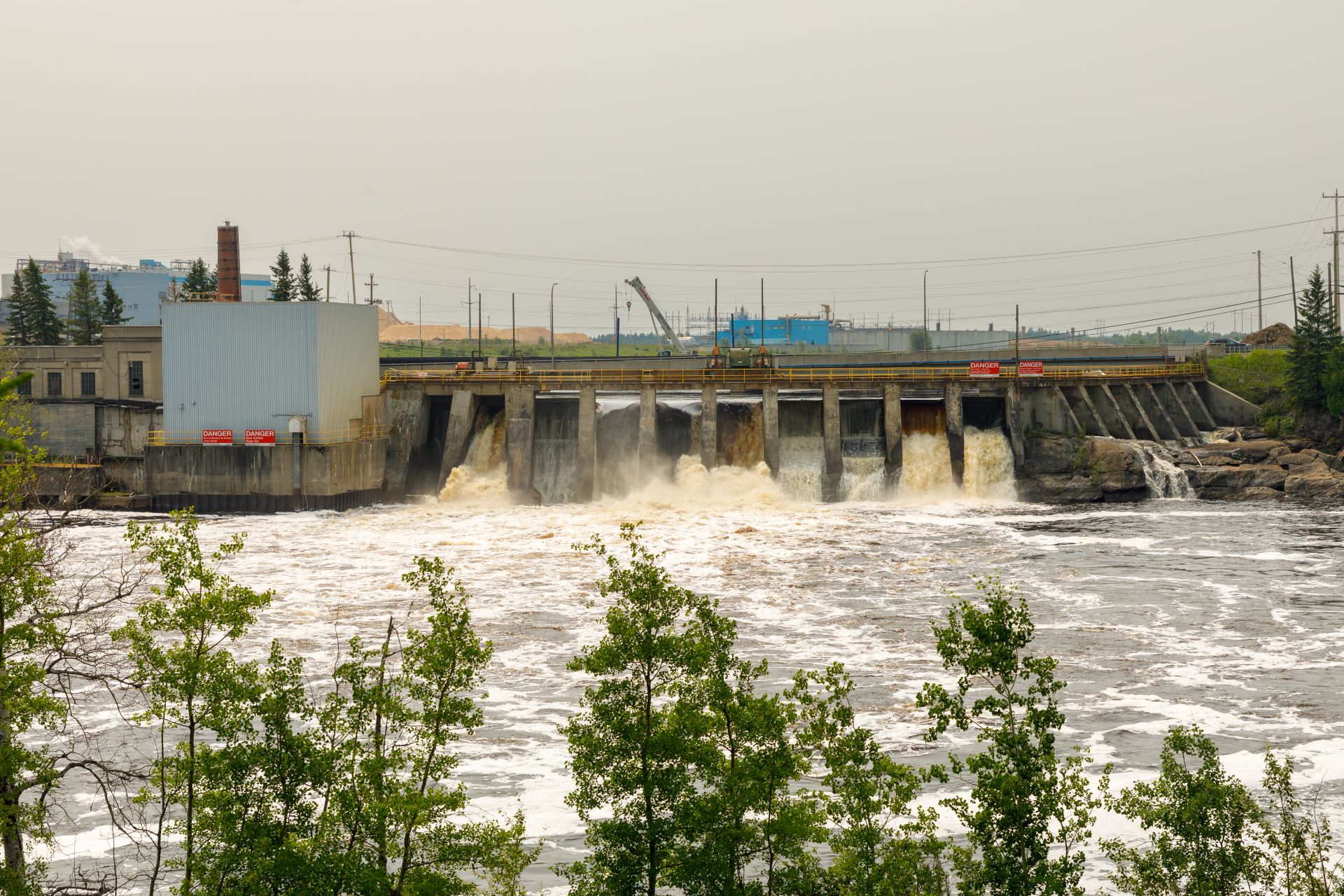
The last time Ontario went on a serious waterpower building spree, Indigenous communities were largely consulted parties. Today, waterpower developers are increasingly asking: Who is connected to this hydro site, and who should share in the benefits of developing it?
To understand how we got here, we need to take an honest look at where we came from.
In the past, Ontario’s waterpower development plan was based on the feed-in tariff (FIT) model, which focused on guaranteed grid access, long-term contracts and pricing models, all designed to encourage renewable-energy project development.
Indigenous inclusion in the FIT era was, at best, a policy garnish. Proponents could qualify for a few extra cents per kilowatt-hour if they brought an Indigenous community along for the ride. It was transactional, optional and structured in a way that made Indigenous participation a consideration, not a requirement.
Early renewable-energy proponents viewed partnerships as consultation requirements, employment commitments or limited economic benefits. Indigenous communities were often consulted later in the process, selected for convenience rather than territorial connection, and handed promises of jobs and contracts.
The Crown’s duty to consult existed but, in practice, it operated as a legal hurdle to clear, not a relationship to build. Ontario’s Ministry of Natural Resources (MNR) held the keys to Crown land, and hydro development was largely structured around the developer, with Indigenous interests receiving limited consideration.
A new procurement process is changing everything.
Beyond symbolic inclusion
Ontario’s new long lead time (LLT) hydro procurement is estimated to add 200 megawatts of new capacity, mostly small greenfield projects in the North. What’s different about LLT procurement is that qualifying projects are those with a five-year runway for generation that will deliver over a 40-year term. Commercial operation is targeted for May 2035.
The new LLT procurement system embeds Indigenous equity as a competitive factor, not a requirement, but something rewarded in a major way. Under the current Independent Electricity System Operator (IESO) framework, a proponent’s bid price can be effectively reduced by up to 10 per cent based on Indigenous participation scoring. In a competitive, price-driven procurement, that is enormous. It is typically more than enough to be the difference between winning and losing.
The design goes deeper than a scoring algorithm. The LLT framework gives additional weight only to projects situated within the traditional territories or treaty lands of the Indigenous community holding equity. This moves away from symbolic inclusion and genuinely asks: What Indigenous Nations are connected to this future hydro site?
During the predevelopment work phase, proponents undertake early site screening, Crown land reviews, Indigenous engagement, engineering assessments, and the submission of Crown land site reports and other applications to MNR before exclusive access to the site is granted.
This phase is where proponents establish Indigenous equity partnerships, territorial relationships, and evidence of Indigenous community participation that will later form part of the IESO-rated criteria evaluation. The predevelopment process also allows MNR to identify consultation obligations, land claim considerations, encumbrances, and watershed-related Indigenous economic benefit requirements before a project advances further.
Here’s what the IESO is really getting right, albeit with room for improvement. To ensure Indigenous Nations can participate in the negotiations necessary to establish partnerships, the IESO has an Indigenous Energy Support Program (IESP), a $15-million fund “to support assessment and development of opportunities for partnerships and participation in new or existing energy infrastructure projects.”
Indigenous Nations have varying levels of the capital and liquidity necessary to hire lawyers and consultants. Some have next to none. Economic self-determination happens when an Indigenous Nation comes to the table with autonomy and the ability to advocate for itself and its members. That’s why the IESP is a necessary ingredient when it comes to establishing equity partnerships.
Benefits of an equity-sharing model
The shift to an equity-sharing model can have lasting, real benefits for Indigenous communities. It can promise revenue streams that last for the life of the asset, decision-making authority at the board table and intergenerational wealth. An equity stake in a hydro project can ultimately give an Indigenous Nation the capital needed to further its economic self-determination.
Partnership agreements aren’t static for the 40-year generation contract term, though. There is a minimum reduced partnership requirement, which will allow an Indigenous partner to reduce, but not entirely remove, its ownership stake in the project before the five-year mark, and once on its own volition any time during the project. This protects an Indigenous partner from its stake being diluted after the contract is awarded and gives them more power to protect their investment from cost overruns or delays.
But the risk is still real. Indigenous communities may have the capital to back their stake, or they may – more commonly – finance the project through the Ontario Indigenous Opportunities Financing Program or the Canada Indigenous Loan Guarantee Corporation. Financial risk is still present as it is in all projects, requiring an Indigenous Nation to do its due diligence up front, a costly and resource-heavy process.
First Nations are not the obstacle to fast-tracking national projects
Canada’s electricity strategy is overlooking its most powerful asset
Decisions on major projects often ignore cultural and social losses
The duty to consult remains legally distinct from the economic participation framework, and a well-scored bid may not be the same as a freely, fairly negotiated partnership. But the broader trajectory is unmistakable. Ontario has moved from a model where governments encouraged Indigenous inclusion as a social-benefit policy objective to one where markets largely require it as a condition of success.
It also reflects a growing recognition that projects built in partnership with Indigenous Nations from the outset are inherently more resilient. Building Indigenous equity as a factor in the bid process is a tacit acknowledgement that a partnership with the rightsholder of that land will tend to encounter fewer conflicts, delays and legal disputes.
Ontario’s latest procurement provisions reflect how much the process has changed. The transformation is not just regulatory. It reflects a growing recognition that these rivers have sustained Indigenous Nations since time immemorial and that these communities should play a central role in the economic opportunities that flow from them.
The waterways didn’t change. The politics around them finally did.