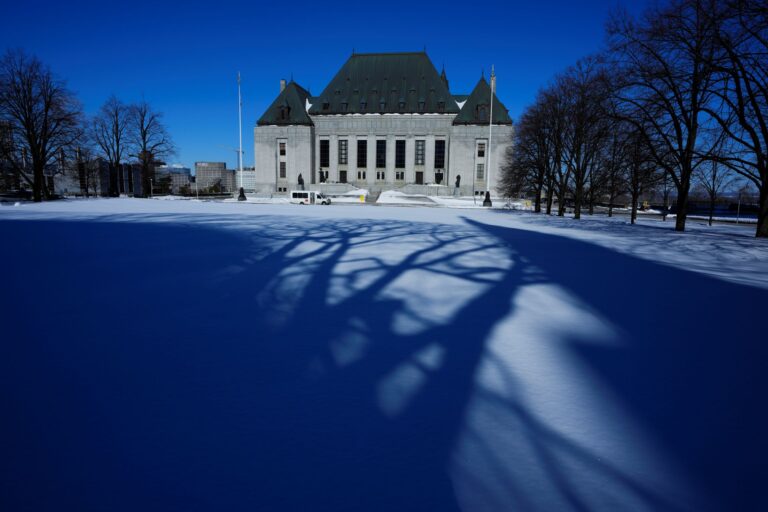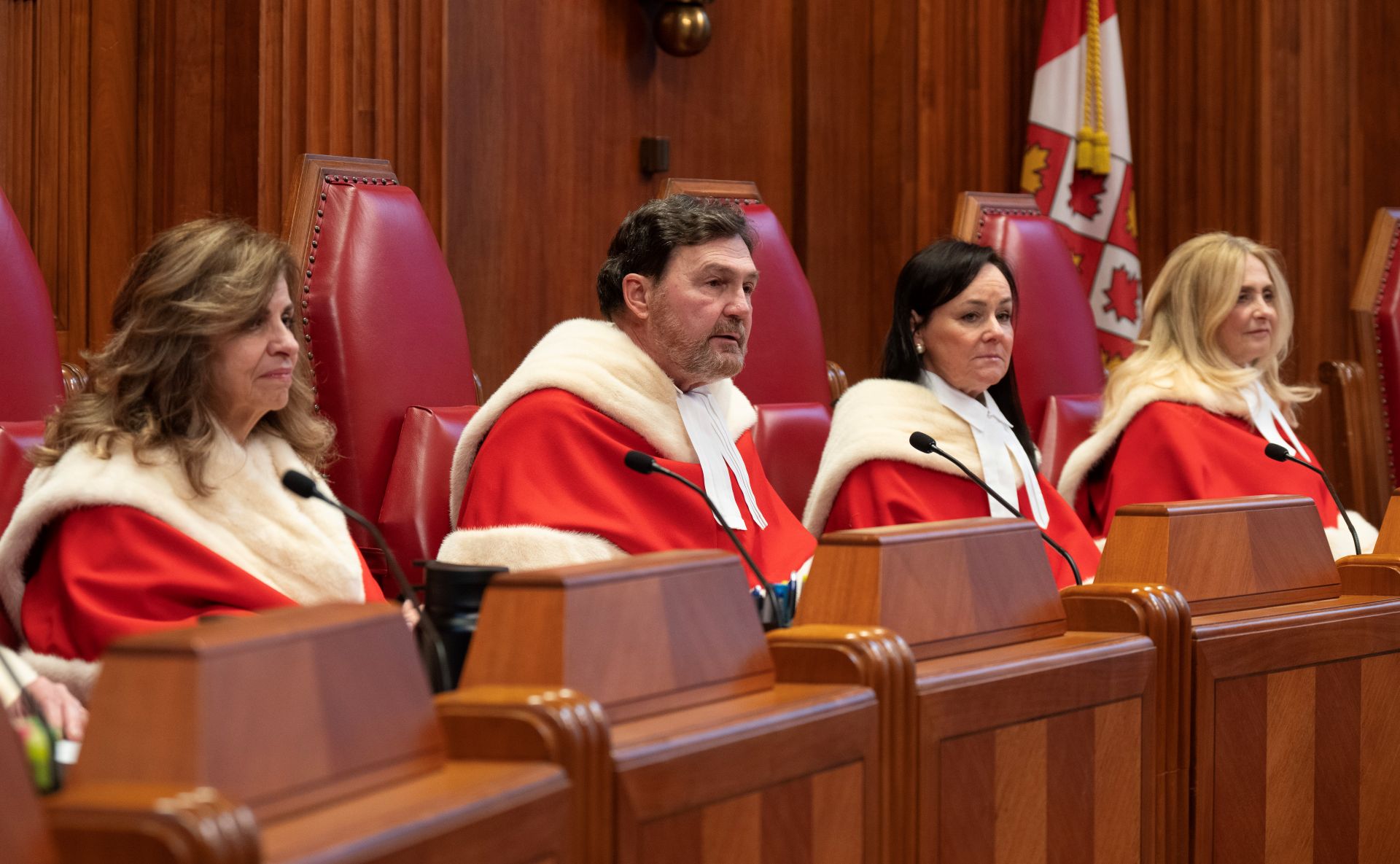
Justice Sheilah Martin’s upcoming retirement on May 30 will create a vacancy on the Supreme Court of Canada. Her retirement raises the question of whether Prime Minister Mark Carney’s government will respect the convention of regional representation and select a candidate from Western Canada when naming her replacement.
The pending vacancy provides an opportunity to review the convention, explore its unique Canadian nature and highlight its continued importance.
The convention of regional representation provides that the nine seats on the Supreme Court are filled by judges from different regions across Canada. By law, Quebec is guaranteed three judges on the court. Quebec’s seats were reaffirmed in the 2014 decision of Reference re Supreme Court Act, ss. 5 and 6 after Marc Nadon’s nomination to fill a Quebec vacancy was challenged.
As for the other six seats, the convention traditionally provides that the remaining regions across Canada are represented with one judge from the East, two from the West and three from Ontario. Recently, the North has been included with the West to ensure regional representation for the territories.
Upholding the convention
The convention of regional representation was generally respected until Justice Thomas Cromwell’s retirement in 2016. During the search to replace the Nova Scotia judge, then-minister of justice Jody Wilson-Raybould stated she could not guarantee that a person from Atlantic Canada would fill the vacancy.
These comments led to backlash from the Canadian legal community, threats of legal action and consternation from many in Atlantic Canada. In response to the minister’s comments, the House of Commons unanimously passed an opposition motion calling for the government to “respect the custom of regional representation” when appointing judges to the Supreme Court.
Then-prime minister Justin Trudeau ultimately voted for the motion, signaling an apparent shift in the government’s stance on regional representation. In the end, Justice Malcolm Rowe of the Court of Appeal of Newfoundland and Labrador was appointed to replace Cromwell, anchoring the metaphorical ship after the storm and ensuring the continuation of the convention.
The Trudeau government continued to respect the convention of regional representation when filling subsequent vacancies. In fact, elements of the convention became requirements in the job description for all Supreme Court appointments following Rowe’s elevation. For the past five Supreme Court vacancies, applicants have needed to reference their bar membership, judicial appointment or “other relationship” connecting them to the region of the vacant seat they seek to fill.
While the convention of regional representation has continued to endure, the new vacancy will be Carney’s first opportunity to appoint a Supreme Court judge. If the history of recent judicial appointments can provide any lesson, Carney would respectfully be wise to uphold the convention of regional representation and continue to use a merit-based appointment system.
Benefits extend beyond tradition
The convention of regional representation, however, should be followed not merely out of deference to tradition. Rather, regional representation provides value in its own right, which is exhibited by three benefits that arise from the convention’s perseverance.
First, regional diversity on the bench of Canada’s highest court legitimizes the institution. Courts across Canada largely rely on the public’s perception that they are fair and that judges are blind arbiters of justice. Canadian courts have limited ways to enforce decisions or ensure parties abide by judicial orders. A Supreme Court that reflects Canada’s geographic diversity is more likely to be viewed as legitimate by Canadians compared to one that is occupied by a small group of judges selected from one specific corner of the country.
Longstanding Canadian confidence in the judicial system may be on shaky ground
Why regional representation on the Supreme Court does (and doesn’t) matter
Second, the convention of regional representation helps promote broader diversity on the bench. Linguistic, gender and racial diversity are all important because they help the Supreme Court reflect the country it serves. By appointing judges from across Canada, the probability of creating a more diverse court increases. The Supreme Court serves all Canadians, meaning all Canadians should see themselves reflected on the bench.
Third, regional diversity among judicial appointments to the Supreme Court strengthens confederation. This is especially important given the recent threats to Canada’s sovereignty from our American neighbours. One way to help bolster the pan-Canadian project of confederation is by having all regions represented on the Supreme Court so that no region feels alienated or ignored.
It was astutely noted by legal observers shortly after Rowe’s appointment that the timing of the government’s attempt to break with the convention of regional representation came during a period of relatively low regional tension within Canada. Canada now finds itself in a more complex situation. A wave of national unity arising from angst about American threats coexists with growing separatist rhetoric in Alberta and Quebec.
No matter how united or divided Canada may feel, the convention of regional representation is important in ensuring the Supreme Court represents all the territory it has jurisdiction over. While regional representation on the court will not solve Canada’s problems, it does help foster a stronger sense of belonging for provinces and territories within confederation.
Ultimately, Martin’s retirement provides an opportunity to reflect on the importance of the convention of regional representation on the Supreme Court. The question that remains is whether the convention will be respected when the government selects her replacement. The court, and country, would be stronger if the convention continues.