Before Canada signs its next economic agreement with Europe, someone in Ottawa should ask a plain question: Could a 20-person business in Trois-Rivières, Que., or Red Deer, Alta., actually use it?
The question matters more now than it did a year ago.
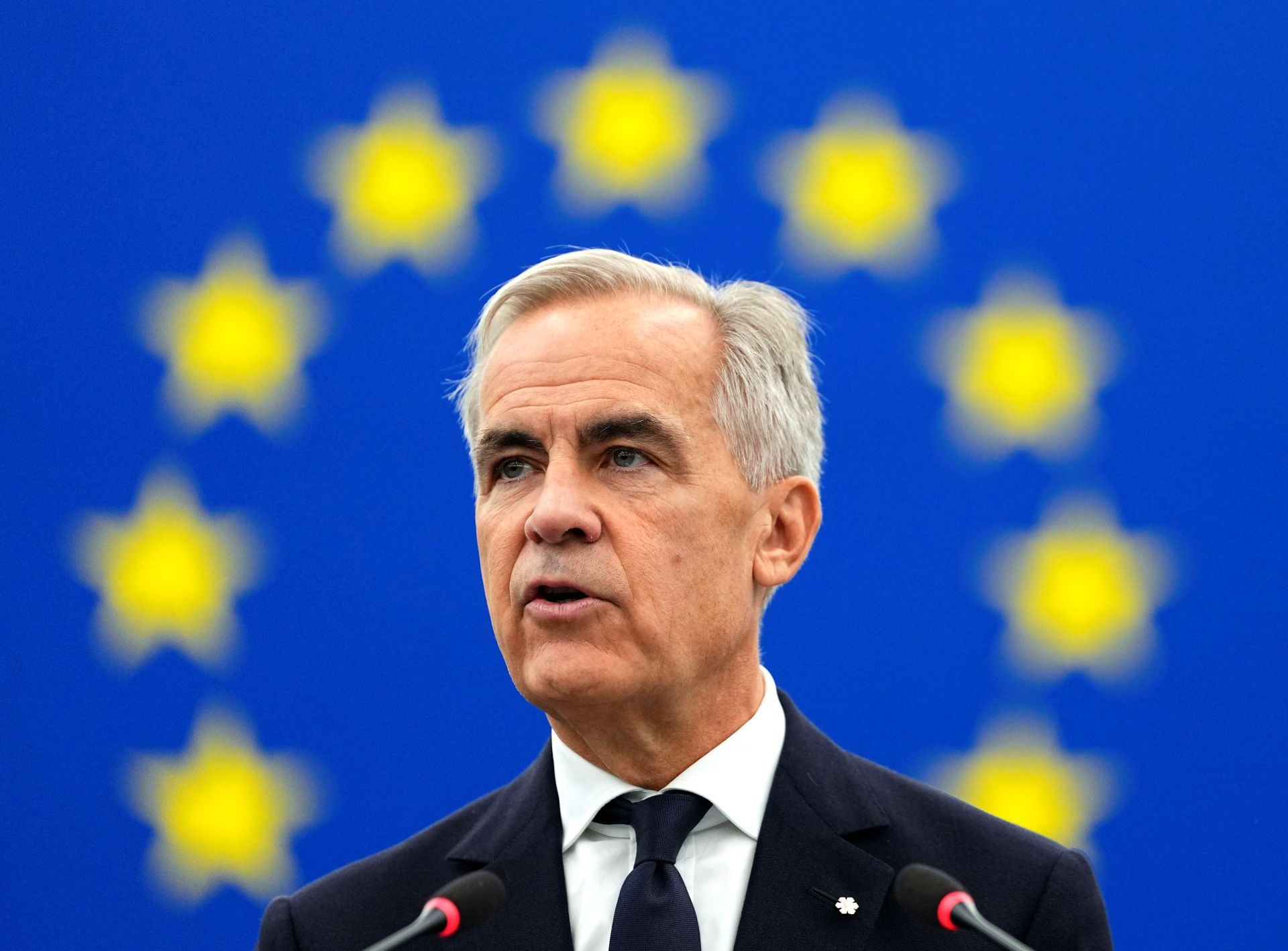
Prime Minister Mark Carney told the European Parliament on Sept. 17 the goal of a deeper Canada-EU partnership is “collective resilience.” His government is moving quickly with the EU on defence, critical minerals, energy, digital trade and investment.
The direction is correct. Canada depends far too much on one customer, the United States. What worries me is who ends up on the other side of the doors Ottawa is opening with other countries.
Statistics Canada reports that our top 500 exporters – about one per cent of all exporting businesses – generated 77.7 per cent of Canada’s goods exports in 2024. The problem is that any trade diversification strategy depending on a few large exporters can be undone by decisions in a few boardrooms.
On the other hand, trade diversification spread across an increasing number of the more than one million small businesses in Canada, which generate about half of the country’s private sector GDP, is much harder to take away. That is the version of collective resilience worth building.
There are two changes the federal government can make now to achieve that goal:
- Ensure every major economic agreement Canada signs with another country comes with a standard implementation package for small- and medium-sized enterprises (SMEs)
- Establish a simple annual measure showing how many SMEs actually trade under each such agreement and set targets for it.
The Comprehensive Economic and Trade Agreement (CETA), which took effect in 2017, expanded trade with the EU substantially. The Library of Parliament reports Canadian merchandise exports to the EU hit $42.8 billion in 2025, a 23.4 per cent increase from 2024. The number of SMEs exporting goods to Europe reached 8,552 in 2024, more than to any region outside the United States.
But the experience of smaller businesses tells a different story. Global Affairs Canada’s state of trade 2025 report found only 43.1 per cent (Figure 35)of Canadian firms had a general knowledge that CETA existed and just 4.8 per cent said they understood its details. Among small businesses (20 to 99 employees), only 7.1 per cent (Figure 36) had a detailed understanding of CETA.
Global Affairs reports CETA usage was below 10 per cent (p. 63) among surveyed small business firms that were asked about trade-agreement use. The underlying survey was conducted by Statistics Canada in late 2021, four years after CETA took effect.
That matters because Canada has about 1.1 million employer businesses, with 1.08 million of them being small businesses. Together with medium-sized businesses (100 to 499 employees), they account for nearly half (Table 1) of private sector GDP and nearly two-thirds (Figure 8) of private sector employment.
The pull of the American market has not weakened. Statistics Canada reports the United States was the only export market in 2024 for 65.9 per cent of Canadian goods-exporting enterprises, the highest share since 2003.
CETA did not fail small businesses. But Ottawa’s own numbers show how difficult it has been to turn increased access into widespread use. Market access and usable market access are different things.
Canada does not have a trade agreement problem. It has a transmission problem. What gets negotiated in Brussels does not automatically arrive at a machine shop in Cambridge, Ont.
The usability test
I have spent the past decade working with several hundred owner-managed businesses. Here is what using a trade agreement looks like from inside a firm with 20 employees.
First, the owner has to learn that an opportunity exists to trade with Europe. Then work out whether the company’s product qualifies under EU rules of origin. Then price it for a market with many different VAT rules, labelling requirements and shipping costs. Then carry a receivable for 60 or 90 days in euros while paying suppliers in Canadian dollars. Then sort out the tax and regulatory consequences without hiring a team of advisers. Then execute, while still running the overall business.
Each of those steps is a financial decision and most SME owners are not set up to make them with confidence.
In the Zenbooks financial clarity index – a national benchmark of 565 Canadian small- and medium-sized businesses that my firm published this summer – only 19.3 per cent of SMEs that had recently made a major investment reported they had conducted a formal return-on-investment analysis, while 18.1 per cent of all SMEs either had no cash runway, meaning no reserve to keep operating if revenue stopped, or did not know how many months their cash would last.
A business that cannot see its cash 90 days out is not going to bet on a new continent, however good the tariff schedule looks.
This is where the prime minister’s thinking is useful. In his book Value(s): Building a Better World for All, Carney argues that systems optimized purely for efficiency become fragile and that resilience has to be built deliberately. His government is now applying that idea to the country: accept some cost today to reduce dependence on a single partner tomorrow.
The same logic holds for an individual business. A small business with one large American customer, thin working capital and no forward view of its numbers looks efficient until a tariff lands.
National diversification happens one small business at a time. If most of their balance sheets cannot support the move, the Canada-EU strategy will generally reward businesses that were already selling in Europe or large companies with teams of advisers.
What Ottawa can do now
Neither of the two changes I propose would be expensive.
First, every major economic agreement Canada signs should come with a standard SME implementation package, released the same day as the agreement. Global Affairs Canada and the Trade Commissioner Service already publish CETA guides and they are good at explaining the rules.
However, they do not explain the economics. The package should say in plain language what changed with the new agreement, which businesses qualify, what are the compliance costs, where the working capital originates, how the income is taxed and what a business of 10, 20 or 50 people should do first. A real-world example is worth more than a legal summary.
Second, measure the right thing. Ottawa publishes detailed trade values, preference-utilization rates and exporter counts by size and destination. What is much harder to find is a simple annual measure showing how many SMEs actually use each agreement.
Publish every year how many small- and medium-sized businesses used each agreement and set a target. If that number does not move, the agreement is not reaching the right businesses and it is not building the resilience for which it was intended.
Neither change requires a new program and both would cost a fraction of what is being committed to the European relationship. They would tell us whether the strategy is effective where most Canadians work.
The prime minister has argued that resilience is worth a cost. He is correct. But Canada’s diversification will be measured in how many small businesses are able to use the agreements it signs. Right now, that number is too small.