Canada’s debate about immigration usually revolves around borders, population growth and labour shortages. Far less attention is paid to another critical question: Who is paying the price for the highly educated immigrants on whom wealthy countries increasingly depend?
In many cases, the answer is the Global South.
Canada, like many OECD countries, increasingly relies on skilled immigrants who were educated and trained elsewhere. This dependence is most visible in health care, where labour shortages have become acute, but it extends into engineering, information technology, academia, finance, research, higher education and the broader knowledge economy.
This is not simply migration. It is a global transfer of vital human capital in which poorer societies disproportionately bear the costs of producing skilled labour while richer societies capture much of the benefit.
While this is a global problem, there are steps Canada can take to mitigate its negative impact on the Global South:
- increase long-term investment in domestic education and training to prepare more current residents for work in critical fields where shortages now exist;
- expand co-development work and sign ethical recruitment agreements tied to sustainable workforce development with the countries of origin; and
- work with other wealthy countries to find ways to compensate the Global South for its losses.
Across the OECD, immigrants account for 15 to 35 per cent of the highly skilled workforce. Nearly one-quarter of physicians and 16 per cent of nurses are foreign-born.
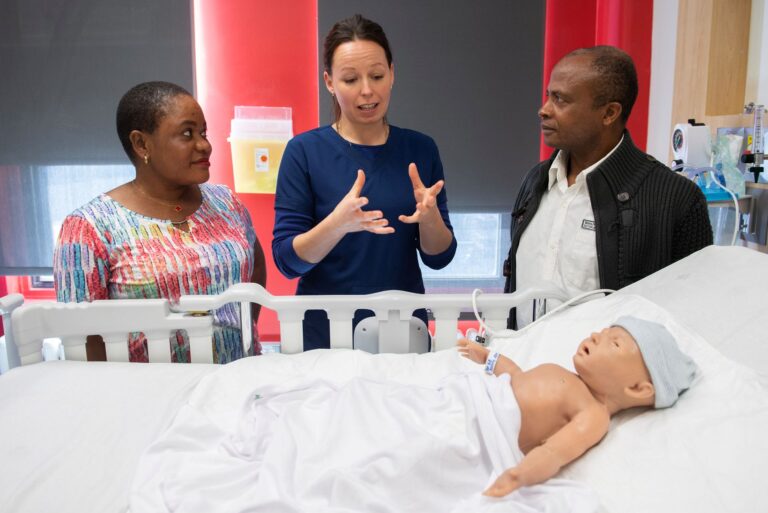
In Canada, internationally educated health professionals have become indispensable. According to Statistics Canada, there were nearly 260,000 of them in 2021, representing 13 per cent of all health care professionals in the country. Most were trained in Asia, while large numbers also came from Africa and other parts of the Global South.
Canada’s health care crisis has made this dependence even more pronounced. Federal and provincial governments are actively accelerating foreign credential recognition and recruitment to address shortages in medicine, nursing and long-term care.
Canada also increasingly prioritizes highly educated immigrants in other areas – such as artificial intelligence, engineering, universities and finance — because advanced economies need skilled workers to sustain innovation, demographic growth and technological competitiveness.
The ethical paradox is difficult to ignore
Countries in the Global South already struggling with shortages of doctors, nurses, engineers, scientists and educators are losing key personnel while helping sustain the economic and institutional resilience of some of the wealthiest societies.
A recent report by the Royal Society of Canada and the Canadian Academy of Health Sciences estimated that Canada receives more than $1 billion annually in what amounts to a “training subsidy” because internationally educated health workers arrive after other countries have already absorbed the costs of their education and professional formation.
The report also warned that Canada’s growing dependence on internationally educated health professionals risks undermining the World Health Organization code of practice on the international recruitment of health personnel.
But this is only part of the problem.
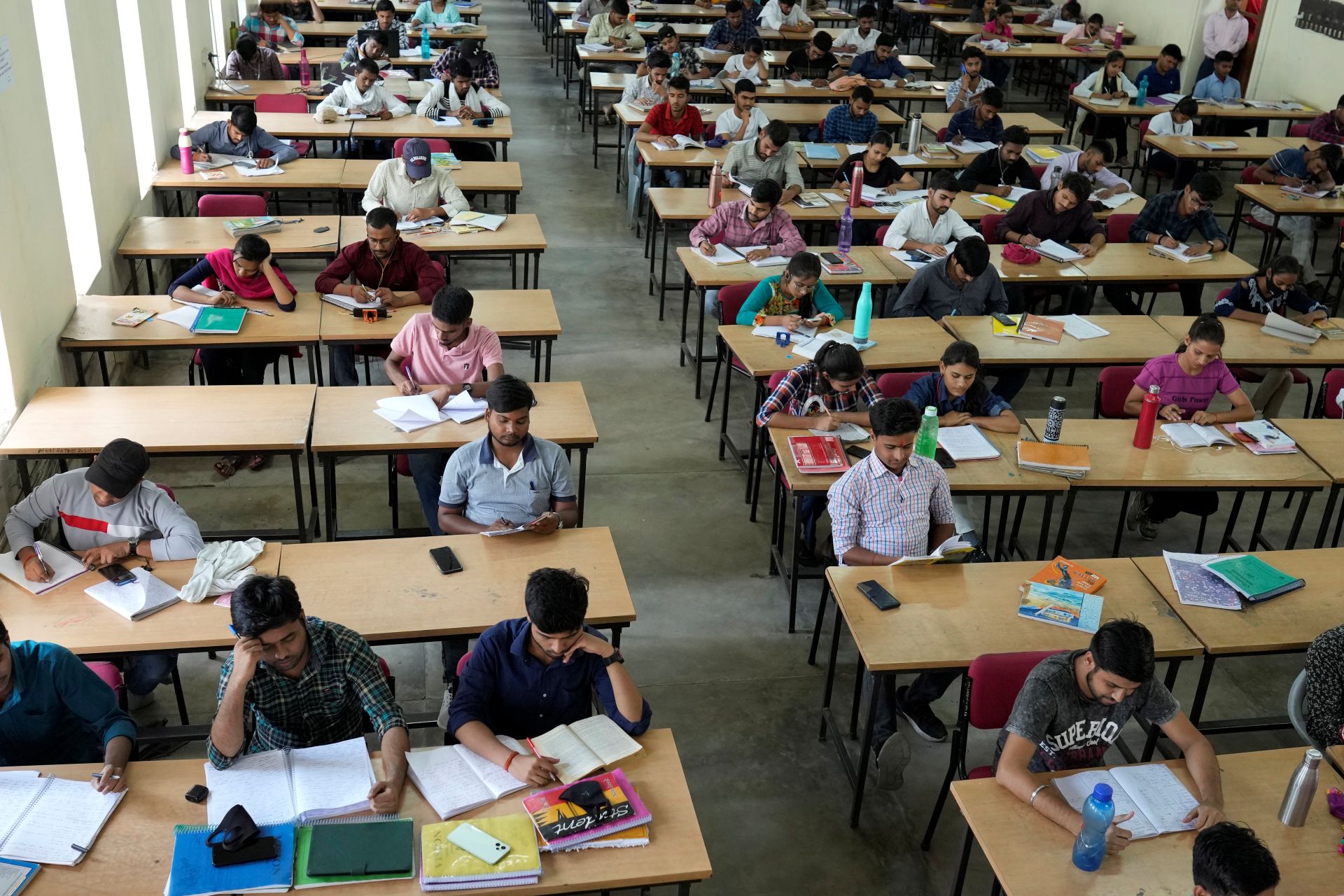
When a software engineer trained in India, a physician educated in Nigeria or a researcher from Nepal immigrates, Canada gains more than a worker.
It gains the cumulative investments of families, taxpayers, public institutions and societies that financed years of education, training and social support. Another country subsidized the universities. Another society absorbed the developmental costs of raising and educating that individual. Canada receives the expertise at the moment it becomes economically productive.
Such migration is not exploitative by definition
Skilled immigrants generate important benefits for their countries of origin. Remittances sustain households and national economies. Diaspora networks facilitate investment, innovation and knowledge transfer. India’s technology sector and the Philippines’ nursing economy, for example, have both been deeply shaped by transnational mobility and diaspora engagement.
Nor can responsibility be placed entirely on receiving countries. Many professionals leave their home countries because of political instability, low wages, corruption, weak public institutions or limited opportunities for career advancement.
This overall structural issue was sharpened for me during the 2026 Bridging Divides annual conference hosted at Concordia University, where discussions on migration and advanced digital technologies highlighted how global inequalities are increasingly shaped by new forms of migration, work and technology.
The comparison with climate politics is revealing.
There is now broad international recognition that wealthy industrialized countries bear disproportionate historical responsibility for greenhouse gas emissions. Climate justice rests on the principle that those who benefited most from carbon-intensive development have obligations toward those who disproportionately bear its consequences.
Yet, there is remarkably little discussion about what might be called “human capital extraction.”
If carbon emissions create ecological externalities, large-scale skilled migration can create social externalities. When countries with already fragile systems lose doctors, nurses, engineers, academics and researchers faster than they can replace them, the effects are profound — weaker institutions, overstretched public services and deepening inequalities in access to health care, education and innovation.
Canada shouldn’t mistake immigrant entrepreneurship for inclusion
Opaque immigration screening threatens Canada’s global talent strategy
The departure of one physician from an understaffed rural region in sub-Saharan Africa or South Asia is not equivalent to the departure of one physician from downtown Toronto. The losses are asymmetrical because of global inequalities.
At the same time, simplistic “brain drain” narratives are inadequate. Human mobility cannot and should not be reduced to nationalist accounting. People are not state property and restricting movement is neither ethical nor realistic.
The real policy challenge is how to reconcile mobility rights with global equity.
Canada should begin with three steps
First, it must invest more seriously in domestic workforce planning. Wealthy countries cannot continue relying on international recruitment as a substitute for long-term investment in education, training and retention of current residents.
Second, Canada should expand co-development partnerships with countries of origin through jointly funded medical schools, research collaborations, reciprocal training programs and ethical recruitment agreements tied to sustainable workforce development.
Third, Canada should support international discussions on compensatory frameworks for countries experiencing acute losses of critical professionals. Such measures should not be understood as charity, but as recognition that the global circulation of skilled professionals currently creates inequalities.
For decades, debates about global inequality focused on trade, debt, aid and natural resources. But the defining resource of the 21st century may increasingly be human capability itself.
Canada benefits enormously from globally mobile talent. So do most OECD countries.
The question is whether wealthy countries are prepared to acknowledge that dependence honestly and whether they are willing to build a more ethical framework for managing it.