Canada is at a critical, historic juncture in the relationship between Indigenous and non-Indigenous peoples. As we collectively strive to strengthen Canada’s economic resilience in the face of geopolitical upheaval, two headline issues are being discussed as threats to progress.
One is the interaction between Aboriginal title and urban property rights. The other is the government’s duty to consult and accommodate Indigenous Peoples about building major projects. Both can make our country fairer, more functional and more prosperous.
Much of Canada’s wealth exists today because of solemn agreements – binding and legal – forged with First Nations Peoples first by representatives of European monarchs, then later by a newly formed Canadian government.
Across the country, there are hundreds of examples of how rights reconciliation has worked to everyone’s benefit, evidence that good things can happen when rights are respected.
Yet too few Canadians know about them, and that lack of knowledge is harmful. Gaps in awareness have been filled with a divisive narrative: that Canada is a difficult place to do business because of Indigenous rights.
Are consultations with First Nations really the obstacle to fast-tracking national projects?
First Nations need equity to help drive a cleaner Canadian economy
Many Canadians see the duty to consult and accommodate as an obstacle rather than an obvious opportunity to create a stable, predictable investment climate by involving Indigenous Peoples in decisions from the outset.
Project delays and uncertainty are the direct result of decisions that ignore this constitutional obligation and circumvent Indigenous rights. It’s a vicious, unfortunate cycle that we are in danger of repeating in our rush to build big and fast.
Prime Minister Mark Carney has promised to take Indigenous obligations seriously as he pursues his nation-building agenda, but a fresh case in point is the Pacific Link pipeline. The day after the National Day for Truth and Reconciliation, Ottawa designated it as the first major project of national interest with the aim of starting construction in a year.
The decision instantly put more than 100 First Nations communities on an impossibly tight pressure-cooker timetable for meaningful consultation, forcing many to again use legal action to protect their lands, waters, wildlife and the health of their people.
A legal challenge came in less than two weeks, filed by an Alberta First Nation. The cycle continues.
Canadian governments must start treating Indigenous relations with the same urgency and level of investment they are putting into building critical infrastructure and diversifying trade.
Indigenous rights are not a problem to be minimized and managed. They are part of the fabric of our country, builders of stability and strength.
The potential for nation building
It is no coincidence that two of the first three major projects referred to the Major Projects Office have Indigenous organizations among their proponents and would be located on modern-treaty territory.
Many other proposals have Indigenous governments as minority or majority owners. They range from LNG export terminals on the west coast to nuclear reactors and energy transmission lines in Ontario.
This is not to say these projects are guaranteed to be built or enjoy full support from all affected Indigenous Peoples. As with all societies, there are a diversity of views.
But their potential demonstrates what is possible when Indigenous Peoples regain agency to determine what is best for their lands and people.
First the rulings, then negotiation
In the last 60 years, when Indigenous Peoples have gone to court to fight for their rights, they have very often won. Over time this has resulted in a body of case law that strongly supports the obligation of the Crown to respect Indigenous rights, including the constitutional duty to consult First Nation, Inuit or Métis peoples when a decision or action might affect their Aboriginal or treaty rights.
But the courts have been disinclined – and rightly so – to prescribe how to implement these rights. Most often, they direct Canadian and Indigenous governments to negotiate them.
“Let’s face it, we are all here to stay,” Justice Antonio Lamer said plainly in the landmark Delgamuukw case in 1997, which confirmed aboriginal title in B.C.
Last summer, the historic Cowichan decision in Richmond, B.C., also affirmed aboriginal title. It did not take away private-property rights, though fear mongers tried to claim it did. The Cowichan sought only to negotiate a good-faith resolution to a problem the Crown created and has perpetuated for more than a century.
This is where truth and reconciliation affects all of us.
We have the foundation for shared prosperity
Twenty-six agreements commonly known as modern treaties cover about 40 per cent of Canada’s land mass. Many include co-management regimes in which Indigenous, federal and provincial or territorial governments share decision-making power over the environment and resources.
All have been signed since 1974, the year after the Calder decision recognized Aboriginal title as a right that pre-dates colonial law. One of them led to the creation of Nunavut, a whole new Canadian territory, as part of the Inuit vision for self-rule.
In southern urban areas, prosperous coexistence is exemplified by over 120 reserves located in or near cities, many of which are the result of restoring wrongly taken lands. First Nations do not unilaterally insert themselves into these cities; they have negotiated service agreements and bylaws with municipalities.
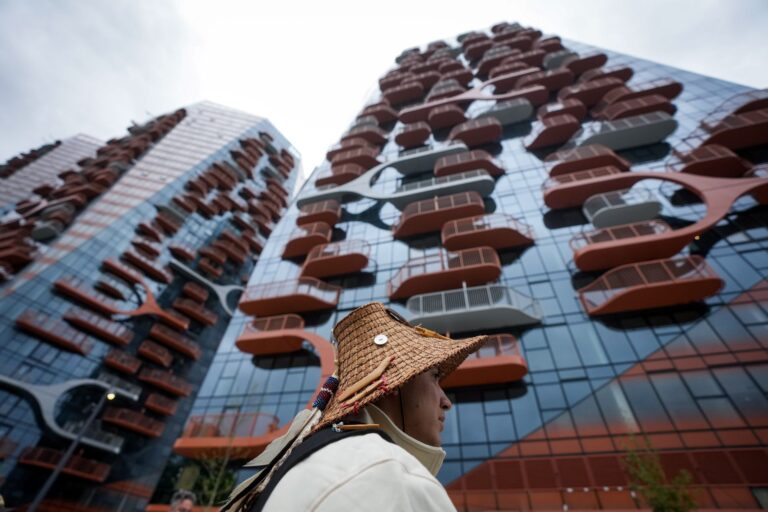
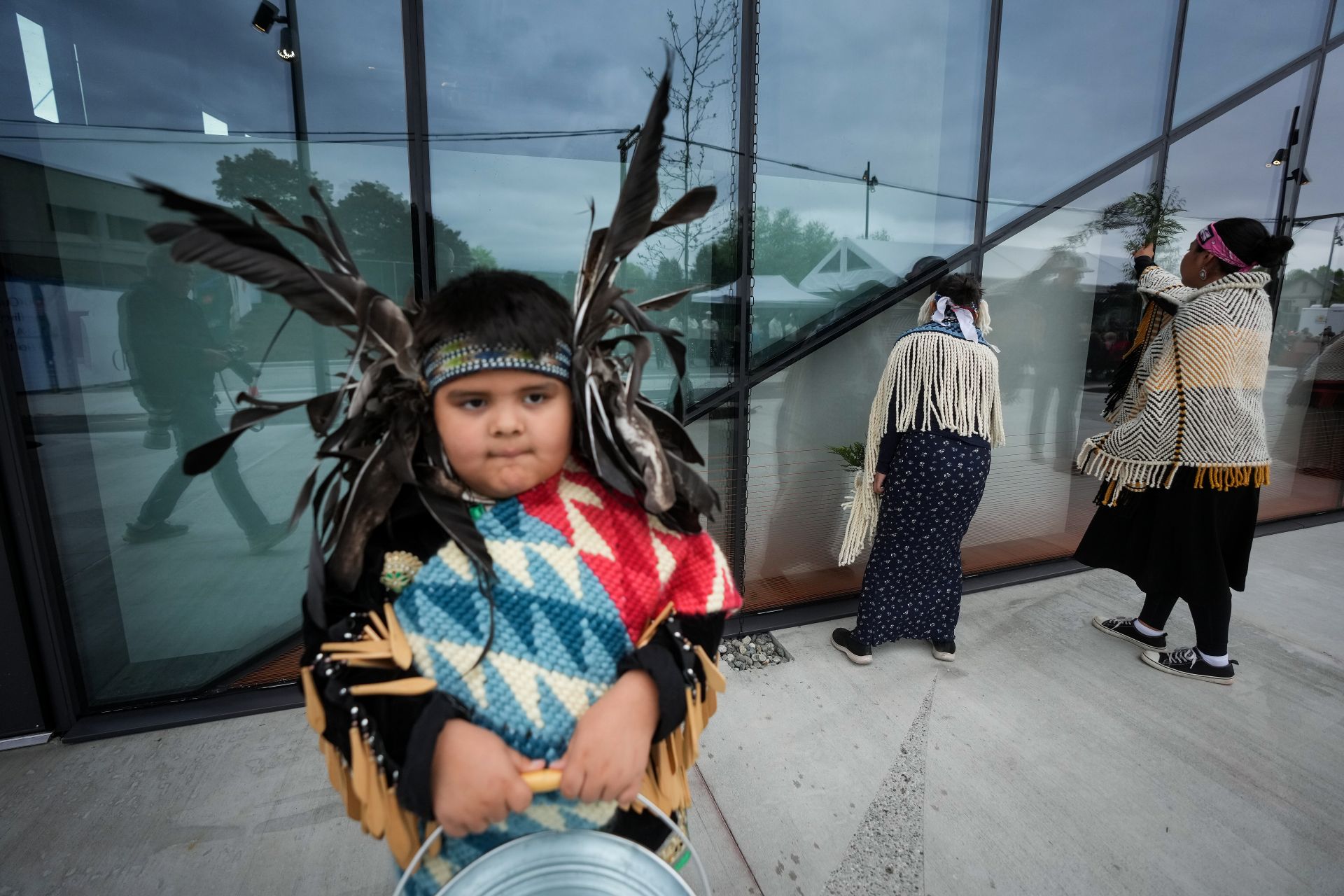
In Vancouver, the Squamish Nation is adding 6,000 homes, including 1,200 affordable ones, with construction of several towers on traditional lands won back after the nation was forced from them a century ago. The community is an economic driver reflective of the nation’s principles, “where everyone can share in the life and purpose of this place.”
In Saskatoon, the Muskeg Lake Cree Nation is home to Canada’s first commercial urban reserve, where it hosts 50 businesses. It established Asimakaniseekan Askiy in 1988 and is continuing to expand with land purchased by the nation.
Unfortunately, this kind of progress is still uneven and often fragile. It has taken us a long time as a country to start addressing deep historical injustices.
Well into the middle of the 20th century, Canada used policy, law and physical force to further erode the ability of Indigenous Peoples to earn a living from their own land and attempt to assimilate them out of existence. The most egregious colonial policies have been struck down, but their legacy is clear in how Canada tries to keep Indigenous Peoples dependant.
The long arc of rights recognition
From the Maritimes to the eastern edge of the Rocky Mountains, over the course of more than a century – starting with the Treaty of Niagara in 1764 – British colonial powers used treaty-making to clear land for settlement and resource development.
First Nations maintain these treaties were agreements only to share the land and its wealth – not hand it over. But colonial governments presumed ownership of the land and began calling it Crown land. Over time they consigned First Nations to small reserves, divested Métis of their land holdings and coerced Inuit into unsustainable settlements.
By the late 1800s, the new governments of Canada and British Columbia seemed to have lost interest in treaty-making as European settlement expanded. First Nations in B.C. used the legislature and the courts to fight for their land and governance rights right up to 1927, when the federal government made it a crime to hire a lawyer to pursue land claims.
This was the law until 1951, when the Indian Act was amended, and First Nations could once again organize politically and legally to reclaim their rights.
There have been other key milestones on the road to the recognition of rights. In 1960, the prohibition that kept status Indians from voting in federal elections was repealed. In 1982, the Constitution affirmed aboriginal and treaty rights.
An opportunity to see rights differently
For more than half a century, Canada has been moving – slowly – toward reconciling Indigenous People’s presence on this land with the truth of history. It is making us a stronger, more cohesive country as a result. But current events have brought us to a fork in the road.
Continuing to treat Indigenous rights as an obstacle will lead to more conflict that causes uncertainty.
The alternative is for Canadians to start seeing the true potential of a nation-to-nation-to-nation relationship and to press governments to work with Indigenous Peoples to develop it. The federal government must make good on its verbal and written commitments “to work in true partnership.”
It is only by working together that we will achieve what we all seek: economic prosperity, safe communities, a healthy society and a sustainable future.