Canada is one of the richest countries in the world. But you wouldn’t know it looking at how we protect people’s most basic economic and social rights.
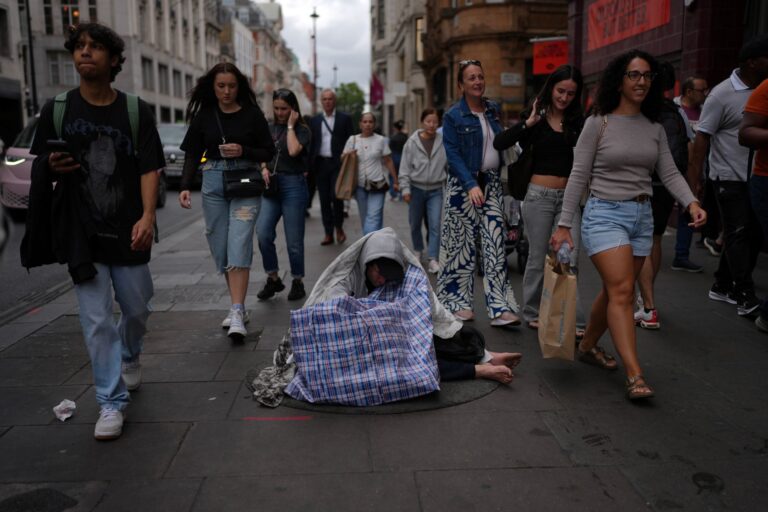
Our own data tells us poverty, homelessness and food insecurity are getting worse. At Maytree, a Toronto-based human rights organization, we produce an annual analysis of Statistics Canada’s poverty data that documents part of that decline. So does our yearly compilation of welfare incomes across every province and territory. The evidence is also visible in communities across the country: more people relying on food banks, more people living in encampments and more households unable to afford the essentials.
What this data doesn’t tell us is how well Canada should be doing given the size and strength of our economy. Are these outcomes an unavoidable reflection of difficult circumstances?
The latest global scorecard from the Human Rights Measurement Initiative (HRMI) gives us an answer.
Measuring what Canada should be able to achieve
Why should we care about another international index? Because measuring outcomes alone can encourage complacency. A government can point to a small improvement or blame a bad result on economic conditions without addressing the more important question: Is the government doing everything it reasonably can with the resources available to it?
That question is central to international human rights law. Under Article 2 of the International Covenant on Economic, Social and Cultural Rights, Canada has committed to using the maximum of its available resources to realize economic and social rights. Those include the right to food, housing, health, education, work and an adequate standard of living.
HRMI turns that obligation into something we can measure. Rather than comparing raw outcome, it assesses how well each country performs against the achievements of countries at a similar income level. In effect, it asks whether a country is delivering the level of rights protection its resources should make possible.
Each country receives an income-adjusted score out of 100 for every metric HRMI tracks. A score of 100 means the country is setting the benchmark for its economic peers. A lower score means other countries, with comparable resources, have achieved better outcomes. The measures are grouped under five rights categories: education; food; health; housing; and work.
That is what makes HRMI’s data so useful. It doesn’t allow wealthy countries to congratulate themselves simply for outperforming much poorer ones. It measures them against what they should be able to accomplish with their wealth.
By that standard, Canada is doing badly.
Where Canada stands
Canada’s strongest overall result is on the right to health, though the data shows we have made no progress over the past decade. In three other categories, right to food, right to education and right to work, Canada’s scores fall within ranges HRMI describes as “bad” or “very bad.”
In the fifth category, housing, Canada doesn’t receive a score at all because our data is incomplete and cannot be compared internationally. That absence is telling. Housing is where Canada’s failure to uphold economic and social rights may be most visible and acute. Yet we still lack the consistent data needed to measure that failure against our peers.
A closer look at three individual measures offers deeper insights.
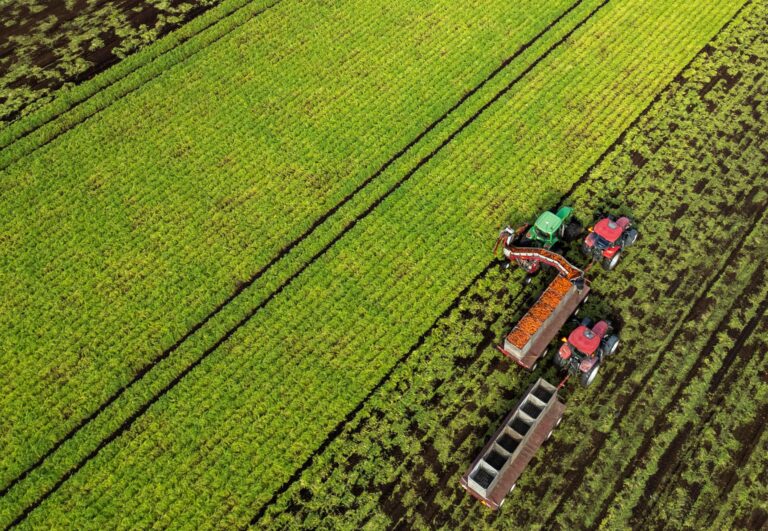
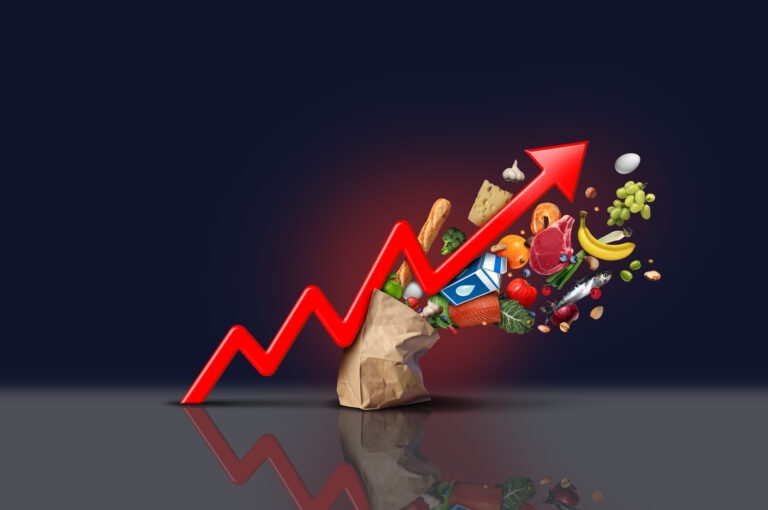
Food security: From fifth place to the bottom third
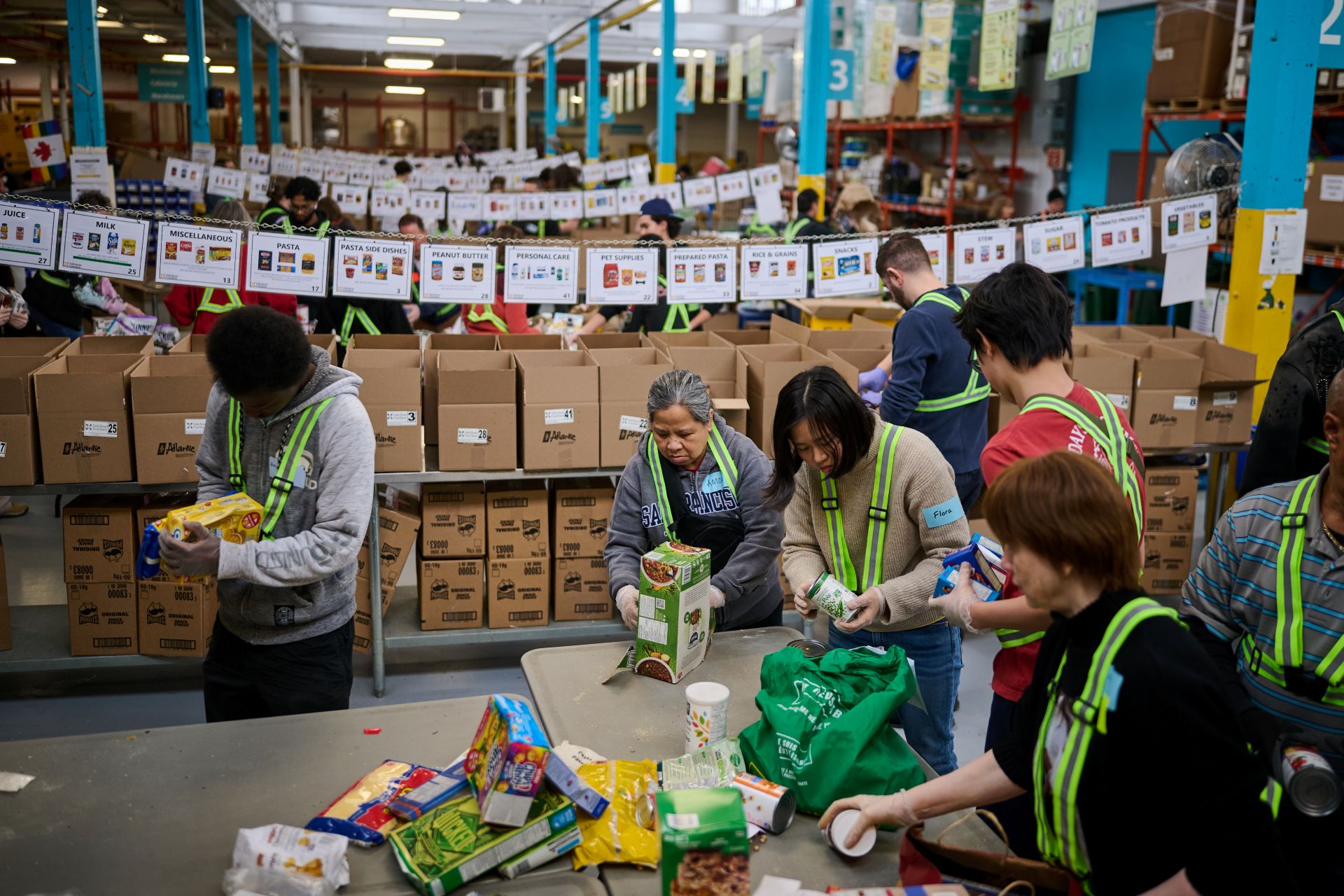
In 2015, Canada ranked fifth among 37 OECD countries on protecting people’s access to food. By 2023, we had fallen to 27th.
The measure is based on the percentage of people experiencing moderate or severe food insecurity, using comparable international data collected by the UN Food and Agriculture Organization. Over the same period, Canada’s income-adjusted score dropped from 93.9 to 83.5 out of 100.
Healthy birth weight: Down eight places
Canada is also losing ground on healthy birth weight, an important measure of maternal and infant health. In 2023, Canada ranked 27th out of 38 OECD countries, down from 19th place in 2015.
This indicator measures the percentage of infants born weighing less than 2,500 grams, using comparable data collected by the OECD. Canada’s income-adjusted score fell from 80.6 in 2015 to 74.7 in 2023.
Relative poverty: Progress, but nowhere near enough
The trends are not all negative. Canada has improved its position on relative poverty, which measures the proportion of people living on less than half their country’s median disposable household income. Canada rose from 31st out of 38 OECD countries in 2015 to 21st in 2023. But moving from near the bottom to the middle of the pack is hardly a triumph.
And to be clear, Canada isn’t being measured against countries whose economies vastly outmatch our own. The comparison includes countries such as Slovenia, Poland, Greece, Spain and Ireland. Some richer countries also perform badly, most notably the United States. But Canada should aspire to emulate the countries that are succeeding, not reassure itself that others are failing too. We need to look up, not down, to see where we should be going.
A harder human rights conversation
Canadian governments are fond of declaring their commitment to human rights, often by pointing to Canada’s role abroad. But are our governments doing all they could be to realize economic and social rights at home?
The evidence says no.
Governments devote considerable time and money to collecting and reporting social and economic indicators. But they make almost no effort to assess whether Canada is progressively realizing human rights to the extent our resources permit, even though Canada has committed under international law to do exactly that.
One poverty measure cannot capture Canada’s economic hardship
Cities are managing the visible signs of social failure with homelessness
That gap matters. Data on poverty, hunger, health and housing can tell us whether conditions are improving or deteriorating. It cannot, on its own, tell us whether governments are meeting their obligations nor how Canada’s performance compares with what is achievable. Without that benchmark, governments can present modest gains as success, normalize poor outcomes or treat deepening hardship as inevitable.
HRMI’s approach exposes that complacency. It shows that Canada’s poor results are not simply the product of forces beyond our control. They reflect policy and political choices about how we use, and fail to use, the resources we have.
Civil society should use this data to demand answers from policymakers and political leaders. Why is a country as wealthy as Canada falling so far behind? Why are other countries with similar resources better able to protect people from hunger, poverty and poor health? What would it take for Canada to meet the benchmarks our peers have already established?
Canada should also incorporate HRMI’s methodology into its own human rights monitoring and public reporting. As the department responsible for the domestic implementation of Canada’s international human rights commitments, Heritage Canada should begin by creating a single national data repository that tracks outcomes at the federal, provincial and territorial levels across the full range of human rights.
This work need not start from scratch. It can build on existing initiatives, such as the Canada indicator framework for sustainable development goals and Canada’s qualify of life framework, each of which can be a limited tool for measuring human-rights outcomes.
From this foundation, and drawing on the work of HRMI and others, Heritage Canada and Statistics Canada should develop a methodology to assess Canada’s record of progressive realization. That would need to factor in the resources available thanks to Canada’s tremendous prosperity over the past 50 years.
Canadians deserve that evidence. We should be able to see whether our governments are living up to their legal commitments, where Canada is losing ground and what comparable countries prove we could achieve.
Canada has the resources of a human-rights leader. The latest international data shows that we are not behaving like one. Our problem is not that the standard is beyond our reach. It’s that we are choosing to fall short.