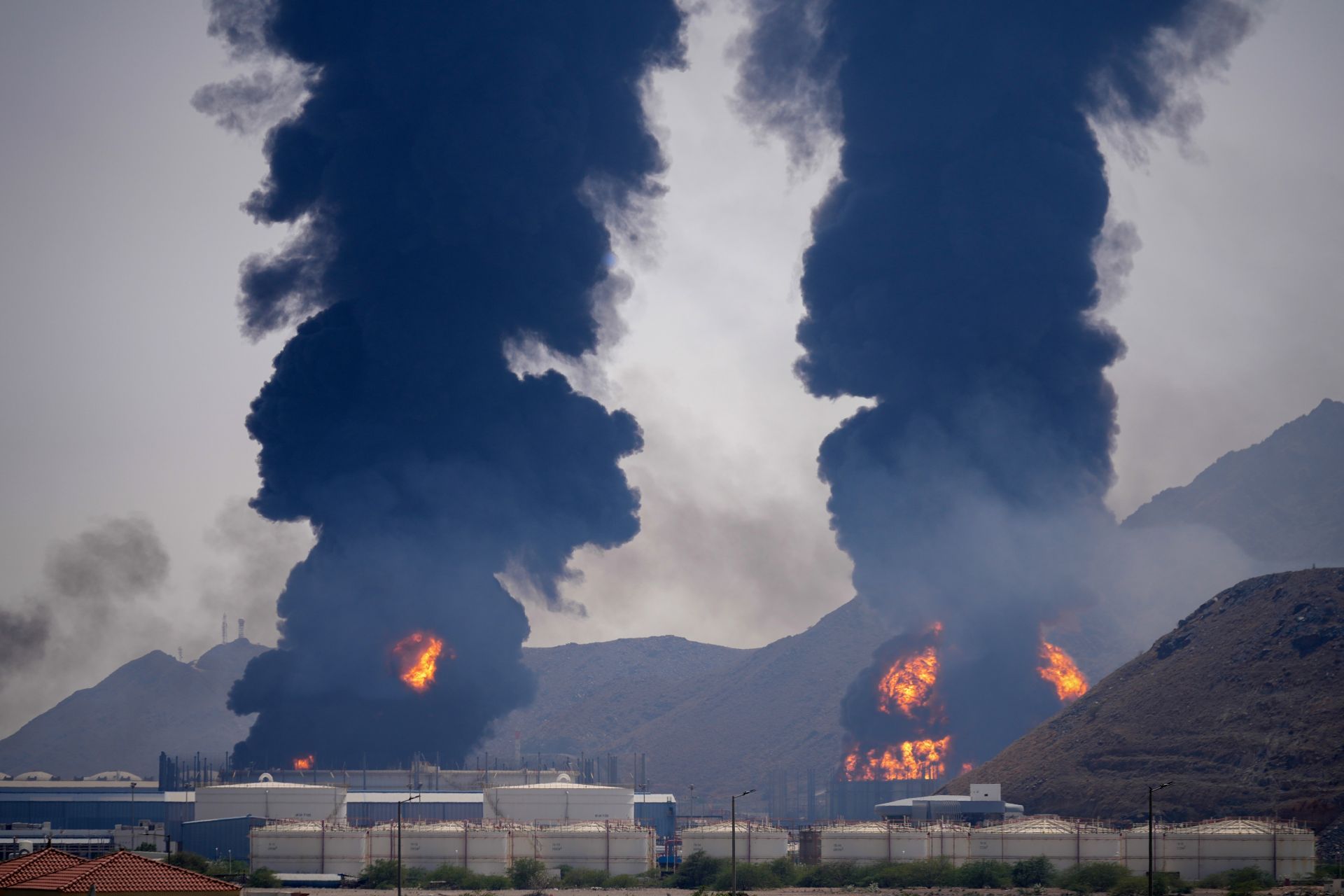
The war in the Middle East, precipitated by an attack on Iran by the United States and Israel, has reopened debate in Canada about oil exports, global strategic petroleum reserves and what it could all mean for our country’s energy sector.
Human cost should always be the first consideration in times of war, but how this conflict will affect oil supplies cannot be ignored. Some see it as an opportunity to expand Canada’s industry, but they have mistaken a temporary price shock for a durable market signal. In fact, the war highlights the Canadian oil sector’s exposure to global risk and the dangers of staking our economic future on that industry’s long-term outlook.
Major Canadian energy and climate policy questions are at issue right now in ongoing negotiations between Canada, Alberta and oilsands producers. Some are attempting to use recent conflicts in Ukraine, Venezuela and the Middle East to advance their goals in these talks.
This conflict has, predictably, caused a spike in oil prices to well over US$100 a barrel. The effective closure of the Strait of Hormuz has restricted near-term supply and driven up consumer prices. Four years ago, we also saw prices rise when Russia, a major oil and gas producer, invaded Ukraine.
War-related price increases provide a windfall for producers, including Canadian firms, and for governments such as Alberta that collect royalties. These spikes tend to be short-lived, because prices settle down as the market develops a workaround. Options can include increased production from other suppliers, rerouted shipping, governments dipping into oil reserves or, in Russia’s case, evasion of sanctions.
Price spikes are temporary, volatility is permanent
Price shocks can work the other way too. In 2014, a price crash caused by a confluence of circumstances led to the restructuring of Alberta’s oilsands. The world was not using less oil. Demand was growing steadily. But China’s economic growth was slower than expected, a lot of new U.S. production came online very quickly and, instead of reducing output to keep prices high, the Organization of Petroleum Exporting Countries (OPEC) decided to stay the course and fight it out for market share.
A barrel of Western Canadian Select lost 80 per cent of its value inside of two years. This led to a recession in Alberta and a huge provincial deficit. The industry learned an important lesson about the volatility of oil markets, even if successive Alberta governments have not.
Oilsands producers now protect themselves from future price crashes by focusing tightly on cost-cutting through layoffs, efficiency through automation and economies of scale through corporate mergers. Employment in the oil and gas sector for every thousand barrels per day of production fell to 22 jobs in 2023 from 38 in 2012. That’s a 42 per cent drop, even though production grew by 47 per cent over the same period.
The 2014 crash permanently changed how oilsands companies approached risk in their capital investment. They abruptly stopped putting money into new megaprojects meant to increase oil production in the future, while creating many construction and engineering jobs in the meantime. Despite wholly new facilities, called greenfield projects, receiving regulatory approval, not one has gone ahead in years. The Alberta Energy Regulator predicts that from 2025 to 2030, capital expenditures in the oilsands will be about 45 per cent of the 2014 peak.
Beyond the headlines caused by geopolitical shocks, there are deeper trends in the world’s energy use that should give pause to anyone hoping to revive capital investment in Alberta’s oilpatch, including a new pipeline to the West Coast.
Modelling published last year by two major multinationals, BP and Shell, examines the expected future of global energy. BP’s model estimates that, despite substantial demand from China in the past decade, global oil growth will peak at 103.4 million barrels per day in 2030. Consumption will be slightly lower by 2035 and decline significantly after that to below 85 million barrels a day in 2050.
Shell published three different scenarios: One is focused on reducing carbon emissions. Another posits isolationism and energy security concerns as top priorities. The third involves artificial intelligence (AI) and quantum computing, which create extreme demands on electricity generation. In all three, electric vehicles (EVs) are the main reason for the world reaching peak oil demand within the next few years, while a growing supply of low-carbon fuels contributes to the decline that follows.
The Economist Intelligence Unit estimates EV sales in China reached 13.8 million in 2025 — more than 37,000 each day. As BP and Shell note, this is creating a permanent hole in global oil demand that will only grow larger, especially when coupled with China’s aggressive export of electric cars.
Global demand trends point to long-term decline
Regardless of short-term shocks, we can expect downward pressure on oil prices. Earlier this month, the Chinese government released its latest five-year plan, which includes reaching peak petroleum consumption through 2026-2030 before reducing its dependency by increased use of green energy.
China’s planning is driven by economics and geopolitics. The cheapest and most secure way for 1.4 billion people to get around is with EVs charged, in large part, by low-cost domestic wind and solar generation. And China isn’t alone in wanting to reduce its exposure to global energy markets. European governments scrambled to find alternate sources of natural gas after Russia invaded Ukraine. Four years on, Europe is doubling down on low-cost renewables — swapping a temporary workaround for a permanent transition.
READ MORE: Canada’s rising oil exports to U.S. refineries have become a risk
In a world characterized by unpredictable U.S. trade policy and potential supply chain disruptions, wind and solar electricity that is locally generated is an attractive proposition, especially with an electrified passenger vehicle fleet. This is a proven, low-cost alternative for policymakers fretting about high oil. The war in the Middle East underscores the urgency of reducing exposure to global oil and gas markets by building up low-cost, clean electricity generation.
The world won’t stop burning oil any time soon. But the business case for multibillion-dollar, multi-decade oilsands projects is eroding quickly. This is also why Prime Minister Mark Carney must deliver on his repeated promise that no taxpayer money will be put toward a new oil pipeline. Canadians should not be asked to take on a risky investment that the private sector won’t.
Politicians and lobbyists will always frame the news of the day as another reason to advance their preferred goal, whether that news be the conflict in the Middle East or U.S. intervention in Venezuela. But Canadians should consider the bigger picture. The long-term economics of Canada’s oilsands are influenced far more by global demand trends than by short-term disruptions to supply. The oil industry already seems to know this. Decision-makers should recognize it, too.