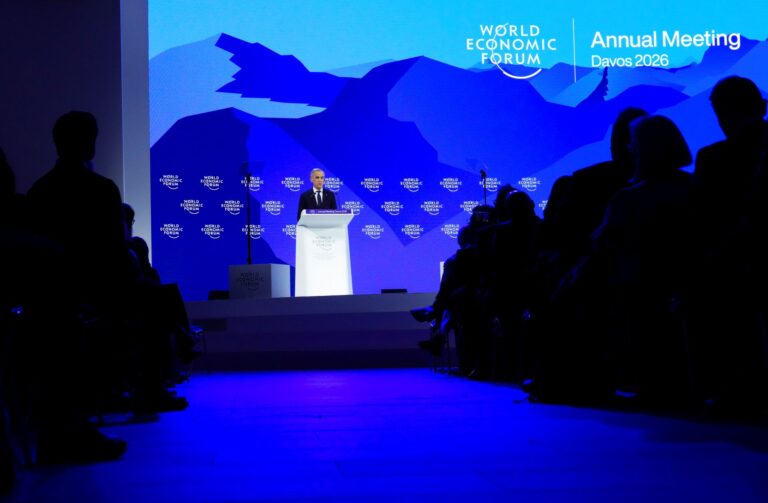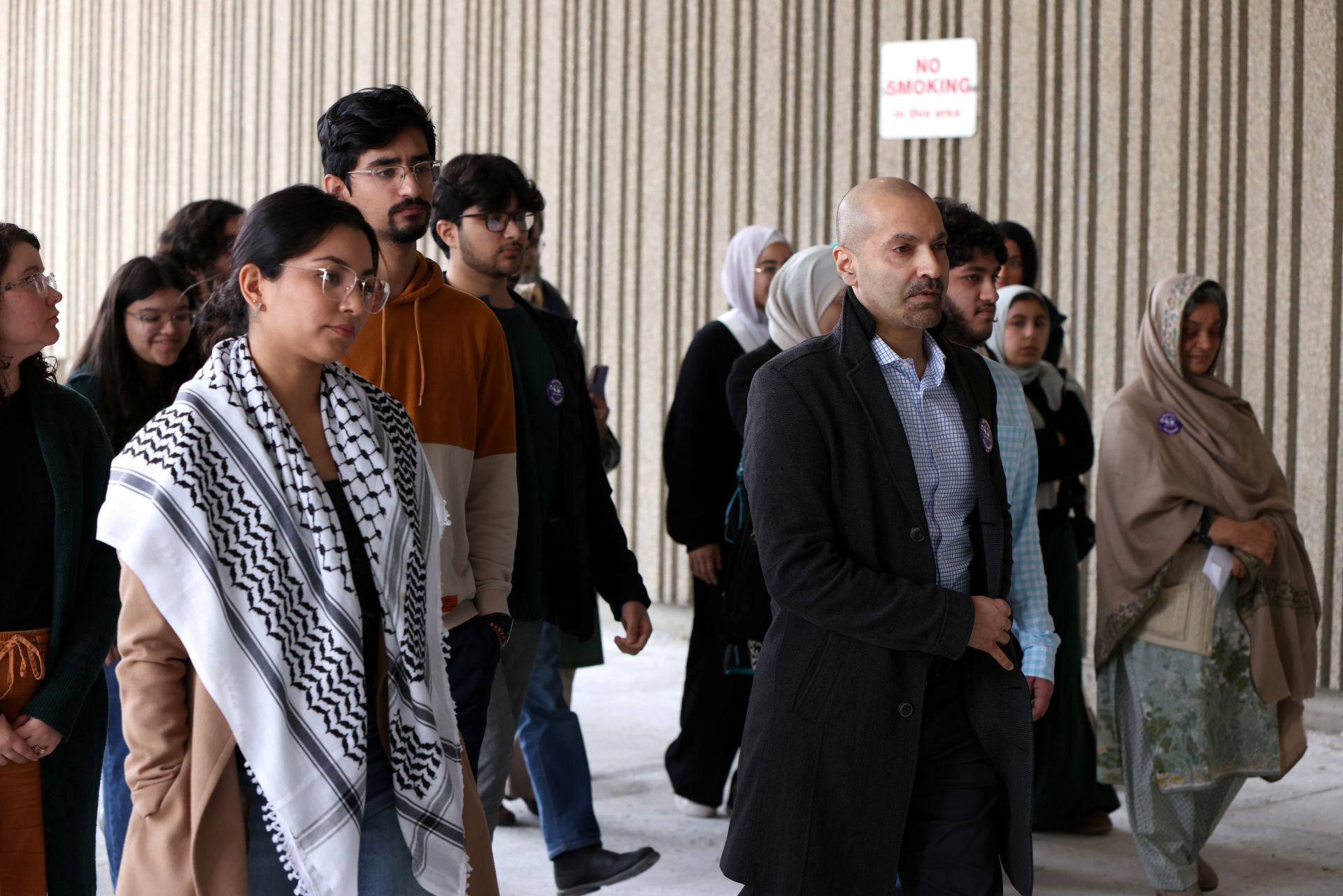
Canada’s culture minister announced last month — with no advance consultation or warning — that two offices meant to help fight racism and hatred would be shuttered.
Mere days after the Jan. 29 commemoration of the 2017 Quebec City mosque shootings, Marc Miller issued a statement announcing a new advisory council to foster social cohesion, battle bigotry and build a shared identity.
The offices of the special representative on combatting Islamophobia and the special envoy on preserving Holocaust remembrance and combatting antisemitism have since closed.
“By deepening mutual trust, unity, respect and solidarity, we can ensure that every person feels included and valued, and that rights and equality are protected for all Canadians,” Miller said.
How do these words leap beyond paper and translate into real-world deeds? Deeds like those of Amira Elghawaby, the representative for combatting Islamophobia. In 2025 her office released a guide — believed to be the first by any national government — to help understand and fight the root causes of anti-Muslim discrimination. She was also working with her European counterparts and other groups to put into practice the aspirational language of a 2023 UNESCO report (p. 55), which said “hate speech is clearly a global phenomenon” which requires educational efforts and “significant and sustained global collaboration.” This is something Prime Minister Mark Carney’s government should have prized.
The government appeared ready to actively listen and gather data when it created her position in the aftermath of a June 2021 terrorist attack by a white nationalist in London, Ont., that killed four members of a Muslim family. The appointment suggested the government was finally recognizing Canadian voices imploring public institutions to acknowledge the seriousness of anti-Muslim hatred in our country.
Why dismantle working institutions?
But now the government has many questions to answer. Chief among them is why shut the offices down at this time and why announce a nebulous future committee which may not even get off the ground. Members are yet to be determined and no metrics have been set for accountability.
It’s as if the government is trading away its star players for future prospects — a questionable management strategy to dismantle functional and accountable offices with a symbolic committee. If the government believes this is an improvement, it should make its case by providing a date by which the council will be set up, determining how it will operate, informing taxpayers of the council’s budget. It also should have overlapped the council with the existing offices to ensure a smooth transition.
The decision to close the offices has the smell of a political write-off or tit-for-tat deal made with another party. Right from her first days in office in early 2023 Elghawaby drew the ire of those who either deny the existence of anti-Muslim hatred or claim that talking about Islamophobia intensifies it.
So has the problem of collective blame, antisemitism and anti-Muslim hatred been solved or is it getting worse? Data shows that Jews and Muslims have rightful concerns about safety and belonging, as well as about not being properly seen and heard in society.
Aside from acts of hatred, there is a creeping home-grown disease taking over some Canadians, who believe their heritage gives them a trump card over the rights of other citizens. We don’t have to look too far from our border to see what happens when that belief is transformed into action.
The danger of normalizing extremism
On a superficial level the goals of groups like Second Sons and Diagolon appear to be spreading hatred against Muslims, Jews, Blacks and immigrants, and converting everyone into white supremacists. But the deeper objective is to shift our society into adopting practices and policies that affirm that Canada belongs to the white race and that the only “real citizens” are white.
This is achieved by telling people that their financial problems would disappear and all problematic national issues would dissolve if the population were more like that of the 19th century, when immigrants were predominantly white Europeans. In this way, white nationalists who, for the most part, have been viewed as being on the fringe of acceptable discourse, use a concept called the Overton Window to infuse their world view into the mainstream.
They are hoping that by diminishing our society’s ideals, it will destroy itself from within by gradually dismantling the rule of law and the guardrails of democracy that prevent special privilege based on hereditary European ancestry.
Canadian values guarantee respect, solidarity and equal rights for all citizens — no matter their race, religion or ethnicity. The two offices that were quietly dismantled were not just symbolic, but served to get us talking about belonging and identity while confronting hatred and racism. Yes, these discussions are uncomfortable, but the very presence of that discomfort is evidence that they are necessary. The government’s apparent retreat from the conversation surrenders the field to the loudest and most polarizing voices in society.
Solidarity is not created by the promise of an advisory council, government statements in the aftermath of a tragedy or moments of silence held once a year. It requires continuity, institutional presence and a willingness to confront assumptions.