No longer America’s privileged neighbour, Canada today faces U.S. threats to diminish or even eliminate our sovereignty.
That said, our economy and security remain so deeply dependent on America that we cannot risk rupturing the relationship now. Our urgent task, therefore, is to do what is possible to maintain our historic position – close to the United States, yes, but increasingly independent of it.
The job was easier when U.S. policymakers shared the vision of a mutually beneficial relationship and when we could rely on American self-interest to foster benevolent neglect toward our sovereignty, independence and integrity.
No more. U.S. President Donald Trump threatens economic coercion – primarily tariffs and the threat of more tariffs – to push Canada to become the 51st state or at the very least, to accept a far less-privileged form of economic dependence.
The threat is real, immediate and historic. Canada must act urgently to give greater substance to our sovereignty if we are to avoid being sucked into the U.S. vortex. We must act where we can and move decisively on initiatives with long-term payoff. The goal must be to make us not just independent, but to be a hedgehog that is better left alone and respected than forcefully embraced.
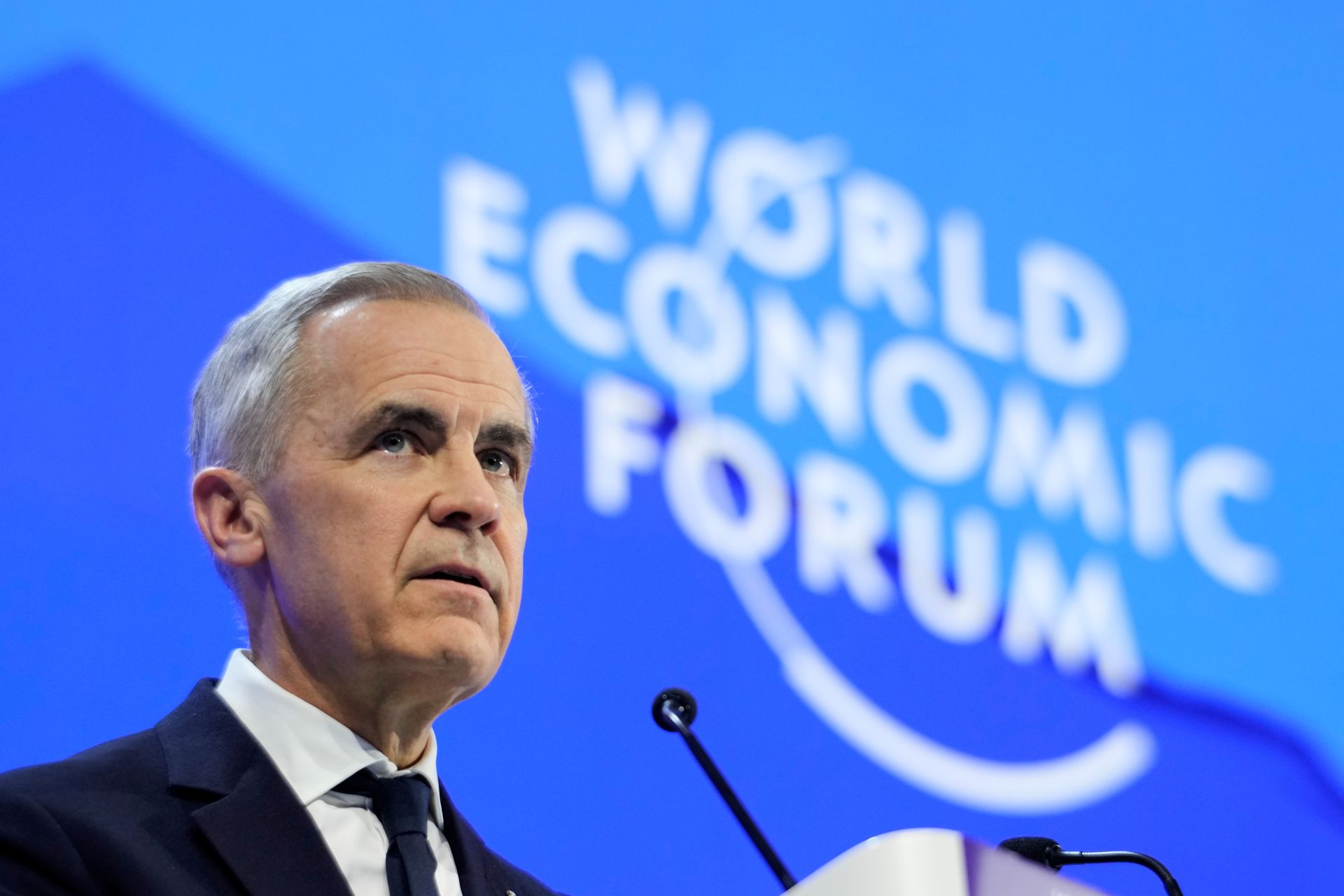
There are four interconnected areas where action is most urgently needed for realistic implementation of the vision for Canada set out by Prime Minister Mark Carney at Davos.
They include diversifying our web of economic and security relations; investing in the strengths of the Canadian economy; radically strengthening our own non-dependent security systems; and redirecting the focus of our diplomacy to serve these objectives.
To implement such a broad agenda, the federal cabinet, under the leadership of the prime minister, must be the active centre for alignment between our foreign, economic and defence policies. The task is formidable.
Leverage natural resources to build partnerships
Canada must build multifaceted and substantive relationships with world powers to offset our current economic and security vulnerability to the United States.
To that end, Ottawa should negotiate sectoral energy, agricultural and mineral supply agreements with major economies, including South Korea, Japan, Germany and India, with a goal of broader partnerships that call for them to invest in Canadian resource infrastructure, technology and manufacturing.
We should also pursue a wider relationship with China, although restricted for now to sectoral trade and investment agreements on natural resources and advanced green technology, including production of electric vehicles (EVs) in Canada.
To make these new relationships work, Canada must invest in the necessary infrastructure and rationalize the relevantregulations to exploit, upgrade and export our resources.
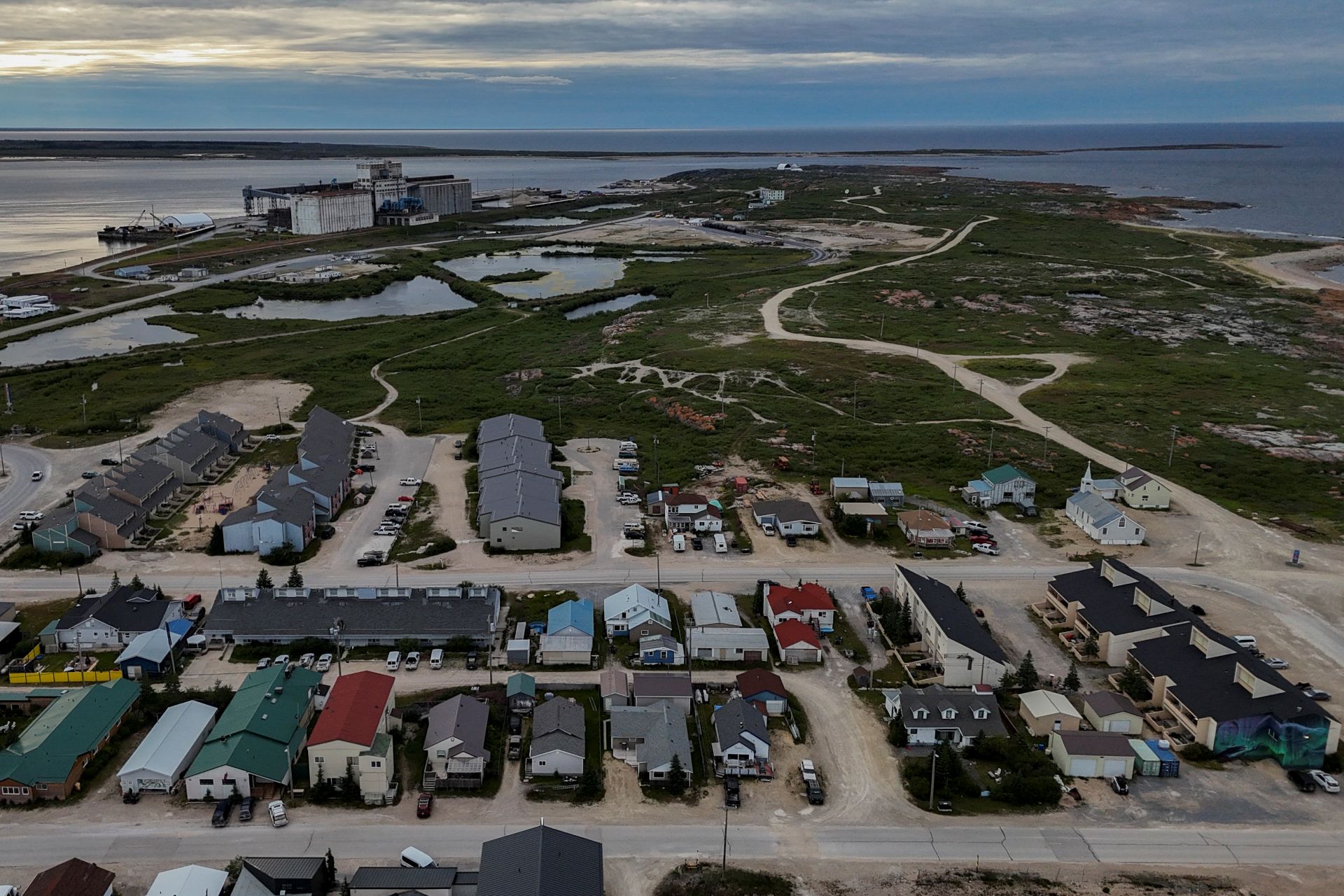
Action to realize this vision must start with increasing our pipeline capacity (including rail) to the West Coast. We must also exploit our unique, increasing access to the Arctic that climate change is creating by investment in overland access to Churchill, Man., and expanding its port infrastructure.
Innovate in national security
We must increase our capacity to defend ourterritorial sovereignty in an era of global instabilityandintensifying great power competition for Arctic dominance. For an immense country bounded by three oceans, our capacity to assert our interests in the air, on land and on the high seas is far below meaningful.
Correcting this weakness will take investment and partnerships. Ottawa should conclude new security agreements, starting with an Arctic defence alliance involving the Nordic nations, which most closely share our interest in keeping the region free of superpower hegemony and are prepared to partner in defending it, including by establishing joint facilities in our respective Arctic regions.
We should also establish a meaningful reserve forceto bolster our military presence across the North and relieve the active armed forces of their current responsibility for civil emergencies. Using educational and training inducements to recruit would double the value of this investment in national security, making it also an investment in human capital.
A sophisticated capacity to detect and defend against cyberthreats to national infrastructure is also critical.
Expand defence industrial policy
We must maximize the economic value from the government’s planned massive increase in defence investment while we build and develop our capacity to defend our sovereignty.
Given the scale and complexity of the challenge, Ottawa should negotiate integrated defence and industrial partnerships with technologically sophisticated, like-minded countries andinvest massively ourselves in the new technologies that are at the heart of warfare in the future, as well as in a military able to use them.
As the first step in pursuit of this approach, the government should complete the initial purchase of enough F-35 aircraft to make a viable fleet, but then purchase no more manned aircraft. Rather, we should invest in becoming world leaders in aerial drone technology capable of operating in the Arctic, including through partnerships with the countries most advanced in these technologies, including Ukraine.
The imperative of national defence extends beyond the Arctic to our maritime zones and homeland. This will require partnering in development of advanced non-Arctic-related drone technology for naval and land operations to stimulate the growth of such an industry in Canada.
We should purchase world-class Korean submarines as part of a deal that includes defence technology co-operation and a Korean commitment to manufacture Hyundai EVs in Canada.
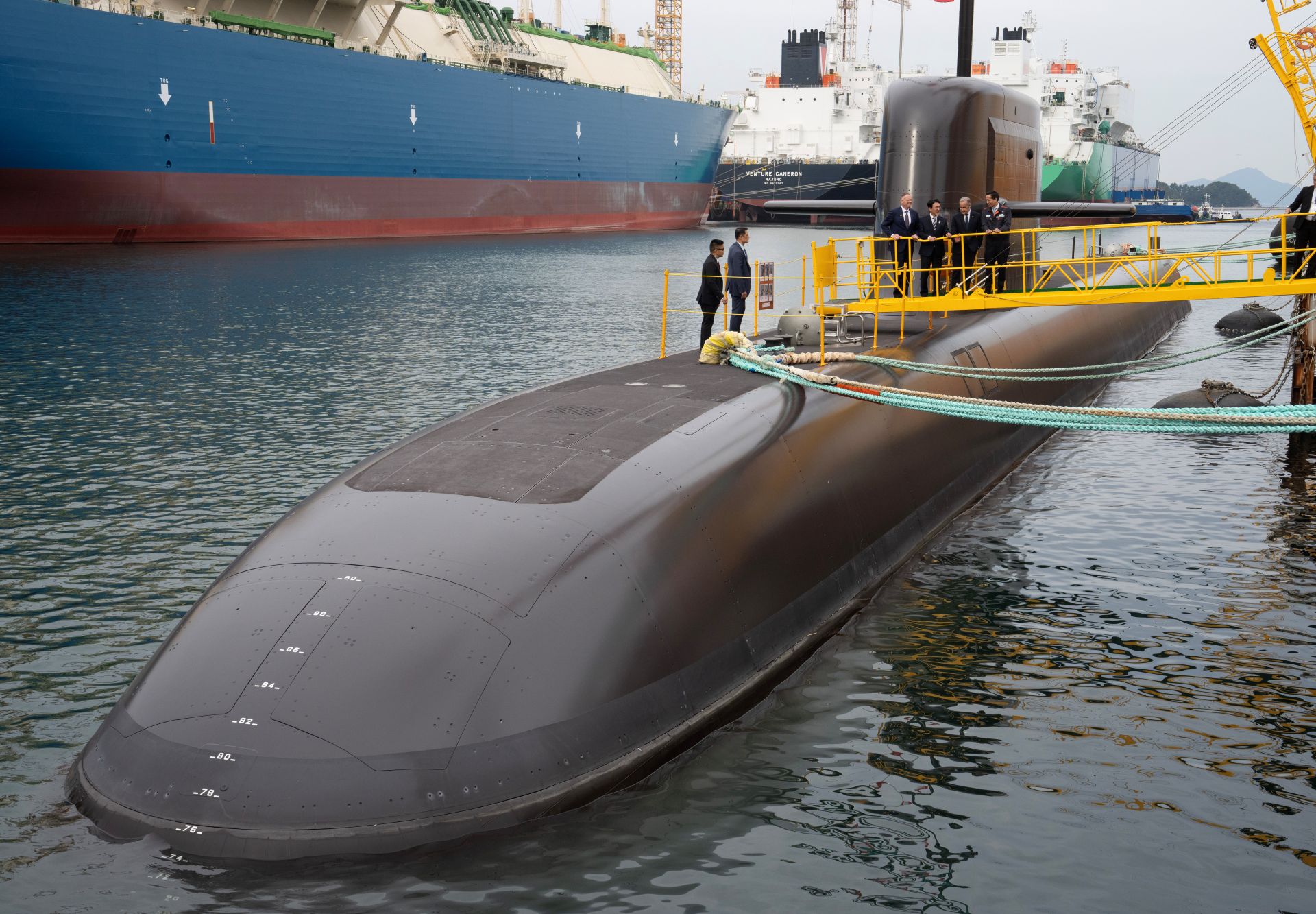
South Korean dignitaries meet with Prime Minister Mark Carney (second from right) on the gangway leading to a submarine at the Hanwha Ocean Shipyard in Geoje Island, South Korea, Thursday Oct. 30, 2025. THE CANADIAN PRESS/Adrian Wyld
To foster our own technological capabilities, the government should establish a defence technology research, development and training network co-ordinated by the National Research Council, which was originally established for this purpose during the First World War.
Address weak internal security structures
The absence of an effective national police capacityhas exposed us to justified criticism that we are unable to control global and cross-border crime, including money laundering, cybercrime and terrorism.
The first step to addressing this weakness should be to transform the RCMP from serving primarily as surrogate police forces in some provinces to being a high-tech, high-intelligence national police service, similar to those that exist in all our G7 partners.
Given the scale of the threat, Ottawa should reinforce FINTRAC’s mandate and resources to become a global leader in the fight against money laundering.
Canada should also expand beyond the Five Eyes and other existing intelligence-sharing arrangements with traditional allies to co-operate with other middle powers with which we share threats and interests.
Assert a middle power presence distinct from the U.S.
The prime minister has set out a vision of Canada as a leader in global co-operation to update the rules-based order that has existed since the end of the Second World War.
Pursuit of this goal requires a careful balance between meaningful assertion of our interests in the global system while remaining unthreatening to, if not aligned with, the United States, as well as co-operating with it where our interests and values still converge.
This new approach to international affairs needs a new diplomacy, with resources shifted to a limited number of key priorities.
In terms of economic diplomacy, that means working closely with Canadian business to follow up on free trade agreements we have in place with the EU, Japan and South Korea, while moving urgently to conclude negotiation of an agreement with Mercosur (the South American trade bloc).
We should also establish a regular schedule of Team Canada missions to the prospective major markets including India, Brazil and Indonesia, with the full participation of provincial premiers and First Nations leaders.
In terms of constructive multilateralism, the Carney vision requires that we help lead the worldwide middle-power effort to sustain the key pillars of the existing system, including:
- rebuilding the World Trade Organization without the U.S.;
- stepping up support for the specialized agencies of the United Nations, such as the World Health Organization; and
- taking an active role in shaping the agenda of the World Bank, IMF and regional development banks such as the Caribbean Development Bank where we are already the major funder.
In terms of active leadership in global burden-sharing, Canada should co-ordinate with other middle powers tobolsterstability and democratic governance in regions of fragility, with a particular Canadian focus on the Caribbean, where we already have influence. In that context, we should prepare to engage when a genuine opportunity for democratic transition arrives in Cuba.
In North America, we need to transform the emphasis of our consular presence in the United States from trade promotion to advocacy, and shift those existing trade promotion resources to our partners.
Canada also needs to develop a post-CUSMA relationship with Mexico that would retain bilateral free trade and co-operation on global issues – to the degree possible in light of managing our U.S. relationship.
More broadly, Ottawa must rationalize reallocate, fund and innovate in the way we manage our international representation, focusing on world capitals and multilateral institutions where engagement would best serve our priorities.
This means focusing on like-minded middle powers with which we co-operate most closely and on deepening the relationships with leading powers of the Global South – starting with our Western Hemisphere neighbour Brazil, as well as India, South Africa and Indonesia. We share with them critical economic and security opportunities and concerns.
Ottawa faces a huge and complex agenda. Work has already started on some of it. While the whole cannot be executed at once or in a hurry, neither can it be postponed.