In less than a month this fall, Alberta Premier Danielle Smith’s government used the Charter’s notwithstanding clause twice to craft legislation, saying it needed to protect children.
The Back to School Act (Bill 2) forced striking teachers to return to their classrooms in October and imposed a four-year-contract. The Protecting Alberta’s Children Statutes Amendment Act (Bill 9) passed Dec. 10, and prevents courts from reviewing three laws that restrict the rights of transgender youth and adults in health care, education and sport.
Bill 9 was introduced during Alberta’s Trans Awareness Week and just ahead of the annual Trans Day of Remembrance meant to honour lives lost to anti-trans violence. Instead, the government used what should have been a time of memoriam to invoke the constitutional nuclear option against trans youth.
What the notwithstanding clause does
The statutes amendment act shields the province’s three transgender laws from Charter challenges. It also suspends the application of the Alberta Bill of Rights and the Alberta Human Rights Act to those laws.
Under Canada’s Constitution, governments are allowed to invoke the notwithstanding clause under certain circumstances, but they must renew it every five years. In this way it is usually tied to one term of government.
It’s meant to be a rare emergency tool, a safeguard that keeps ultimate power with elected governments, while still allowing courts to protect rights. But Alberta’s United Conservative government is misusing it to prevent laws from facing a judicial review. In this way it protects policies the courts have already found harmful.
Other provinces — among them Quebec, Ontario and Saskatchewan — have also invoked the clause, but it has never been used by the federal government. Provinces are seemingly more willing to turn to the notwithstanding option, so what stops a future government from wielding it against any politically motivated group? Against workers, religious minorities or any community that challenges government power?
The reaction
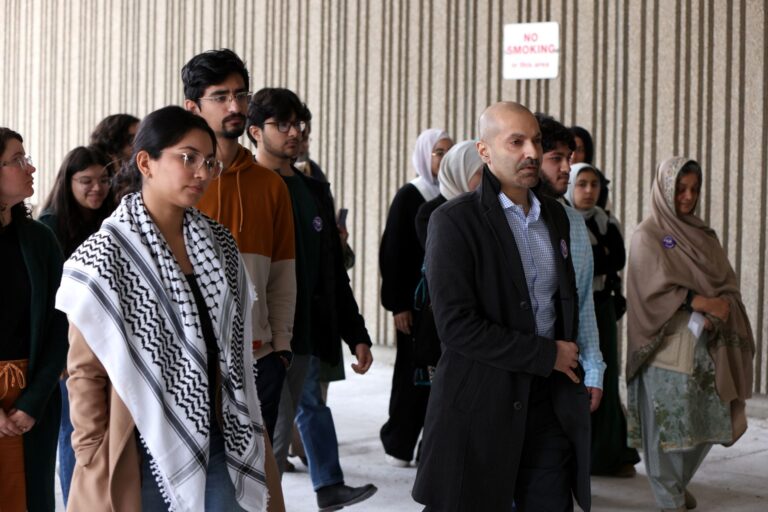
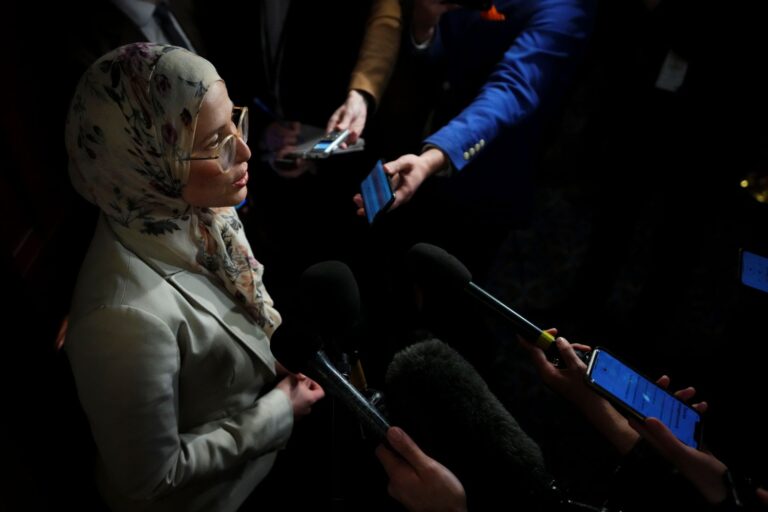
Alberta’s intention to barricade its trans laws behind the notwithstanding clause was swiftly and strongly condemned in public protests and in statements from diverse organizations.
The Canadian Medical Association stated the government’s actions are “infringing on physicians’ freedom of conscience . . . and disregarding the rights of patients to access medically necessary care.” Itwarned that the government has essentially stepped into a doctor’s office, which, for some young transgender patients, is the first and only safe space they have.
Chris Gallaway, executive director of Friends of Medicare, urged all citizens to be concerned about the government’s “despicable” use of the notwithstanding clause.
“Last month it was teachers. Today it’s trans Albertans. But, ultimately, an attack on anyone’s rights is an attack on all of our rights,” he said.
The Alberta Federation of Labour said the government used the clause because it is aware its trans laws are not defensible.
“Every Canadian should be concerned when the notwithstanding clause is used to erode people’s rights. That is not what this clause was intended to do. The only reason to use it in this way is because the government knows it is wrong and will lose in court,” president Gil McGowan said in a statement.
The Alberta Teachers’ Association called the move “a flagrant disregard for basic human rights” and warned that “normalizing the notwithstanding clause is a dangerous practice.”
Civil liberties organizations were equally blunt.
“Freedom of expression, freedom of religion, equality before the law, the right to life and liberty are constitutionally protected rights and cornerstones of Canadian democracy,” said a joint release by three rights groups.
“They were never meant to be optional, or to be applied selectively when politically convenient. If these rights and freedoms can be suspended at will, no one’s freedoms are secure.
How we got here
In June 2025, Justice Allison Kuntz of the Alberta Court of King’s Bench issued a temporary injunction against the law banning gender-affirming care to youth. Her ruling was unambiguous.
“The evidence shows that singling out health care for gender diverse youth and making it subject to government control will cause irreparable harm to gender diverse youth,” she wrote.
She concluded that denying treatment could cause young people emotional and psychological harm and expose them to permanent physical changes that don’t match their gender identity.
The government appealed. But instead of waiting for the courts to decide, it turned to the notwithstanding clause to render legal proceedings irrelevant.
Smith understood the consequences to the democratic process of introducing the notwithstanding clause. On her weekend radio show in June, the premier said she felt “the reverse” of what Kuntz ruled.
“We (government) want to battle this out, and the way you do that is you go to the higher levels of court,” she said. She then added: “If we were to impose the notwithstanding clause, everything would stop.”
Months later, she did it anyway — in the absence of any new medical findings or a change in circumstances. It was simply about a government that knew it was on the wrong side of the law and chose politics over children’s well-being.
Why this matters
The government is ignoring evidence it heard in court. Access to gender-affirming care significantly reduces suicide risk. A study of youth seeking help from the Seattle Children’s Gender Clinic found that those receiving gender-affirming care, including puberty blockers and hormones, had a 73 per cent lower risk of self-harm or suicidal thoughts. An Australian randomized clinical trial found a significant reduction in depression and suicidal thoughts among both young and older adults receiving testosterone therapy.
Other research found that transgender youth prevented from using pronouns and names reflecting their gender identity had increased thoughts of suicide, suffered poor mental health, became socially isolated and failed to perform well in school. And a 2015 transgender survey in the United States found that 79 per cent of respondents who experienced family rejection after being forced to come out had suicidal thoughts and 43 per cent had attempted suicide.
Bennett Jensen of Egale Canada has said that even before the three transgender laws were passed last year, there was increased bullying as well as more young people feeling anxious, depressed and scared. The very introduction of the bills had already created a hostile environment.
Alberta’s trans youth deserve better
Trans youth in Alberta should not be pawns used to appeal to a political base. They’re not abstractions in a policy debate. They’re kids who deserve to go to school safely. Who deserve access to medical care. Who deserve to enjoy sports with their friends. Who deserve not to be outed to families who may hurt them.
The Alberta government is taking all that away. And it is using the Constitution, the very foundation meant to protect vulnerable people, as a weapon against them.
Using the notwithstanding clause is about a government strongarming an entire segment of the province’s population for political gain. Transgender youth and adults are not being kept safe by these laws. It’s time to see it clearly for what it is.
The only thing “protected” are the laws themselves.