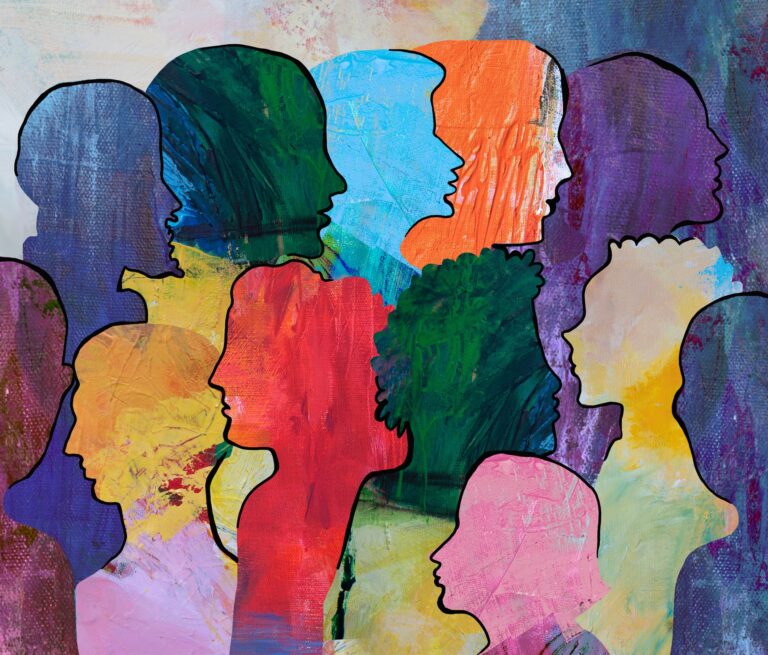
So far, the 2008 American presidential campaign does not make sense. Since 2000, reporters have been warning about the growing polarization between “red” and “blue” America. After the 2004 election, a map darted around the Internet, showing North America divided into two countries: cosmopolitan “blue” America, constituting the Northeast, the West Coast and Canada, renamed “the United States of Canada”; and the benighted American Midwest and the Sunbelt, renamed “Jesusland.”
And yet, in 2007 the leading candidates all seemed to be, in George W. Bush’s now infamous phrase, uniters, not dividers. On the Democratic side, the leading candidate, Senator Hillary Clinton, ran a campaign that was so cautious and centrist she refused to apologize for her vote authorizing the Iraq war even as she sought to lead America’s antiwar party. Her closest rival, Senator Barack Obama, preached about America as a “purple” nation, combining the red and the blue, while making history as the first African-American candidate in a country now so accepting that people objected not to the fact that he was black but to the fact that he was green— too inexperienced. Among the Republicans, the candidate leading in the polls, Rudy Giuliani, was a pro-life, thrice-married, gay-friendly former mayor of the capital of “blue” America, New York, seeking to lead America’s “red” party. His two main rivals were Mitt Romney, a flip-flopping Mormon former governor of the state often called “the People’s Republic of Massachusetts,” and Senator John McCain, who built a reputation as a straight-talking, centrist iconoclast. Could it be that the United States is finding a new centre? Might moderation be George W. Bush’s unintended parting gift to his country?
The contentious presidency of George W. Bush followed Bill Clinton’s roiling tenure, which resulted in the first presidential impeachment in nearly a century and a half. Fears spread that America was divided and dysfunctional. Left and right frequently accentuated the differences, feeding the conflict. A great inversion had occurred. Whereas once popular culture and political culture were centripetal, drawing Americans toward a common standard, toward common experiences, both became centrifugal, sending Americans careening off in different directions. In the 1960s and 1970s, the “big three” networks— CBS, NBC and ABC— broadcast similar news shows, which most viewers considered “objective,” if somewhat superficial, slanted and sensational. In the Fox News era, competing partisans relied on contrasting news sources. Partisan blogs, talk radio shows, think tanks, and magazines intensified the polarization, perpetuating the impression that America had experienced a defining red-blue split— although the conservative columnist Jonah Goldberg, referring to the Civil War, cracked: “Until you’ve got more than 600,000 American bodies stacked up like cordwood, spare me the ”˜more divided than ever before’ talk.”
Bush’s presidency fed fears of an everwidening chasm. America’s Crossfire culture became increasingly shrill. Conservatives and liberals whipped their followers into an Internet-fed frenzy, libelling opponents and lionizing their own in the unfiltered blogosphere’s virtual echo chamber. Al Franken became a Democratic icon, with hatchet jobs packaged in book form such as Lies and the Lying Liars Who Tell Them, and Rush Limbaugh Is a Big Fat Idiot. He and others declared Bush the worst president ever, a liar, a boob, a fanatic, a warmonger. Republicans proved equally harsh in demonizing Democrats with screeds such as that claiming “Liberalism is a Mental Disorder,” by the aptly named Michael Savage. Bill O’Reilly and Dinesh D’Souza accused liberals of aiding Osama Bin Laden. Modern liberals loved complaining about being disenfranchised, shut out of the Fox News orbit, while conservatives complained about being silenced and shunned by the mainstream media, the universities, the establishment. Characteristically myopic, Al Franken lamented “the loss of civility in public discourse,” without taking responsibility for contributing to the problem.
The blogosphere increased the tension. Bloggers hoped to revolutionize politics, undermining the mediaparty monopoly, mounting insurgent candidacies and, as one progressive study by the New Politics Institute dreamed, building “communities of activists and generat[ing] new political activity online.” Even as new business and cultural models emerged on the more collaborative Web 2.0 of Wikipedia, YouTube and MySpace, the political Blogosphere failed to deliver.
The blogs were the Internet era’s shrill speakers’ corners. Blogs prized short, punchy, flamboyant interactions, and the cheekier, meaner, or loopier the posts, the better. Over 25 million Americans read blogs daily. Blogs became incubators of pungent political commentary, reinforcing the red-blue paradigm. Internet spats spilled over into the mainstream media, generating “buzz” and frequently upstaging traditional journalists. If there was anything politically constructive in the blogosphere, journalists ignored it.
The new and old media’s polarizing partisanship further alienated America’s vast army of disengaged citizens. America’s postmodern “whatever” culture was steeped in cynicism and addicted to irony. In the 1990s, Seinfeld became popular by creating characters proud of their attachment to nothing, mocking idealists and activists as earnest fools. Jon Stewart applied Seinfeld’s delight in life’s daily absurdities to politics. Stewart and his fellow merry prankster Stephen Colbert, born in 1964, joined the baby boomers Jay Leno and David Letterman as the leading court jesters in America’s emerging republic of ridicule. The 1980s concerns about “infotainment” blurring news and entertainment now seemed quaint, as the news was delivered wrapped in a punchline. Surveys estimated the average age of The Daily Show viewers at 33, almost half the age of nightly news show viewers. Young people, especially, were mocking current events before comprehending them. Given a false choice between shouting and laughing, why not retreat into a world of individual prerogative and indulgent sensation?
Jon Stewart called himself passionate and idealistic, not cynical. Stewart believed in an American centre. When Baghdad fell in 2003, Stewart said, “If you are incapable of feeling at least a tiny amount of joy at watching ordinary Iraqis celebrate this, you are lost to the ideological left.” But “if you are incapable of feeling badly that we even had to use force in the first place, you are ideologically lost to the right.”
While insisting “this show is not a megaphone,” Stewart took pride in his bipartisan posture. Stewart said his comedy came “from feeling displaced from society because you’re in the center. We’re the group of fairness, common sense, and moderation.”
Despite the venom, some political scientists described a working American consensus on abortion, gay rights and other hot issues, in addition to Americans’ common commitments to capitalism, democracy, equality and consumerism. As the 2006 midterm elections loomed, Democrats wisely shelved their ideological conflicts.
Congressman Rahm Emanuel of Illinois, a Bill Clinton protégé, and Senator Chuck Schumer of New York sought electable candidates. Most Senate winners were moderate, “blue dog” Democrats tacking right. Pennsylvania’s Bob Casey was pro-life and anti-gun-control. Virginia’s James Webb had been Ronald Reagan’s undersecretary of the navy. Missouri’s Claire McCaskill defined “being a Democrat” as “being moderate and truthful and strong.” Calling herself a “Harry Truman Democrat,” McCaskill wanted leaders “strong enough to take on foreign enemies when they needed to, but…strong enough to know when not to fight.”
The star of the 2006 Democratic campaign, Barack Obama, embodied this centrist spirit. Obama’s national debut in 2004 electrified the Democratic Convention with a charismatic keynote speech urging unity. Rejecting “the spin masters, the negative ad peddlers who embrace the politics of ”˜anything goes,’” Obama mocked “the pundits” who “like to slice-and-dice our country into Red States and Blue States.” He declared:
We worship an “awesome God” in the Blue States, and we don’t like federal agents poking around in our libraries in the Red States. We coach Little League in the Blue States and yes, we’ve got some gay friends in the Red States. There are patriots who opposed the war in Iraq and there are patriots who supported the war in Iraq. We are one people, all of us pledging allegiance to the stars and stripes, all of us defending the United States of America.
Two years later, Obama cleverly timed a book tour to coincide with the midterm campaign. This gangly, youthful looking 45-year-old charmed America. Oprah Winfrey, the high priestess of American popular culture, begged him to run for president. Larry King called Obama “the man with more buzz than anyone in politics right now.” His book, The Audacity of Hope, identified the “common values and common ideals that we all believe in as Americans, whether we’re Republican or Democrat or Independents.” Obama blamed the unproductive polarization on “Baby Boomer politics.” Obama’s new generation of leaders promised to heal, building a more idealistic and gentler America with these common building blocks.
Joe Klein, the columnist of Time magazine, said the freshman senator’s “relentless efforts to understand and reconcile opposing views” bordered on becoming “an obsessive-compulsive tic.” Klein counted “no fewer than 50 instances of excruciatingly judicious on-the-one-hand-on-the-other-handedness.” This critique overlooked Americans’ excitement at seeing a politician who tried to reconcile with opponents rather than renouncing them. Americans wanted leaders tilling common ground rather than sowing seeds of division.
To a nation still reeling from the shock of September 11, traumatized by the Iraq war, seeking solutions to the Islamist threat, worried about the economy, unnerved by a coarsening culture, craving community in an increasingly polychromatic, multicultural nation and frustrated with many politicians’ shortsightedness, the Stewart-Obama message resonated. Americans wanted unity. They yearned for some calm and clarity.
On Election Day in 2006, many voted against Republicans to punish Bush for his partisanship. The Democrats regained the House and the Senate. “The Vital Center Prevails,” rejoiced a post-election press release from the Democratic Leadership Council. “America is a pragmatic nation, not a radical one,” Newsweek’s Anna Quindlen lectured President Bush as she branded the election a blow against “overreaching” and for “moderation.”
Bush’s perceived rigidity and failure guaranteed that the 2008 campaign would trigger a mad dash to find or reconstitute the centre. A quarter of a century into the “Reagan revolution,” nearly four decades after the heyday of the sixties movement, the country has been “Reaganized.” A consensus is re-emerging, bringing back traditional values with a makeover. As the baby boomers age, their rediscovery during the 1990s of enduring ideals and ethics has become ever more relevant, all leavened with a most welcome tolerance. The sixties kids relearned some of the lessons their elders accepted automatically, about the importance of families, the need for a moral centre, the desirability of balancing rights with responsibilities. Filtered through what the political scientist Alan Wolfe calls modern Americans’ “eleventh commandment”— thou shalt not judge thy neighbour— many liberals and conservatives are realizing they can find common ground.
Thus, amid the media circus, the political firefight and the cultural toxicity, calls for centrism grew louder, especially after the 2006 campaign. As the 2008 presidential contest loomed, the middle increasingly appeared the place to be. “I grew up in a middleclass family in the middle of America,” Senator Hillary Clinton said when she launched her presidential exploratory committee in January 2007, suggesting she was born to be balanced. Just two weeks earlier, launching his second term, California Governor Arnold Schwarzenegger said voters were “hungry for a new kind of politics, a politics that looks beyond the old labels, the old ways, the old arguments.” The Governor wanted “to move past partisanship, past bipartisanship to postpartisanship,” which he defined as “Republicans and Democrats actively giving birth to new ideas together.”
Both Senator Clinton and Governor Schwarzenegger were process-oriented centrists. Like President Clinton, they triangulated, balancing off liberal and conservative ideologues. Some centrists emphasized particular building blocks. The New Republic‘s Peter Beinart began with the Islamist terrorist challenge. Beinart wanted to galvanize Americans with a multilateral antiterror strategy, echoing liberals’ “good fight” for freedom during the Cold War. David Callahan said centrist Democrats advocated reconstituting a “moral centre.” Liberals and conservatives would unite against American culture’s selfishness, materialism, and excessive sensuality. “In an era of extreme self-interest, the left focuses on collective responsibility as our path to salvation, while the right dwells on personal responsibility,” Callahan wrote. “Most ordinary Americans know we need to have both to advance the common good.”
Like Callahan, yet unlike many other liberals, Barack Obama acknowledged “the power of culture to determine both individual success and social cohesion.” Unlike many conservatives, Obama also believed “our government can play a role in shaping that culture for the better.” This tension and his calls for a constructive, respectful dialogue defined the Illinois senator as a centrist, despite an overwhelmingly liberal voting record.
The Democratic Netroot activists were particularly appalled by both Hillary and Bill Clinton’s perpetual political calculations. When Hillary Clinton unveiled her cautious, mainstream, middle-class agenda, perhaps the Democrats’ most influential blogger, Markos Moulitsas ZuÌniga of the Daily Kos declared her domestic plan “dead on arrival.” Using the colourful language so characteristic of his medium, Zuniga exclaimed: “It’s truly disappointing that this is the crap Hillary has signed on to.” Zuniga labelled it “more of the failed corporatist bullshit that has cost our party so dearly the last decade and a half.” Still, again and again, Hillary Clinton made it clear that, as her campaign buttons proclaimed, she was “in it to win it.” Purity was secondary.
Historically, Democrats demonstrated a flair for doctrinal division, sometimes constructively, often selfdestructively. In the Bush years Republicans squabbled about foreign policy, immigration, separation of church and state, but these clashes rarely generated broad strategic visions. Advocating “centrism” or alternative visions risked appearing disloyal to the administration’s conservative agenda. Ultimately, George W. Bush represented both poles in the Republican debate over centrism. His 2000 campaign championed a more moderate, compassionate conservatism. Bush souped up his father’s “kinder, gentler” approach with more vision and more government involvement in a call for a “compassionate conservatism.” By 2006, the Bush presidency represented a more rigid conservatism than Ronald Reagan’s. Filling the vacuum, as party grumbling mounted about Karl Rove’s play to the base, David Brooks articulated a post-Bush conservative centrism. The New York Times columnist stressed culture’s role in shaping individuals, the need for strong ethics, the imperative to defeat Islamist terrorism and his own version of “common good” Americanism.
Politics is the art of compromise. Constructive democratic politics needs to be as broad and as welcoming as possible to encourage social peace and political legitimacy. Conviction politicians risk being imprisoned by ideology, handcuffed to the world they wish to see rather than adjusting to the world as it is. Particularly in 2006, George W. Bush’s administration seemed to have foundered on the shoals of his rigidity.
In recent decades, primary battles have tended to bring out the partisanship in candidates, while the general election fosters broader, centre-seeking statesmanship. Before any caucuses meet, before any votes are cast, it is premature to make any definitive pronouncements about what has occurred so far. But it is never too early to hope. This is a perilous age, menaced by Islamist terrorists who have declared war on the West— whether we like to notice it or not— challenged by an overheated economy that often underproduces for the poor. America’s leaders must try building bridges, forging consensus, playing to the centre, not to the base. At the same time, citizens, especially today, need a renewed appreciation of what binds them as Americans, while noticing the many positive things going on in the country, despite the challenges.