(Version française disponible ici)
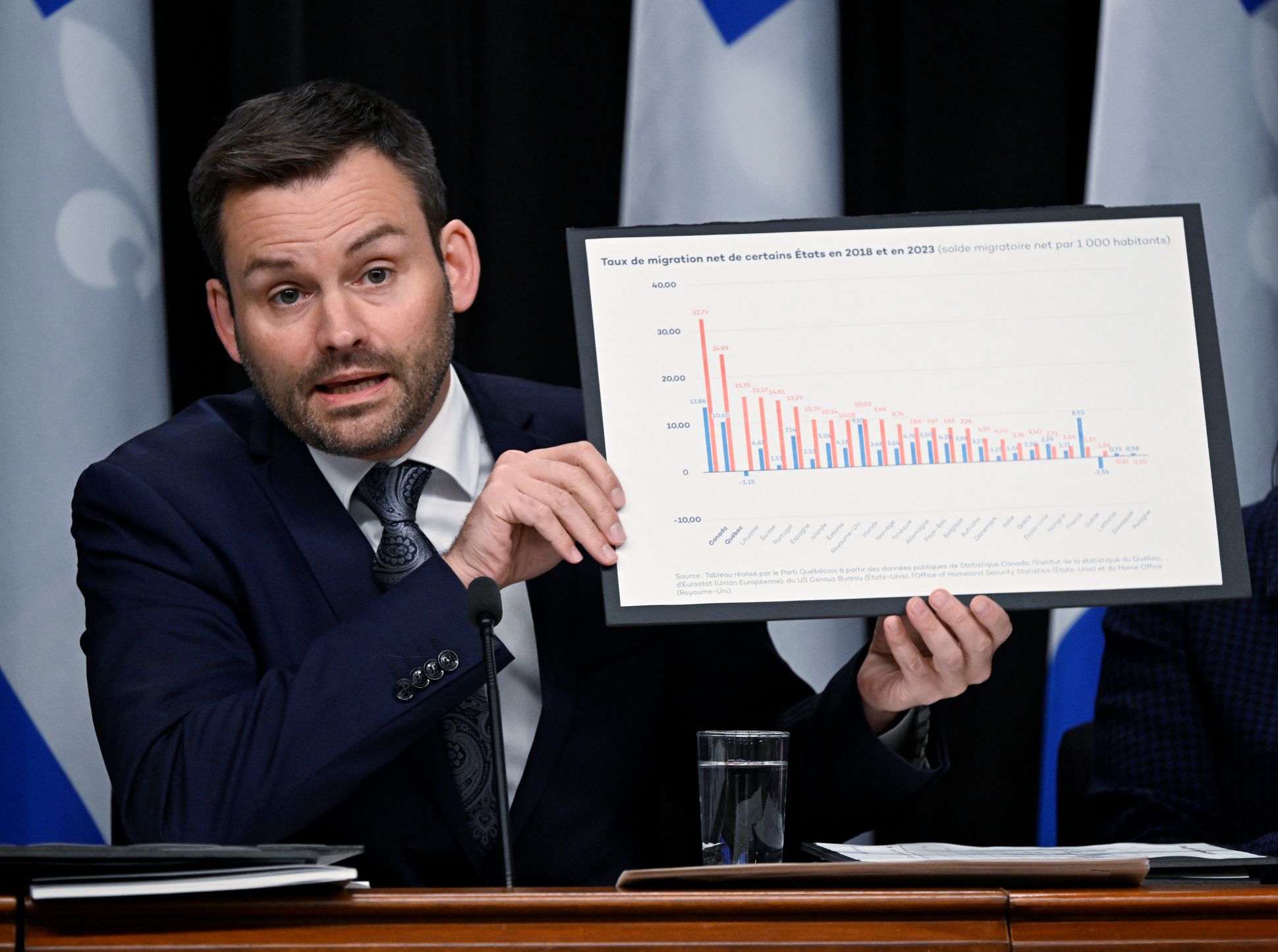
The new Parti Québécois (PQ) government has proposed limiting Quebec’s share of all asylum seekers in Canada to 22 per cent, roughly the provinces’ share of the national population, until Quebec “becomes independent.”
The proposal responds to real cost pressures that were repeatedly cited by the previous Coalition Avenir Québec (CAQ) government. However, the PQ’s 12-point immigration plan does not clearly explain whether it intends to pursue this goal through negotiations with Ottawa or through unilateral provincial measures.
The PQ’s proposal goes further than simply asking Ottawa to reduce Quebec’s share of asylum seekers. Its detailed immigration plan says a PQ government would seek to determine which claimants could remain in Quebec, giving priority to French speakers, then people with close family in the province and finally others who wish to settle there, until Quebec reached its demographic share of asylum seekers.
It would then ask Ottawa to relocate additional claimants elsewhere in Canada. This raises a fundamental legal question about the limits of Quebec’s authority over asylum – a field largely governed by federal law.
The 12-point immigration plan also addresses other areas, such as permanent resident selection, temporary foreign workers, international students, French-language requirements and university funding – areas where Quebec has varying degrees of authority and the minority PQ government can act with the support of other parties in the National Assembly.
Quebec has carried a disproportionate share of asylum claims
Quebec has long argued that it receives a disproportionate share of asylum seekers while bearing substantial costs for housing, health care, education and other services.
In 2025, the last year for which statistics are available, approximately 34 per cent (Figure 4) of all asylum seekers in Canada made claims in Quebec, down from about 46 per cent in 2023 during the crisis over irregular entries at Roxham Road. As of July 1, Quebec had approximately 21.7 per cent of Canada’s population, according to Statistics Canada’s quarterly population estimates.
The previous CAQ government also argued repeatedly for a reduction in the share of asylum seekers in Quebec to the province’s demographic weight, but the PQ is being much more assertive in demanding a provincial role in deciding which claimants remain in Quebec.
Asylum seekers are not the same as other immigrants
Assessing the PQ’s 22 per cent proposal also requires distinguishing between asylum seekers, protected persons and resettled refugees because Quebec’s authority differs across these categories that Canadian law treats differently.
An asylum seeker is someone who has claimed protection in Canada but whose claim has not yet been decided. If the claim is accepted, the person may be recognized as a protected person under Section 95 of the Immigration and Refugee Protection Act (IRPA). Resettled refugees, by contrast, are selected for protection abroad and admitted to Canada through a separate process.
These distinctions matter because Quebec’s role differs across these pathways.
Under international and Canadian law, as well as the 1991 Canada–Québec Accord (Sections 17–20), the federal government alone determines who qualifies as a refugee, although Quebec has a role in selecting refugees destined for the province, subject to the accord’s conditions.
Quebec has responsibilities for the reception and integration of permanent residents under Sections 24–29 but this does not give it the authority to unilaterally limit access to the federal asylum determination process.
Under Sections 99–101 of the IRPA, federal authorities determine whether asylum claims are eligible for referral to the Immigration and Refugee Board of Canada. The board then decides whether claimants qualify for protection. Quebec cannot unilaterally require federal authorities to stop processing claims because the province has reached a demographic target.
What Quebec can do instead
Although Quebec cannot unilaterally impose a binding limit on access to Canada’s refugee determination system, it can negotiate a fairer distribution of reception responsibilities and seek federal support for accommodation and public services.
The previous CAQ government has already pursued these objectives through negotiations with Ottawa.
In 2024, Ottawa gave the province a one-time payment of $750 million to help cover the costs of receiving asylum seekers, including temporary housing. The federal government also committed to faster claim processing and voluntary relocation to other provinces which agree to accept them.
The new PQ government could build on these measures by negotiating a new federal–provincial arrangement that distributes reception responsibilities more equitably, taking into account population, housing availability and service capacity. It could also press Ottawa to further accelerate claim processing, reducing the time that asylum seekers spend awaiting decisions and relying on provincial reception services.
Further financial support could help address the costs borne by the province. One existing mechanism is the Interim Housing Assistance Program. In its 2024 budget, the federal government announced an additional $1.1 billion to extend and renew the program for three years beginning in 2024-25. Funding is based on eligible costs and planned activities, rather than simply the number of claimants in a province.
The challenge for the new government is to secure greater federal support and better co-ordination over housing, services, asylum processing and voluntary relocation without encroaching on federal authority over asylum.
The distinction is fundamental: Quebec can seek a fairer share of the responsibilities and costs of receiving asylum seekers, but it cannot unilaterally decide who has access to Canada’s refugee determination system.