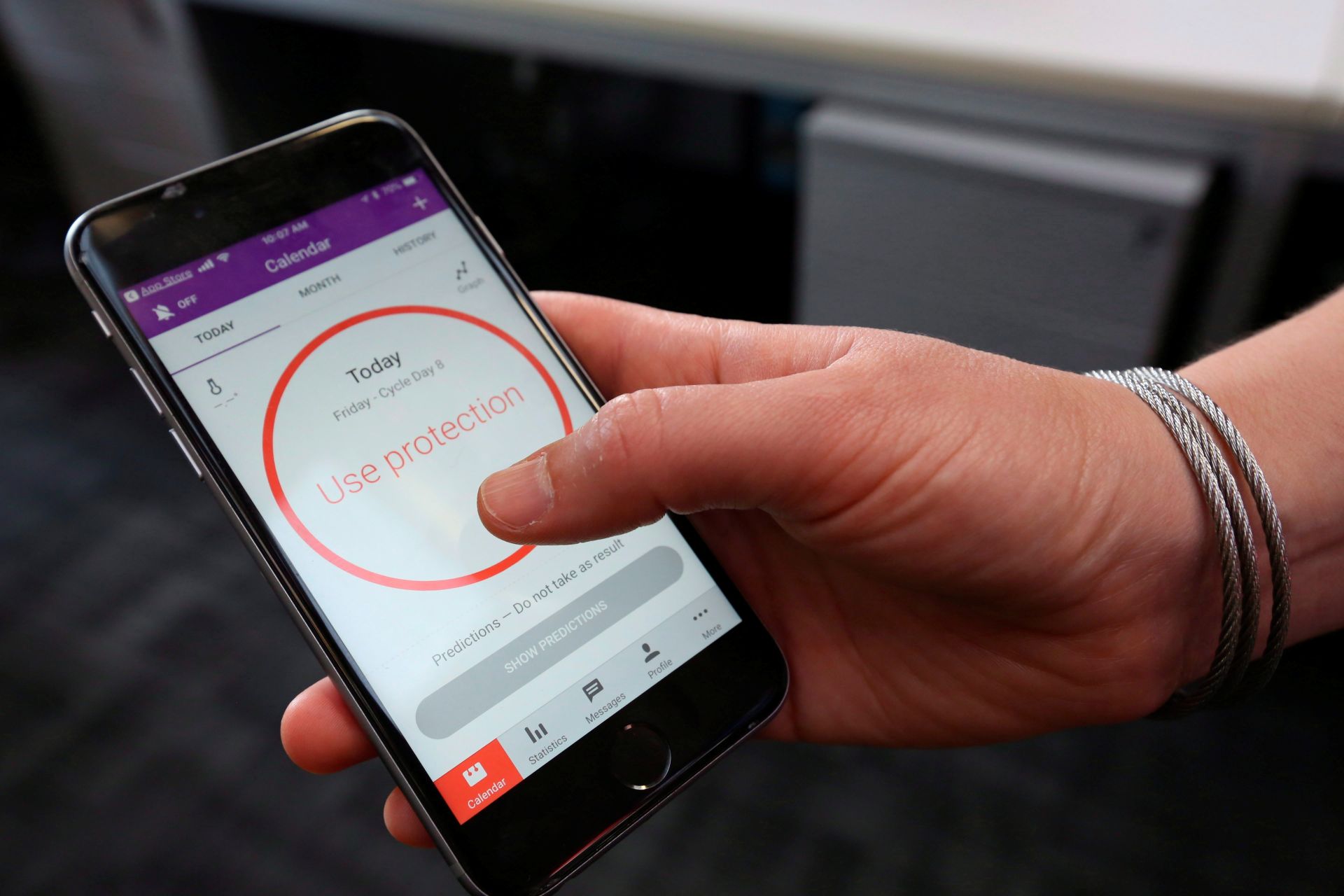
A birth-control app can look straightforward. A user records body temperature and menstrual cycle data, and the app identifies days when pregnancy is more or less likely. The decision that follows can have serious consequences. Someone may rely on the app’s prediction when deciding whether to use protection during sex.
Health Canada approved Natural Cycles in January 2024 and granted a Swedish digital health company what is called a medical device licence. It was the first and remains the only app licensed for contraceptive use in Canada. For people who cannot or do not want to use hormonal birth control like the pill, the app offers another option. Its approval also reflects the growing place of software in health care.
When people see that a health product has been approved by the federal government, they are likely to take that as a sign that the product has been carefully assessed. Yet a licence approval may not tell the entire story. Few will know what Health Canada examined, which parts of an app may fall outside the review, or how the product will be monitored once it’s on the market. Those questions are especially important for an app that depends on software that can change through regular updates or intimate personal data like sexual activity.
Health Canada should make it easier for Canadians to understand what a medical device licence covers. It should also pay closer attention to how digital contraceptives perform in the lives of the people who use them.
The gap between perfect use and real life
Natural Cycles uses basal body temperature (BBT) and menstrual cycle information — processed through an algorithm — to estimate a user’s fertility window. Figures (p. 2) reviewed by the Society of Obstetricians and Gynaecologists of Canada (SOGC) show seven out of 100 users may become pregnant with typical app use over one year. With perfect use — consistent and accurate temperature testing and avoiding unprotected sex on fertile days — the figure is closer to two out of 100. The society cautions that fertility awareness, such as Natural Cycles provides, is less effective than hormonal and long-acting contraception.
Using a contraceptive app requires more than downloading it and opening it every now and then. Users must take temperature measurements consistently, provide accurate information and follow the app’s recommendations. The software, in turn, must interpret data reliably.
Everyday life can make that harder. Stress, illness, disrupted sleep, some medical conditions, weight changes and irregular work schedules can affect body temperature or menstrual cycles. People may also forget a measurement, take it at a different time or misunderstand what the app is telling them. These are realities of life, not failures on the part of users.
This does not mean that Natural Cycles has no place among contraceptive options. Some people may value a hormone-free method and be comfortable with the daily input it requires. But approval should not close the conversation about effectiveness. Regulators need to know how a product performs among people whose bodies, routines and circumstances differ from those represented in the manufacturer’s original research.
The consequences of an unintended pregnancy also differ greatly. A person with stable income, nearby health services and ready access to abortion care may have choices that are not available to someone living in a remote community or facing financial insecurity. When regulators consider real-world performance, they should also consider who bears the greatest risk when the app’s prediction is wrong.
What did Health Canada actually approve?
Health Canada assesses medical devices for safety, effectiveness and quality before they can be sold. Regulatory requirements that classify medical devices based on their level of risk granted Natural Cycles a Class II “moderate-risk” licence. That may be meaningful to regulators and manufacturers, but it means little to those who use it.
They may assume that the licence covers the app’s privacy practices, sharing of reproductive data with other companies, later software updates or the company’s advertising claims. But some of those matters may fall under privacy law or consumer-protection rules. That division may make sense inside government, but it makes much less sense to someone using a single app.
Health Canada should publish a short, plain-language summary for every licensed health app. It should explain which function was approved, who the product is intended for, what evidence supported the decision and whether any important limitations were identified. It should also clearly state which issues were not part of its review. People should not need to understand the structure of Canadian regulation to know what government approval means.
Approval should not be the end of oversight
The government has recently given Health Canada stronger powers to oversee licensed medical devices. Since January, the health minister has been able to impose or change terms and conditions on Class II, III and IV licences at any point.
These powers allow Health Canada to ask for more evidence or monitoring when new risks emerge or when more information is needed about how a device is performing in certain groups.
For digital contraceptives, Health Canada could ask manufacturers for evidence about Canadian users and compare expected app performance with real-world outcomes. It should also examine how the app works for people with irregular cycles, disrupted sleep or health conditions that may affect temperature readings.
AI scribes in health care raise risks for patients and privacy
Canada’s health data is flowing abroad while Ottawa stalls on AI rules
Health Canada should also require digital contraceptive manufacturers to explain publicly, in accessible language, how their apps determine fertility windows and what evidence was used to develop and validate those predictions. That evidence should include what types of bodies, cycles and circumstances were represented.
Health Canada could also require independent assessments of whether these apps perform reliably across different ages, cycle patterns, racialized groups, literacy levels and socioeconomic circumstances.
Users should not have to piece the system together
Health Canada cannot address every concern surrounding digital contraception on its own. A medical-device licence is about the app’s safety, effectiveness and quality. But questions about how reproductive data is collected, retained and shared fall largely within privacy law. That distinction is rarely obvious to users.
Reproductive data can reveal highly personal information. Yet someone using a licensed app may not know whether Health Canada assessed the app’s privacy practices, how its data is protected or which public authority is responsible when something goes wrong. Health Canada should work with federal and provincial privacy authorities to develop stronger and more consistent standards for reproductive-health apps, including standards for meaningful consent and minimizing the amount of data collected and shared with third parties.
Canada needs to make sure its only licensed contraceptive app is understood by users, including what that approval means, what it leaves unanswered and how the product’s safety and effectiveness will be monitored over time.