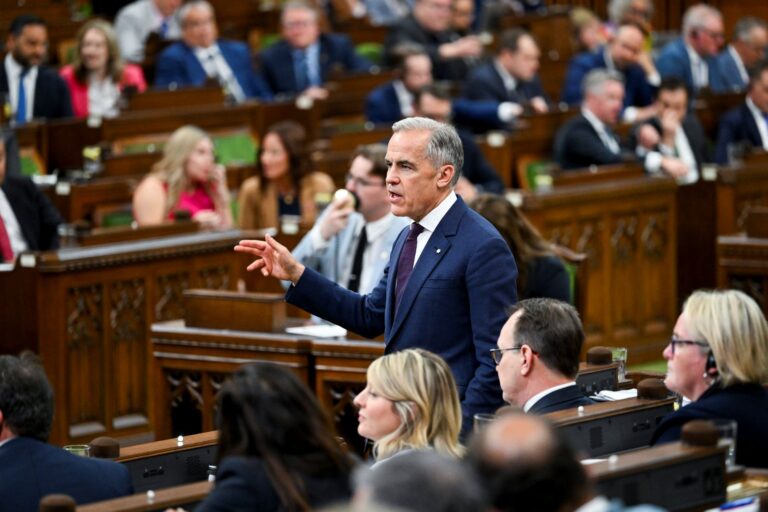
The best remembered speeches in Canadian history have come at moments of crisis and uncertainty, when prime ministers capture the public’s imagination through carefully crafted performative speech acts, inviting citizens and the world to see Canada in a particular light.
These moments are important to the country over the long term. They give rise to collective emotions of pride, reassurance, and loyalty, and over time, the narratives embedded in those speeches become a part of the national fabric, influencing how Canadians perceive and understand themselves.
Such defining rhetorical moments are relatively rare in Canadian history, as I note in my recent book, Canada’s Prime Ministers and the Shaping of a National Identity.
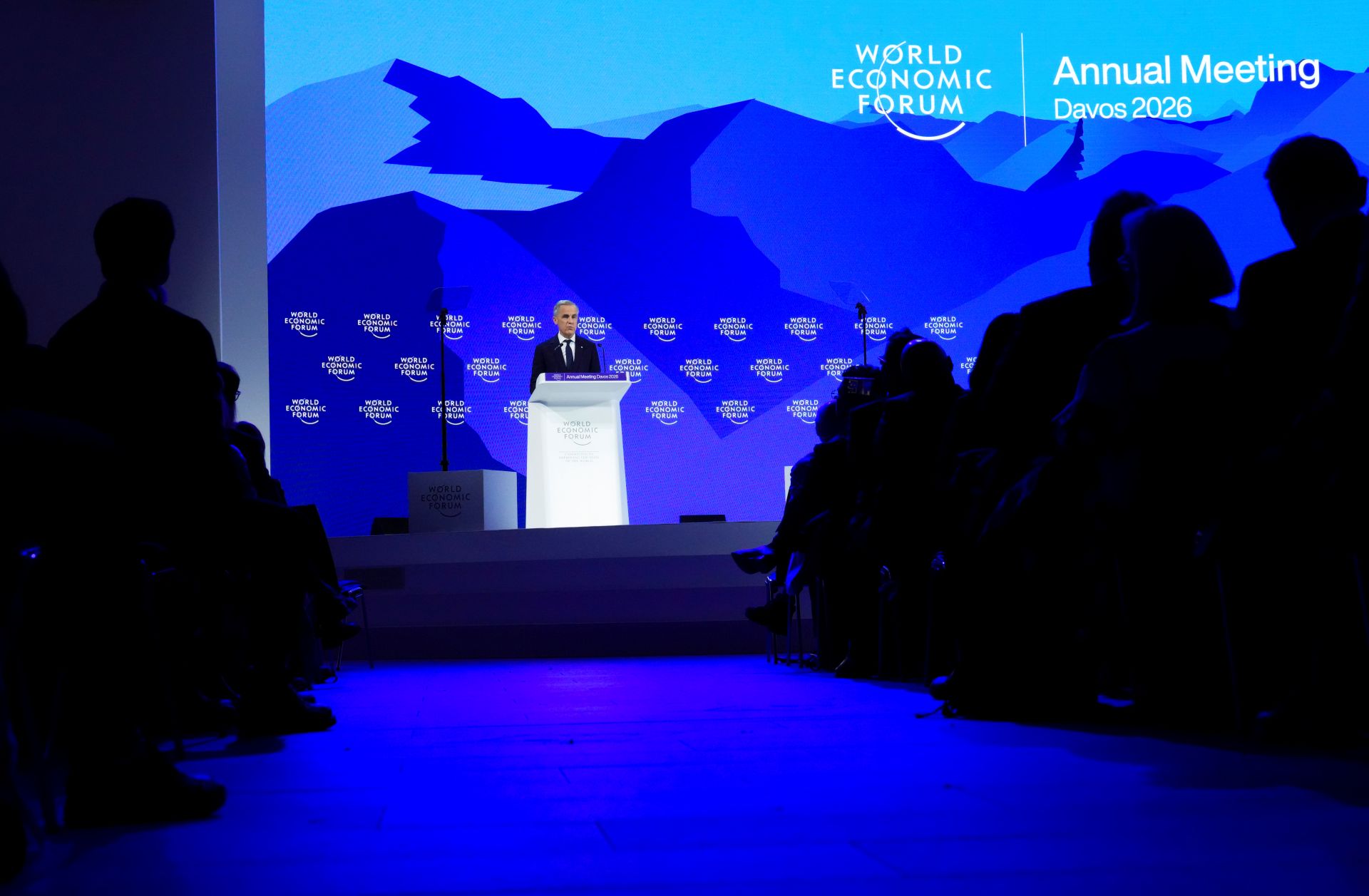
Mark Carney had such a moment on the global stage in Davos at the World Economic Forum.
Carney crafted his speech at a moment when many Canadians feel they are living through an existential crisis with the country under assault from the United States and amidst great stirrings of disunity, particularly in Quebec and Alberta.
But Canadians have felt this kind of anxiety about global instability and national unity many times before.
A historic Cold War call
In 1948, for instance, Canada was a restless nation. It was coming out of the Great Depression and six years of war. The world was fast descending into the Cold War.
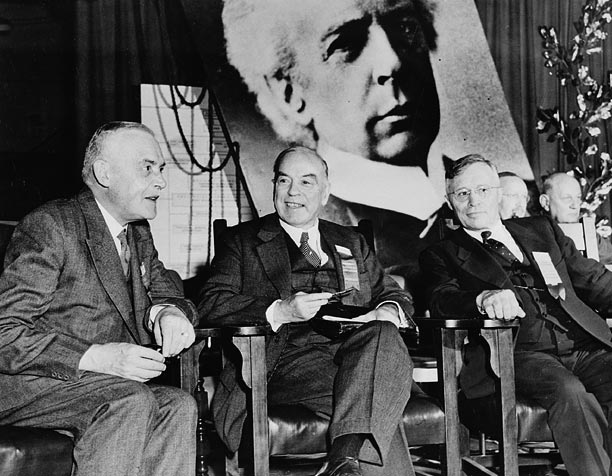
In September of that year, William Lyon Mackenzie King, prime minister at the time, was in Paris addressing the United Nations. He warned against a world divided by the great powers and called for genuine international co-operation. “The good of each is bound up in the good of all,” he asserted.
The speech was a hit. King was interrupted twice by applause and received “a resounding ovation as he returned to his seat,” the press reported.
His remarks were described as “the first moral call” of a new world order based on the emerging liberal internationalism and multilateralism of the day, according to a report in The Globe and Mail.
Accordingly, King went home and continued to build a new identity around social security.
The first duty
National unity has been the first duty of prime ministers, and they understand that what they say matters greatly.
In their speeches they attempt to build a national story, evoke a shared identity, and convey to Canadians and others what Canada is and what it aspires to be. Their speeches are crafted to be both meaningful and motivational and are meant to steer citizens to seeing the nation itself in specific ways.
King was performing Canada’s emerging role as a moral middle power in a divided world. Carney accomplished the same at Davos in front of political, cultural and financial elites in a speech widely judged to be brilliant, inspiring, and confident.
Like King and every prime minister since, Carney knows that national unity is sustained by narratives and stories.
Since his decisive win as Liberal leader, Carney has seized the political context shaped by Donald Trump, framing a narrative of Canada around unmistakable threat and resolve.
“President Trump is trying to break us so that America can own us,” Carney said back in April 2025. The language was blunt by Canadian standards. But it reflected a public mood increasingly shaped by anxiety and anger.
Carney has positioned himself as the credible manager with the steady hand to guide Canada through turbulent times.
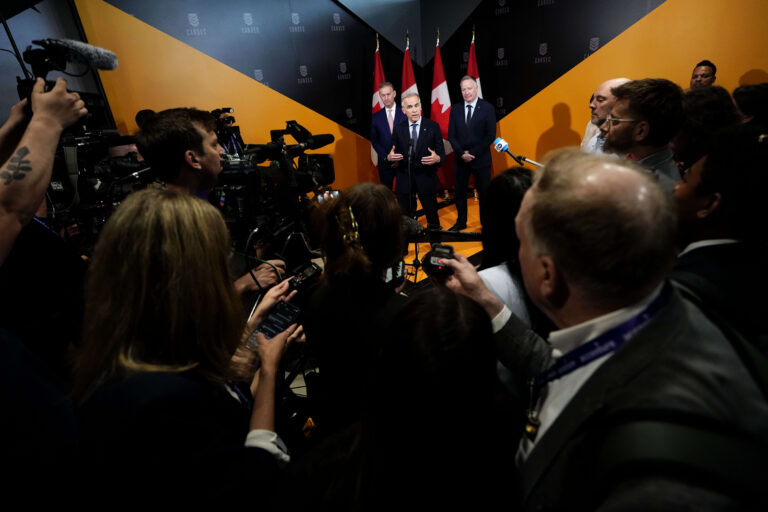
His highly publicized visits to China, Qatar, Davos, India, Japan and Australia have reinforced the themes.
In Beijing, Carney spoke openly about the emergence of a new world order and made a trade deal that emphasizes co-operation in what he sees as a divided and fragmented global environment. Later in Qatar, he acknowledged that the world has fundamentally changed and securing new trade partnerships and investments are necessary to reduce Canada’s reliance on any single country.
Davos, however, was the centrepiece and Carney played to a Canadian audience even if few Canadians were physically present in the theatre where he spoke.
The importance of location
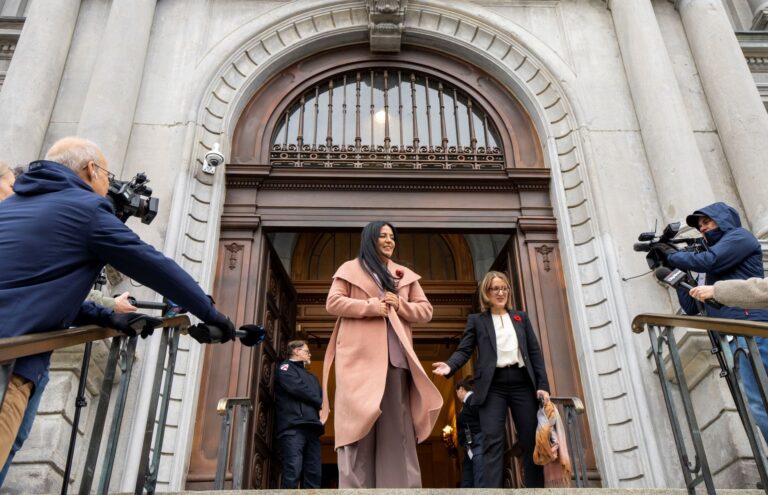
It was in Quebec City two days later that he would speak to the nation, delivering a speech titled “Building Canada” that all prime ministers have routinely given as their call to national unity. The venue – the Citadelle of Quebec next to the Plains of Abraham – was the wrong one, though, angering some politicians and commentators but pleasing many.
Location is never neutral in politics, particularly in a country as regionally and historically complex as Canada.
The Plains of Abraham are a place of defeat for French-Canadians, a reminder of a lost nation. It’s where the French were forced to surrender Quebec to the British in 1759 in the Battle of Quebec, leading to the fall of New France. It was the start of English domination over French-speaking people in North America.
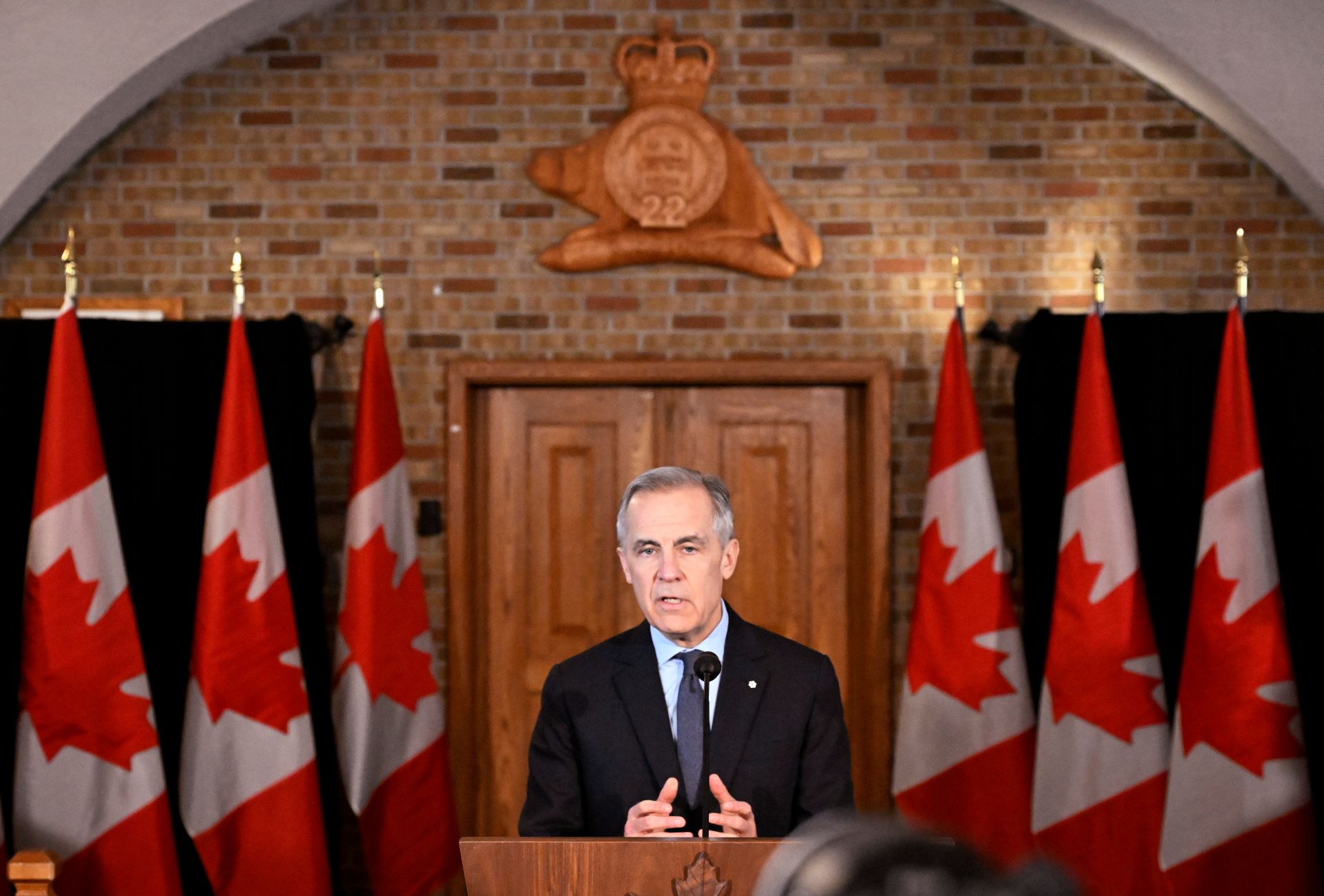
Carney’s Canada story in Quebec City was one of solidarity, generosity, caring and “how we look out for each other and ensure that no child, no family, no one is left behind” as the nation responds to moments of genuine uncertainty.
The Plains of Abraham, he said, are “where Canada began to make its founding choice of accommodation over assimilation,” reframing the British conquest as the start of a partnership.
Across Quebec intellectual and political circles, the reaction was immediate.
“Perhaps Mr. Carney wasn’t paying attention in his history classes, or maybe the history he learned doesn’t quite align with reality,” journalist and political commentator Chantal Hébert told Radio-Canada.
“Mr. Carney’s speech can only lead to the independence of Quebec,” Parti Québécois Leader Paul St-Pierre Plamondon said.
The plains are now part of Battlefields Park, which has served as a backdrop for official visits and cabinet retreats. But not for formal speeches by prime ministers. They are sensitive to its status in Quebec history.
Carney was in Quebec City for a cabinet meeting when he delivered his speech at the Citadelle. He described Canada as a nation unlike any other: “a beacon – an example to a world at sea.”
He talked about diversity as a strength, rights and freedoms as fundamental. How Canada was built by partnership over domination, compromise over division. Like so many of his predecessors, Carney quoted George-Étienne Cartier’s depiction of “different races” living not in conflict but in co-operation, “great families beside each other.”
Carney acknowledged that Canada did not have a straight path to accommodation and inclusion. He mentioned the Acadian deportation and the historic Durham Report, with its push for French assimilation. But he noted the resilience of the French, and how “progress came through tension, compromise, and sometimes failure.”
Each generation of Canadians, he said, “has built a modern, progressive, liberal state that embraces the values of caring and sharing, of equity and fairness for all.”
It’s not the first time a prime minister has miscalculated the significance of the Plains of Abraham.
In 2009, Stephen Harper was keen on promoting a better understanding of Canada’s history. A re-enactment of the Battle of the Plains of Abraham was planned for the 250th-anniversary. Harper cancelled it after members of the Bloc Québécois and Parti-Québécois and others objected.
New or not, voters like the message
Broadly speaking, Carney’s talk of Canada has reassured many Canadians. A Leger poll taken after both speeches shows growing support for his narrative. In Quebec, support jumped four percentage points for the Liberals and nine per cent for Carney as the best choice for prime minister compared with late last year.
Both speeches contain little that has not been spoken of by earlier prime ministers. They all tell Canadians their country is an example to the world. Carney continued that tradition at Davos, saying Canada “was among the first to hear the wake-up call” of the dangers presented by Trump without naming him.
The Davos speech tapped into what many Canadians want for their country in a disruptive world: bold leadership. Carney declared Canada will lead in building a better world. He situated Canada on the side of good, bringing to the world “the power of legitimacy, integrity and rules” that will lead it to a better place.
In that moment, a prime minister commanded global attention and spoke with confidence on Canadians’ behalf. For that, many of them cheered.
We do not know how Mark Carney’s prime ministership will unfold or where his narrative of Canada will lead. But it is clear that the country has a prime minister who understands how to use national stories to respond to the needs and anxieties of the nation. His challenge will be to build a national story that is not simply built on anger and resentment toward the United States.