Canada has long prided itself on having a multilateral foreign policy grounded in sovereignty and the rule of law.
Yet Canadians, like many others in the international community, have often remained silent about a persistent contradiction at the heart of the global order: the routine tolerance many nations show for U.S. interventions abroad.
That silence is now being challenged. Economists, policy institutes and international leaders are more openly questioning U.S. intrusions as they begin to affect allies, not just adversaries.
At the World Economic Forum in Davos last month, Mark Carney challenged long-standing euphemisms about global power and urged the international community to stop “living within a lie,” as the costs of looking away from interventionism become indefensible.
The international community should take that warning seriously, ensuring that its own laws are more than symbolic and speaking out when U.S. policy relies on strong-arming weaker nations.
Breaking the silence on global disorder
There is a shifting international consensus that the world is beyond hegemony and Carney’s warning was clear: A rules-based international order cannot endure when authoritarian states or those increasingly behaving that way can act with impunity.
Carney used his speech to argue that world leaders have repeatedly turned a blind eye to bullying U.S. foreign-policy practices, including sanctions, support for compliant regimes and selective enforcement of international norms.
This reflects a growing recognition that the post-Second World War order has been unevenly enforced, with rules applied selectively and accountability deferred when they conflict with the interests of the powerful.
That assessment is illustrated in a recent article by the Australian Institute of International Affairs, which examines U.S. foreign policy in the context of its long history of interventionism and economic pressure.
The article highlights the 1962 embargo against Cuba, along with U.S. actions in Vietnam and other Cold War and post–Cold War theatres. They are framed not as diplomatic initiatives but as instruments of punishment and destabilization.
Cuba: a case study in U.S. coercion
Cuba exemplifies this pattern clearly. Since the late 19th century, its sovereignty has been repeatedly compromised by U.S. intervention.
In 1898, as Cuban forces neared victory in their war of independence from Spain, the United States entered the conflict after falsely blaming Spain for an explosion that destroyed the USS Maine in Havana harbour.
The melodramatic “yellow journalism” practised by rival New York newspaper publishers of that era — notably William Randolph Hearst, who held personal agricultural interests in Cuba — helped recast Cuba’s liberation struggle as a pretext for U.S. imperial expansion.
The pattern of intervention would be repeated in the 20th century.
After the 1959 Cuban Revolution and the Fidel Castro government’s nationalization of U.S. assets, Washington retaliated by cancelling Cuba’s critical sugar import quota in 1960 — destabilizing the island’s economy and setting the tone for the broader embargo imposed in 1962 that is still in place today.
In 1961, the U.S.-backed Bay of Pigs invasion was launched in the hope that proved false that Cubans would welcome forces whose goal was to overthrow Castro’s government. The invasion was defeated in three days, but U.S.-led economic warfare never ceased.
These pressures pushed Havana toward the Soviet Union — where sugar exports abandoned by the U.S. found a new market — although Cuba’s leaders would ultimately make ideological and strategic choices that were not aligned with communism.
Cuba opted for a socialist governance model to pursue equitable development and share the wealth in a society that had been long shaped by plantation economies, slavery and colonial extraction.
This choice aligned with a broader post-colonial logic spreading across the Caribbean, as other newly independent states rejected liberal capitalism as being inadequate to address neocolonial inequities.
In 1976, Cuba renounced any political alignment with communism, declaring socialism irrevocable in its constitution — a stance reaffirmed by a new constitution enacted in 2019, which also legalized independent workers and small businesses.
Despite severe economic constraints, Cuba built a universal education and health-care system that produced outcomes — particularly in literacy and child health — often surpassing those of other Caribbean states. This capacity also enabled advances in biotechnology, including the development of COVID-19 vaccines.
These complexities are explored in the book Our Cuba: Contextualizing a Vibrant Past. Written by Cuban scholars, the book — edited by the two Canadian authors of this article, Wright and Winterdyk, and by Cuban Páez Pérez — offers a contextualized, island-authored history of Cuba that traces U.S. interventionism from its 1898 hijacking of Cuban independence to Cold War regime-change efforts and the embargo that endures today.
Why Canada must speak up now
The matter of Cuba’s sovereignty is urgent and there are increasing signs that the regime is facing an imminent existential threat.
Both the New York Times and the Wall Street Journal have reported that the Trump administration wants the Havana government ousted before the end of this year. Using its Venezuela intervention as a playbook for Cuban regime change, Washington is reportedly already identifying insiders who could replace the current leadership.
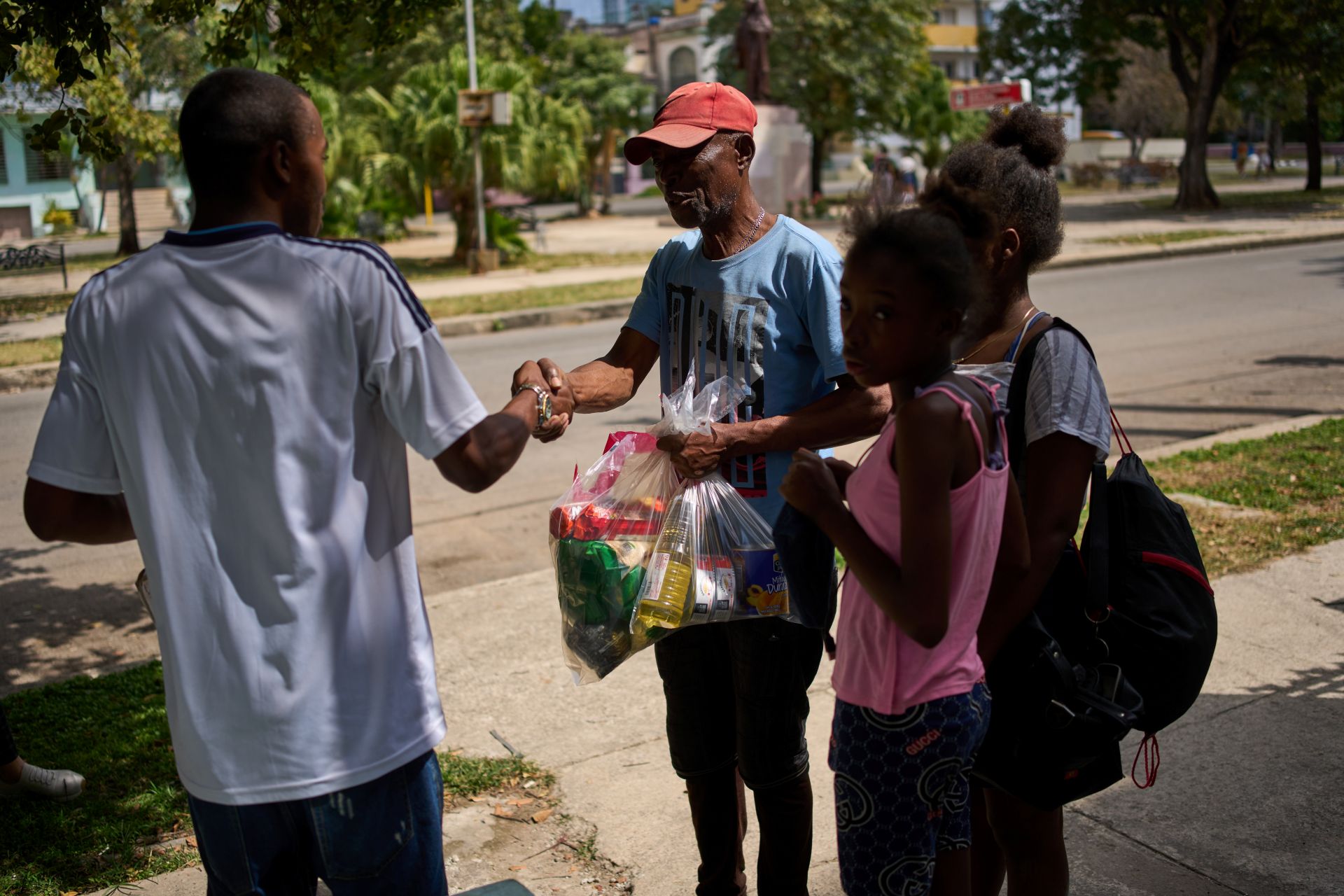
At the end of January, Washington further tightened the noose when it threatened tariffs on any country that sold oil to Cuba. The impact was immediate. Within days, Cuba’s shortage of jet fuel led Canadian airlines and others to cancel all vacation flights. This will cripple the tourism industry — one of the island’s few remaining sources of hard currency.
In the 1960s, the U.S. justified its Cuba embargo as being necessary to limit Soviet geopolitical expansion. Then, after the Soviet Union collapsed, Washington recast the embargo as a pro-democracy strategy.
The new branding did not change the global community’s opposition to the policy, as evidenced by decades of United Nations resolutions condemning the embargo. These censures are endorsed annually with overwhelming support from UN members. Canada, which has maintained diplomatic relations with Cuba before and after the revolution, has consistently opposed the embargo in the UN votes.
The U.S. posture was codified into law in 1996. The Helms–Burton Act allows U.S. nationals to sue foreign firms deemed to be trafficking in Cuban assets nationalized after 1959 from U.S. owners or from Cuban nationals who later became U.S. citizens. This legal threat over third-country actors succeeded in discouraging foreign investment in Cuba.
One expression of Ottawa’s divergence from U.S. policy is Canada’s Foreign Extraterritorial Measures Act (FEMA) meant to shield Canadian firms from the reach of this and similar U.S. legislation. In practice, however, FEMA’s safeguards are largely symbolic. They apply only after firms have been exposed to U.S. litigation — a risk most cannot afford.
It is difficult to ignore the irony of the U.S. fixation on toppling Cuba’s socialist government, given Washington’s extensive trade ties with authoritarian regimes such as China and Saudi Arabia – neither of which operates under a constitutional model foregrounding social rights and participatory state structures comparable to Cuba’s.
Cubans elect half of the country’s National Assembly through secret ballot and the National Assembly elects the president.
As noted in our epilogue to Our Cuba, we saw no evidence that Cubans seek a market economy or presidential elections beyond the democratic mechanisms of Cuban socialism.
Against this backdrop — and aside from the paradox already noted above — the Trump administration’s call for regime change runs counter to established norms of state sovereignty.
What Canada should do
For Canada, the question is not whether to take sides, but whether it stands by its principles. A foreign policy rooted in multilateralism cannot remain credible if it tolerates coercion.
Ottawa should amend FEMA to provide proactive legal protection for Canadian firms, transforming the statute from a shield into an instrument capable of challenging the extraterritorial reach of the U.S. embargo.
In parallel, export credit support through Export Development Canada insurance and financing programs in the Cuban market leaves smaller firms especially exposed. Expanded payment insurance would give Canadian exporters greater security.
Cuba’s history has shown that U.S. intervention leaves lasting scars and deepens inequality. In the face of U.S. efforts to oust the Cuban government, Canada’s silence is not a neutral posture but an enabling one.