(Version française disponible ici.)
Quebec Premier François Legault’s upcoming departure will mark the end of a cycle and open a period of collective reflection on the kind of leadership and social vision Quebecers want for the future.
Quebec is at a turning point. The coming months, marked by a leadership race with an election further on the horizon, offer an opportunity to refocus public debate on what unites the population and on the concrete priorities that affect citizens’ daily lives.
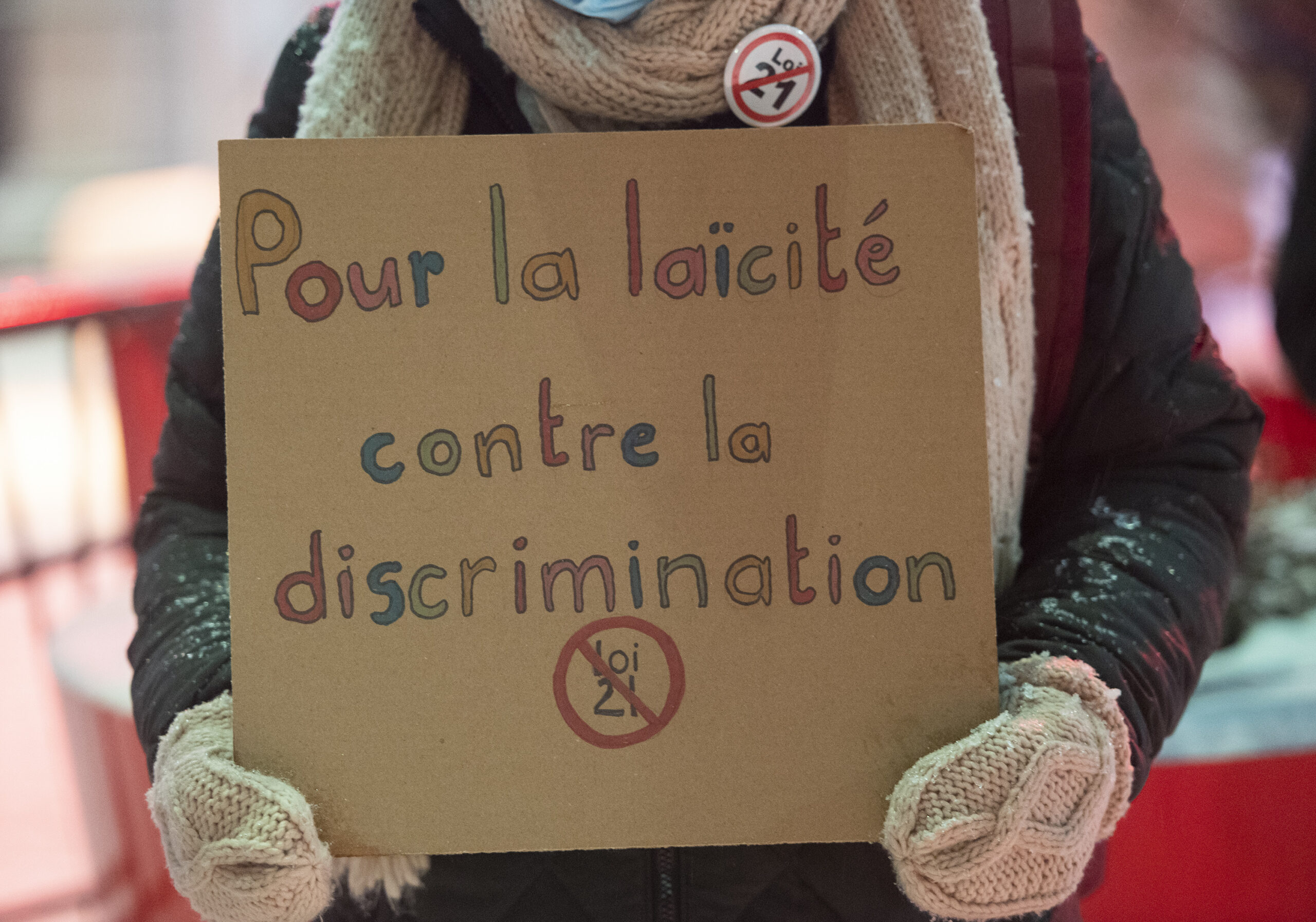
The identity politics of the Coalition Avenir Québec (CAQ) government did not emerge from a vacuum. They are part of a political trajectory that has often emphasized identity issues, notably through the Act respecting the laicity of the State (Bill 21), Bill 9, and the debates surrounding Bill 94, an Act to establish guidelines governing accommodation requests within the Administration and certain institutions. These choices need to be examined with clarity today, not to designate scapegoats, but to assess their real impact on social cohesion.
A weakened sense of belonging
Secularism is a fundamental value in Quebec, and we fully embrace it. However, true secularism is based on the neutrality of the state, freedom of conscience, and the separation of public institutions and religions. This value is widely shared and is an integral part of Quebec’s social contract.
However, certain political rhetoric and restrictive interpretations of secularism have contributed, over the course of more than 30 years, to polarizing society and undermining the sense of belonging among entire groups, particularly among many young people from religious minorities.
Credible voices from different backgrounds have expressed their concerns. The president of the Quebec English School Boards Association (QESBA) and the president of the English Montreal School Board (EMSB) strongly criticize Quebec’s Bill 94, calling it an unfair extension of Bill 21 that “targets the most vulnerable.”
The effects of repressive secularism
The Canadian Civil Liberties Association (CCLA) astutely points out that Bill 9 masks discrimination under the guise of secularism. “State secularism means the separation of religion and government institutions, as well as the state’s neutrality toward religions,” said Anaïs Bussières McNicoll, director of the CCLA’s fundamental freedoms program. “It does not give the government the right to suppress all traces of religion in public spaces.”
Co-chair Gérard Bouchard of the Bouchard-Taylor Commission also warned the government about the effects of repressive secularism, calling for consideration of the impact of these policies on younger generations and their relationship with Quebec society. In a recent op-ed on Bill 9, he wrote:
January 29 marked the ninth anniversary of the deadly attack at a Quebec City mosque. On this occasion, it is essential to remember that words, laws, and public debates have real consequences. Discussions about identity, when poorly framed, can reopen wounds, accentuate feelings of exclusion, and undermine social cohesion.
Refocusing on collective priorities
Meanwhile, Quebec faces major challenges: a persistent housing crisis, a healthcare system under pressure, rising food insecurity, and growing concern about the economic situation.
According to recent data, more than one-third (36 per cent) of Quebecers experience some form of food insecurity, compared with 22 per cent five years ago. This reality calls for urgent and concerted responses.
The political choices made in recent years have also had repercussions on newcomers, particularly with the unilateral cancellation of the Quebec Experience Program (PEQ), which represented an important pathway to integration and contribution to Quebec society.
Choosing a unifying societal project
Quebec needs all of its vital forces. All of its talents. The commitment of each and every one of its citizens, regardless of their origins, beliefs, or backgrounds. Quebec society is built on solidarity, social justice, and the search for a balance between individual rights and the common good.
The period ahead is an opportunity to choose a social project that unites rather than divides, that tackles the concrete challenges of everyday life and that strengthens citizens’ confidence in their institutions.
Prime Minister Mark Carney recently spoke in Davos about the importance of calling things by their name and strengthening our solidarity:
“This is the task of the middle powers, the countries that have the most to lose in a world of fortresses and the most to gain in a world of genuine co-operation. The powerful have their power. But we also have something too: the capacity to stop pretending, to name reality, to build our strength at home and to act together.”
Quebec is and will remain a secular and free society. The question today is how secularism can continue to be a vehicle for unity, respect, and social cohesion.