One hundred and fifty billion. It’s a big number with big implications for Canada. But what it represents depends on whom you ask.
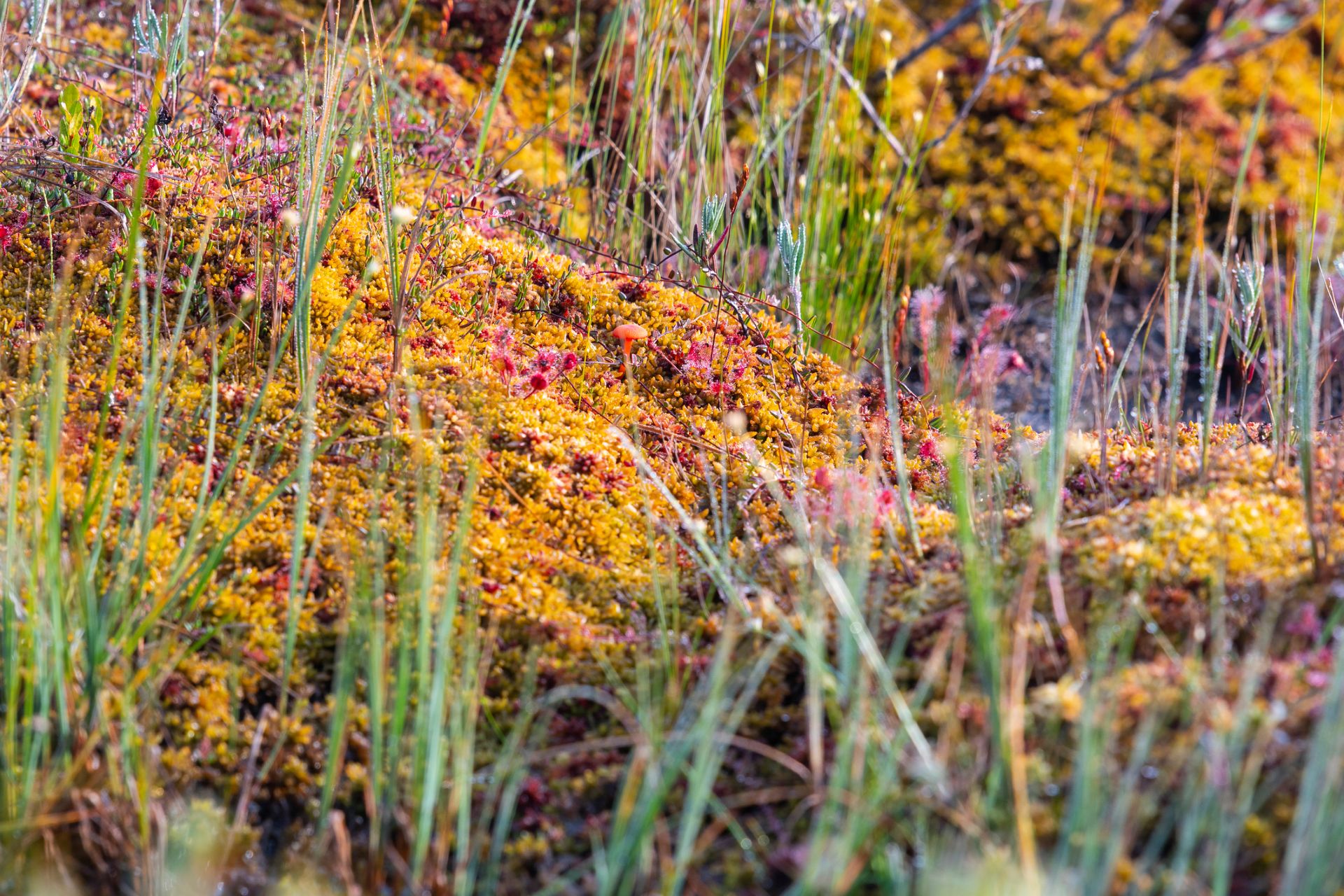
The Carney government said in its November budget that its suite of nationbuilding megaprojects is expected to trigger at least $150 billion in total capital investment. However, for those focused on studying and protecting Canada’s natural wealth, 150 billion tonnes is the total amount of carbon stored in our peatlands – the largest terrestrial carbon stock on Earth.
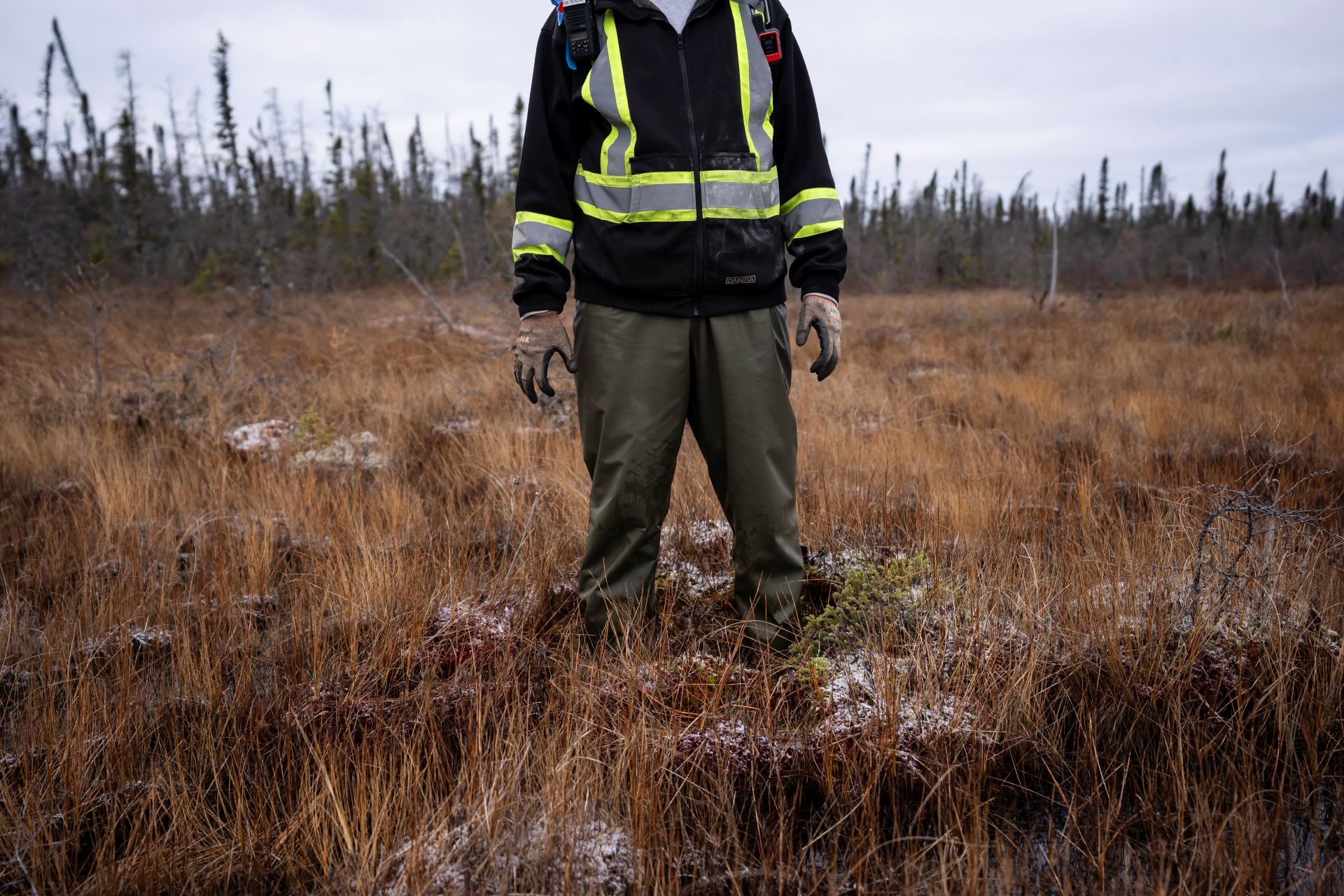
Without a shift in perspective, these two things are on a collision course. Peatlands span much of the areas slated for nationbuilding development and there is no scenario where a pipeline from the Alberta oilsands to the B.C. coast doesn’t run through peatland-rich areas known as “muskeg.”
Until the federal government gets honest about full climate-cost accounting and brings nature to the forefront of its climate and economic agendas, major projects risk releasing massive amounts of carbon into the atmosphere, resulting in intergenerational impacts for which no pie-in-the-sky industrial carbon capture system can compensate.
Canada stands at a crossroads. Peatlands illustrate the stakes.
The Wildlife Conservation Society Canada’s recently released national peatland strategy offers one way forward. Built on extensive interdisciplinary research and collaboration with more than 130 experts, it highlights the shortcomings of current federal, provincial and territorial policies, then offers a roadmap for protecting and stewarding peatlands across the country.
It calls on the federal government to adopt a binding peatland conservation target linked to Canada’s 30×30 protected-areas commitment, establish a national fund to support Indigenous-led conservation and stewardship of northern peatlands, and close Canada’s Paris Agreement emissions reporting gaps related to peatlands. It also calls on the provinces to step up and start accounting for the essential and irreplaceable values and services of peatlands.
The risks are great
Canada’s ecosystems generate staggering economic value – far more than what appears in any budget line.
Wetlands alone provide more than $225 billion per year in areas such as flood protection and water filtration, equivalent to roughly 10 per cent of the nation’s GDP. The full extent of nature’s contributions is nearly impossible to measure. While calculating nature’s returns can seem abstract compared to direct return-on-investment, that is no excuse to ignore them altogether.
The idea of nature as capital has been popularized by some economists. Nature is treated as an asset that yields continuous benefits. But degrade the stock and you diminish future returns.
Canadians understand this. An Abacus Data poll from October found that 91 per cent of respondents see nature as one of our most valuable economic assets, while 93 per cent believe Canada should position it as such.
Federal policies are wrong
The Carney government’s actions, however, suggest a different understanding of the nature-economy relationship.
Recent federal policies position nature not as foundational capital but as a peripheral risk factor – something to manage at the margins of economic planning. Ottawa’s climate competitiveness strategy wholly ignores the role of ecosystems in climate regulation, mitigation and adaptation.
The 2025 federal budget mentions nature only three times – twice ambiguously and once in the context of expected losses – and allocates no funding to it despite years of substantial budget commitments and a strategy sitting ready to be mobilized.
The Major Projects Office positions nature as ancillary to the national interest, reduced to a checklist of environmental standards to be met. But the provinces also have exhibited a limited view of reality with recent moves such as:
- the Protect Ontario by Unleashing Our Economy Act, which severely erodes environmental protections in the province;
- the B.C. Renewable Energy Projects (Streamlined Permitting) Act and Infrastructure Projects Act, both of which are aimed at fast-tracking development despite objections; and
- Nova Scotia repealing its uranium-mining ban and enabling onshore fracking with little public consultation.
Europe leads the way
This stands in stark contrast to the shift under way in Europe, where governments have embraced “nature-positive” approaches, designing economic development strategies that explicitly prioritize a net-positive growth in nature, biodiversity and ecological well-being.
These countries recognize that healthy ecosystems reduce risk, as well as increase resilience and long-term returns. They treat nature as essential infrastructure.
Much of this shift in perspective is informed by past mistakes, including in peatland management. About 50 per cent of peatlands in Europe are classified as degraded and are now net emitters, contributing significant greenhouse gases.
Integrating environmental considerations is key to Carney’s seven priorities
Plant trees, but remember: nature is more than a carbon sink
Canada must improve environmental reviews to speed major projects
Canada’s natural capital is a key in the Trump era but requires a new approach
Peatlands offer a vivid case study in what happens when governments fail to value healthy ecosystems as fundamental to economic well-being. Peatland collapse in Southeast Asia was not the result of a failure to properly balance competing conservation and development objectives. It was the result of trying to balance them at all. Natural limits must be respected.
Peatland loss is effectively irreversible on human timescales. Preventing collapse isn’t a negotiation exercise. It’s a prioritization problem. The Atlantic cod fishery collapse of the early 1990s is a lesson: when the reconciling of interests is more important than respecting ecosystem limits, all parties’ interests will ultimately go unfulfilled.
Canada has one-quarter of the world’s peatlands and a disproportionate share of the world’s freshwater resources. It has the globe’s largest intact boreal and Arctic ecosystems. The country has the moral obligation to chart a path that achieves mutual gains in nature and economy.
But to do this, industrial and economic strategies at both the national and subnational levels must centre nature and its essential, irreplaceable values and services.
Action needed now
That means maintaining and strengthening the incentives, systems and processes to fully account for a project’s ecological impacts during planning and investment decisions. If avoidance of harm to ecosystems isn’t prioritized and if major projects proceed without fully accounting for the long-term costs of nature loss, we compromise any climate competitiveness we have.
The federal government in particular has a critical leadership role to play, but its track record shows it’s failing to step up.
If the Carney government is truly serious about good climate policy and capital budgets, it will understand that positioning nature as the foundation of economic security is not environmental idealism. It’s sound economics. True nationbuilding means protecting the natural capital that underpins our future.
WCS Canada is hosting a free, hour-long webinar on Monday, Feb. 2. to explore the unique importance of peatlands, the limitations of current approaches, and how policymakers and implementers can use its national peatland strategy to guide collective action.