It’s not that long ago that the senior deputy governor of the Bank of Canada, Carolyn Rogers, said Canadian productivity is so dismal that it’s an emergency in need of extreme measures. Most proposed solutions involve economic policy because productivity is a measure of material well-being.
But productivity is also tied to human capital, which is the skills and knowledge that people use to produce goods both physical (cars, for example) and intangible (patents). More can be done with less as skills and knowledge expand and become more sophisticated.
Acquiring skills and knowledge is inherently creative to some degree. Creation and art go hand in hand. But nobody talks much about the value and role of art in human capital because art can seem like a luxury in times of tight government budgets and the major economic problems the country is facing. It can seem like something to discuss after wages are no longer stagnant. We should resist this thinking, though.
Art has an underappreciated impact on economic activity. The human capital that contributes to productivity leads to better standards of living for all. Solving trade barriers and attracting business investment are important goals, but the human element of productivity also deserves attention and support.
Putting the human in human capital
The ability to generate good ideas is increasingly important. The most in-demand jobs are projected to involve complex decision-making in rapidly changing environments. Instead of assembling iPhones by hand, workers will be expected to figure out how to communicate with new suppliers or how to break into a new market.
The ability to work in teams is essential in today’s labour market. Firms have become flatter. Workers are expected to collaborate among departments to a much greater extent than has been the custom.
Decisions that used to be made higher up the corporate chain are now being entrusted with teams much closer to the entry level.
The low productivity of Canadian companies threatens our living standards
Can angst about productivity lead to serious public-service reforms?
Industrial policy may have part of the answer to Canada’s productivity problem
The ability to understand and work with businesses in other cultures is also a must. Despite a rise in protectionism, global markets are still tightly integrated. Employees at globalized firms will be expected to speak more than one language, and they’ll need to understand cultural context to secure business opportunities overseas.
Imagination, creativity, empathy, and cooperation are all essential skills to invest in for any country that wants to increase its productivity. This is where art comes in.
The art of productivity (and productivity of art)
Art is powerful enough to change the physiology of the brain. It has been found to significantly slow cognitive decline in a meta-analysis and a randomized control trial of art therapy on the cognitive health of the elderly.
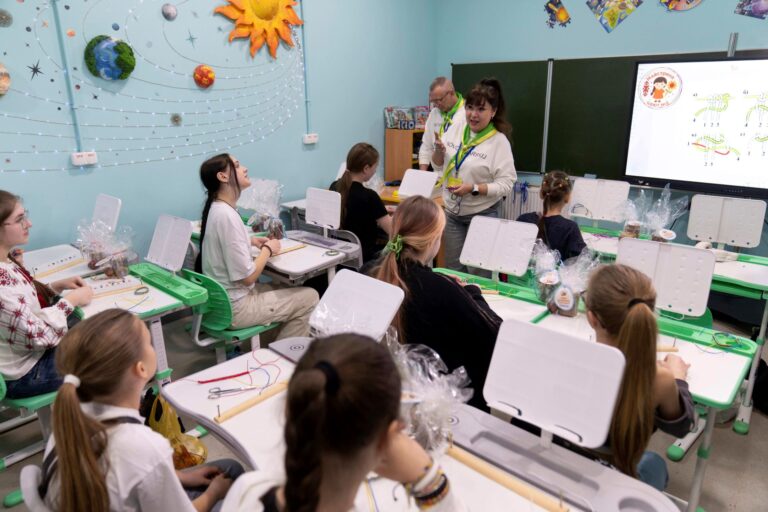
Making art equips people to respond better to unexpected problems by helping orient thinking toward the future, research shows. Art makes people more empathetic, an integral component of enhancing teamwork.
Reading works of fiction increases empathy and prosocial behaviour when readers deeply invest in the story. Allowing children to create story-driven video games that they themselves would find enjoyable also increases teamwork skills, which showcases the power of fiction in spurring cooperation.
The importance of art may go even deeper. Liane Gabora, a psychologist at UBC Okanagan, has argued that social evolution itself occurs through the creative expression and exchange of worldviews. Art is, naturally, the most well-known form of creative expression and a time-tested method of exchanging worldviews. Following this logic, the more art that’s produced, the more Gabora’s notion of cultural exchange occurs, and the more new worldviews are generated.
Researchers have found a reciprocal relationship between creativity and openness to experience. With it comes a reduction in cognitive biases, better conflict-resolution capabilities, and more success in multicultural environments. Being open to new worldviews expands the amount of information a person will come into contact with.
Suppose you’re a hiring manager. You want someone who will stay for a while in a job of increasing cognitive complexity. You want someone who’s forward thinking, empathetic, and can take in new perspectives. Someone with creative thinking to help your firm handle shifts in the global market.
You should be searching for someone with a background in art, or at the very least an interest in it. Because that’s a person who can build the human capital that firms need to get to the leading edge of productivity.
Investing in art, then, is an investment in productivity, full stop.
A question of funding
How much support should be directed to the arts while funding other productivity-enhancing policies will require a bit of a tight-rope act, but post-secondary institutions could help ease the burden. They could help consolidate support for art and more traditional levers for productivity growth under the same roof.
They could do this through two channels.
Skills production: Universities and colleges could require all students to take art courses as part of their studies. That would round out the technical skills taught in STEM programs and the soft skills concentrated most heavily in the social sciences and humanities.
Graduates of the future would then have the full suite of skills necessary to succeed in a dynamic, complex labour market.
Art production: Post-secondary institutions could become major drivers of production the way they are for private-sector research and development.
Post-secondary institutions use technology-transfer offices to market technology and ideas, acting as a conduit for academic research to end up in the hands of private business. In this way, they help create a market for university IP and disseminate university research as broadly as possible.
Similarly, universities could develop offices for artistic works to expand the market for artwork of their fine-arts students and visual-arts professors with the goal of placing the work in museums, libraries, or other public areas. This would help distribute art more broadly across the country, spurring a greater exchange of worldviews and creativity.
Ultimately, art isn’t a luxury to enjoy only once the productivity problem is solved. It’s an economically beneficial tool to use now. When doling out funding for productivity-enhancing measures, governments should think about throwing a few dollars art’s way for the benefit of everyone.