(Version française disponible ici)
Canada often hears a misleading narrative about Iran: isolated protests, a crackdown, then silence. This view wrongly frames Iran’s crisis as cyclical instead of structural, discouraging meaningful international engagement.
What is unfolding is not a single-issue movement about wearing the hijab or the price of bread. It is a national rejection of a governing system that has fused ideology with coercion and turned daily life into surveillance, censorship, arbitrary detention and routine state violence.
This is not just a distant humanitarian crisis; it directly impacts Canada’s commitments to human rights, diaspora safety and international norms.
The question is whether Canada will go beyond existing sanctions to stop legitimizing a violent, corrupt regime and defend the right of Iranian citizens to choose democracy.
How the 2025-26 uprising began
The current wave of protests began on December 28, 2025, when merchants in Tehran’s Grand Bazaar – a historic political and economic centre – walked out in protest against inflation, currency collapse and rising living costs. Iran’s rial had plunged to a record low of 1.42 million per U.S. dollar, while annual inflation reached 42.2 per cent, with food prices rising 72 per cent year-over-year, sharply eroding household purchasing power.
This trajectory had been predicted. In 2023, the World Bank cautioned that 40 per cent of Iranians faced a significant risk of falling into poverty over the next two years. In 2026, that vulnerability has materialized into a nationwide revolution. What began in Tehran quickly spread to cities and towns across all 31 provinces, with protests becoming increasingly co-ordinated and politically explicit.
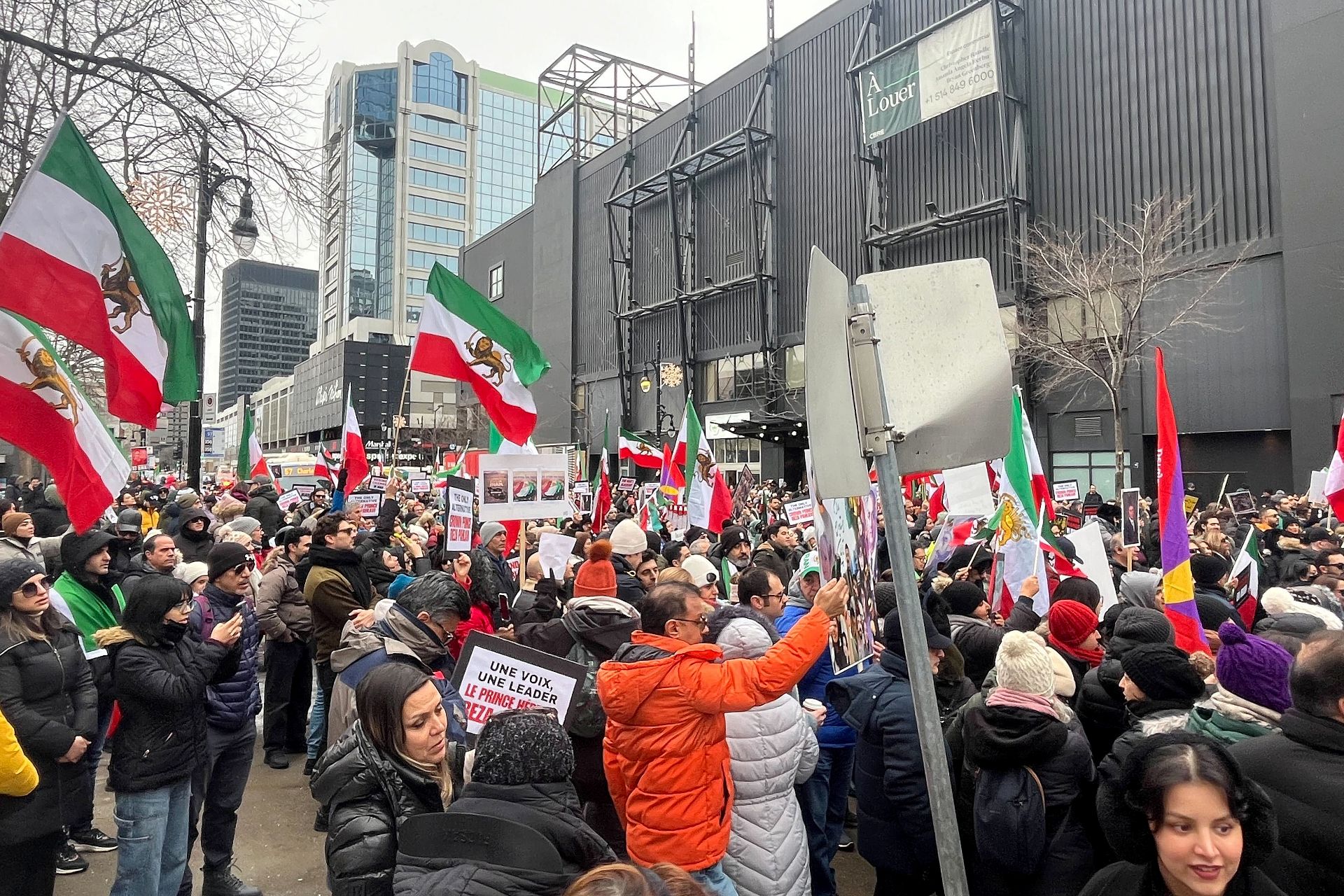
Protesters voiced clear demands for regime change, chanting “Death to the dictator” at Ayatollah Ali Khamenei and calling for the return of Crown Prince Reza Pahlavi, the son of Iran’s last Shah. Pahlavi, a prominent opposition figure in exile, has long supported Iran’s resistance from abroad, but in this phase of unrest, he has become a direct mobilizing figure, calling for protests on specific days and framing ongoing demonstrations to push the international community to act under the United Nations’ responsibility to protect principle. Protest participation has followed these appeals.
Canada must be ready for Iran’s democratic turning point
Diplomacy without pressure won’t end Iran’s nuclear program
Iranian regime officials are entering Canada with alarming ease
The recent revolution has become one of the most serious challenges to the Islamic Republic since the 2022-23 Woman, Life, Freedom movement sparked by the murder of Mahsa Amini while in custody for wearing a hijab improperly. However, reducing Iran’s uprising to a hijab protest or an inflation crisis misses the broader context. Protesters are pushing back against the Islamic regime’s censorship, mass surveillance, discriminatory laws and prolific use of the death penalty; the Islamic regime consistently ranks among the world’s top executioners.
Economic collapse is driven by corruption and political priorities that divert resources from public welfare to security forces and global terrorism. Water and electricity shortages have become routine, despite Iran’s natural resources, driven by drought, aging infrastructure and mismanagement. These failures have further eroded public trust in the state.
The regime also exploits ethnic, religious and gender divisions, presenting a false choice between stability and chaos. UN investigations show institutional discrimination against women and girls, disproportionate targeting of ethnic and religious minorities, and widespread arrests, violence and executions against protesters across Iran.
Protesters are demanding an entirely new system, following principles articulated within the Pahlavi-led political framework, which emphasizes territorial integrity, secular governance, equality for citizens and elections as non-negotiables of a democratic transition.
The regime’s response
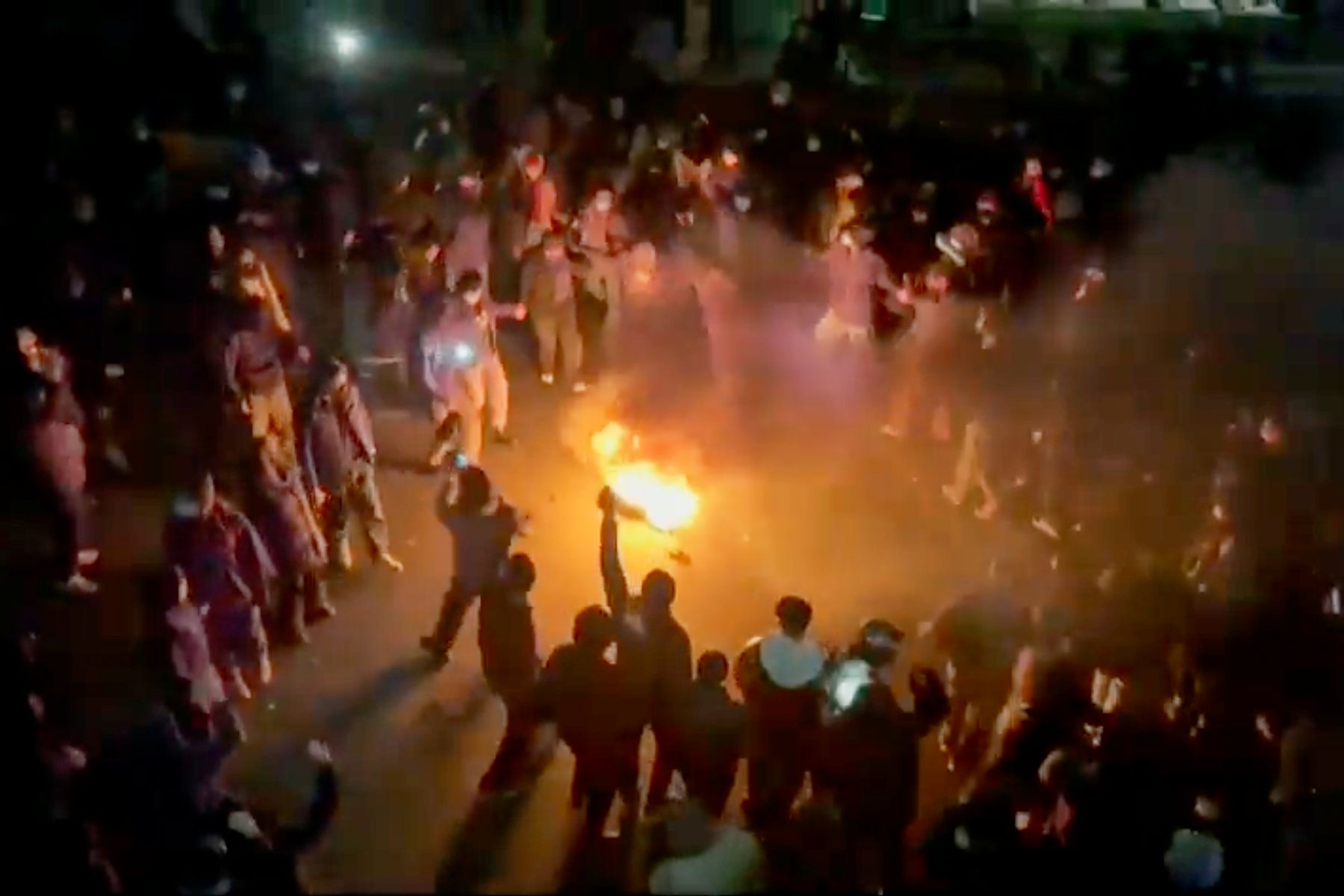
Security forces have deployed lethal force against unarmed demonstrators. By January 13, 2026, Human Rights Activists News Agency reported 614 nationwide protest gatherings; 18,434 arrests; 1,134 with severe injuries; and 2,403 confirmed protester deaths, including 12 children. Sources inside Iran cite figures as high as 12,000 to 20,000 deaths. These numbers show why wait and see is not a morally neutral stance.
Independent verification remains difficult under blackout conditions. Authorities imposed a nationwide internet and phone blackout on January 8, cutting access to messaging apps, foreign news and emergency services. Information control has become a central tool of repression, blocking the verification of abuses and isolating communities so that fear replaces solidarity.
Officials have framed the protests as foreign-backed terrorism, threatening harsh penalties, including death sentences, while staging pro-government rallies to project stability. The message is clear: dissent will be crushed, and the country will be sealed off from the outside world.
Europe is moving
In January 2026, the European Union expressed solidarity with Iranian protesters, condemned the use of violence and arbitrary detention, and called for the full restoration of internet access. Importantly, the European Parliament announced plans to restrict access for Iranian diplomatic representatives to its premises, explicitly to avoid legitimizing the regime during an active crackdown on civilians.
European governments are no longer treating Iran’s repression as a purely domestic issue, framing it, instead, as a breach of international norms.
This matters for Canada in two ways. It shows that democratic states are treating legitimacy as a policy variable that can be withdrawn when repression escalates, and it provides diplomatic cover for co-ordinated action.
Canada’s critical role
This crisis is not confined to Iran’s borders. Canada has designated the Islamic Revolutionary Guard Corps as a terrorist organization, imposed sanctions on Iranian officials involved in human-rights abuses under the Special Economic Measures Act and issued repeated joint statements condemning repression since the death of Mahsa Amini in 2022. These measures restrict financial access and signal diplomatic disapproval. However, symbolic pressure alone has not curbed escalating violence.
Unlike the European Parliament’s move to bar Iranian diplomats, Canada has not tied sanctions to clear benchmarks such as restoring internet access or halting executions. Canada should now shift from general condemnation to strategic enforcement.
Canada should move beyond vague “reform” language and adopt clear political positioning.
- Canadian governments must match rhetoric with policy action. While Ottawa has condemned Iran’s human-rights abuses, its statements focus on behavioural change rather than systemic transformation. These calls stop short of endorsing protesters’ demands for secular governance, equal citizenship and democratic elections. Canada’s messaging should have emphasized that cosmetic reforms cannot dismantle Iran’s security courts, censorship system or ideological policing.
Transnational repression should be treated as a national security issue.
- Iranian-Canadians have reported intimidation linked to regime networks. Ottawa should strengthen reporting mechanisms, ensure proper investigations and visibly protect diaspora communities. Safeguarding Canadians from foreign intimidation is not only a human-rights obligation but a matter of domestic security.
Canada should treat internet shutdowns as human rights violations.
- Iran’s blackout has concealed civilian casualties and cut access to emergency services. While some Iranians have relied on smuggled satellite internet, reporting shows that authorities now use drones, signal jamming and house raids to hunt for Starlink terminals. As satellite access now carries severe risks, Canada should prioritize diplomatic pressure, fund secure non-hardware communication tools and support independent Persian-language media.
Canada should support Iranian-led civil society.
- This includes supporting credible human-rights organizations, amplifying verified reporting, engaging with Iranian-Canadian advocacy groups and pressing for accountability in international forums.
Iran’s crisis tests whether democracies will consistently defend human rights, even when there are diplomatic costs. Iranians are asking Canada to stop empowering the system that crushes them, and to stand for the right of a people to choose a secular, democratic future.