In today’s political and media landscape in Canada, where leaders are scrutinized in both traditional and social media, not only for their policies but also for their personalities, a pressing question emerges: What truly defines a good leader?
Is it their ability to connect with ordinary citizens, their competence in navigating complex issues or the authenticity they project? All three?
We recently began a new study that delves into these questions. Its preliminary findings already offer some insights into the nature of political leadership in Canada. Our study explores how Canadians perceive their leaders and how those leaders shape their own images in response.
This project is part of a broader book initiative that seeks to trace the evolution of leadership traits in Canada from the early 1990s to the present. It builds on foundational work by Amanda Bittner, updating her survey-based approach to reflect contemporary political dynamics.
As Bittner argued, leadership in Canada isn’t just about policies. It’s also about the human connection that drives democracy. Voters today aren’t merely scanning party platforms. They’re also searching for leaders who feel real, who inspire trust and who seem to understand life beyond the political bubble.
The importance of being ordinary
The growing importance of authenticity, competence and ordinariness (or relatability) in leadership is reshaping the tone of Canadian public policy.
Rather than emphasizing abstract metrics or technocratic language, policies are increasingly framed in ways that resonate with citizens’ lived experiences – addressing, for instance, affordability, health care and climate resilience through narratives that feel personal and relatable.
This trend encourages governments and political parties to prioritize communication strategies that highlight their leaders’ empathy and practical impact, making policy not just a set of rules but a story about shared values and trust.
Our study is grounded in two key theoretical frameworks.
First is Diego Ceccobelli and Luigi Di Gregorio’s “triangle of leadership,” which posits that effective leadership is a balance of authenticity, competence and ordinariness – traits that resonate deeply with voters.
Second is the concept of the “fourth age of political communication,” as described by Andrea Roemmele and Rachel Gibson, which emphasizes the rise of individual-centred electoral campaigns.
Since the advent of television and even more so with the internet and social media platforms, political branding has shifted dramatically, with leaders increasingly becoming the face, and sometimes the entirety, of their party’s message. Alex Marland has documented this phenomenon in depth in Brand Command, showing the increasing power of the leader’s inner circle in promoting its discourse and image.
Leadership trait scores: a portrait of the 2025 election
This theoretical discussion sets the stage for our first cut at public opinion data analysis for our project. We looked at the 2025 federal election, using original data collected during the campaign from more than 3,000 respondents in Quebec via the Datagotchi platform.
The survey, conducted between April 7 and 28 (that is, over the last three weeks of the campaign), asked participants to evaluate party leaders on three key traits: authenticity (“Are they sincere and honest?”), competence (“Can they get things done?”) and ordinariness (“Do they understand the problems of ordinary citizens?”).
Our preliminary findings paint a fascinating picture of how different leaders were perceived across demographic lines at that time.
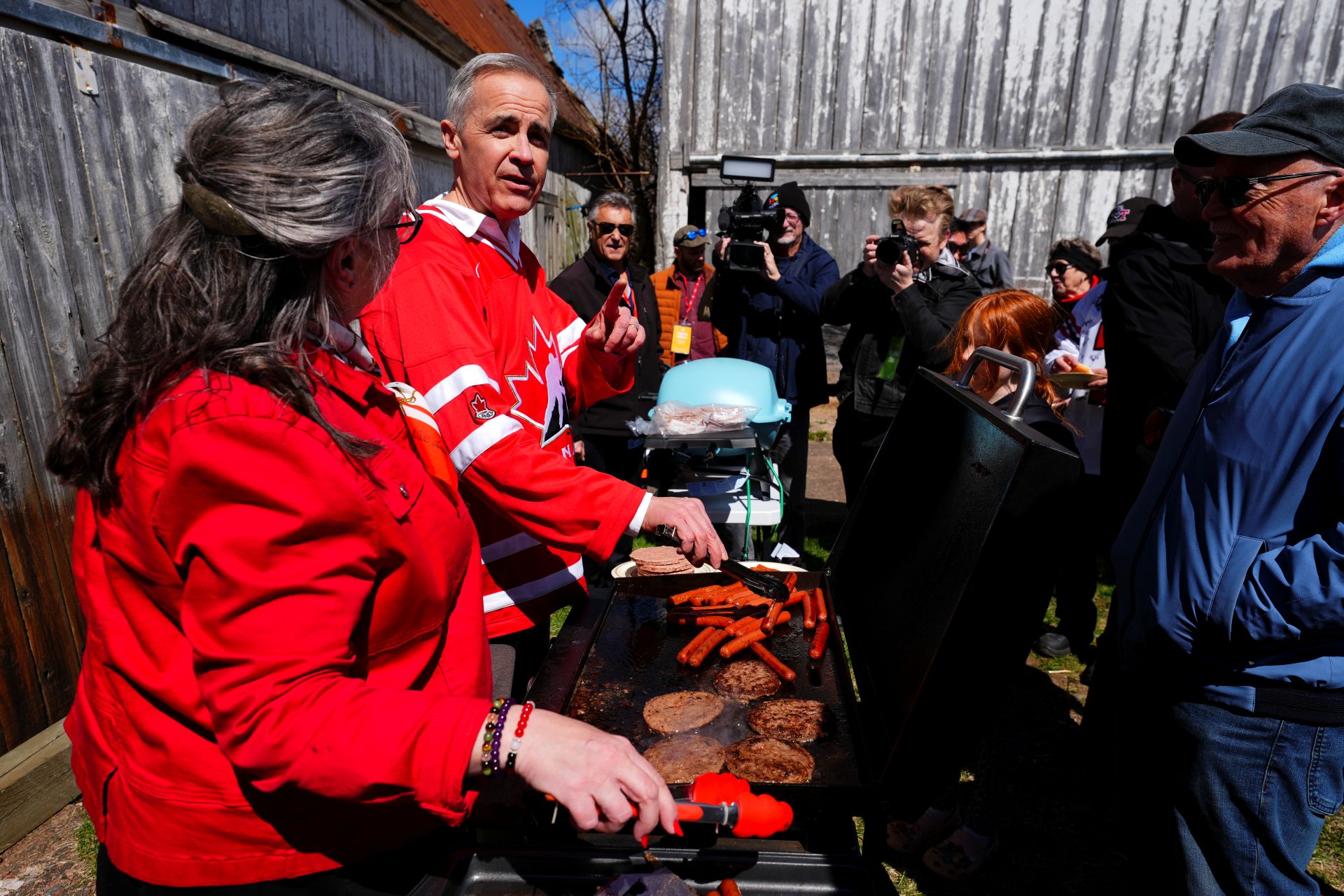
Mark Carney, despite being dominant on competence, saw his authenticity score decline over the course of those last three weeks. His ordinariness rating was as low as that of Pierre Poilievre, suggesting a perceived disconnect between these two leaders and everyday voters. Interestingly, Carney scored higher among older respondents and partisans of the NDP, indicating a complex cross-partisan appeal.

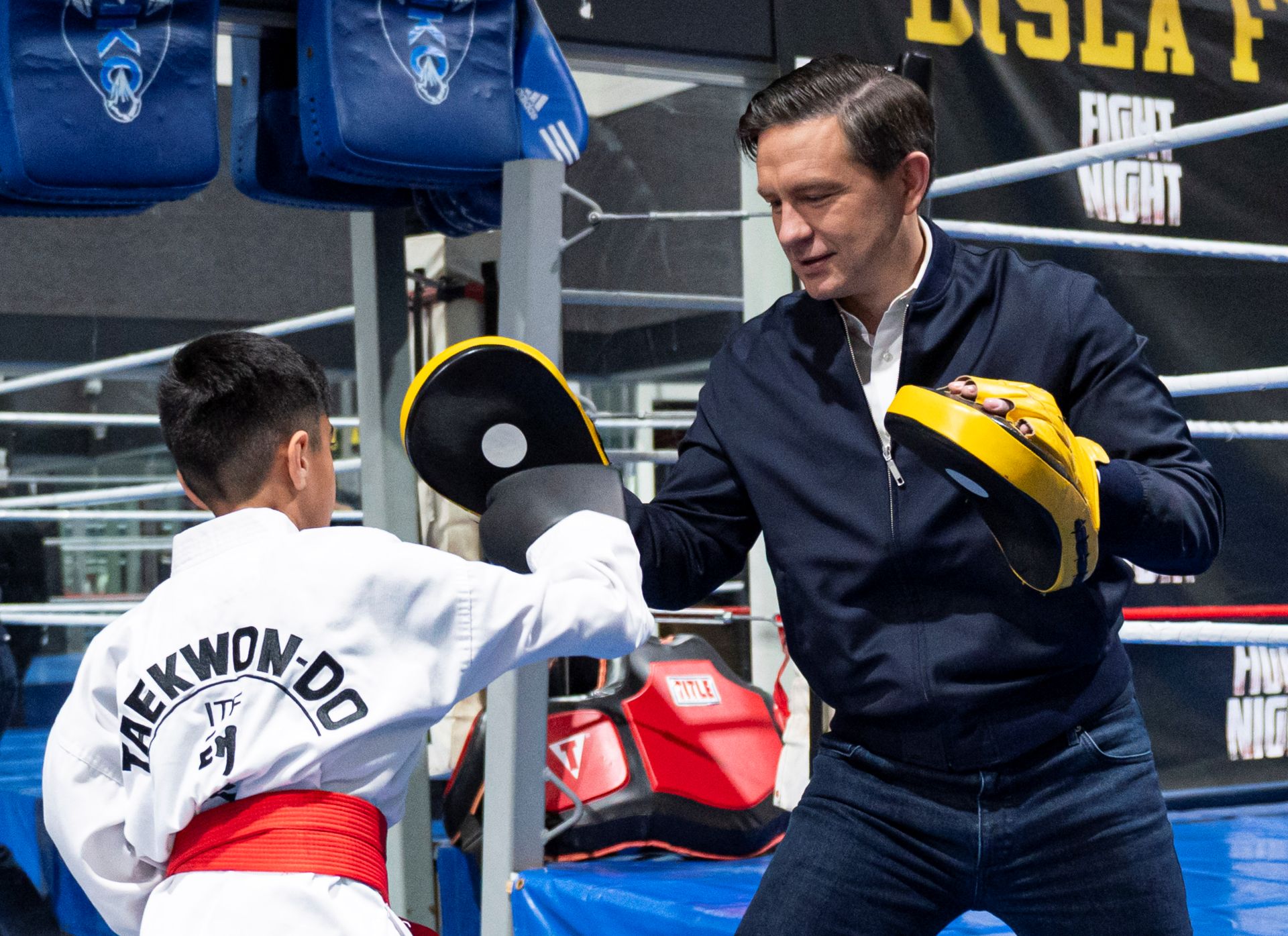
Poilievre lagged behind the other party leaders on all three traits. His scores remained stagnant throughout the campaign, with only a slight uptick around the time of the televised debates. His strongest support came from his own partisan base and male respondents, suggesting a narrower appeal that likely limited his broader electability.
In contrast, Jagmeet Singh and Yves-François Blanchet performed better among younger voters, particularly on competence. Women rated both leaders higher on competence and ordinariness, underscoring the gendered dimensions of leadership perceptions.
Blanchet’s trajectory was especially noteworthy. His scores improved steadily across all three traits as the campaign unfolded, suggesting successful image management and growing resonance with the electorate.
Beyond the numbers: the supply side of leadership
While these findings offer rich insights into Quebec voters’ perceptions, they also raise the importance of complementing this public opinion analysis with a supply-side perspective.
Why did Poilievre experience a mid-campaign bump? What drove Blanchet’s upward trend across all traits? We do not have answers to these questions yet, but they point to the strategic decisions, media narratives and campaign events that shape public opinion in real time.
Our research on leadership over a 30-year-plus span – 1993 to 2025 – will require not only longitudinal data but also a deep understanding of how political communication has evolved. To accomplish this, we intend to adopt an approach that integrates survey data with media analysis, campaign materials and interviews with political insiders.
How intergenerational inequality threatens trust in democracy
That said, the project is more than an empirical exercise. It’s a reflection of how leadership functions in a democratic society. In Canada, as elsewhere, voters are increasingly drawn to leaders who appear genuine, capable and relatable. These traits are not just abstract ideals. They are measurable and they influence electoral outcomes.
Moreover, our study highlights the interactive nature of leadership. Leaders don’t operate in a vacuum. They respond to public expectations, media portrayals and strategic imperatives. The co-construction of leadership images means that authenticity, competence and ordinariness are not just innate qualities but are cultivated, performed and sometimes contested.
This dynamic is particularly salient in the age of social media, where leaders communicate directly with voters and where every gesture, word and misstep is amplified. The fourth age of political communication has democratized access to political discourse but has also intensified the pressure on leaders to maintain a consistent and compelling persona.
Rethinking leadership in a changing political landscape
In sum, we believe this project offers a timely and thought-provoking look at what makes a good leader in Canada today. By combining empirical data with theoretical insight, it sheds light on the evolving relationship between leaders and the public, as well as on the traits that matter most in the eyes of voters.
Contemporary politics is marked by rising distrust in institutions and a surge in anti-elitist sentiment. At the same time, populist communication strategies are becoming increasingly influential. Against this backdrop, this research offers key insights into how expectations of political leaders are being redefined.
As Canada continues to navigate complex political, social and economic challenges, the question of leadership will remain central.
This research reminds us that good leadership is not just about policy or ideology. It’s about connection, credibility and character. In a democracy, those qualities are ultimately defined not just by the leaders themselves, but by the people they seek to serve.
This article is part of a series on political leadership and trust. Click here to read more.