Some policy changes arrive with a bang. They dominate headlines because their intent is obvious and their consequences are immediate.
Others are more pernicious. Their effects are not felt first in Parliament or at news conferences, but in clinics, classrooms and communities far from capital cities and power centres.
The latest expansion by U.S. President Donald Trump’s administration of what was known as the Mexico City policy fits squarely in the latter category.
The policy is often referred to as the global gag rule. It was introduced in 1984 by former president Ronald Reagan and attaches conditions to aid. Non-U.S. organizations receiving funding from the United States government must guarantee that they will not provide abortion services, refer patients for abortion, counsel on abortion or advocate for abortion-law reform — even with funds obtained from non-government donors.
After USAID: Why Canada must lead on global health now
Canada should fill the void in democracy development left by the Trump administration
The policy seeks to dictate not only how U.S. government funds are spent, but the narrow path organizations must walk to remain eligible for financial support. Long embraced by anti-abortion advocates, it has the effect of restricting the activities of international organizations that provide or advocate for abortion care.
In late January, the U.S. announced an updated policy governing foreign assistance. It now extends into new areas of global health and rights-based international development programming.
The policy is being implemented through a broader set of standardized conditions that extend beyond abortion, including programs that support LGBTQI+ communities and those framed around diversity, equity and inclusion.
These are binding terms embedded in funding agreements. They seek to limit which partners can participate in major global health efforts, what services can be included and which communities should be reached.
The implications are significant for Canadian organizations working in global health. Some receive U.S. government funding directly. Many more partner with international and local organizations that do. Even when Canada is the primary funder of a project, Canadian-supported programs are often part of broader partnerships that include organizations funded by the U.S. government.
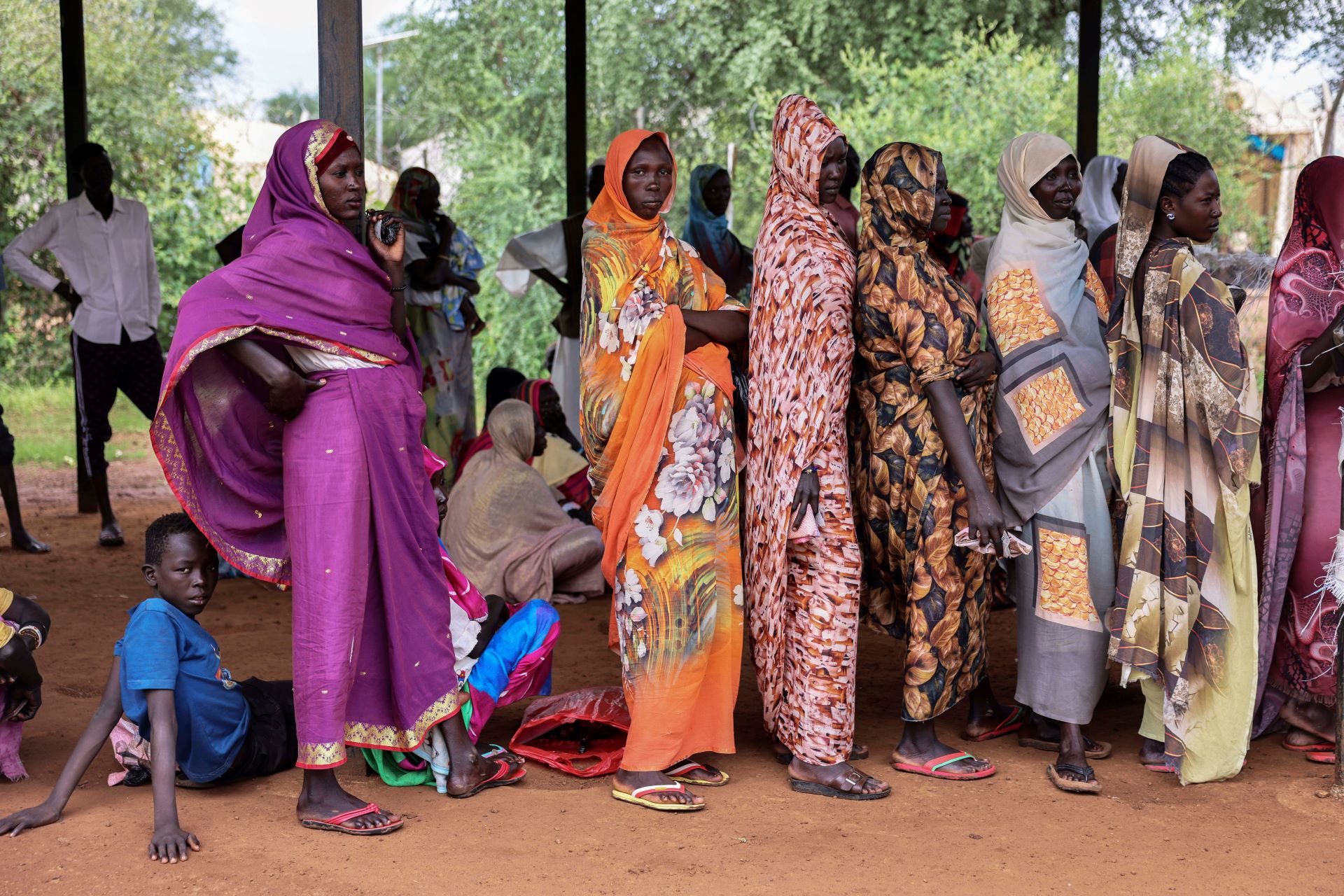
Canadian organizations and their partners deliver life-saving care in some of the most difficult operating environments in the world — from providing maternal and reproductive health services in rural Tanzania to supporting front-line health clinics for women and girls affected by conflict in South Sudan. When funding rules force organizations to pull back, self-censor or step away from co-ordinated health systems built on evidence and best practice, it is women, girls and marginalized communities who pay the ultimate price.
The people most affected are those with the fewest alternatives. A woman denied accurate information about her reproductive health options. An adolescent cut off from sexuality education. An LGBTQI+ person pushed further away from safe services. A community left with fewer health-care providers as organizations are defunded or entangled in bureaucracy.
Past iterations of the global gag rule have shown that these impacts extend well beyond abortion-related care. Sexual and reproductive health services are deeply integrated into broader health delivery. When organizations withdraw or are excluded, continuity of care breaks down across maternal health, HIV prevention, vaccination and primary care.
At a moment like this, Canada’s voice matters
Canada positions itself as a steady partner in an increasingly fragmented global landscape. As Prime Minister Mark Carney noted recently in his speech before the World Economic Forum at Davos, Switzerland, middle powers like Canada will be judged not only by what they say they value, but by what they choose to defend. The mounting opposition to sexual and reproductive health and rights worldwide is a prime test case.
The benefits of Canada taking a firm stand are tangible. Consistent and evidence-informed leadership in global health reinforces our reputations as a reliable partner, protects the effectiveness of past Canadian-funded programs and strengthens co-operation in health care that helps prevent crises from escalating across borders. In an increasingly volatile world, this leadership is not peripheral to Canada’s interests — it advances them.
Canada has pledged $1.4 billion a year through 2030 as part of a 10-year commitment to global health and rights. At least $700 million annually is set aside for sexual and reproductive health and rights. That commitment prioritizes life-saving work too often relegated to the “optional” category — comprehensive contraception, safe abortion care, adolescent sexual health and the advocacy required to protect services when they come under political and ideological attack.
A recent report from the Guttmacher Institute underscores what is at stake. In the fiscal year 2023-24, Canada funded $76.2 million in international assistance for family planning. That support helped provide modern contraceptives to 4.7 million women and couples worldwide. It averted about 1.6 million unintended pregnancies, prevented nearly half a million unsafe abortions and helped avoid more than 2,100 maternal deaths in low- and middle-income countries.
But progress in sexual and reproductive health does not sustain itself. Gains can be reversed quickly when services are disrupted, providers and experts are silenced and funding becomes politicized. That is why the current moment demands clarity and resolve from Canada.
The federal government must wholeheartedly fulfil its 10-year commitment and reaffirm, publicly and unequivocally, that sexual and reproductive health and rights remain central to its dealings with other countries. We must signal that assurance to international partners facing uncertainty and to communities depending on continued access to care and information. There must be no doubt about Canadian values and commitments.
Amid endless and chaotic news cycles, the expansion of the Mexico City policy arrived quietly. Its consequences will be anything but.
In these days of global upheaval and politicized funding decisions, leadership is measured by what we choose to defend and with whom we stand. Canada must ensure that, as Carney said in Davos, “legitimacy, integrity and rules” — not political convenience — guide that choice.