OTTAWA — Changes to Canada’s top national security ranks in this week’s deputy minister shuffle are raising questions about the country’s security in an increasingly dangerous world.
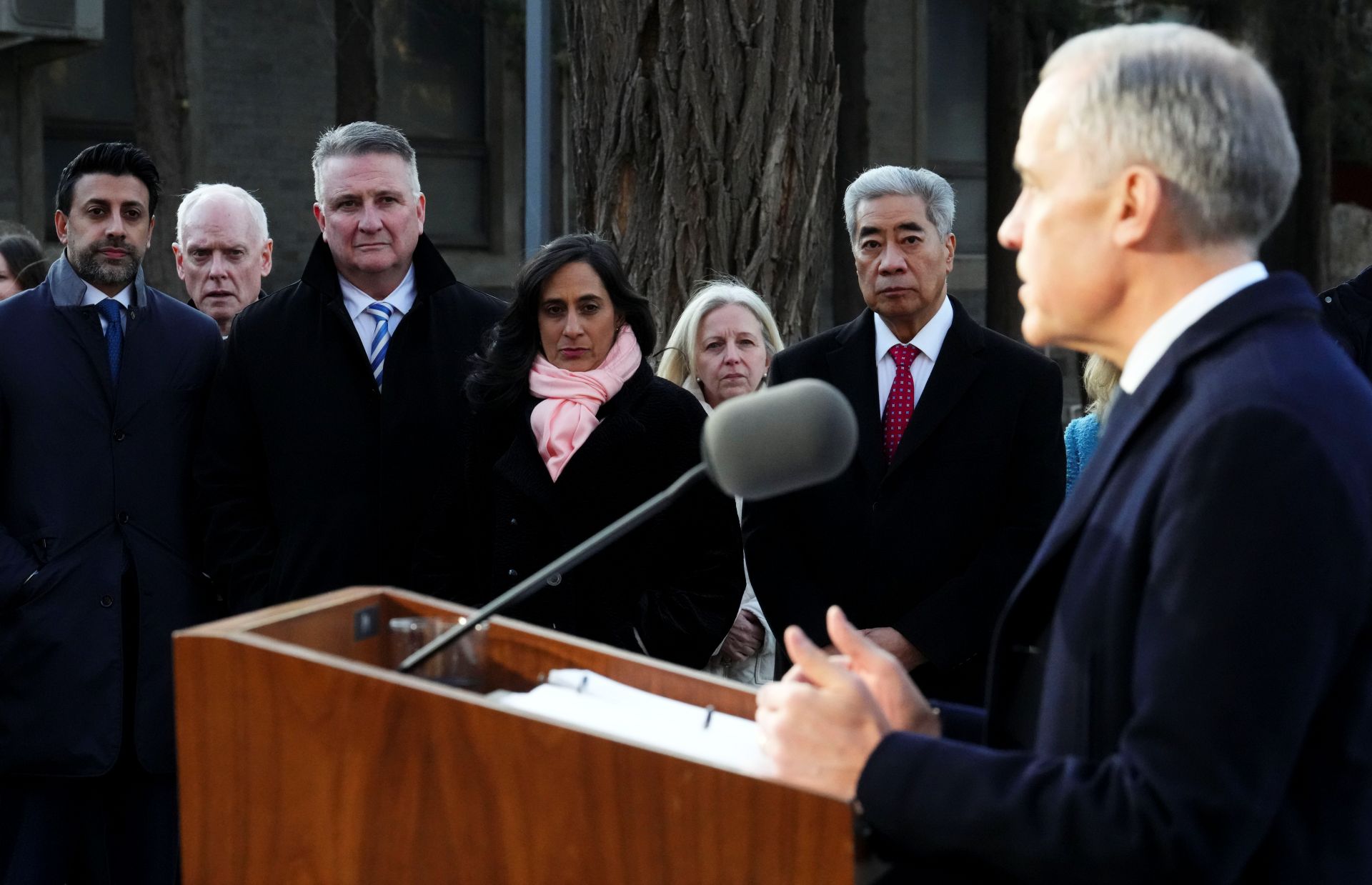
The shuffle marked a major reorganization of the public service’s front bench to reflect Prime Minister Mark Carney’s priorities in a post-U.S.-led world — what one senior bureaucrat called his “Davos speech in action,” a middle-power strategy built around coalition building, resilience and a more independent foreign policy.
The shuffle, however, was in the works long before Davos. It was also the most anticipated deputy minister shuffles in years, filling top jobs left vacant as public servants faced the chaos of the biggest downsizing in a generation.
Billed as part two of December’s sweeping reorganization, the latest shuffle moved, promoted, or reassigned another 16 senior bureaucrats. Two shuffles in barely three months have seen 40 officials retire, depart, be promoted or recruited into government. The new and existing deputies met Thursday in a retreat at Meech Lake.
But the most significant change came to the country’s national security infrastructure, where the departure of Nathalie Drouin and the elimination of her position as national security and intelligence adviser to the prime minister led to a cascade of changes that have some experts questioning whether the country will even be as safe going forward.
Why it matters
The national security and intelligence adviser has long been one of the most influential roles in Canada’s national security system. Formally created in 2003, its roots go back decades, and the role was strengthened after 9/11.
The adviser serves as the prime minister’s direct intelligence counsellor, co-ordinates federal security agencies and represents Canada in Five Eyes discussions abroad.
Its influence has typically peaked when several conditions align: a strong incumbent, an engaged prime minister and heightened global risk. The decision to eliminate the standalone office as geopolitical tensions are rising prompted mixed reaction and questions about what the change signals.
Debate inside government
Some see it as an effort to organize the senior ranks around Carney’s middle-power strategy, focusing on geopolitics, investment, trade and coalition building in a world no longer led by the U.S. Carney was in Australia this week, warning that allies must work more closely together as the global order is breaking down.
Others say many of the changes reflect clerk of the Privy Council Michael Sabia’s push to improve administration and personnel management.
The restructuring has also raised concerns about the signal it sends on national security. Critics argue the changes could amount to a downgrading of the security and intelligence function.
Security and intelligence expert Wesley Wark was blunt. He wrote “the sudden erasure” of the NSIA role — with no explanation — and the “possible siloing of the function into separate international and national security portfolios makes no sense at this moment in time.”
Vincent Rigby, a former NSIA to the prime minister and now a professor at Max Bell School of Public Policy at McGill University, wrote in an email statement published by Wark that at first blush, eliminating the role “looks dangerous” especially as Canada’s security “at home and abroad has taken a serious turn for the worse.”
“At a time when Canada is facing a more diverse range of threats than at any point since the Second World War, this decision could send the wrong message to Canadians and allies. Again, we need more information on how the new structures will work, but it has the potential to be a serious step backwards,” Rigby said.
Another long-time bureaucrat with no authority to speak publicly questioned, “How, in the Davos world Carney describes, is national security not even more important. So why downgrade the function and move it away from you?”
The details behind the shift
The delay in this week’s shuffle largely stemmed from Drouin’s departure and the elimination of her standalone adviser role, prompting what one senior official called a “security jujitsu move” that used the vacancy to reset the Privy Council Office’s security and intelligence structure.
Her exit triggered a series of domino moves across security, intelligence and foreign affairs. Drouin is wrapping up her term as NSIA before becoming Canada’s ambassador to France and Monaco.
In place of the NSIA, David Morrison, the deputy minister of Foreign Affairs, will take on a new role as senior diplomatic and international affairs adviser reporting directly to Carney – and serving as his Sherpa for the G7 and G20 summits.
The new position appears to bridge geopolitics, diplomacy and international affairs, reflecting Carney’s Davos focus. Morrison will be replaced later this month by Arun Thangaraj, Transport deputy minister and former CFO at Global Affairs.
Responsibility for national security and intelligence will shift to Dominic Rochon who becomes deputy secretary to cabinet for national security and intelligence – a role that does not report directly to the prime minister. Rochon is currently the government’s chief information officer, based at Treasury Board, and comes with deep security roots from the Communications Security Establishment.
The deputy NSIA at the Privy Council Office is also gone. Ted Gallivanhas becomes deputy minister at the troubled Immigration Refugees and Citizenship. And David Angell, foreign and defence policy adviser to the prime minister, moves to become the associate deputy minister of Foreign Affairs. He wasn’t replaced.
Mark Carney’s sweeping deputy minister shuffle signals a strategic reset
Subscribe to The Functionary, Kathryn May’s newsletter on the public service
Some question whether bringing Morrison – the most senior foreign affairs executive – into PCO signals further centralization of foreign policy. As one argued: “The classic model keeps your top foreign policy person at Global Affairs. Is this a Davos shift, or Carney centralizing power and bypassing GAC?”
One senior bureaucrat explained the thinking behind the split is to strengthen intelligence by pulling together “all the pockets of intel” collected in a half-dozen agencies and departments to produce more cohesive, top-level advice. “It’s a model worth trying,” despite needing to work out the details, they said.
Elsewhere in the public service
While the national security changes have drawn the most scrutiny, they are part of a much broader effort by Carney and Clerk Michael Sabia to reshape the senior ranks of the public service.
Most deputy minister shuffles are routine. This one is not – and was highly strategic. Carney signalled from the start he’d take a tougher line on performance in a dramatically changed global environment, fuelling speculation he would recruit outside government for new leadership.
But so far, he and Sabia have largely drawn their picks from within the bureaucracy. (The two main exceptions came in the last round: Quebec Court of Appeal Justice Marie-Josée Hogue as deputy minister of justice and John McArthur, a Brookings director, became a PCO deputy secretary of economic policy.)
Recruiting expertise from finance and global policy
A notable recruit this time is Glenn Purves, an executive at BlackRock Investment Institute, appointed to head International Trade. But Purves is a former bureaucrat with previous senior jobs at Finance and Treasury Board. (Purves replaces Rob Stewart, who will lead the setup of the new Financial Crimes Agency.)
As clerk, Sabia sizes up the front bench talent and recommends moves based on fit with government priorities, but the prime minister has final approval.
Many see Purves and Morrison’s appointment as Carney’s main imprint on the shuffle — while in keeping with his focuson geopolitics, foreign policy, finance and global investment. By all accounts, Carney previously knew both and will be comfortable working with them.
It is still unclear whether deputy ministers will face the same 12-per-cent reduction expected for the rest of the executive ranks. About 1,120 executive positions are slated to disappear across roughly 90 departments and agencies.
Insiders say Sabia has argued there are too many associate deputy ministers — the grooming level for deputy ministers. He began thinning that layer in the previous shuffle — often by leaving vacancies unfilled or “double-hatting” associate jobs with multiple roles — and that trimming continued in this round.
Double-hatting and the shrinking executive ranks
Take Kaili Levesque. The new associate deputy minister at Innovation, Science and Economic Development Canada was also named president of the Federal Economic Development Agency for Southern Ontario while continuing to support the secretary of state for Nature. She also left her associate job at Fisheries and Oceans which was not backfilled. Or Kevin Brousseau who is leaving PCO but keeping his job as fentanyl czar while triple-hatting as National Defence’s associate deputy minister and commissioner of the Coast Guard.
Other associate deputy ministers, said to be worried about the future of their jobs, may just opt for the early retirement incentive, which will roll out when the budget bill is approved.
Appointments beyond the spotlight
The shuffle also included appointments in departments that aren’t in the spotlight these days but need experienced leaders to keep operations running smoothly.
- Harpreet Kochhar becomes president of the Canadian Food Inspection Agency (CFIA).
- Nancy Gardiner, is the new deputy minister of Veterans Affairs.
- Paul McKinnon becomes DM at Fisheries and Oceans.
- Cindy Termorshuizen was named DM at International Development.
- Talal Dakalbab becomes commissioner of the Correctional Service of Canada – replacing Anne Kelly who is retiring.
- Francis Trudel was named associate DM at Public Services and Procurement Canada.
This article was produced with support from the Accenture Fellowship on the Future of the Public Service. Read more of Kathryn’s articles. Kathryn writes The Functionary newsletter about the federal public service.