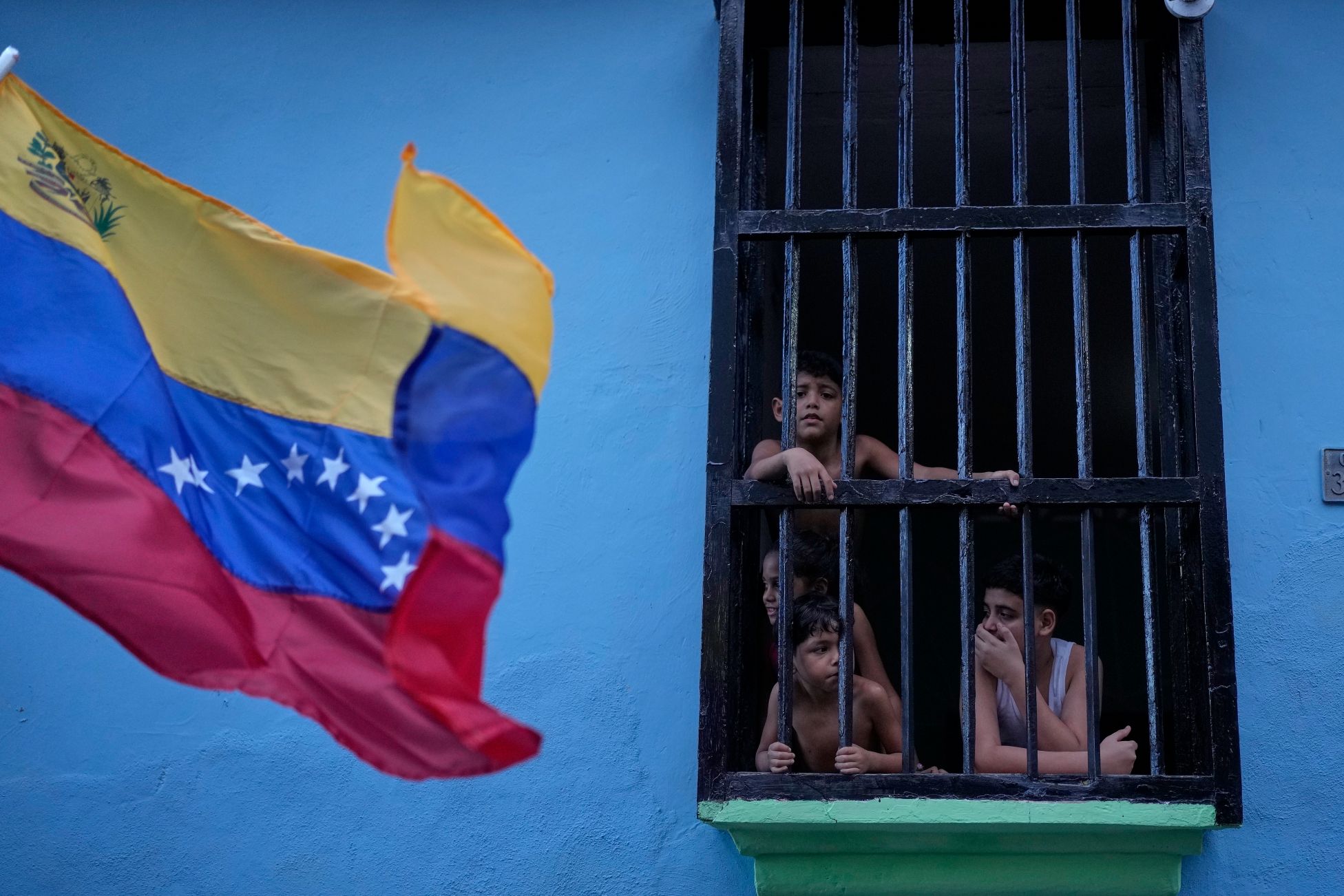
The U.S. removal of President Nicolás Maduro from power in Venezuela, its bid to “indefinitely” sell that country’s oil, and its threats to Greenland, Cuba and perhaps Canada beg the question: Is sovereignty still a legal boundary? Or is it quietly becoming something to be negotiated?
Canada’s security, prosperity and political independence depend on whether its borders are lines of law, not merely of convenience. If belief in that weakens — if independence comes to mean “what the strong choose to respect” — then Canada’s position in the world changes fundamentally. We could become less a self-governing equal and more a tolerated neighbour.
What is at stake is the erosion of a basic political condition: sovereignty or the idea that a political community possesses supreme authority within its territory and is legally independent of external command. It is both a claim about who rules at home and a claim about who may not rule from abroad.
We often imagine sovereignty as something solid, such as bedrock. In reality, it is more fragile. It exists because states collectively treat it as binding. It survives not because it cannot be violated but because violations are named as wrongs and resisted as such.
There are four things that Canada and Canadians can do to protect our sovereignty: politicians, diplomats, jurists, journalists and the general public need to speak out; governments should take co-ordinated diplomatic and economic actions; government should help build political economic and defence institutional resilience; and refuse to treat “might is right” arguments as substitutes for the rule of law.
International law is at risk
Article 2(4) of the United Nations Charter commits every member to “refrain…from the threat or use of force against the territorial integrity or political independence of any state.” Scholars commonly refer to this as the “cornerstone of the modern international legal system.” It exists to prevent the strong from converting military capacity into entitlement and to ensure that sovereignty is not merely what power can hold.
Yet it is not static because international norms endure through patterns of behaviour. When powerful states violate a core rule and face few consequences, the meaning of that rule shifts. It remains formally valid, yet becomes practically negotiable. This is how sovereignty erodes.
It is not difficult to imagine the Trump administration adopting rhetoric toward Canada that resembles language it uses elsewhere: claims that U.S. violations of the sovereignty of other countries are law enforcement actions, or necessary for national security.
It might not take military coercion — only an American assertion of control in the Canadian Arctic, justified as “continental security” — to test whether the existing border is law or merely habit.
Legally, nothing would change. Canada would remain a sovereign state. Any American use of force would violate Article 2(4) of the UN charter. International law remains clear that territorial sovereignty is exclusive and inviolable except in narrow circumstances such as self-defence against an armed attack or explicit collective authorization.
Politically, however, everything would feel different. Sovereignty would begin to appear conditional — less a right than a privilege enjoyed only by those too costly to coerce. Deterrence would become less a function of law and more a function of raw capacity.
This is how norms decay: not through formal abandonment but “decreased acceptance and decreased compliance.” When violations cease to shock, they start to instruct.
Law shapes expectations and behaviour
The remedies involve the ordinary work of preserving a legal order.
It begins with language. Sovereignty is defended through speech — by politicians, diplomats, jurists, journalists and the general public. The prohibition of force must be treated as non-negotiable in our public vocabulary. As Michael Byers notes in his studies of international law, law shapes expectations, and expectations shape behaviour. From this perspective, silence becomes a reinterpretation that allows the quiet revision of rules.
Second, norms survive by rendering violation “enormously costly.” Condemnation alone is rarely enough. Co-ordinated diplomatic, economic and institutional consequences are what transform disapproval into deterrence. The post-war system worked not because no one ever broke the rules, but because breaking them carried predictable high penalties, the “outlawry of war,” as Oona Hathaway and Scott Shapiro put it.
Canada failed to heed the warning signs of key U.S. policy shift
Third, sovereignty depends on institutional resilience, as Prime Minister Mark Carney insisted in his Davos speech. Political cohesion, economic independence in critical sectors, cybersecurity and credible defence are not expressions of belligerence. They are the conditions under which law can function as law. A right that cannot be defended invites being reclassified as a courtesy.
Finally, Canada’s strength lies in keeping disputes on the plane of law. The powerful will always generate rationales for their actions. The task for others is not to deny those rationales exist, but to refuse to treat them as substitutes for lawful authority. Either coercion fits within the UN charter’s narrow exceptions or it is a wrong.
In the Rights of War and Peace, the great theorist of sovereignty Hugo Grotius warns that when power is allowed to define right, war becomes indistinguishable from crime. The same is true of borders.
Sovereignty survives not because it is never violated, but because states decide that violations will never become normal. Canada’s challenge is not to match power with power. It is to ensure that power never becomes the measure of right.
Sovereignty will not survive because it is written down. It will survive only if states insist — again and again — that power is not permission.