(Version française disponible ici)
In one of his final acts as prime minister, Justin Trudeau signed the Big Tide Haida Title Lands Agreement. It was momentous. For the first time, Canada was handing back land through negotiations with an Indigenous community.
With the agreement, Canada recognized Haida authority over much of Haida Gwaii in the form of aboriginal title. The agreement – Chiix̲uujin/Chaaw K̲aawgaa in Haida – marks a new chapter in a generations-long fight for Haida self-determination over their homelands and waters. Many expect it to be transformative for the Haida Nation.
I worry, however, that it was an endpoint for reconciliation, not a turning point. Is it a milestone? Yes, but one that is “the exception, not the norm,” as Anishinaabe scholar Riley Yesno writes.

A decade after the Truth and Reconciliation Commission’s (TRC) final report introduced debate about “reconciliation” into the Canadian mainstream, a disconnect remains: What non-Indigenous people are willing to do is not enough. It does not meet what reconciliation requires.
A hard look at the present, too
Back in 2015, there was a collective sense that many non-Indigenous Canadians took Justice Murray Sinclair’s comment to heart when he said he and his fellow TRC commissioners had concluded that “cultural genocide is probably the best description of what went on here.”
We realized we needed to understand what happened to Indigenous Peoples. We started listening to Indigenous stories, learning the sometimes-difficult-to-accept history and celebrating Indigenous artists.
But what got dropped is that colonialization is ongoing.
The TRC’s clear description of the Indian residential school system illuminated the country’s history and became a rallying point for change. However, four years later, in 2019, when the National inquiry into Missing and Murdered Indigenous Women and Girls found Canada was still committing genocide, the response was muted.
Assumptions about decision-making
People and governments across the country have continued to sidestep the question of Indigenous power and sovereignty. Focusing on reconciliation as a cultural and historical issue has perpetuated what Goenpul scholar Aileen Moreton-Robinson described as “white possessiveness.”
Settler colonialism legitimizes itself, she says, by creating a common belief that naturalizes European ownership of Indigenous lands and waters, and displaces Indigenous sovereignties.
Moreton-Robinson’s writings have focused largely on modern Australia. But here in North America, Eva Mackey has identified similar expectations that normalize the concentration of power in the settler-colonial state and alienate Indigenous Peoples.
Indeed, colleagues and I have found in survey data that Indigenous people do not see the Canadian state as legitimate to the same degree as non-Indigenous individuals. This is a direct result of historical colonial systems such as the residential school system. It also reflects the ongoing colonial reality.
To get over this key hurdle to real reconciliation will require significant work from the federal government. Non-Indigenous Canadians, too, will need to change how we think decision-making is meant to operate.
Gaps in awareness
A societal shift is needed. The encouraging news is that awareness of historical abuses, including the residential school system, is increasing. So is optimism about the future for reconciliation.
There is also a sense that relations between Indigenous and non-Indigenous people are getting better. Nearly 70 per cent of Canadians believe individuals have a role to play in reconciliation.
Most of these trends hold for both Indigenous and non-Indigenous people, but gaps remain. Fifty-nine per cent of Indigenous people see the need for governments to do more. Only 36 per cent of non-Indigenous people say the same. Overall, though, the evidence points to an increasing understanding of historic colonization and a need for resolution.
Governments have also seemed willing to act. Trudeau quickly committed to implementing the 94 calls to action when the TRC report was released. Premiers largely echoed him and governments from coast to coast to coast have made admirable changes.
Canada’s adoption of UNDRIP, the United Nations Declaration on the Rights of Indigenous Peoples, was also an important step. In 2007, the declaration was passed by the UN General Assembly with support from the vast majority of member states. Canada initially opposed UNDRIP, but it became federal law in 2021, two years after B.C. adopted it.
The federal action was a commitment to align Canadian laws with UNDRIP standards for defining and upholding Indigenous rights.
The move provides tangible opportunity for Indigenous Peoples to lead, since the right to Indigenous self-determination is at UNDRIP’s core. Faithful implementation of the declaration would give Indigenous Peoples greater authority and decision-making power over their relationships with their lands and waters.
Undermining sovereignty
The problem is in converting commitment to action. Here the duelling impulses of Canadians on reconciliation are revealed. The federal government agreed to the UNDRIP standards to affirm Canada’s role as a world human rights leader. But those standards require structural changes and the sharing of sovereignty, which Ottawa is unwilling to do.
That is what Anishinaabe scholar and international Indigenous rights expert Sheryl Lightfoot calls selective endorsement, and it shows up in polling data.
More than two-thirds (69 per cent) of non-Indigenous Canadians do not take part in TRC Day. This contrasts with the rising awareness of historic colonization and stated willingness to be involved in achieving reconciliation.

More concerning, when they were asked about specific, tangible actions they are taking to bring about change – such as reading the 94 calls to action, donating or participating in a march or rally – very few Canadians could identify one. Twenty-three per cent said they would be willing to wear an orange shirt, but more effective actions were almost entire overlooked: only four per cent would go to a march or rally, and only two per cent said they would ask their MP to take action.
The commitment to change falters when it comes time to act.
Governments behave the same way. They have stalled on the calls to action and in some cases gone backward. UNDRIP implementation – once a focus of government action – has also largely stalled. This moves us away from delivering on the promise of Indigenous self-determination.
Reconciliation has also been conspicuously redefined by government, corporations and society writ large. “Economic reconciliation” has become the key term used by governments alongside the cultural celebration and memorialization. Calls for economic reconciliation have gotten louder this year because of the impact of U.S. tariffs and other trade measures.
This push for extractive resource development echoes historic arguments around the need to “improve” lands by removing Indigenous Peoples and to send Indigenous children to residential schools so they would learn industrial skills. Those efforts sought to undermine Indigenous nationhood, relationships to lands, waters and animals, and ultimately sovereignties.
In my new book Settler Colonial Sovereignty, I explore how a desire for “improvement” has long been among the animating purposes and legitimizing discourses of settler colonialism. But today’s appeals for economic reconciliation seem to include little meaningful power for Indigenous Peoples.
Nationalist calls to build a stronger Canada risk undermining reconciliation when they operate through white possessiveness. That’s not the behaviour of a partner, but rather one who believes they hold all the authority.

A way forward
Of course, even at the height of Trudeau’s government, affirmations of Indigenous authority felt more exception than norm. It bought the Trans Mountain pipeline after all despite fierce opposition to its expansion, deployed heavily armed police to clear the route and sentenced Indigenous land defenders upholding their authority over their own land.
Turning promises into action has been a repeated problem, but over 10 years the Trudeau government did slowly learn how to work with Indigenous nations through partnerships. Important steps toward environmental stewardship and language revitalization in particular have been made.
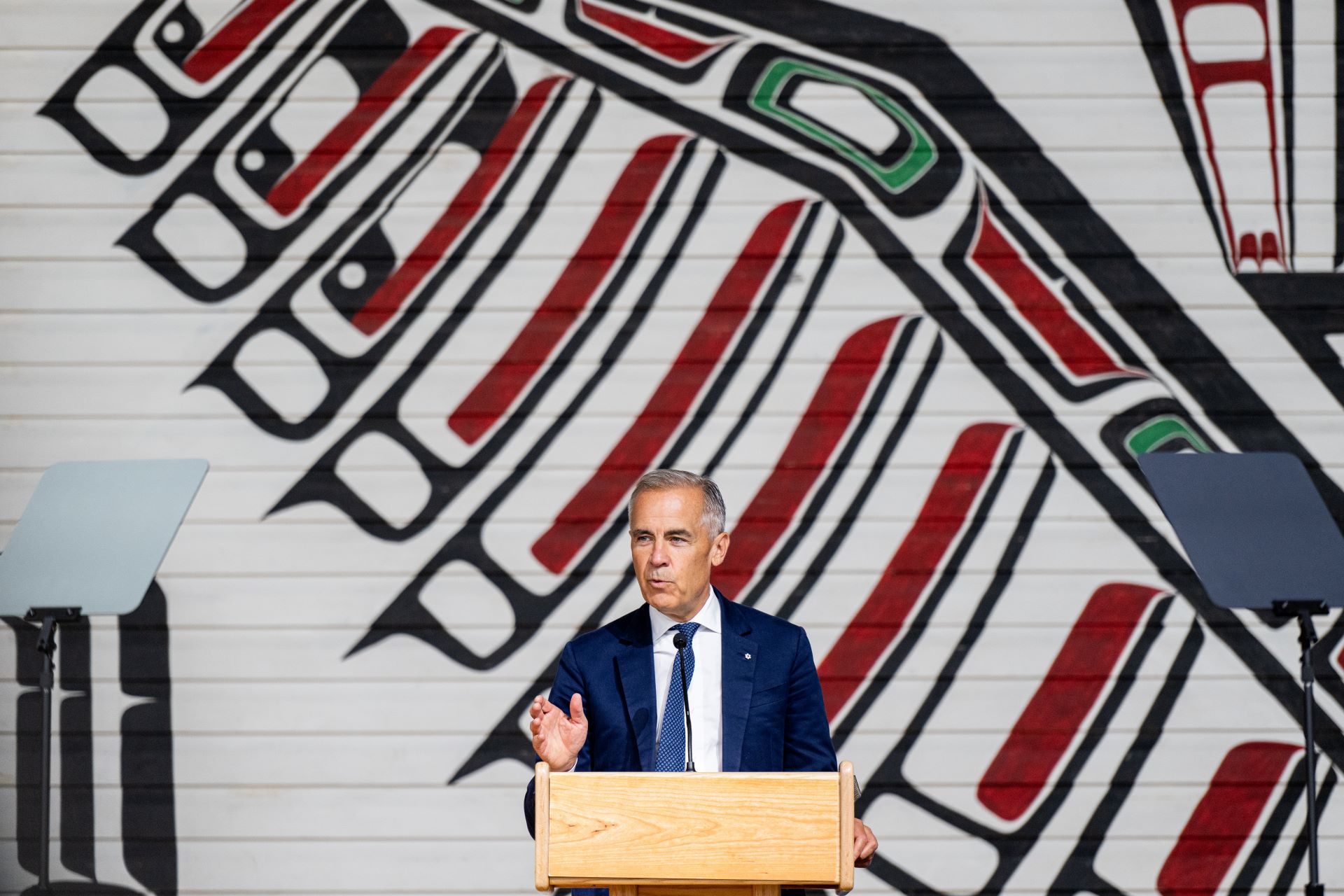
That momentum seems to have stalled with the Mark Carney government.
There continues to be little accountability for ongoing failures to provide basic health and well-being services for which the government is responsible. A turn away from environmental protection, where many of the successes lay, appears imminent. And the prime minister himself has displayed a breathtaking lack of understanding when confronted with serious Indigenous concerns about the lack of engagement as he pushed through his legislation for major projects.
If economic reconciliation is to have meaningful impact for Indigenous Peoples, it will come only when it includes support for economic initiatives of their own. Nations and individual communities know what they need. They have the skills to develop projects when governments are willing to stand by them. What they need is the partner the federal government keeps claiming to be.

Extractive resource projects are not typically among the priorities that Indigenous Peoples put forward. They prefer projects that are part of a regenerative economy – one where Indigenous people are able to earn a stable living in fields such as cultural tourism, bio-tourism, language education, on-the-land education and renewable energy.
Support for these fields provides a future for Indigenous and non-Indigenous people alike, but also allows Indigenous Peoples to maintain the renewal and stewardship responsibilities for their nations, animals, lands and waters.
Trade can be an important part of this.
Indigenous nations on the Prairies are seeking to revive generations-old trade networks divided by the imposition of the international border between Canada and the U.S. These networks once crisscrossed North America and they could once again with appropriate support.
Canada’s long-overdue recognition of the Jay Treaty, for example, could significantly boost an Indigenous-led economy that would also help re-establish the ties that bound Indigenous nations with each other across borders in the past.
To do it requires putting power in the hands of Indigenous nations, however. Reconciliation is more than an opportunity to commemorate. It requires seeing Indigenous sovereignty and self-determination as core to the solution.