Twenty years ago, in the fall of 1987, the Canada-US free trade negotiations hovered precariously between success and failure. Time was running out. President Reagan’s authority to negotiate a free trade agreement was scheduled to expire in early October and the major issues were far from resolution. In an intensive, final three-day round of negotiations during which I represented Prime Minister Mulroney and Treasury Secretary Jim Baker headed the US side, success was achieved. A few months later, the final legal text was drafted and the Prime Minister and the President signed the agreement on January 2, 1988.
The negotiations were arduous enough and success had by no means been pre-ordained. But the conclusion of the Free Trade Agreement added new fuel to what had become a volatile national debate in Canada, a highly emotional roller coaster touching every corner of society and extending well beyond the provisions of the actual trade agreement. It raised fundamental questions about the character of Canada, its relationship with the world and, in particular, its relationship with the US. Everyone seemed to have an opinion, from the chattering classes to seniors, from religious leaders to feminists, from authors to actors and, of course, politicians from all sides. The debate polarized the country between Cassandras who predicted literally the end of Canada from a free trade agreement with the US and optimists who saw the agreement as a means to make the Canadian economy more competitive and trade with our major trading partner more secure.
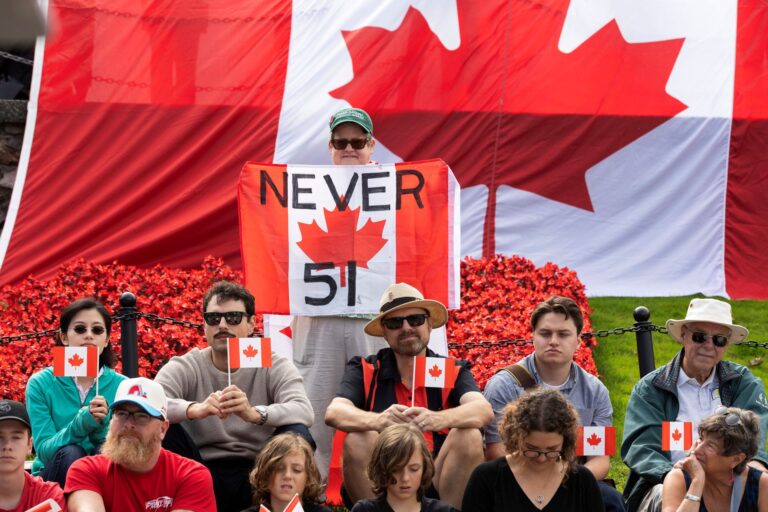
The Cassandras were led essentially by self-appointed Canadian nationalists, perennial anti-Americans who defined Canada and Canadians as everything that was not either the US or American. They saw the Free Trade Agreement as a conspiracy to make Canada the 51st state, reflecting a latent sense of inferiority but imbued with an even more profound sense of moral superiority. Canadians were warned that their industry would be swallowed whole by American competitors. Our vineyards in the Niagara and Okanagan Valleys would be “paved over.” Canadian cultural industries would drown in a flood of southern imports. Canadian foreign policy would be yoked to the White House and the Pentagon. In short, Canada would lose its ability to survive as a distinct North American entity.
Social policy activists declared that Canadian medicare would be deemed a subsidy and would have to be abandoned in favour of American-style heath care. Senior citizens, including the Prime Minister’s mother, were told that their nursing homes would be privatized and that they would be thrown “out on the street.”
Labour leaders worried that factories would close en masse. Unemployment would rise and Canada would become an economic backwater with Canadians condemned for eternity as hewers of wood and drawers of water.
Select religious leaders rushed into the debate preaching to their no doubt bewildered flocks that free trade would imperil Christian values. One bishop complained that any agreement that compelled Canadians to be more competitive was unchristian and unethical.
Instant experts emerged from varied disciplines, including at least one from a family court, stimulating headlines and fear in equal proportions. “Sellout” and “traitor” were among the milder epithets used against advocates favouring free trade. The language of the critics was often as crude as the analysis.
Against this emotional assault it was difficult to defend the agreement with dispassionate messages about “comparative advantage” or Adam Smith’s theories on specialization.
At the height of the debate, Saturday Night commentator David Frum shrewdly observed that free trade’s opponents were having all the fun. They could, he pointed, “write any old thing that comes into their heads… and did not consider themselves bound by the customary standards of evidence expected over matters of urgent public policy.”
But ultimately it didn’t matter. The Canadian people were not all listening to the Cassandras. The government countered each of the allegations and, with strong support from many outside the political arena, sought to concentrate the debate on economic issues— the need for better and more secure access to Canada’s principal export market— and with an appeal to Canadian self-confidence, namely our ability to compete under an enhanced, rules-based trade system.
Free trade became the dominant issue in the 1988 election. As they say in Newfoundland, the campaign was a “doozy.” The government was re-elected with a second majority (the first for Conservatives since the days of John A.). The agreement was ratified by Parliament and came into effect January 1, 1989.
What has happened since? The Cassandras were proven wrong on all points to the extent that many of free trade’s most vehement, political opponents eventually became ardent supporters. (The theory of elasticity is often present in politics.) One who did not, however, was Maude Barlow, erstwhile critic of the FTA, NAFTA and virtually any trade liberalization agreement. Writing two years after the agreement came into effect she declared solemnly that “Canada faces extinction as a nation.” As Churchill might observe “Some extinction; some nation!”
Statistics tell a powerfully positive story all by themselves. Not only has Canada-US trade more than quadrupled since the FTA but the quality of the expansion, notably the increase in higher value Canadian exports, exceeded the government’s expectations. In short, the theory worked— liberalization of trade fuelled specialization and efficiency with dividends for both producers and consumers. Two-way investment grew rapidly as firms on both sides of the border equipped themselves to take advantage of the agreement. Intra-firm trade accelerated with productivity spin-offs on both sides. Over 70 percent of Canada-US merchandise trade today consists of trade within the same industries. Tariffs were reduced more quickly than initially contemplated.
More to the point, none of the dire predictions about vanishing social programs ever materialized. Canada’s approach to health care certainly has problems, but they are home-grown and in no way attributable to free trade if anything the US health care system is in more serious jeopardy. Costs are escalating dramatically— even without universal coverage— eroding US competitiveness and driving many major US manufacturers to the brink of bankruptcy. Neither country is satisfied with its approach to health care but at least the debate is no longer distorted by loopy links to trade agreements. Canadian social programs more generally face challenges but these are not the result of trade agreements.
The fears that bilateral trade agreements would emasculate commitments to multilateral trade proved equally hollow. Success in the FTA, and subsequently NAFTA, actually helped galvanize the conclusion of the Uruguay Round, which gave birth to the World Trade Organization (WTO). In fact, the WTO adopted some features from NAFTA, notably the dispute settlement system, to strengthen its effectiveness.
Throughout the Mulroney and subsequent Chrétien/Martin years, Canada pursued its own course on foreign policy, supporting the US and other NATO allies where it was in Canada’s interest, e.g., the Balkans and Afghanistan, while opposing the US where it was not, e.g., on South Africa and Iraq. The Harper government is proving itself no less capable of managing a vibrant trade and investment relationship with the US while pursuing policies that serve distinct Canadian interests, whether in our own hemisphere or on issues such as Arctic sovereignty.
With the glaring exception of softwood lumber, the dispute settlement provisions of the FTA, made permanent in NAFTA, are doing what was intended— reducing the threat of arbitrary or capricious use of protectionist US measures against Canadian exports. The blatant abuse by the US of final rulings by NAFTA panels on the perennial lumber dispute necessitated, once again, a “managed trade” solution but has left a serious scar on the agreement as a whole, undermining confidence more generally about the willingness of the US to live up to solemn treaty obligations.
The Free Trade Agreement was not perfect. It was a negotiated compromise reflecting a balance of gives and gets by both sides. It was a bold initiative, much more so for Canada than for the US, made possible by the tenacity and commitment of the two political leaders at the time— Prime Minister Mulroney and President Reagan. The FTA, NAFTA and the Uruguay Round represented a high-water mark of achievement for Canadian trade policy. The fact that not much has happened of that magnitude since on the trade front is a tribute to the political will mustered at that time.
By any measure, Canada is a stronger, more prosperous country than it was 20 years ago. No one would claim that free trade merits all the credit nor that it has been flawlessly implemented. But it would be difficult for the most dedicated of the Cassandras to claim that Canadians would be better off today without improved access to the US market and without the more competitive Canadian economy that has been generated by regional and global trade liberalization.
Canada’s prosperity is vitally linked to our proximity to the vast US market and one of the biggest threats to our future prosperity would be an outbreak of protectionism from our southern neighbour. Whether or not Canada is the target, we could easily become the victim. Whether in the name of security or anti-globalization, US protectionism is a constant threat to our economic well-being.
Canada’s first priority must therefore be to restore full commitments to the dispute settlement provisions of NAFTA. We should also use the increasing integration of the CanadaUS economies as a platform for bold trade negotiations with the European Union and the major economies of Asia.
We should address the broad issue of border management in a way that respects legitimate concerns about security while using 21st-century technologies to facilitate efficient movements of people, goods and services. It seems perverse that, as Europeans find new ways to ease and expedite movements within their borders, North America is moving in the opposite direction.
The new passport requirement is proving more onerous than effective. Four-to-five-hour lineups at the border for trucks and tourists are counter-productive to both economies. Particular focus is merited on customs pre-clearance procedures that would ease congestion along the border. As David Ganong pointed out eloquently at the recent Montebello Summit, we also have different regulations on the production of things like jelly beans that serve no practical use whatsoever. The introduction of new user fees and extra inspections at the border are egregious examples of protectionism under a different disguise.
At their Montebello Summit in August, the leaders of Canada, the United States and Mexico made a solemn joint commitment “to a secure border that remains open to the exchange of goods and services and the interaction of people.” The words are compelling but concrete actions emulating this sentiment would be more convincing.
It is never easy to get and sustain US attention to genuine Canadian priorities— whether on trade or other bilateral issues. Inattention or indifference in Washington was a huge obstacle to the trade negotiation 20 years ago and nearly caused the initiative to collapse. The never-ending challenge for Canada in managing relations with the world’s only super power is to generate commitment, tenacity and vigilance from the top while reinforcing it systematically at other levels. The real lesson from 1987 is that, with the right leadership and confidence about our objective, we can overcome both the hand-wringing Cassandras at home and the customary ambivalence of the United States.
But trade policy and trade agreements are only one element of measures needed to assure our future well-being. On the home front, we need a coherent policy framework that will give Canadians the best chance to compete and prosper in a rapidly globalizing world. We need fundamental tax reform that levels the playing field for Canadian firms and stimulates investment— domestic and foreign; regulatory reform that respects legitimate public policy interests instead of home-made solutions designed simply to distinguish Canada from the US. After too many years of talk with too little action, our provinces need to match the example of Alberta and B.C. and remove internal trade and investment barriers. Most importantly, we need comprehensive investments in education and infrastructure (ports, railroads, bridges, municipal transit, etc.) by all levels of government that will sustain our ability to compete and prosper in an increasingly integrated global economy. That too requires the kind of vision, stamina and political leadership we were fortunate to have had 20 years ago.