Next year will mark the 15th anniversary of the signing of the North American Free Trade Agreement. Building on the Canada-US Free Trade Agreement, NAFTA has accelerated the economic integration of North America and the interdependence, for a major share of our livelihoods, not only of Americans and Canadians but of our Mexican neighbours as well.
As the world’s most significant political and economic power, the United States tends to take its neighbours largely for granted. Canadians often take offence at this reality. However, from an American perspective, the focus on other priorities is understandable. As one US government official told me recently, “Every relationship the US has in the world right now is asymmetrical.” Or “when there are no fires, you don’t send in the fire trucks.”
Of course, one can look at this challenge from other perspectives. Former Canadian Ambassador Frank McKenna allegedly told a neighbour in small-town New Brunswick that he was working in a place that barely recognized that we existed, and that it was hard to get people to listen to his concerns or to take them seriously. “Gee, Frank,” said the neighbour. “I didn’t know you were still working in Toronto.”
The paradox of NAFTA is that it anticipates the integration of three economies of very different sizes and different stages of development, without making provision for formal institutions to facilitate ongoing policy coordination or adaptation to changing economic and political circumstances. This paradox is at the heart of current debates in each country over how to respond to the evolution of North American integration and to the political and economic shocks of recent years that have demonstrated the heavily contingent nature of the elite and public consensus that supports North American institutions.
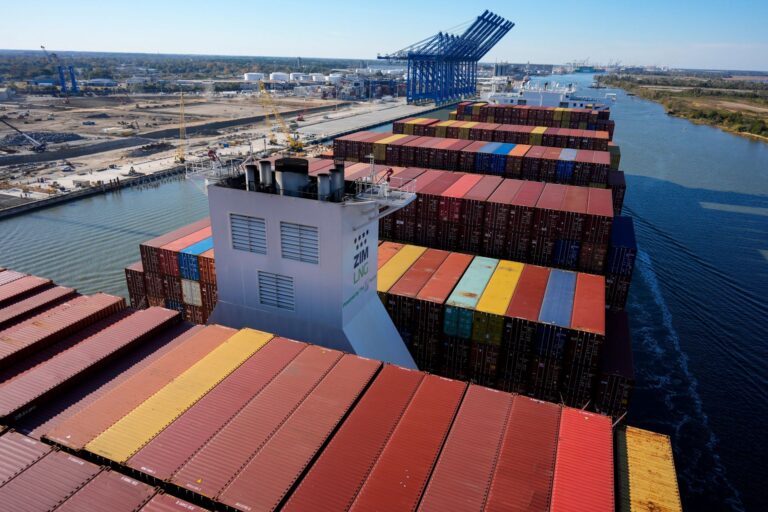
Ongoing economic integration means that the US and its neighbours no longer sell things to one another as much as we tend to “make things together.” Production processes, supply chains and distribution systems are increasingly integrated, particularly between the United States and Canada. Intrafirm trade now accounts for about 40 percent of bilateral trade. Canada now accounts for almost one-quarter of net US energy imports— and Canadian firms have been among the largest sources of foreign direct investment in the United States in recent years. Rather more controversial is the growing integration of labour markets; 30 percent of Mexicans with “formal sector jobs” now work in the United States. Given this context, post-9/11 efforts to secure America’s borders can have seriously disruptive effects on the economic well-being of many Americans if not carried out with careful attention to the realities of economic interdependence. The result has been described as the politics of “intermesticity”— the blurring and intermingling of traditional distinctions between domestic and international policy concerns— particularly in traditional areas of domestic policy.
Despite the absence of formal institutions for political or policy coordination, there is extensive cooperation between Canada and the United States on the many issues associated with their economic interdependence, societal relations or shared responsibilities for ecosystems that frequently ignore man-made international boundaries. Hundreds— perhaps even thousands— of intergovernmental contacts take place every day through “horizontal networks” of varying degrees of formality. Most of these contacts take place outside the formal activities of US and Canadian embassy and consular staff.
This paradox is also reflected in three major elements of “unfinished business” resulting from both the similarities and the differences in the three countries’ policy agendas. These can be summarized as:
-
the lack of institutional arrangements to manage changing policy circumstances;
-
the interaction between regional trading arrangements within North America and each country’s broader trade and international economic agendas; and
-
the asymmetries between the USCanada and US-Mexico relationships— sometimes described as the problem of dual bilateralism.
Other complications come from the fact that Canadian and American governments and their respective citizens tend to look at North American issues, international politics and the international economic system from very different perspectives— significantly affecting political attitudes and priorities in both countries.
The first challenge of the NAFTA paradox is that the very depth and extent of integration and interdependence among the economies of North America increase the challenges of policy coordination and of avoiding or managing political disputes— something inherent in any complex economic agreement. Structural factors and circumstances that have led to the development of political or economic agreements change over time. These changes create problems unforeseen by those who created those institutions and contracts.
The NAFTA trade-off, which built on both established principles of international trade law and the previous Canada-US treaty, combined three major features:
-
general trade rules, arranged in separate procedural and sectoral chapters that reflected differences in sectoral arrangements and interest group bargaining in each country;
-
the accommodation of considerable national legal and policy variations in each country, subject to the application of principles of national treatment and nondiscrimination; and
-
provisions for independent, arm’slength dispute resolution processes to adjudicate disputes over the application of national laws in each country— limiting but not eliminating the potential for opportunistic cheating or regulatory capture by domestic special interests.
The economic focus of the NAFTA bargain was a logical response to the fundamental asymmetries of size, power, institutional structures and political cultures in each country. Although economic disparities within North America have narrowed to some extent since 1993, Mexico’s per capita GDP (US$10,400 in 2005 at purchasing power parity equivalence) still trails those of the United States ($42,000) and Canada ($32,900) by wide margins (table 1). The economies of Canada (at 33.8 percent of GDP) and Mexico (20.0 percent) remain far more export-dependent than the United States (7.4 percent), as well as far more dependent on a single dominant export market (table 2).
Although these provisions were intended to maintain the sovereign economic rights of each NAFTA partner, the lack of formal or informal provisions for consensus-based amendments short of a general reopening of the agreement has severely hampered its adaptation to changes in economic or institutional arrangements inside or outside North America. For example, rather than an independent legal system of permanent dispute resolution tribunals with their own jurisprudence— similar to the WTO, which emerged around the same time— the composition and power of NAFTA tribunals were limited to interpretation of existing domestic laws. These provisions also left room for different interpretations by national governments and assertive interest groups of the precise legal status and purpose of those tribunals— as seen in protracted litigation and political disputes over Canadian softwood lumber, and over Mexican sugar and cement exports to the United States.
The emphasis of the original NAFTA bargain on economic issues, along with the generalized economic recovery of the late 1990s, facilitated what Mendelsohn and others have called the “permissive consensus” on North American integration. The consensus is permissive to the extent that the mass of voters defer to the policy judgments of political and economic elites on broad trade and economic policies as long as they are seen to deliver desired economic outcomes, and as long as they do not affect their country’s basic social and political institutions. In general terms, polling data suggest that NAFTA outcomes continue to meet this standard in Canada, but that public responses are far more mixed in the United States and Mexico.
Polls conducted in Mexico and the US in 2004 found public perceptions of the economic benefits of NAFTA evenly divided within both countries. But citizens in each country perceived the other to be the greater beneficiary of the agreement. Highly publicized disputes over softwood lumber have also increased Canadian perceptions that Canada has not done as well out of the agreement as the United States— despite plenty of empirical evidence to suggest otherwise.
Another major element of the NAFTA bargain was that each country would retain substantial autonomy and discretion in its own internal political decisions— allowing for the internal compromises and trade-offs necessary to secure and maintain political legitimacy and respond to very different domestic political challenges.
Arguably, NAFTA has lived up to many of the economic expectations of its negotiators. Bilateral trade between the United States and its neighbours has increased far faster since 1994 than American trade with the rest of the world. While it is unrealistic to expect annual bilateral trade flows of more than US$500 billion with Canada and about $370 billion with Mexico to be free of disputes, the economic rules of NAFTA have allowed for the more-orless efficient resolution of bilateral disputes with a limited number of fairly high-profile exceptions.
The second major challenge to NAFTA institutions comes from a series of changes to the international trading systems and the environment for international trade during the past decade. The emergence of China and India as strong, export-oriented economies has challenged the competitive positions of industries across North America. In addition, expected efficiency gains from economic integration have been offset by technical compliance issues resulting from a series of separate bilateral and regional trade agreements negotiated with other countries— mainly by Mexico and the United States.
Mexico has entered into separate free trade agreements with the European Union, Japan and several Latin American countries, among others. It is currently pursuing “associate status” in Mercosur. The United States has negotiated six free trade agreements with ten countries. As with previous examples of Canada and NAFTA, its pursuit of bilateral and regional trade agreements reflects the glacial pace of multilateral trade negotiations, tactical considerations intended to advance broader US trade priorities, a variety of geopolitical considerations and, closer to home, the willingness of Congress to give the president “fast-track” or trade negotiation authority.
Following the effective breakdown of hemispheric Free Trade Area of the Americas negotiations in 2003 over persistent differences with Brazil and other Mercosur countries, the United States resorted to a policy that some observers have described as “surrounding Brazil” with a network of reciprocal trade agreements that could do double duty in advancing US agendas in the FTA, ongoing WTO negotiations and in limiting the spread of a Latin American trading bloc that could be directed against US interests and policies.
The proliferation of bilateral agreements has created significant challenges for Canadian trade policies— particularly given the administrative costs to Canadian-based firms of complying with rules of origin covering components sourced from countries outside NAFTA. Although NAFTA contains provisions for the accession of other countries to its arrangements, several factors have precluded the use of these provisions, including:
-
significant differences in the size and scope of the economic relationships involved;
-
important technical differences in the contents of the agreements, including provisions for the harmonization of competition and anti-trust provisions, and the absence of dispute settlement provisions comparable to NAFTA’s chapter 19; and
-
the political challenges of securing congressional approval for even relatively small-scale trade agreements.
These complexities— and the differences between NAFTA’s arrangements and other bilateral treaties between the United States and third parties— have provoked calls from business groups in both Canada and the United States to work toward a common external tariff in North America that can reduce the cost and complexity of managing customs rules governing international supply chains.
However, business hopes for further trade liberalization are hostage to several broad political realities. International economic and trade policies are a secondary preoccupation of the US government in the current political environment dominated by the war in Iraq and internal disputes over immigration policy. Many proposals for regulatory consolidation or changes to NAFTA rules have impacts outside North America— creating incentives to shift their discussion to the complex multilateral negotiations of the WTO’s Doha round. And, perhaps most important in the short term, shifts in the political cycle and broader terms of trade have been exploited— especially in the United States— by interest groups and media voices hostile to economic liberalization and supportive of economic unilateralism and protectionism.
The third major challenge to Canada-US relations— especially in adapting to North American integration— is that NAFTA has done little to change the reality that bilateral relations between the United States and its two neighbours remain very different in style and substance. Canada’s relations with Mexico, while growing, remain very modest by comparison.
The “default mode” for intergovernmental relations among the nations of North America is one of separate bilateral relationships between the United States and its neighbours. At the same time, the realities both of NAFTA and of American domestic politics make it difficult to engage in high-profile dealings with Canada without making comparable arrangements with Mexico. The problem of dual bilateralism is directly related to the problem of intermesticity— the blurring of traditional differences between domestic and international policies. The global focus of US foreign and international economic policies means that most bilateral issues between the United States and Canada— like most “North American” issues— are dealt with as subsets of US domestic policies.
Under such circumstances, good relations with the current president may be helpful in dealing with bilateral irritants— but their often technical character and the fragmentation of power built into the American political system make them far from decisive on many issues. As noted by Frank McKenna before he left Washington, foreign governments have to deal not with one government in Washington but with two— the administration and Congress.
Members of Congress are independent political entrepreneurs subject to very limited party discipline (by Canadian standards). Most, quite understandably, are focused on the concerns of their own constituents and contributors— particularly when they are seen to conflict with those of foreign governments. As a result, protecting Canadian interests amid the competitive pressures of US domestic politics requires Canadian governments, businesses and other societal interests to build alliances with US domestic interests and to gain a far greater understanding of the complexities and gamesmanship of American legislative and regulatory processes than can easily be communicated to public audiences back in Canada.
However, even given the best will in the world, Canada-US relations are often held hostage to competing political agendas— whether in global economic policies, North American relations or domestic American politics— that shape the context for American priorities and responses.
The Canada-US FTA, NAFTA and other steps toward North American economic integration were based on neo-liberal and “democratic peace” theories, which contended that greater economic interdependence creates incentives for democratic countries to cooperate in order to increase the mutual benefits of trade and reduce the corresponding costs of managing political and economic conflicts.
The spread of the so-called Washington consensus during the 1990s was facilitated by the absence of fundamental conflicts and by broadly shared economic outlooks between American political elites and their counterparts in most other industrial countries and many developing ones. But this consensus has been disrupted, at least in the short term, by the very different responses of the United States and other industrial countries, including Canada, to the events of 9/11, and by subsequent debates over the style and substance of the foreign policies of the Bush administration.
Second-term adjustments in the style and substance of US foreign policy, as well as the election of Stephen Harper’s Conservative government in Canada, suggest the potential for a more cooperative relationship on both sides. Ironically, the Martin government’s decision to honour Canada’s NATO commitments and provide continuing support for the rebuilding of Afghanistan and military support of its elected government and of the United States in combatting the continuing Taliban insurgency has been an important element in this rebuilding of bilateral security relationships.
However, the greatest challenges to economic cooperation in North America are coming from American domestic politics— particularly the opportunistic use of security issues by both Republicans and Democrats in Congress to frame partisan political debates ranging from Mexican immigration to Ontario’s garbage exports.
Thoughtful policy commentators on both sides of the partisan divide in Washington recognize that the continued promotion of economic growth at home and abroad and the cultivation of alliances of mutual benefit between the United States and other countries are fundamental conditions of successful American leadership of the international economic order. Achieving these objectives requires a willingness to work systematically and cooperatively toward the integration of legitimate security and economic concerns, rather than attempting to externalize the costs of American security concerns through unilateral and often ill-considered congressional actions.
Both Canada and Mexico actively sought to address US concerns over border security in the aftermath of 9/11. The 30-point Smart Border Accord with Canada signed after 9/11 has been relatively effective on the Canadian side— building on existing networks for cooperation on security, law enforcement, immigration, border management and a wide range of other issues.
However, the US-Mexico relationship— like debates over the future of NAFTA— has been increasingly dominated by the externalization of adjustment problems by both countries, particularly problems of large-scale structural unemployment in Mexico, rising levels of extra-legal migration and the progressive hardening of America’s border with Mexico.
These trends have been reinforced by:
-
the absence of effective bilateral agreements to manage labour mobility;
-
the failure of economic benefits from trade liberalization to reach much of rural Mexico;
-
the ability and willingness of American employers to take advantage of a rapidly growing supply of low-wage undocumented labour;
-
growing uneasiness among many Americans over rising levels of economic insecurity— much of which is blamed on the pressures of globalization, rather than on the sheer recklessness of American domestic economic policies;
-
the inability or unwillingness of American governments to enforce immigration or labour regulations with any consistency; and
-
most recently, deep divisions in Congress, particularly but not exclusively within the Republican Party, on how to respond to these problems in the face of a deeply polarized American public.
The inability of the Fox administration to implement structural economic reforms without the support of an opposition-controlled Congress has reinforced Mexico’s reliance on largescale migration to the United States as a safety valve for its surplus population and for the huge economic and social disparities of Mexican society. It is also the source of as much as US$20 billion a year in remittances that have become a critical source of income for much of rural Mexico.
These trends have provoked a huge backlash in many parts of the United States that has linked issues of border security to issues of economic security, the costs of providing social services to illegal migrants and cultural insecurities over uncontrolled immigration. It has also contributed to a climate of competitive demagoguery in Congress and elements of the mass media that appear to be using security issues as a screen for special-interest log-rolling and the political hijacking of relatively routine business arrangements such as the Dubai Ports World takeover.
As a result, prospects for further North American integration— or for the resolution of bilateral Canada-US policy concerns, such as the Western Hemisphere Travel Initiative, that also have significant implications for Mexico— are being held hostage to US security concerns and bilateral disputes with Mexico.
To make the most of continuing North American economic integration and provide effective leadership of the international economic system, the current administration— or, more probably, its successor— will need to invest the political capital necessary to renew a domestic and bipartisan political consensus that recognizes the potential benefits of continued globalization while facing up to the domestic policy changes necessary to correct America’s unsustainable fiscal, current account and personal savings deficits.
Although NAFTA remains unpopular in the United States, a breakdown in the NAFTA system would be deeply damaging to United States credibility in trying to negotiate reductions in tariff and non-tariff barriers with other major economic powers— or to US capacity to exercise constructive leadership within the international economic system. It could also lead to the political destabilization of Mexico and a reversion to the kind of populist authoritarianism that has spread rapidly in South America in recent years. However, any successful strategy for the renewal of NAFTA must begin with the recognition that political conditions do not currently exist in any of the three countries that would support the kinds of “grand vision” for the creation of a customs union— as advocated by some Canadian business interests— or the kind of North American political community guided by benevolent, cosmopolitan elites suggested in the report of a 2005 Council on Foreign Relations task force co-chaired by Canada’s John Manley.
In the short term, the Harper government in Canada lacks the parliamentary majority or the political capital necessary to pursue any highprofile extension of North American integration. The United States is also the captive of its electoral cycle, and of the Bush administration’s depleted political capital— despite its best efforts to stave off the forces of economic and cultural nativism clothed in the guise of national security. It is also unlikely that the winner of this summer’s Mexican presidential election will enjoy the support of a majority of the Mexican Congress. Such an outcome does not suggest the kinds of conditions conducive to the pursuit of either stable, growth-oriented economic policies or a trilateral agreement supporting further economic liberalization in North America.
Under such circumstances, the current Security and Prosperity Partnership (SPP) initiated in March 2005 offers a process for strengthening economic relations among the United States, Canada and Mexico, identifying areas for constructive cooperation in reducing regulatory barriers to trade and developing administratively viable approaches to combining border security and trade facilitation.
The SPP’s short-term priorities, outlined in March 2006 by Presidents Bush and Fox and by Prime Minister Harper at their meeting in CancuÌn, provide an opportunity to prepare the groundwork and identify shared interests among the three countries should a window of political opportunity open after the 2008 presidential election and the next Canadian general election.
These initiatives have been summarized as:
-
“Strengthening Competitiveness in North America” by setting up a trilateral group of business leaders from each country to propose common initiatives for reducing sectoral and regulatory barriers to trade;
-
“North American Emergency Management”— which appears to be a code phrase for figuring out how to avoid a protracted border closure in the event of a terrorist or other cross-border incident that results in disruptions at the border;
-
“Avian and Human Pandemic Influenza”— to ensure close cooperation among public health authorities to limit the collateral damage from an outbreak of avian or human pandemic flu given the interdependence of our economies;
-
“North American Energy Security”— focusing on cooperation to develop and commercialize new technologies that can contribute to more efficient, sustainable energy use and reduce dependence on costly and politically volatile energy sources from outside North America; and
-
“Smart and Secure Borders”— continuing work to facilitate the “fast, efficient and secure movement of low-risk trade and travelers to and within North America,” closer coordination of infrastructure investments and closer cooperation in dealing with organized crime and the threats it poses to judges and law enforcement officers, especially in Mexico.
However useful the SPP may be in contributing to closer security cooperation or suggesting mutually beneficial proposals to reduce sectoral and technical barriers to trade and broader economic cooperation, the paradox of NAFTA also imposes serious limits on what it will be able to accomplish.
The SPP is explicitly designed to address issues that can be dealt with through the separate regulatory processes of the three countries. But while it deliberately avoids measures dependent on Congressional approval in either Mexico or the United States, it is far from clear that these measures can actually be implemented without at least the tacit support of congressional leaders in each country.
The processes of congressional oversight provide for detailed micromanagement of technical arrangements that, at some point, will need to be reconciled with broader legislative requirements such as the Western Hemisphere Travel Initiative, the REAL I.D. Act or proposals to extend country-of-origin labelling to agricultural imports to the United States.
This is not to say that it would be feasible to reopen or renegotiate NAFTA. However, should the US Congress renew presidential trade negotiation authority in either 2007 or (more probably) 2009, it will be important to lay the groundwork now for NAFTA-plus legislation that can provide legislative sanction for the administrative measures that will emerge from the SPP process over the next two years.
It might seem from this somewhat skeptical analysis that North American integration has been less than successful. Actually, it has achieved many of its objectives: expanding flows of trade and investment and contributing to conditions necessary for sustained economic growth in all three countries. However, trade liberalization may encourage and complement the pursuit of more effective domestic fiscal and microeconomic policies, but it can never be a substitute for them.
The countries of North America do not have the luxury of living in isolation from the rest of the world, of complacency in their own domestic economic policies or of taking future competitiveness and economic growth for granted. On balance, it will be easier for the countries of North America to deal with these challenges by finding ways of working together than by living in splendid isolation or by preening ourselves on our cultural and moral superiority— as people in each of our countries are sometimes prone to do.
The multitude of small, technocratic steps outlined in the Security and Prosperity Partnership are necessary preparations for the political window of opportunity that may lie beyond the next electoral cycles in the United States and Canada. But the heavy lifting of building a broader vision of North American integration and of demonstrating its benefits to the ordinary citizens of all three countries that will be necessary to build on NAFTA’s current arrangements still remains to be done.