When a young researcher in Montreal trains a cutting-edge artificial intelligence model, she usually cannot do so on Canadian infrastructure. Instead, she rents time on servers in Virginia or Oregon – machines humming day and night, powered in part by coal, oil, and gas.
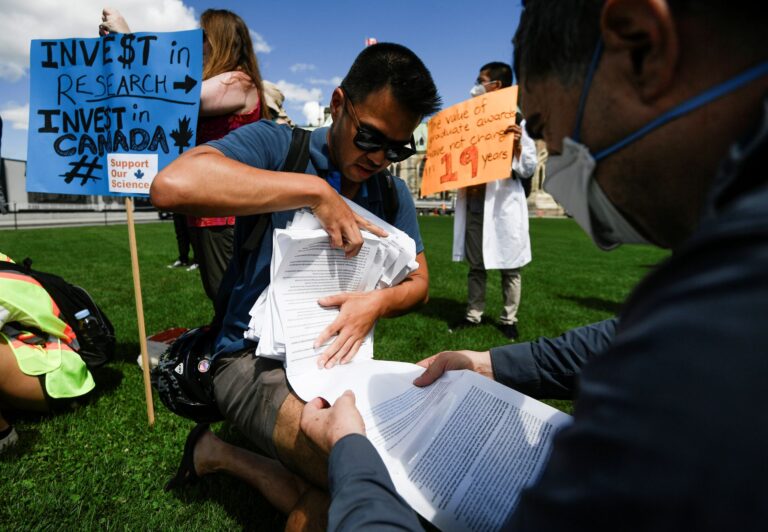
Canada now faces two kinds of brain drain. Many of our best researchers pursue opportunities abroad with more abundant capital and advanced computational capacity (known in the tech industry by the shorthand “compute.”) Researchers and innovators who remain in Canada often have to send their work, and sometimes Canadian data, across the border to run on AI infrastructure based in the United States, beyond Canadian operational control. We are talent-rich but compute-poor, even though Canada is uniquely positioned to run the next wave of AI on clean electricity and world-class efficiency.
These are the twin crises of our moment: a national compute gap that holds Canada back, and a global sustainability gap as AI’s massive energy demand threatens climate goals. The challenge for policymakers is to resolve this paradox – how do we expand AI compute without overwhelming our grids?
The wrong paths
This green-AI paradox is not Canada’s alone. Across the world, the exponential adoption of AI is colliding with transitioning energy systems already strained to their limits. Servers designed for AI can use 10 times more electricity than conventional machines.
The International Energy Agency projects that by 2030, AI and data centres could consume as much power as all of Japan, the world’s fourth largest economy. In Northern Virginia, where the world’s largest cluster of data centres are located, utility companies are already extending fossil fuel plants simply to keep the lights on.
The United States has taken a market-first path, allowing hyperscalers to grow so quickly that households often absorb the grid impacts and fossil plants stay online to meet rising energy demand. Europe has taken a regulation-first path, advancing stronger rules for privacy, safety, and sustainability reporting, but still lacks the sovereign compute capacity needed to train and deploy leading models at scale.
Neither of these approaches solves the core paradox – AI growth accelerates, but the clean power required to run it does not.
A third path: sovereign, sustainable, responsible AI
Canada has the chance to chart a different course and the timing could not be more consequential. Our electricity system already faces major new demands as transport, buildings, and industry shift from fossil fuels to clean electricity, including EV adoption and heat pumps. AI will add to that pressure.
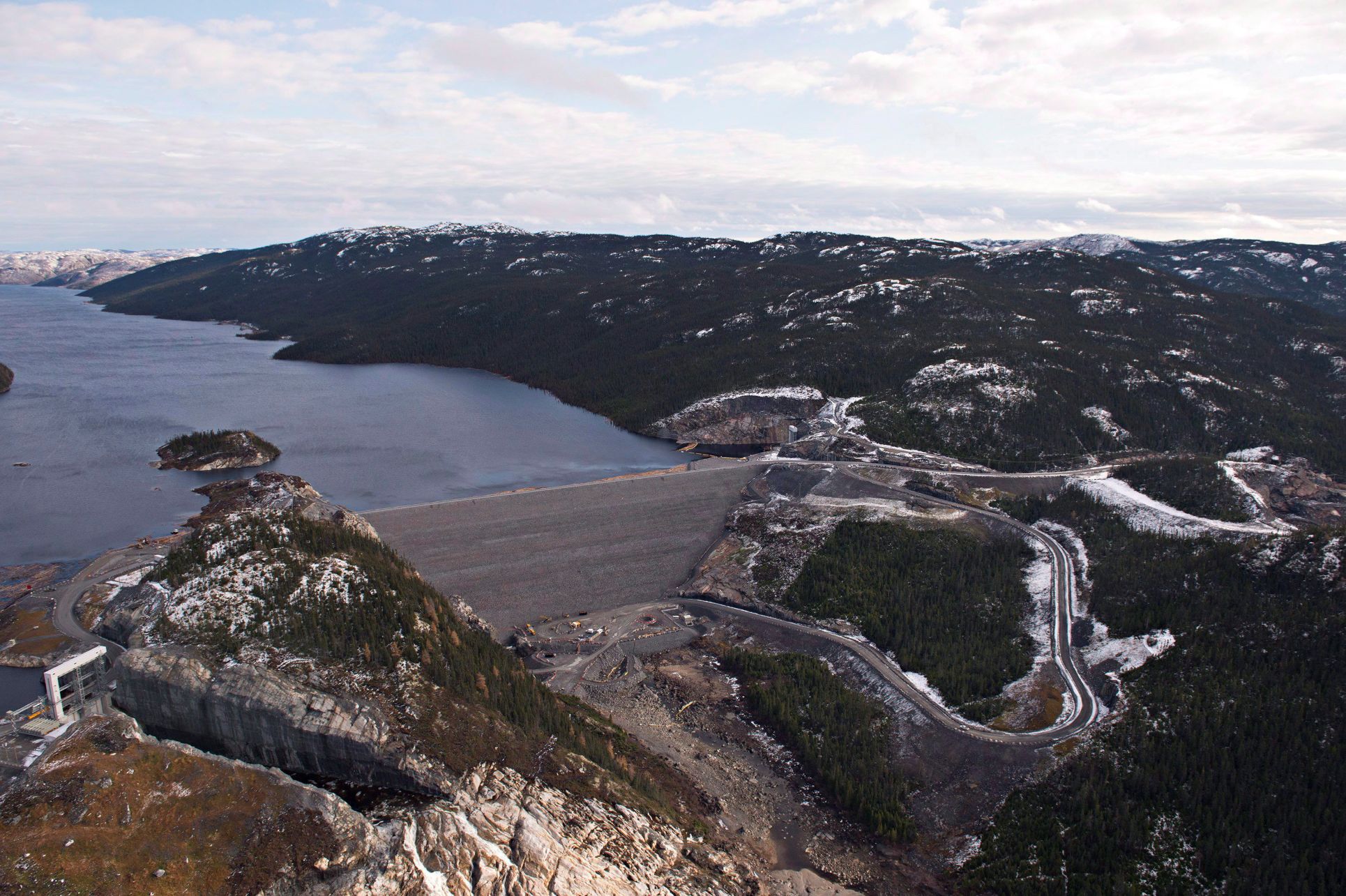
Canada begins with advantages most G7 peers can only envy. According to Natural Resources Canada (NRCan)’s Energy Fact Book, 82 per cent of our electricity is non-emitting, powered by hydro, nuclear, wind, and solar. Our cold climate naturally reduces cooling loads, giving AI data centres an immediate efficiency edge. And beyond electrons, we offer trust in the form of stable public institutions that ensure Canadian data remains governed by Canadian laws.
Currently, however, Canada controls less than one per cent of global AI compute capacity. We can only close this strategic gap by scaling clean, sovereign infrastructure. Success requires alignment across governments, utilities and industry.
This third path is built on three pillars:
1. It is sustainable-by-design.
The advantage is measurable. Some Canadian facilities (such as this one built by Telus, my employer) use 99 per cent renewable energy and operate with a power usage effectiveness (PUE) as low as 1.15, compared with a global average of 1.56, roughly 25 per cent more efficient. Where others must retrofit sustainability into aging facilities, Canada can hardwire efficiency into the blueprint from day one.
2. It is sovereign-by-design.
This model is about more than clean electrons. It ensures that Canadian infrastructure, data, models and decision-making remain under Canadian operational control and governed by Canadian laws. This control is what ultimately enables Canada to deploy AI safely in critical infrastructure and across critical industries.
3. It is responsible-by-design.
This is the governance layer that underpins the sustainability and sovereignty pillars. It builds trust by engineering verifiable safety and ethics directly into the stack, from Indigenous data sovereignty to human-centric design. Responsible governance mitigates risk across the entire system.
From crisis to catalyst
The great irony of AI is that it looks like an energy hog, but it is also the tool we need to accelerate the clean-energy transition.
AI can forecast demand, balance renewables, accelerate materials discovery, and optimize storage. With carbon-aware scheduling and waste-heat capture, data centres can become “good grid citizens,” strengthening the grid rather than straining it.
Canada’s task is to ensure AI strengthens the clean energy transition and proves it can scale on clean power.
Engineering trust
No country will let AI optimize its critical energy infrastructure unless it trusts the brain making the decisions. We cannot hand the keys of the grid to algorithms we do not control. To use AI to manage demand, stabilize renewables, or run storage fleets, we must first close the trust gap.
Trust must be engineered, not merely audited. Telus was Canada’s first signatory to the G7 Hiroshima AI Process and the Canadian AI Code of Conduct, and that experience reinforces a simple point – policy must demand verifiable proof of governance. Trust cannot be a slogan; it must be the architectural foundation of our AI infrastructure.
Policy pathways
Three steps would allow Canada to lead:
- Define a “twin standard” for AI procurement that merges “green compute” certification (leveraging Canada’s clean grid) with “sovereign control” standards (anchored in end-to-end Canadian operational control).
- Make AI data centres “good grid citizens” by requiring large facilities to participate in demand response by shifting load off-peak, publish transparent metrics (PUE, water use, carbon intensity), and capture waste heat for communities.
- Back Canadian pilots in NRCan’s Energy Innovation Program, using the current call to fund demonstrations of AI workloads and data centres as flexible grid resources, rewarding facilities that balance renewable loads and capture waste heat.
These recommendations align with NRCan’s Clean Electricity Strategy, the G7 Leaders’ Statement on AI for Prosperity, and Canada’s forthcoming AI strategy.
Canada’s chance to lead
The era in which Canada’s brightest AI researchers have to rent compute capacity on servers in the US because Canadian infrastructure can’t meet the demand is beginning to end.
With the launch of Canada’s first sovereign, sustainable, responsible AI factory, the researcher in Montreal no longer has to assume her most advanced work must run outside the country. But one facility does not close a national AI compute-capacity gap. We can close it for good only if we act now to scale this model by pairing clean energy with sovereign infrastructure and world-class governance before Canada’s window of advantage closes.
AI will not run out of code or chips, but it will run out of clean electrons. Electrons are the new currency of intelligence, and unlike most of the world, Canada’s supply is clean.
By building sovereign, sustainable, and responsible AI, we can keep our talent at home, make our grid resilient, meet our climate goals, and ensure Canada owns its destiny. We can offer the world a model that is clean, fair, and trusted, ensuring our children inherit not just smarter machines, but a stronger, cleaner, fairer Canada.
The countries that align clean energy and intelligence will define the next decades. Canada can be one of them. This is our moment.