Canada likes to imagine itself as a responsible artificial intelligence superpower. Federal policies such as the pan-Canadian AI strategy celebrate ethical AI, global competitiveness and leadership in innovation. Panels debate bias, privacy and transparency. White papers circulate through Ottawa.
Then AI leaves the city.
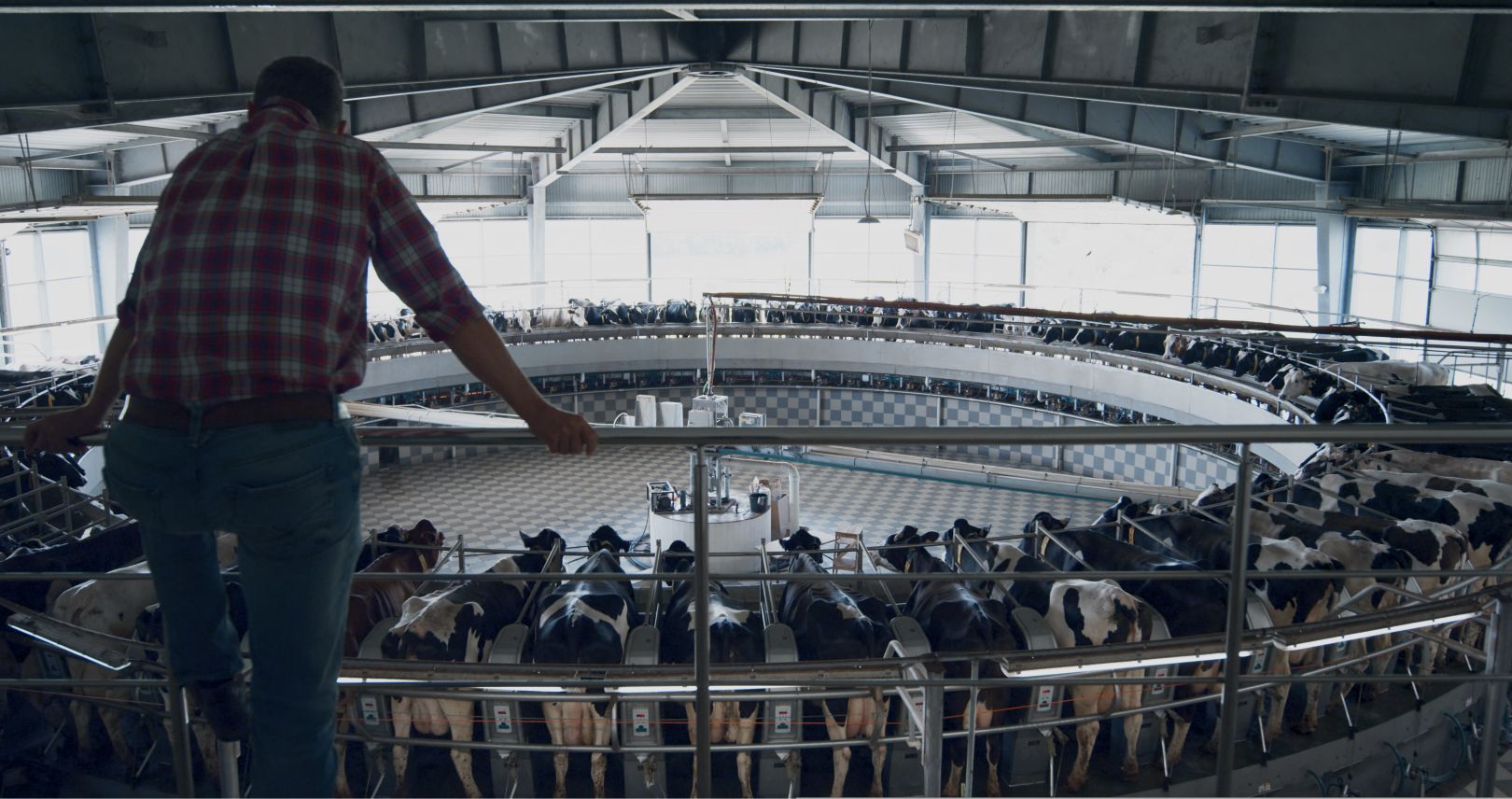
On the farms and in the barns and poultry houses that keep this country fed, artificial intelligence is already making decisions every day – flagging animal illness through rumination monitoring, autonomously adjusting barn ventilation based on real-time air quality sensors and controlling precision feeding systems that deliver individualized rations to hundreds of animals without human intervention.
These systems operate continuously, often with weak connectivity, uneven infrastructure and little public scrutiny.
Canada’s AI strategy barely acknowledges this reality. That is not because agriculture is behind the curve. It is because Canadian AI policy was never designed for rural deployment in the first place.
The federal government needs to act in several areas to fix this problem – require AI systems deployed in food production to meet basic standards, include safeguards for equal access to markets and certifications, and collect lessons from real-world AI failures in agriculture to inform policy choices.
AI policy assumes an urban world
Canada’s AI rules are quietly built around assumptions that do not hold up outside major centres. Reliable broadband. Stable power. Centralized oversight. Dedicated compliance staff. Regular audits. These assumptions work in downtown offices, hospitals and government buildings. They do not work on many farms.
Across rural Canada, connectivity remains inconsistent. Power interruptions happen. AI systems in barns run around the clock, not just during business hours. When something goes wrong, there is no help desk, regulator or review board on standby.
Yet, Canada’s AI debates remain dominated by issues that reflect urban use cases. Facial recognition in public spaces. Algorithmic bias in hiring. Data governance in financial services. These conversations matter. They are just not the ones shaping AI risk in agriculture.
On farms, the risks are quieter and more structural. Systems fail slowly. AI-generated recommendations gradually transform into accepted practice, embedding algorithmic decision-making into daily operations without triggering formal review.
Unlike urban AI deployments where changes in practice often require regulatory approval, agricultural AI reshapes operational norms through vendor contracts and equipment leases. Technology reshapes behaviour without triggering alarms. All of this goes unheard in policy debates.
Agricultural AI is governed by contracts, not public institutions
Farmers adopt tools bundled with equipment, financing, insurance or access to markets. Oversight comes from vendor contracts, not public standards. This represents a quiet but consequential shift in power.
AI tools increasingly influence rural outcomes about which governments care deeply. Animal welfare. Disease control. Environmental compliance. Trade credibility. Yet, the rules governing these are largely written by private actors.
Canada tightly regulates fertilizers, veterinary drugs and food safety practices. It inspects barns, audits records and enforces compliance. But AI systems that now influence many of the same decisions operate in a grey zone.
This is not deregulation. It is regulatory absence.
Rural failures rarely become policy failures
When AI systems fail in urban contexts, the response is immediate and visible. Media coverage follows. Investigations are launched. Policies are changed.
However, when AI systems fail on farms, individual producers absorb the consequences. Problems are often framed as training gaps or resistance to change. Lessons rarely travel beyond the fence line.
AI in the classroom is here. A policy patchwork is failing Canadian students
This invisibility matters. Over time, AI policy that ignores rural deployment stops being neutral. It quietly reshapes who can participate in Canada’s food system and under what conditions.
In rural Canada, AI governance arrives through private, non-governmental channels. Foreign technology vendors. Export-oriented certification schemes. Standards designed for global markets.
This creates a strategic risk. Decisions about data ownership, transparency and acceptable risk thresholds increasingly reflect external market requirements rather than Canadian priorities. Public institutions respond after the fact, if at all.
The policy conversation Canada keeps avoiding
Canada’s AI discourse is ambitious but narrow. It emphasizes principles and potential while avoiding uncomfortable questions about deployment. The assumption seems to be that AI governance challenges are universal. That one framework fits all sectors. That context does not matter.
But it does.
AI systems running intermittently in offices behave differently than systems running continuously in barns. Tools that can be paused, audited or updated centrally face different risks when deployed in environments with weak connectivity and a thin institutional presence.
Government policy that ignores these differences does not just miss nuance. It misses risk.
A rural-aware AI strategy would look different
Canada does not need a separate AI strategy for agriculture. It needs an overall AI strategy that recognizes all the places where AI actually operates.
Standards must reflect rural realities. Expectations around system reliability, operator training and vendor responsibility must match the environments in which these tools run. What works in a lab or office does not automatically work in a barn.
Public funding also matters. When AI adoption becomes a prerequisite for market access or participation in sustainability programs, governments must ensure that smaller producers are not structurally disadvantaged. Otherwise, innovation incentives quietly become consolidation incentives.
What Ottawa should do
Federal AI policy should require that AI systems deployed in food production meet basic standards for reliability, operator training and vendor responsibility under low-connectivity conditions.
Public funding programs that incentivize AI adoption should include safeguards so access to markets and certifications does not depend on a producer’s ability to absorb opaque technological risk.
Finally, Canada should collect lessons from real-world AI failures in agriculture – not to punish producers, but to ensure that policy evolves with deployment realities rather than urban assumptions.
Agriculture does not sit outside the AI transition. It is where that transition is most fragile.
Canada’s AI strategy is thoughtful and well-intentioned but incomplete. By focusing on urban, connected, institution-rich environments, it overlooks where AI already operates with limited oversight and real consequences. Farms are not waiting for AI to arrive. It is already there.
If Canada wants to lead on responsible artificial intelligence, it must extend its policies beyond city limits to rural areas.
The current gap is not accidental. It is time Canada closed it.