(Version française disponible ici)
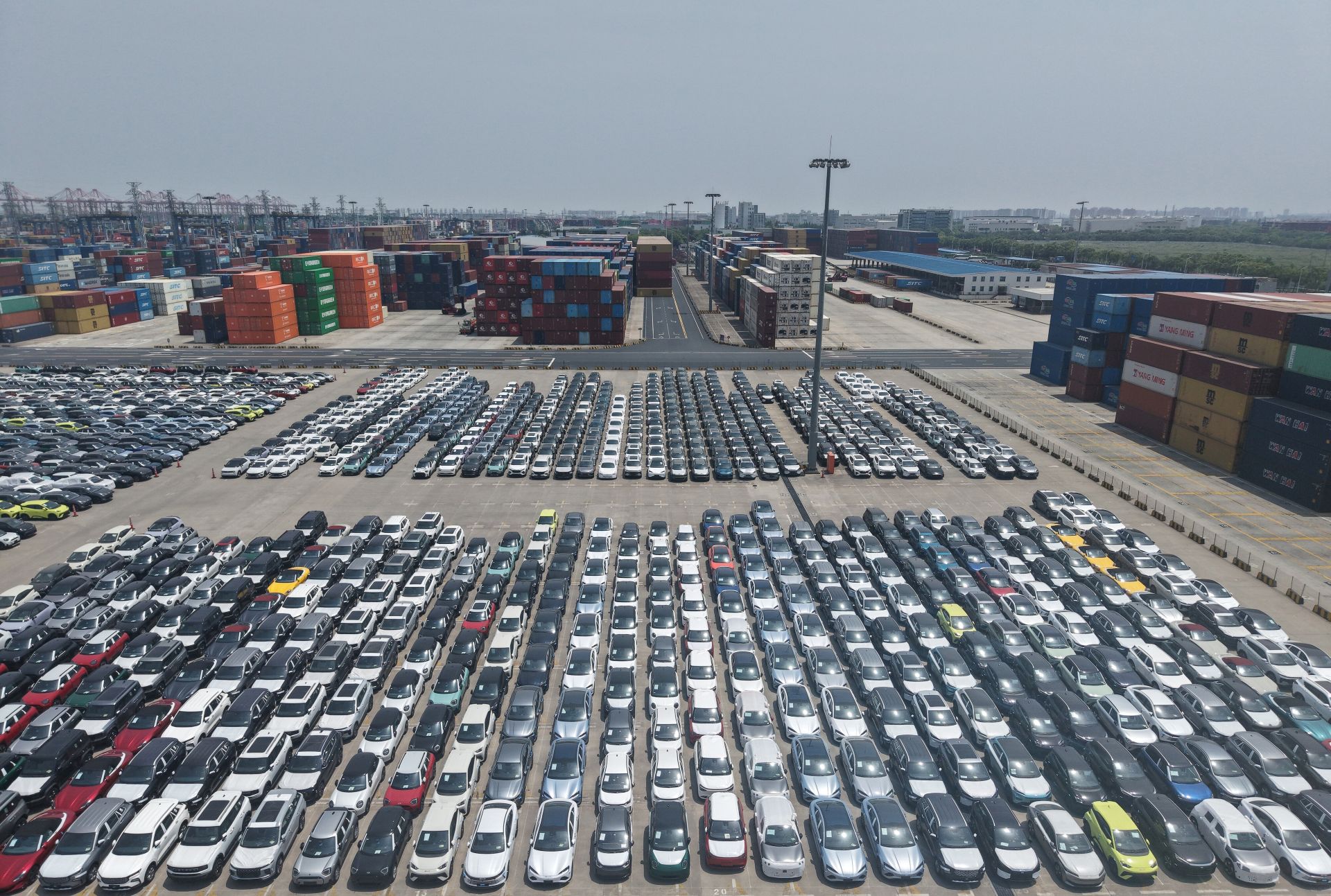
Following Prime Minister Mark Carney’s announcement in Beijing that Canada will allow a limited annual quota of Chinese electric vehicles (EV) into the domestic market at reduced tariffs, the federal government has framed the agreement as a pragmatic response to rising vehicle costs and slowing EV adoption in Canada.
In the short term, that logic is understandable. Affordable EV options have largely disappeared from the Canadian market, purchase incentives have been rolled back and policy uncertainty has dampened consumer confidence. According to Statistics Canada, EV registrations fell by roughly one third during the first three quarters of 2025, placing Canada out of step with many peer jurisdictions.
While the agreement may ease immediate price pressures, it introduces longer-term risks that deserve closer scrutiny. In particular, it raises questions about Canada’s industrial resilience, environmental accountability and strategic autonomy at a time of growing global economic fragmentation.
A short-term fix
There is little dispute that affordability has become a binding constraint on EV adoption in Canada. Recent policy shifts, including the removal of consumer incentives and a pause on the EV availability standard, a regulation intended to require automakers to ensure a minimum supply of electric vehicles in the Canadian market, have coincided with a measurable slowdown in EV uptake.
Allowing a quota of lower-cost imports could help temporarily bridge this gap. In that sense, the agreement responds to a real political and economic challenge. However, the concern is not whether prices fall in the near term, but whether trade policy aimed primarily at correcting short-term market failures creates structural vulnerabilities if it is not paired with a broader industrial strategy.
Competition or dependence
Chinese EV manufacturers operate within a political economy that differs fundamentally from that of Canada and most OECD countries. Their cost competitiveness reflects not only technological efficiency, but also extensive state support, preferential financing, controlled energy prices, and regulatory frameworks that do not fully internalize environmental and labour costs.
Allowing a limited number of these vehicles into the Canadian market falls short of neutral competition in the conventional sense. It introduces a degree of dependence on an external industrial system over which Canada has limited regulatory influence and little leverage in the event of trade disruption or geopolitical tension.
Comparisons with the European Union are often cited in support of a more flexible tariff approach. However, the EU has paired tariff measures with a comprehensive industrial strategy, including domestic manufacturing support, supply chain regulation, and the forthcoming carbon border adjustment mechanism. Canada’s approach focuses primarily on imports without comparable measures to strengthen domestic capacity.
The affordability paradox
Lower vehicle prices are often presented as an unequivocal benefit to consumers. Industrial economics suggests a more complex reality. Sustained exposure to heavily subsidized imports compresses margins for domestic manufacturers and suppliers, discourages investment, and erodes production capacity over time.
This dynamic can reduce competition rather than enhance it, leaving consumers more vulnerable to supply concentration and price volatility in the future. Similar patterns have been observed in sectors such as solar manufacturing and consumer electronics, where early affordability gains were followed by industrial hollowing out.
From a policy perspective, the relevant question is not whether prices fall over the next year or two, but whether Canada retains the capacity to participate meaningfully in the value chains that underpin its transportation system.
Environmental accounting beyond tailpipes
Much of current EV policy design is driven by tailpipe emissions metrics, which play an outsized role in trade and policy decision-making. These reductions are real and important, but they represent only one dimension of the environmental impact of EVs.
Battery-electric vehicles shift a significant share of environmental burden upstream into mining, processing, and manufacturing. Lithium brine extraction, nickel laterite mining, and energy-intensive battery production impose material costs on water systems and ecosystems, particularly in jurisdictions with weaker environmental oversight.
A policy framework that treats carbon reductions as a sufficient proxy for environmental benefit accepts these impacts as secondary. Climate stability and ecological integrity are related but not interchangeable objectives. Trade decisions that externalize ecological harm while improving domestic emissions metrics raise legitimate questions about environmental responsibility.
Strategic considerations in a fragmented world
Beyond market competition, Canada’s transportation transition is unfolding amid rising geopolitical tension, supply chain fragmentation, and resource nationalism. In this context, industrial policy is increasingly understood as a matter of resilience rather than efficiency alone.
Reliance on external suppliers for critical transportation technologies may reduce costs in the short term, but it also constrains future policy options. Once domestic capacity erodes, rebuilding it becomes costly and politically difficult. Strategic exposure accumulates gradually and is often recognized only after options have narrowed.
From this perspective, the EV quota agreement should be evaluated not only in terms of consumer prices and adoption rates, but also in terms of its implications for Canada’s long-term autonomy in mobility and manufacturing.
Addressing underlying constraints
Canada’s recent EV slowdown reflects more than vehicle prices alone. Charging infrastructure gaps, grid capacity constraints, household debt pressures, and instability in U.S. EV trade and industrial policy that affects North American supply chains all play a role. Importing lower-cost vehicles does little to address these structural challenges.
Alternative approaches exist. These include conditional imports tied to Canadian job creation, local manufacturing, or supply chain participation, binding technology transfer requirements, stronger recycling and materials recovery mandates, and a greater emphasis on smaller, less mineral-intensive vehicles. These measures are more complex to design, but they better align affordability goals with long-term capacity building.
Choosing durability over speed
The appeal of rapid market correction is understandable, particularly amid cost-of-living pressures and climate targets. But speed should not be mistaken for strategy.
The EV quota agreement may improve short-term market indicators, but it also introduces risks related to industrial resilience, environmental accountability, and strategic dependence. If Ottawa intends to pursue tariff flexibility, it should pair it with binding domestic value creation, credible environmental accounting across supply chains, and a clear industrial strategy. Without these, affordability gains risk coming at the expense of durability.
In an era defined by uncertainty, durable policy frameworks matter more than quick fixes. The challenge for Canada is not simply to accelerate the EV transition, but to ensure that the transition strengthens rather than weakens the foundations on which it depends.